The question of barbell vs dumbbell training comes up every time someone starts planning a home gym. Both have carved out dedicated followings in 2026 — Bowflex reports that their SelectTech line has held the top spot in U.S. adjustable dumbbell sales for three consecutive years, while barbell-focused garage gyms continue to dominate home gym communities on Reddit and YouTube. The honest answer is that both tools are excellent, but the right choice depends on your training goals, available space, budget, and whether you have a reliable spotter.
This comparison covers the core differences between barbell and dumbbell training, then recommends the top pick in each category so you can make a decision without drowning in options.
Quick Comparison
| Spec | Rogue Ohio Bar (Black Oxide) | CAP Barbell Classic 7-Foot Olympic Bar | Bowflex SelectTech 552 Results Series | PowerBlock Elite EXP Stage 1 |
|---|---|---|---|---|
| Rating | 9.3/10 | 7.8/10 | 9.0/10 | 8.7/10 |
| Price | $320 | Check price | Check price | $358.78as of Oct 18, 2026 |
| Weight | 20 kg (44 lb) | 20 kg (44 lb) | — | — |
| Shaft Diameter | 28.5 mm | 30 mm | — | — |
| Finish | Black Oxide | Black | — | — |
| Bushings | Bronze | Standard | — | — |
| Tensile Strength | 190,000 PSI | 63,800 PSI | — | — |
| Knurl Marks | Dual (IPF + IWF) | — | — | — |
| Loadable Sleeve | 16.4" | 15.3" | — | — |
| Warranty | Lifetime | 1 year | 3 years (residential) | 5 years (residential) |
| Weight Capacity | — | 500 lb | — | — |
| Weight Range | — | — | 5–52.5 lb per hand | 5–50 lb per hand |
| Increments | — | — | 2.5 lb (up to 25 lb), 5 lb after | 2.5 lb increments throughout |
| Number of Settings | — | — | 15 | 16 |
| Construction | — | — | Metal plates with durable components | Steel pin-selector |
| Footprint | — | — | Replaces 15 pairs | Replaces 16 pairs |
| Stand | — | — | Optional (sold separately) | — |
| Expandable | — | — | — | Yes (Stage 2 to 70 lb, Stage 3 to 90 lb) |
| Check Price at Rogue → | Check Price → | Check Price → | Check Price → |
Prices change daily — tap Check Price for the current Amazon price. Numbers shown were verified on the "as of" date.
Barbell Training: What It Does Best
A barbell loads both hands with a single implement, which means you can move more total weight than with dumbbells. Squat 225 lb with a barbell or goblet squat 60 lb with a single dumbbell — the barbell wins for total load and progressive overload.
The core compound lifts — squat, deadlift, bench press, overhead press, barbell row — are all designed around a barbell. These movements recruit the most muscle mass per movement pattern and produce the highest hormonal response per training session. For raw strength development, no free-weight tool competes with a loaded barbell.
Where barbells fall short: Heavy barbell work requires a rack for squats and bench pressing, a spotter or safety arms for failure, and more floor space. The fixed bilateral loading also means muscle imbalances can go uncorrected — both arms work together to stabilize the bar, but the stronger side can compensate for the weaker.
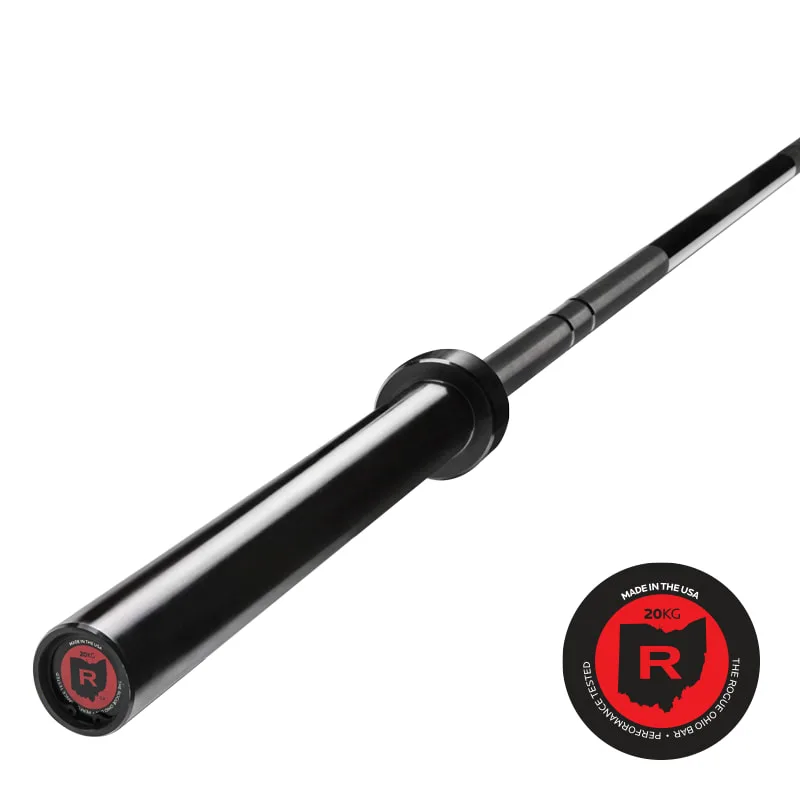
Rogue Ohio Bar (Black Oxide)
Pros
- 28.5mm shaft is the sweet spot — thin enough for Olympic lifts, right for powerlifting
- Bronze bushings give smooth rotation without the expense of needle bearings
- Dual knurl marks cover IPF powerlifting and IWF weightlifting grip widths
- Black oxide finish keeps the raw bar feel while adding mild corrosion resistance
- Lifetime warranty from Rogue — the bar can outlast every other piece in your gym
Cons
- Only available direct from Rogue — no Amazon option, 2-4 week shipping common
- Black oxide requires occasional oiling to prevent surface rust
- At $320, it costs more than most full adjustable dumbbell sets
The Rogue Ohio Bar is the most researched and reviewed all-purpose barbell available. The 28.5 mm shaft sits between a powerlifting bar (29 mm) and a dedicated weightlifting bar (28 mm), making it genuinely versatile for squats, deadlifts, bench, cleans, and snatches.
Owner feedback across thousands of reviews highlights the consistency of Rogue’s manufacturing — the knurl depth is aggressive enough to grip without tearing calluses, the dual knurl marks correctly position hands for both powerlifting and Olympic-style movements, and the bar doesn’t develop flat spots or warping under regular loading.
The black oxide finish is worth noting: it offers mild corrosion resistance but requires more maintenance than chrome or stainless steel. For garage gyms with temperature swings and humidity, monthly oiling with 3-in-1 oil or Rogue Bar Shield is a standard practice owner reports consistently recommend.
At $320, the Ohio Bar costs more than comparable bars from CAP or Titan, but the lifetime warranty and consistent quality justify the premium for anyone planning to use the bar for years.
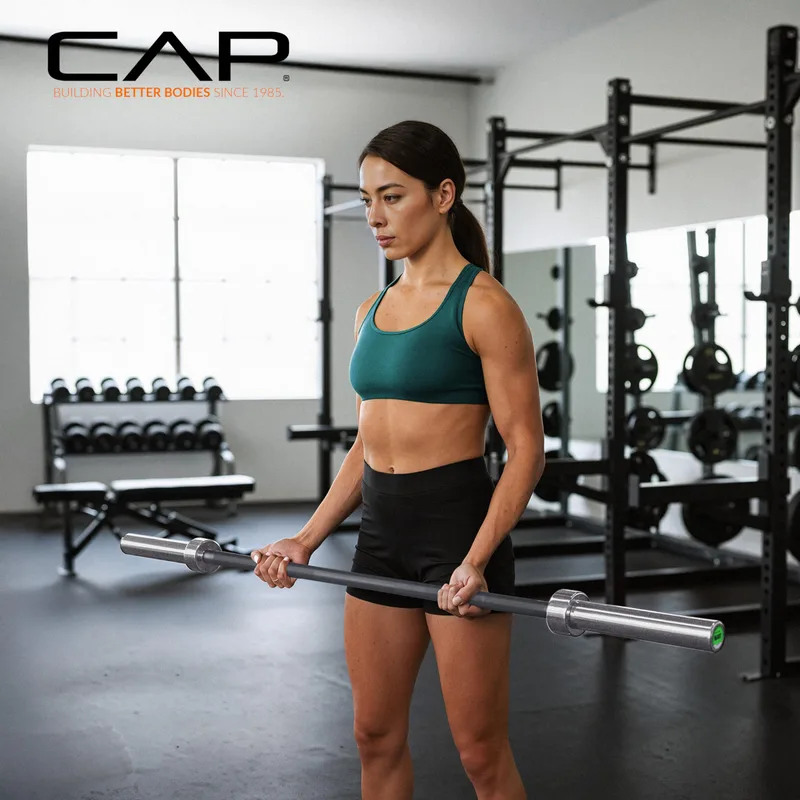
CAP Barbell Classic 7-Foot Olympic Bar
Pros
- Sub-$100 entry point makes it the cheapest path to barbell training
- Standard 2-inch sleeves accept all Olympic plates
- 500 lb rated capacity handles most home lifters without issue
- Medium-depth diamond knurling provides a functional grip without shredding hands
- Ships and delivers quickly via Amazon Prime
Cons
- 63,800 PSI tensile strength is low — not suited for heavy powerlifting over 300 lb
- 30 mm shaft feels thick compared to premium 28.5 mm bars — affects grip on Olympic movements
- Finish wears off quickly under heavy use or in humid garage gyms
- Budget bushings lack spin; sleeves rotate stiffly compared to premium options
The CAP Barbell Classic 7-Foot Olympic Bar represents the floor for barbell quality. At roughly $95, it’s a legitimate introduction to barbell training for lifters who want to confirm they enjoy the format before investing in a premium bar.
The 63,800 PSI tensile strength is the spec to watch. That number is low by performance bar standards (the Rogue Ohio Bar is 190,000 PSI). In practical terms, this means the CAP bar shouldn’t be used for max-effort powerlifting above 300 lb, and it’s not rated for Olympic weightlifting movements where the bar flexes dynamically under load. For home gym lifters focusing on moderate weights and hypertrophy, 500 lb rated capacity is more than sufficient.
Where CAP delivers: It ships via Amazon Prime, fits any standard 2-inch Olympic plate, and works reliably for the basic compound movements at moderate loads. Many lifters use a CAP bar for their first year of training, then upgrade once they’ve confirmed the commitment. That’s a reasonable approach.
Dumbbell Training: What It Does Best
Dumbbells address two problems that barbells cannot: unilateral loading and safety without a spotter.
With dumbbells, each arm works independently. This forces both limbs to contribute equally rather than letting the dominant side compensate, which is significant for identifying and correcting bilateral imbalances. Owner feedback on dumbbell-first programs consistently notes improvements in pressing symmetry and shoulder stability versus barbell-only training.
The safety benefit is real. A dumbbell can be dropped or “parked” mid-set without requiring a spotter or safety bars. This matters for solo home gym training, particularly on pressing movements where failure under a barbell creates a genuine hazard.
Dumbbells also cover a wider exercise variety. Unilateral exercises — single-arm rows, Bulgarian split squats, single-leg RDLs — are accessible with dumbbells in a way that’s awkward with a barbell. For athletes, rehab contexts, and lifters prioritizing movement quality, dumbbells often cover more ground per dollar.
Where dumbbells fall short: Maximum load is capped at whatever your heaviest dumbbell weighs. Even at 52.5 lb per hand with a Bowflex 552, that’s the equivalent of a 105 lb barbell loaded symmetrically — limiting for heavy squats and deadlifts.
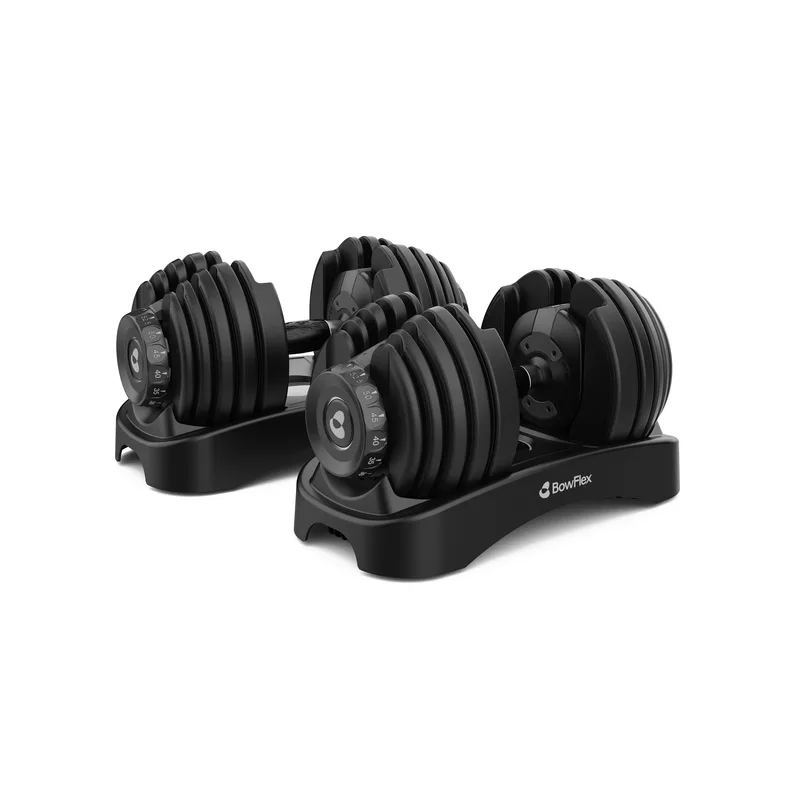
Bowflex SelectTech 552 Results Series
Pros
- Dial selector switches weight in under 3 seconds — no fumbling between sets
- 52.5 lb ceiling handles hypertrophy work for most lifters without needing heavier
- Metal plate construction in the Results Series is more durable than the original plastic internals
- Compact footprint replaces a full dumbbell rack while taking up less than 2 square feet
- Available immediately on Amazon — no wait, no shipping delay
Cons
- Dial mechanism can feel fragile if dropped or stored improperly
- Weight jumps to 5 lb increments above 25 lb — coarser progression for upper-body isolation work
- 52.5 lb max is a ceiling for advanced lifters doing heavy rows or goblet squats
- Optional stand costs extra; without it storage is awkward on the floor
The Bowflex SelectTech 552 Results Series is the updated version of the most popular adjustable dumbbell in the U.S. The key change in the Results Series versus the original 552 is the shift to metal plate components, addressing the most common long-term complaint about the original model’s plastic-heavy construction.
The dial adjustment system remains the fastest mechanism available — three seconds to select a new weight, no pins to pull, no plates to slide. For circuit training or rest-pause sets where you’re changing weights frequently, this speed advantage over traditional dumbbells is tangible.
The 52.5 lb ceiling works for most training styles. Hypertrophy-focused training (8-15 reps) on major movements rarely requires more. Where the cap shows is on strength-focused work — a 5-rep set of dumbbell bench press at 52.5 lb hits a ceiling faster than most lifters expect, particularly lifters who’ve spent time with a barbell.
The 2.5 lb increments up to 25 lb are genuinely useful for early-stage pressing movements where small jumps are needed. Above 25 lb, the 5 lb jumps are coarser but manageable.
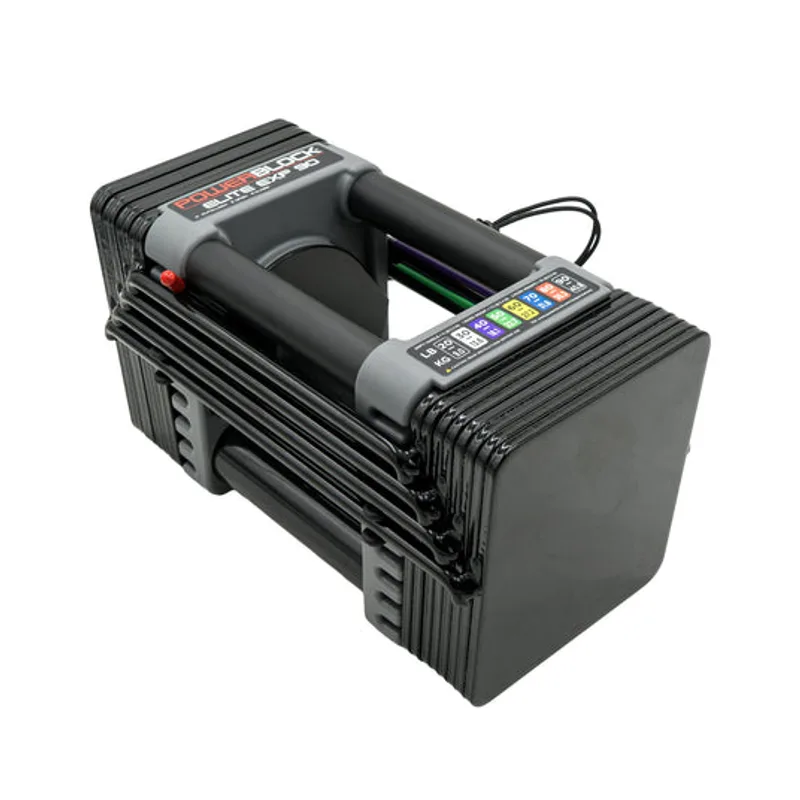
PowerBlock Elite EXP Stage 1
Pros
- Consistent 2.5 lb increments all the way to 50 lb — finer progression than Bowflex above 25 lb
- Expandable to 70 lb and 90 lb with optional Stage 2 and Stage 3 kits — future-proof
- Compact rectangular shape stores easily on shelves or under benches
- Five-year warranty is the longest residential coverage in adjustable dumbbells
- $299 price undercuts Bowflex by $100 for comparable functionality
Cons
- Cage-style design catches on clothing and can pinch skin during some exercises
- Pin selector is quick but less intuitive than Bowflex dial for first-time users
- Rectangular block shape feels less natural than a traditional dumbbell in some grips
- Stage 1 maxes at 50 lb — expansion kits add cost if you need heavier
The PowerBlock Elite EXP maintains consistent 2.5 lb increments through the full 5–50 lb range, which is the key functional advantage over the Bowflex above 25 lb. For intermediate lifters running linear progression on pressing movements, finer increments at heavier weights produce better outcomes than jumping 5 lb at a time.
The modular expansion system is the most important long-term consideration. Stage 1 covers 5–50 lb. Add the Stage 2 kit to reach 70 lb. Add Stage 3 to reach 90 lb. No new set required — you’re expanding the pair you already own. Lifters who commit to dumbbell training and progress past 50 lb save money on this pathway compared to buying heavier fixed or adjustable sets.
The cage-style construction that surrounds the handle is a real limitation. During certain movements — hammer curls, neutral-grip presses — the outer cage contacts wrists or clothing in a way that traditional dumbbell handles don’t. Owner reviews consistently flag this as the primary ergonomic drawback. It’s worth trying the grip pattern before committing if possible.
At $299, PowerBlock saves $130 versus the Bowflex 552 Results Series while offering finer increments and an expansion path. For lifters focused on progressive strength work, it’s the better long-term value.
Buying Guide: How to Choose
Choose a barbell if:
- Your primary goals are squat, deadlift, bench, or overhead press strength
- You have space for a rack (at minimum a squat stand, ideally a power cage)
- You can train with a spotter or have safety bars installed
- You want the highest total load capacity available in free weights
- Your budget is $300+ for a quality bar plus a rack
Choose dumbbells if:
- You’re training in a small space (apartment, bedroom, spare room)
- You train alone without a spotter
- You prioritize unilateral training or correcting imbalances
- You want versatility across 40+ exercises without a rack
- You’re newer to training and still refining your compound lift technique
The real answer: both eventually
Most serious home gym setups end up with both. A barbell handles the heavy compound work. Dumbbells cover accessories, unilateral work, and exercises where a barbell would require a spotter. The practical sequence for most lifters:
- Start with adjustable dumbbells — lower cost, minimal space, safe solo training
- Add a barbell + squat rack once you’ve confirmed consistent training habits
- Use dumbbells for accessories (rows, lunges, shoulder work) alongside barbell main movements
FAQ
Can I build serious muscle with dumbbells only? Yes. Research consistently shows that muscle hypertrophy responds to mechanical tension and progressive overload regardless of implement. The limitation is maximum load — once you’re lifting 52.5 lb dumbbells for 8 reps on every pressing movement, progression becomes difficult without moving to a barbell or heavier adjustables.
Do I need a rack to use a barbell? For bench press and squats, yes. Without safety bars or a rack, you can only use a barbell for deadlifts, bent-over rows, overhead press, and floor press — movements where you can safely drop the bar. A squat stand (around $200-$300) is the minimum for full barbell training.
Are adjustable dumbbells durable enough for daily use? The PowerBlock Elite EXP and Bowflex SelectTech Results Series both hold up to regular home gym use based on owner reports. Neither is rated for commercial gym volume. Dropping the Bowflex from height is the most common cause of damage — the dial mechanism doesn’t tolerate impact. PowerBlock’s steel pin construction is more drop-resistant.
How much weight do I need in dumbbells? For most lifters, 52.5 lb per hand covers 90% of exercises. The 10% where you’d want more is heavy dumbbell rows (many intermediate men want 70-80 lb), and heavy goblet squats or Romanian deadlifts. If you foresee needing more, the PowerBlock’s expansion path to 90 lb is the most cost-effective solution.
Is a $95 CAP barbell worth buying? For beginner lifters learning the movements at moderate weight, yes. For anyone planning to lift 250+ lb, competing, or doing Olympic movements, no. Treat the CAP bar as an introduction — if you’re still training consistently 6 months later, reinvest in a Rogue Ohio Bar or comparable quality bar.
Conclusion
For most home gym builders starting out, adjustable dumbbells are the better first purchase. They’re safer for solo training, take up less space, and cover more exercise variety. The Bowflex SelectTech 552 Results Series at $399 or PowerBlock Elite EXP at $299 are the two standout options in 2026.
Once you’ve committed to consistent training and want to build maximum strength, a barbell becomes the priority. The Rogue Ohio Bar at $320 is the best all-purpose barbell for home gyms. If the budget is tight, the CAP Barbell Classic 7ft at $95 is a legitimate entry point.
The short answer: buy dumbbells first, add a barbell when you’re ready.