Barbell collars are the one piece of safety equipment that home gym builders consistently underestimate — until a plate slides off a sleeve mid-rep. In 2026, the market has matured significantly: lever-style quick-release clamps have become the default over spring clips, aluminum options have dropped in price, and Rogue’s acquisition of the OSO brand has raised the build quality floor on the premium end. The core decision hasn’t changed — you’re choosing between spring clips, resin quick-release clamps, and machined aluminum — but the quality gap between tiers has narrowed.
This guide covers five collars across the full price range: a $9 spring option, two resin quick-release picks at $20 and $43, an aircraft-aluminum premium pair at $50, and the Rogue HG 2.0 as the overall recommendation for serious home gym use.
Quick Picks
Rogue HG 2.0 Collars are the editor’s pick: nylon resin with stainless steel hardware, a spring-loaded release tab, and rubber pads that grip bar sleeves without scratching. Available in a Magnetic version that sticks to rack uprights between sets. Direct from Rogue only.
Clout Fitness Olympic Barbell Clamps are the best value at $19.99: single-lever composite resin with a lifetime replacement guarantee. The right collar for most home gym builders who don’t need competition-grade aluminum.
Lock-Jaw OLY 2 is the pick for heavy lifting: redesigned frame with 50% more holding power, stainless steel pins, and rubber-lined interior. Fits 2” and 50mm bars. The go-to for CrossFit and Olympic lifting where plates see repeated drops.
OSO Elite Barbell Collars are the premium aluminum option: 6061 billet construction, made in the USA, now under Rogue’s manufacturing umbrella. At $49.50, these are the choice for lifters who want machined-aluminum precision and longevity.
CAP Barbell Spring Clip Collars are the budget entry at $8.99: chrome steel spring clips with plastic grip handles. Adequate for casual lifting, not recommended for Olympic lifting or repeated drops.
Buying Guide: How to Choose Barbell Collars
Spring Clips vs. Quick-Release Lever vs. Aluminum Locking
Spring clips are the original gym collar — a simple steel spring that squeezes onto the sleeve. They’re cheap and fast to install in one motion. The problem: spring tension degrades with use, and even new spring clips provide limited holding force under dynamic loading. A deadlift drop or clean from overhead generates significantly more force than a static load — plates can migrate or slide off if the spring can’t maintain compression. For light loads and casual training, spring clips are fine. For any movement involving drops, use a lever clamp.
Resin quick-release clamps (Clout Fitness, Lock-Jaw) are the current standard. A lever mechanism creates a cam-locking grip around the sleeve that holds firmly through repeated impacts. The quality difference between budget and mid-range resin clamps comes down to the precision of the cam geometry and the durability of the interior rubber. Clout Fitness’s composite resin is adequate for most training; Lock-Jaw’s reinforced resin with stainless pins handles competitive Olympic lifting volume.
Aircraft-grade aluminum clamps (OSO Elite) offer the highest-precision grip. Machined from 6061 billet aluminum to exact tolerances, these collars close with a positive engagement that resin options approximate but don’t match. For lifters who compete or train Olympic lifts daily with bumper plate drops, the aluminum option has a meaningful advantage. For general strength training with occasional drops, the performance delta over a good resin collar is minimal.
What to Look for in a Barbell Collar
Collar width: Narrower collars (1.25–1.5”) leave more sleeve space for plates. This matters most on shorter specialty bars and when loading near maximum capacity on a standard bar.
Interior surface: Rubber-lined interiors protect bar sleeve finishes (chrome, black oxide, cerakote) from scratching. This matters if you own a high-end barbell — OSO Elite and Lock-Jaw OLY 2 both include rubber-lined interiors.
Single-hand operation: Any collar you’ll use in a live training session should be operable with one hand. Lock-Jaw’s oversized lever and Rogue’s spring-tab release both allow clean single-hand use. Spring clips typically require two hands to seat fully on a stiff sleeve.
Magnetic versions: Rogue offers an HG 2.0 Magnetic variant with N52 magnets that stick directly to steel rack uprights. For athletes who are particular about organization and lose collars to the gym floor regularly, the magnetic version solves a real problem.
Bar compatibility: All collars on this list fit 2” (50mm) Olympic sleeves — the standard across Rogue, Rep, Titan, CAP, and major commercial barbells. The Lock-Jaw OLY 2 explicitly fits both 2” and 50mm, covering the full range of Olympic bar specifications.
Detailed Reviews
Rogue HG 2.0 Collars — Editor’s Pick
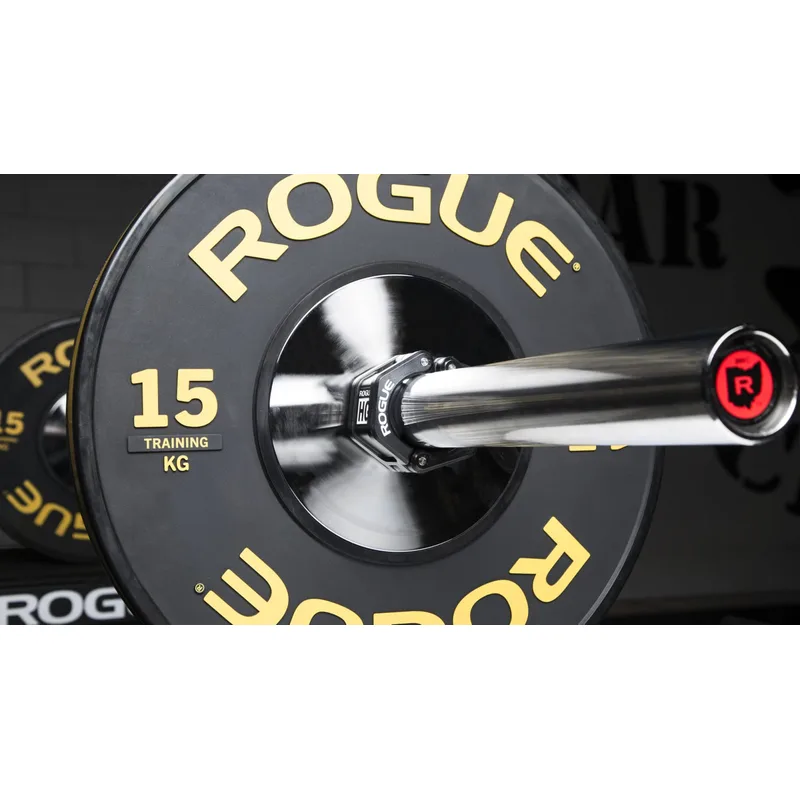
Rogue HG 2.0 Collars
Pros
- Spring-loaded release tab makes single-hand plate changes fast — one press opens the collar completely
- Stainless steel hardware resists rust and corrosion for garage gym environments with temperature swings
- Interior rubber pads grip the sleeve firmly without scratching chrome or cerakote bar finishes
- Available in a Magnetic version that sticks to rack uprights when not in use — no more hunting for collars mid-set
- Backed by Rogue's reputation for commercial-grade durability; no meaningful degradation reported after years of daily use
Cons
- Available direct from Rogue only — no Amazon Prime, expect 3–5 business day shipping
- Tight fit on first use; the locking mechanism requires a brief break-in period before it becomes smooth to operate
- Slightly more collar body to grip around compared to aluminum options like the OSO Elite
The Rogue HG 2.0 is the most-recommended collar in the garage gym community for good reason. The nylon resin body is light and durable — owner reports consistently describe no wear after months of daily use in both home gym and CrossFit environments. The spring-loaded tab provides a clean, one-press release that opens the collar fully without requiring careful lever manipulation.
The stainless steel hardware is the detail that separates the HG 2.0 from cheaper resin collars. In garage gyms that see temperature swings, humidity changes, and the occasional chalky hand, stainless hardware doesn’t corrode where mild steel fasteners would. The rubber pads grip the sleeve firmly through repeated drops without leaving marks on chrome or cerakote finishes.
The Magnetic version adds N52 magnets that allow the collars to stick to steel rack uprights, J-cups, or any steel surface near your lifting station. It’s a small quality-of-life improvement — not essential, but genuinely useful for athletes who prioritize organization mid-session.
The direct-only limitation is the practical tradeoff. No Amazon Prime, no same-day delivery. If you already order Rogue equipment, these add naturally to a cart. As a standalone accessory purchase, factor the shipping window into your planning.
Clout Fitness Olympic Barbell Clamps — Best Value
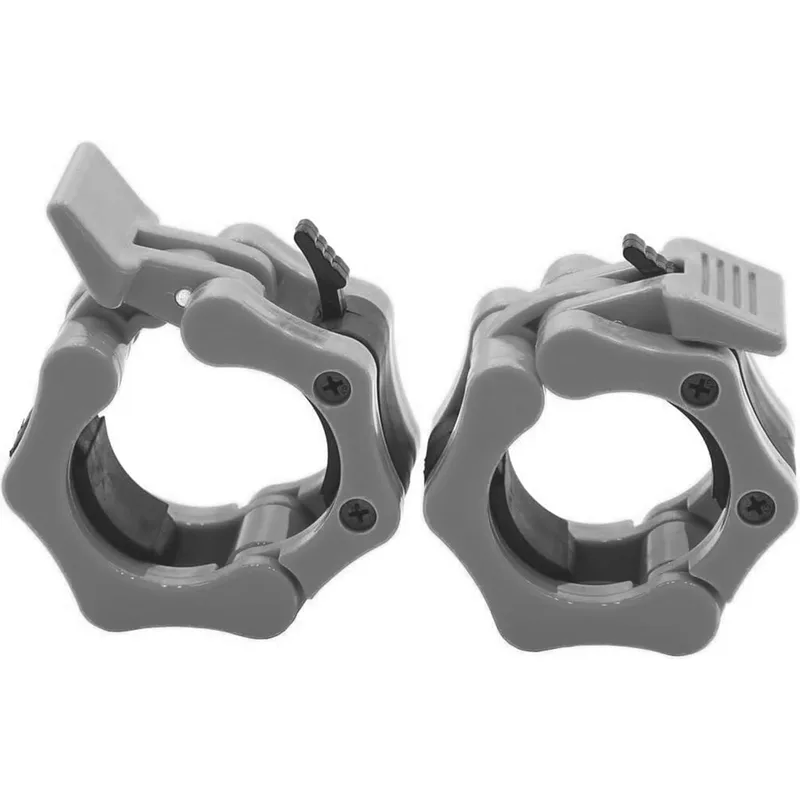
Clout Fitness Olympic Barbell Clamps
Pros
- Lifetime guarantee — if the collar breaks, Clout Fitness sends a replacement pair, no questions asked
- Single-lever locking latch eliminates unnecessary moving parts, which is where cheap clamps typically fail first
- Fits all 2" Olympic and hex bars — works across barbells, trap bars, and any 50mm sleeve
- Under $20 with Prime shipping makes these the lowest-barrier-to-entry non-spring option
- Lighter than aluminum collars — less added weight when exact barbell loading matters
Cons
- Composite resin does not match the grip security of aircraft-grade aluminum on repeated heavy drops
- Interior contact surface is less precisely machined than the OSO Elite or Lock-Jaw — minor plate movement reported by some owners under very high loads
- Color options are limited compared to Lock-Jaw's range
Clout Fitness has built a strong reputation in the home gym accessory market on the strength of the lifetime guarantee: if the collar breaks, they ship a replacement pair. For a $20 product, that warranty removes the hesitation around long-term durability.
The single-lever composite resin design is mechanically sound. One lever, one latch — no compound mechanisms to fail. The cam action clamps onto a 2” sleeve with enough force to hold through moderate dynamic loading. For most home gym training — bench, squat, deadlift, overhead press, row — these collars perform reliably without the premium of aluminum alternatives.
Owner feedback at scale (over 24,000 reviews across variants) reflects the expected range: the vast majority report the collars work as advertised across months of regular use. A minority of reviews note quality control variation, with some pairs requiring more force to engage the latch than others. The lifetime guarantee makes that a non-issue — contact Clout Fitness and they replace the pair.
For athletes whose training doesn’t include repeated Olympic lifting drops or competition-level volume, the Clout Fitness clamps are the right call at $19.99. Spending $30 more to get a Lock-Jaw or $50 more for an OSO delivers marginal performance gains most general lifters won’t notice.
Lock-Jaw OLY 2 Olympic Barbell Collar — Best for Heavy Lifting
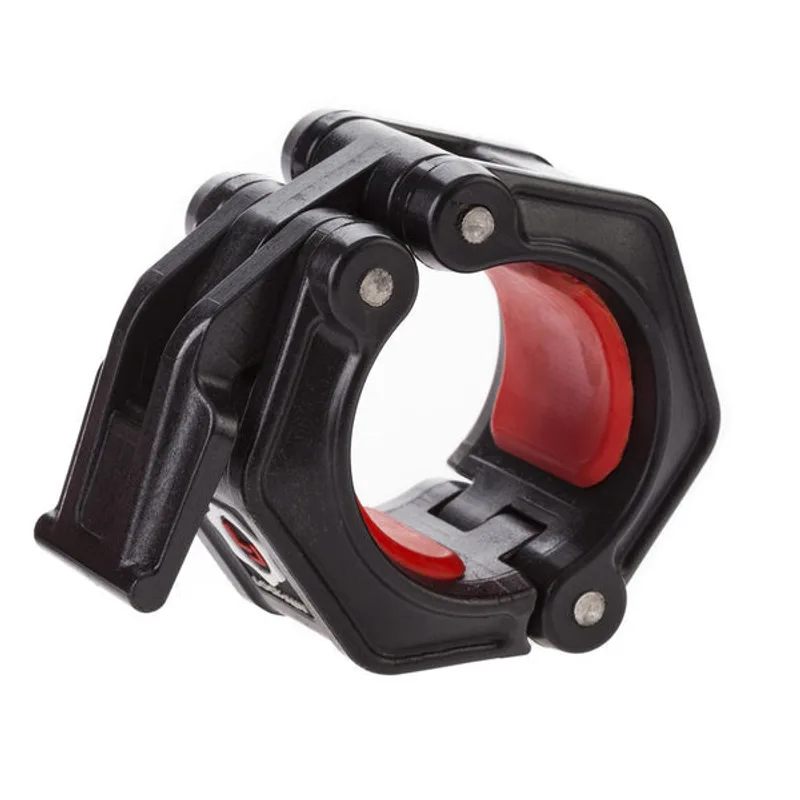
Lock-Jaw OLY 2 Olympic Barbell Collar
Pros
- Redesigned OLY 2 frame increases holding power over 50% compared to the original Lock-Jaw — meaningful difference under repeated heavy drops
- Fits both 2" and 50mm sleeves — covers Rogue, Eleiko, Texas Power Bar, and any Olympic bar in your gym
- Stainless steel pins and over-molded rubber provide a secure internal grip that doesn't degrade under heat or repeated loading cycles
- Oversized lever handle allows single-hand operation even with thick lifting gloves or chalk-coated hands
- At 9.6 oz total, the lightest non-spring collar on this list — relevant when exact loading increments matter
Cons
- More expensive than Clout Fitness with only marginal performance gain for most non-competitive lifters
- The large lever body adds width to the collar, which can crowd sleeves on shorter specialty barbells
- Rubber interior pads can collect chalk over time and require occasional cleaning to maintain grip
The Lock-Jaw OLY 2 addresses the specific problem of collar performance under repeated heavy drops. The redesigned frame and stainless steel pin construction provide substantially more holding force than the original Lock-Jaw — meaningful for Olympic lifting where clean-and-jerk drops and snatch catchments put significant lateral force on the collar interface.
At 9.6 oz per pair, the OLY 2 is the lightest clamp-style collar on this list. For competitive powerlifters or Olympic lifters programming to kilogram increments, collar weight is a real consideration — lighter collars affect the total system weight and the accuracy of programmed loads.
The over-molded rubber interior protects bar sleeve finishes under repeated use. For athletes who own expensive barbells (Rogue Ohio, Texas Power Bar, Eleiko Sport), preserving the finish under repeated collar installation and removal is a legitimate concern the OLY 2 addresses.
The oversized lever handle is a practical design choice. It allows single-hand collar release even with chalk-covered hands, thick grip pads, or the reduced dexterity that comes with hand fatigue mid-session. This is where cheaper lever clamps with small lever arms consistently draw complaints.
The Lock-Jaw OLY 2 fits a specific need: athletes who train Olympic or CrossFit movements with bumper plates and need a collar that won’t shift mid-session. For general strength training, the Clout Fitness option at half the price is adequate.
OSO Elite Barbell Collars — Premium Pick
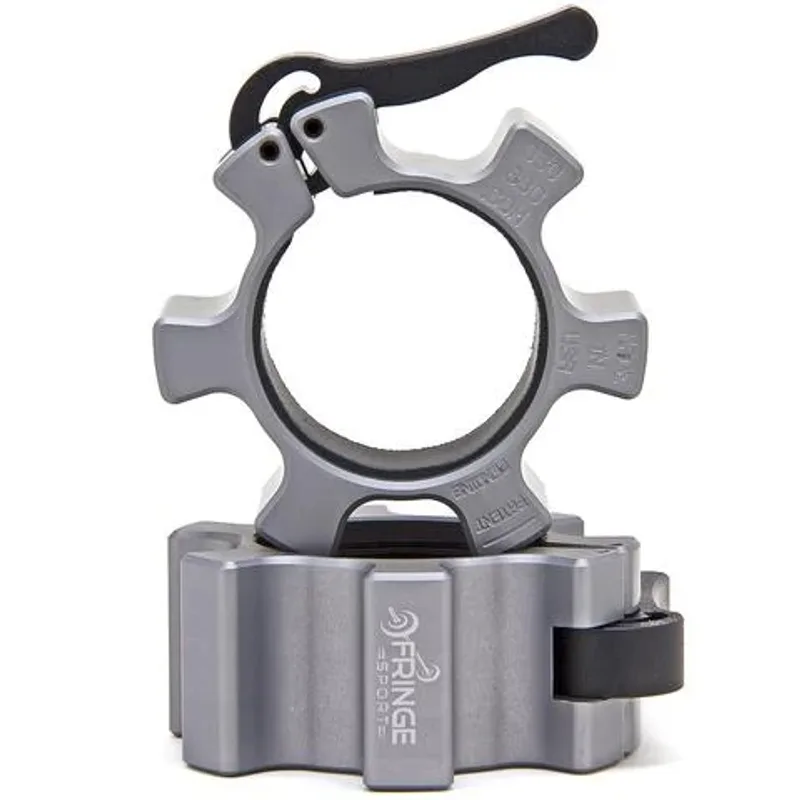
OSO Elite Barbell Collars
Pros
- 6061 billet aircraft aluminum is the highest-strength material on this list — the same alloy used in aerospace applications
- Lever-and-lock cam mechanism holds through repeated Olympic lifting drops without plate movement, confirmed by owner reports across competitive use
- Made in the USA with precision machining — consistent tolerances across pairs, no variation between left and right collar
- Now manufactured under Rogue's umbrella, combining OSO's proven collar design with Rogue's supply chain quality
- Anodized color options with the natural aluminum edge reveal make these the most visually distinctive collar on the list
Cons
- At $49.50, the most expensive Amazon option on this list — a 2.5x premium over Clout Fitness for incremental performance gains most non-competitive lifters won't notice
- The lever mechanism requires precise alignment to lock — a minor learning curve compared to Clout Fitness or Lock-Jaw's oversized lever design
- Heavier than resin options at 1 lb per pair — matters when programming to exact weight increments
The OSO Elite occupies a specific position: aircraft-grade aluminum machined to close tolerances, made in the USA. In 2026, OSO is manufactured under Rogue Fitness’s umbrella, which has tightened the quality consistency that was occasionally variable in earlier production runs.
The 6061 billet aluminum construction provides a cam-engagement feel that resin collars approximate but don’t replicate. The collar closes with a positive, mechanical click that communicates exactly when the lock is fully engaged — a tactile confidence that matters for competitive lifters and anyone who trains alone without a spotter to notice a loose collar.
The lever-and-lock mechanism requires correct alignment to engage. It’s not difficult once the motion is learned, but the first few sessions have a brief learning curve compared to Clout Fitness or Lock-Jaw’s more forgiving lever designs. The precision of the machining that makes these collars excellent is also why they’re slightly less tolerant of sloppy engagement.
At $49.50 on Amazon, the OSO Elite is the premium choice for athletes who want the best available collar and intend to use it for years. For home gym builders who train general strength work and change plates multiple times per session, the performance advantage over the Lock-Jaw or Rogue HG 2.0 is measurable but not transformative.
CAP Barbell Olympic 2-Inch Spring Clip Collars — Best Budget
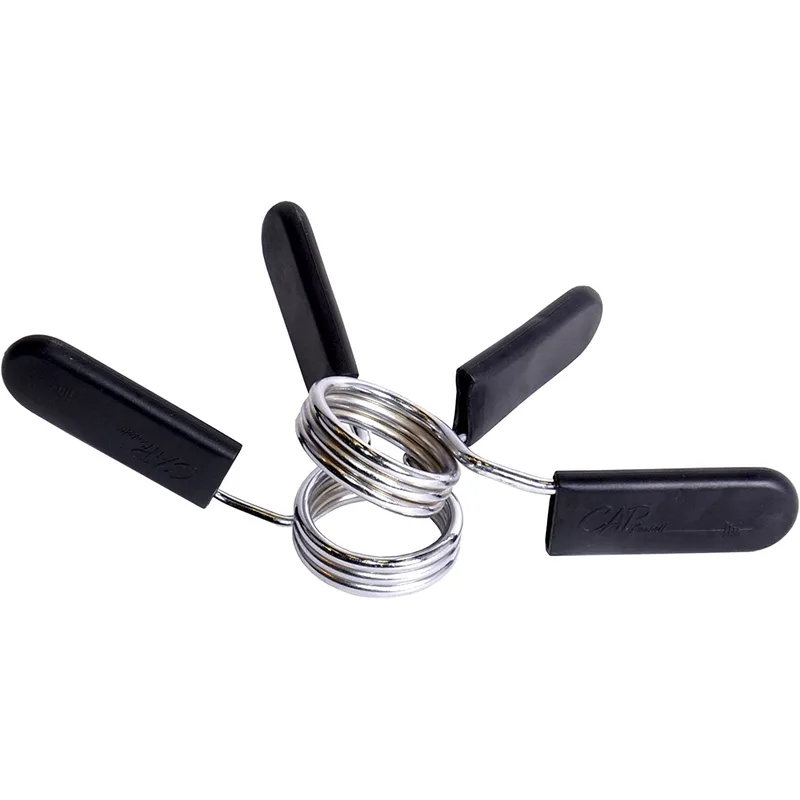
CAP Barbell Spring Clip Collars
Pros
- Under $10 with Prime shipping — the lowest-cost way to keep plates on a barbell
- Chrome-plated steel construction holds up in humid environments without immediate rust
- Squeeze-and-slide installation is faster per motion than any lever clamp — useful in high-rep, rapid plate-change scenarios
- Widely available from multiple retailers — easy to replace a worn pair within same-day delivery
Cons
- Spring mechanism loses retention force over time with repeated use — most owners replace these every 12–24 months under regular training volume
- Single-hand operation requires more grip strength than lever-style collars; thick-handed lifters and those with grip fatigue find them harder to manage
- Not recommended for Olympic lifting or any exercise involving drops — spring tension is insufficient to prevent plate migration under dynamic loading
Spring clips remain the default collar in most commercial gyms for the same reason they’re the default starting point for home gym builders: they cost under $10, they’re faster to put on per motion than any lever clamp, and they work adequately for moderate loading.
The chrome-plated steel on CAP’s spring clips holds up in humid garage environments without immediate rust. The plastic handle covers make the squeeze-and-slide installation comfortable with bare hands. For an athlete building a first home gym on a tight budget, these solve the problem adequately.
The limitation is physics: spring tension is fixed at manufacturing and degrades with use. Under repeated installation, removal, and the shock of heavy drops, spring clips lose their holding force. For general strength training — bench, squat, deadlift — a fresh set of spring clips at moderate loads holds adequately. For Olympic lifting, CrossFit, or any exercise where plates see repeated drops, spring clips are not the right tool. Plates can migrate several centimeters from initial position over a set of ten cleans, affecting balance and increasing the chance of a partial plate release.
Replace spring clips every 12–24 months under regular use, or sooner if you notice reduced resistance when squeezing the handles. At $8.99 per pair, the replacement cost is a non-issue.
Compare All 5 Collars
| Spec | Rogue HG 2.0 Collars | Clout Fitness Olympic Barbell Clamps | Lock-Jaw OLY 2 Olympic Barbell Collar | OSO Elite Barbell Collars | CAP Barbell Spring Clip Collars |
|---|---|---|---|---|---|
| Rating | 9.2/10 | 8.5/10 | 8.8/10 | 8.6/10 | 7.2/10 |
| Price | $39.50 | Check price | Check price | Unavailable | Unavailable |
| Material | Nylon resin construction | Advanced composite reinforced resin (ABS) | Advanced composite reinforced resin + stainless steel pins | 6061 Billet Aircraft-Grade Aluminum | Chrome-plated steel |
| Fit | 2" Olympic bars | 2" Olympic (50mm) bars | 2" and 50mm bars | — | 2" Olympic bars |
| Mechanism | Lock-On with spring-loaded release tab | Single-lever quick-release with locking latch | Oversized lever quick-release | Lever-and-lock cam action | — |
| Hardware | Stainless steel | — | — | — | — |
| Padding | Rubber pads on interior | — | — | — | — |
| Available | Standard and Magnetic versions | — | — | — | — |
| Warranty | — | Lifetime guarantee | — | — | — |
| Bar Compatibility | — | Olympic bars, hex bars | — | — | — |
| Sold as | — | Pair | — | — | Pair |
| Weight | — | — | 9.6 oz per set (0.6 lbs) | 1 lb per pair | — |
| Interior | — | — | Over-molded rubber for bar protection | — | — |
| Bar Protection | — | — | Rubber-lined interior prevents sleeve scratching | — | — |
| Origin | — | — | — | Made in USA | — |
| Width | — | — | — | 1.5" | — |
| Finish | — | — | — | Anodized with natural aluminum contrast edge | — |
| Style | — | — | — | — | Spring clip |
| Grip | — | — | — | — | Plastic handle covers |
| Best For | — | — | — | — | Casual lifting, light loads, beginners |
| Check Price at Rogue → | Check Price → | Check Price → | Check Price → | Check Price → |
Prices change daily — tap Check Price for the current Amazon price. Numbers shown were verified on the "as of" date.
Frequently Asked Questions
What type of barbell collar is best for Olympic lifting?
For Olympic lifting — specifically clean and jerk and snatch — use a lever-style quick-release collar with stainless steel hardware or aircraft-grade aluminum construction. The Lock-Jaw OLY 2 and Rogue HG 2.0 are both designed to handle repeated bumper plate drops without plate migration. Spring clips generate insufficient holding force under dynamic loading and are not appropriate for Olympic lifting movements where bars see significant impact on each repetition.
Do barbell collars scratch bar sleeves?
Lower-quality collars with bare metal or plastic interior surfaces will scratch bar sleeves over time, which affects the finish on chrome and cerakote bars. Collars with rubber-lined interiors — the Lock-Jaw OLY 2 and Rogue HG 2.0 specifically — create a friction grip through the rubber contact rather than direct metal-to-metal contact. For athletes with high-end barbells, rubber-lined interiors are worth prioritizing.
How tight should a barbell collar be?
A correctly installed lever collar should require no additional force once the lever is engaged — the cam action should create full collar engagement in one motion. If you need to push the collar inward while engaging the lever to get a firm grip, the collar interior diameter may be slightly oversized for your specific bar. Rogue bars have tighter tolerance sleeves; OSO and Rogue collars are manufactured to match this. On the other end, if a collar feels excessively tight to close, it’s likely a new collar before the rubber interior has broken in. After a dozen installations, the rubber compresses to a consistent fit.
Are barbell collars worth it compared to just leaving plates loose?
Never lift without collars. Without collars, plates can slide off the sleeve during any movement — bench press, overhead press, deadlift — if the load distribution becomes uneven. On a bench press, a plate sliding off one side while you’re under the bar is a serious injury risk. On a deadlift, it’s a floor and equipment damage concern. Collars also eliminate the rattling noise and plate movement that occurs on sub-maximal loading without them, which is both a training nuisance and a distraction. A $20 pair of clamps is not an optional accessory.
Can I use the same collars on a standard 1-inch bar and an Olympic 2-inch bar?
No. Collars are sized for specific bar diameters. All collars on this list fit 2” (50mm) Olympic bars, which is the standard for all barbells in this guide and most home gym barbells. Standard 1” bars use smaller spring clips or knurled spin-lock collars. If you have a standard bar (typically sold in beginner kits as a standard barbell set), the CAP Barbell 1-Inch Spring Clip Collars (separate product from B0029F62LU) are the correct option. For Olympic bars — the 7-foot, 45 lb barbells used for serious lifting — use the collars on this list.
Conclusion
Barbell collars are not a place to over-think or over-spend. Most home gym athletes will be well served by a pair of Clout Fitness clamps at $20 — lever-style, lifetime guarantee, adequate for all general strength training. Spending more gets you better hold under dynamic loading, longer service life, and better materials — but the jump from $20 to $50 in collars makes sense primarily for athletes who train Olympic movements regularly or who’ve had cheaper collars fail.
Editor’s Pick: Rogue HG 2.0 Collars — the most reliable collar in the garage gym category, available in magnetic and standard versions, built to outlast the barbell itself. Direct from Rogue at $39.50.
Best Value: Clout Fitness Olympic Barbell Clamps — lifetime guarantee at $19.99. The right call for the majority of home gym athletes.
Best for Heavy Lifting: Lock-Jaw OLY 2 — stainless pins, rubber-lined interior, oversized lever. The collar for athletes who train Olympic lifts with bumper plates.
Premium Pick: OSO Elite Barbell Collars — aircraft-aluminum precision at $49.50, now under Rogue’s manufacturing quality standards.
Best Budget: CAP Barbell Spring Clips — $8.99 works for light loads and beginners, but replace lever clamps as your training intensity increases.