Core training machines occupy a narrow but important gap in a home gym setup. Ab rollers and resistance bands cover bodyweight work, but dedicated machines — captain’s chairs, roman chairs, ab coasters, and hyperextension benches — produce a different training stimulus: loaded range of motion with a fixed movement pattern. In 2026, these machines remain some of the most searched items by home gym owners who want to complement their compound lifting with direct core and lower back work.
This roundup covers five machines across a wide price range — from a $109 adjustable roman chair to a $1,649 dedicated ab coaster — with the goal of finding the right fit for different training priorities and budgets. Each machine targets the core differently. Understanding those differences is the buying decision.
Quick Comparison
| Machine | Type | Capacity | Key Function | Price |
|---|---|---|---|---|
| Ab Coaster CS1500 | Dedicated ab coaster | 250 lb | Bottom-up parabolic crunch | Unavailable |
| XMark VKR XM-4432 | Power tower | 300 lb | Captain’s chair + dip + pull-up | Unavailable |
| Finer Form FID Bench | Multi-function bench | 500 lb | Roman chair + decline + hyper | $249.99 as of Oct 18, 2026 |
| Body-Solid BFHYP10 | Hyperextension bench | 300 lb | Dual ab board + hyperextension | Unavailable |
| Marcy JD-3.1 | Roman chair | 300 lb | Hyperextension only | $112.56-$159.99 as of Oct 18, 2026 |
1. Ab Coaster CS1500 — Editor Pick
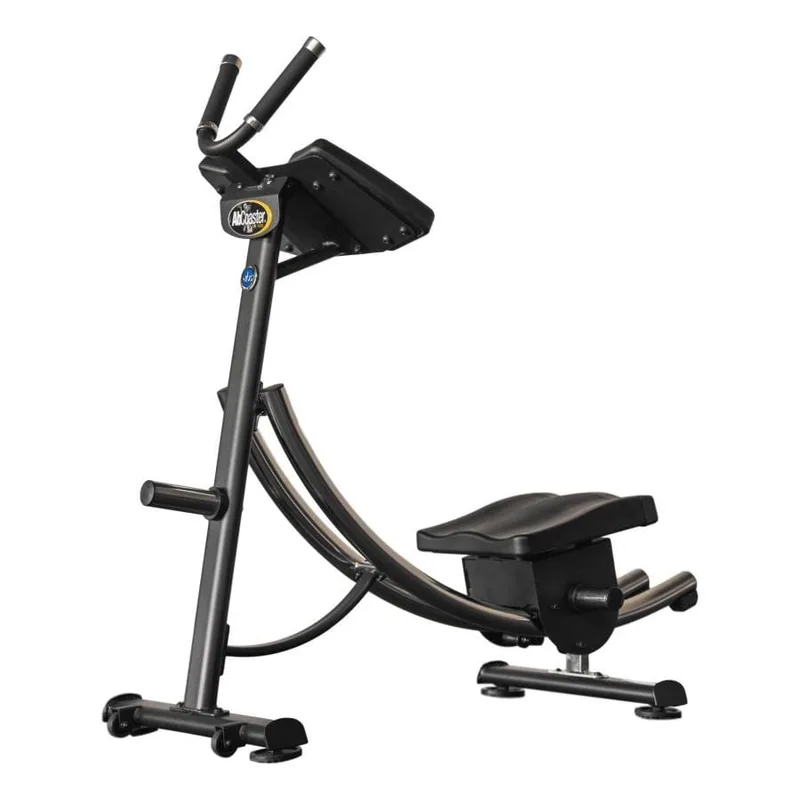
Ab Coaster CS1500
Pros
- Curved rail forces a true bottom-up crunch arc — the rectus abdominis contracts from the lowest point of the range of motion upward, eliminating the hip flexor dominance of traditional sit-ups and decline crunches
- Adjustable resistance post accepts Olympic plates — progressive overload is built into the design, not an afterthought
- Free-style motion seat allows lateral rotation during the crunch for oblique targeting without switching exercises
- Smooth stainless steel rails maintain consistent feel under load over years of use, with no cable to fray or stack to service
- Rated for light commercial use — the machine is built to handle apartment complex and boutique gym traffic, not just home use
Cons
- At $1,649, it is the most expensive machine in this roundup by a significant margin — this is a dedicated investment in a single movement pattern
- 250 lb user weight limit is lower than the other machines in this roundup; heavier athletes should confirm compatibility before purchasing
- The footprint (32" W × 40" D) requires dedicated floor space — it cannot be folded or compacted for storage
The Ab Coaster CS1500 operates on a mechanical principle that differs from every other machine in this roundup. Standard ab exercises — decline crunches, captain’s chair knee raises, sit-ups — work from the top of the range of motion downward, meaning hip flexors engage heavily in the early phase and the abs do not reach full contraction until the end of the movement. The Ab Coaster reverses that sequence. You kneel on the rolling seat, grip the handles, and pull your knees upward along a curved stainless steel rail that follows a parabolic arc. The abs contract from the lowest point upward — the opposite biomechanical pattern from a traditional crunch.
The practical result is more direct abdominal involvement per rep. The curved rail path removes the positional advantage that allows hip flexors to dominate the early phase of movement, according to the machine’s design principles and consistent feedback from owners who have compared it against other methods. The free-style motion seat also allows lateral rotation during the upward pull, which routes oblique fibers into the movement without switching exercises or equipment.
Where the CS1500 earns its price premium: the adjustable resistance post accepts Olympic weight plates. Progressive overload is built into the design from the start, not added as an afterthought. Owners report that the stainless steel rails stay smooth after years of regular use with no cable fraying, no stack maintenance, and no electronic components to service. At $1,649 it is a serious investment, but for home gym builders who have already spent on a rack, barbell, and cardio equipment, the CS1500 fills the core training gap with a machine that functions at light commercial levels.
2. XMark VKR Vertical Knee Raise XM-4432 — Best Captain’s Chair
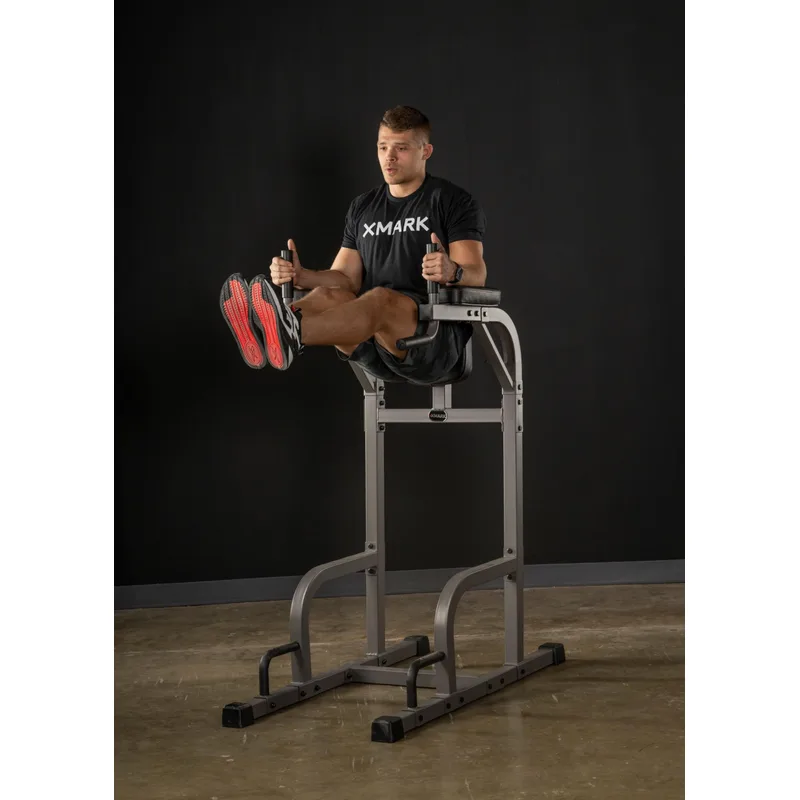
XMark VKR Vertical Knee Raise XM-4432
Pros
- Four functions in one footprint — vertical knee raise, dip station, chin-up/pull-up bar, and push-up station make this the most versatile core and upper body unit in the roundup
- 14-gauge 2" × 2" steel construction is noticeably more rigid than many budget towers — the frame does not sway during hanging leg raises or heavy dips
- 14-inch wide padded armrests distribute elbow pressure correctly during knee and leg raises, reducing forearm fatigue that shortcuts the core work
- Adjustable push-up handles and padded foot bar on the sit-up station accommodate varied user heights
- Powder-coat finish and skid-resistant feet handle daily training without floor slippage or surface wear
Cons
- 300 lb capacity is the standard for this class — athletes above that weight should confirm the rating covers their training style
- The 87" height requires standard ceiling clearance; measure before ordering if your gym has any overhead obstruction
- Power towers do not isolate core muscles with the specificity of dedicated ab machines — captain's chair work relies on hip flexor strength as a significant contributor
- No resistance adjustment for the VKR — progression is limited to hanging leg raises, weighted knee raises, or L-sits
A vertical knee raise station — commonly called a captain’s chair — produces hanging leg and knee raises in the most practical footprint available for home gyms. The XMark VKR XM-4432 goes further by combining the VKR station with a dip station, a chin-up and pull-up bar, and a push-up station in a single unit. For home gym owners who want multi-function value, this is the strongest argument in the roundup.
The 14-gauge, 2” × 2” steel construction separates the XM-4432 from budget towers sold at mass-market retailers. The frame does not sway or flex during heavy dips or pull-ups based on owner feedback, which matters for captain’s chair work specifically — a wobbly tower forces you to stabilize the machine rather than focusing the effort on your core. The 14-inch wide padded armrests distribute elbow load correctly during leg raises, which reduces the forearm fatigue that causes many lifters to cut sets short before the abs are actually challenged.
The honest limitation of any captain’s chair is specificity: hanging knee and leg raises involve significant hip flexor contribution. The abs do work, but they are not isolated the way the Ab Coaster achieves with its guided arc. For home gym builders who want both a core machine and an upper body station without buying two separate pieces of equipment, the XM-4432 at $249 is the most efficient purchase in this roundup.
3. Finer Form Multi-Functional FID Bench — Best Value Multi-Function
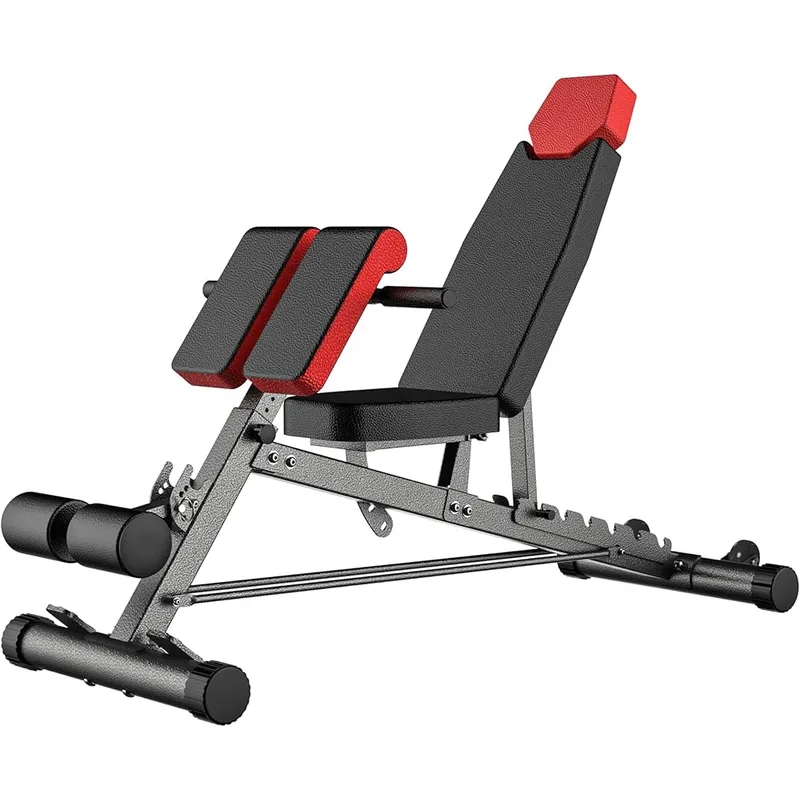
Finer Form Multi-Functional FID Bench
Pros
- Six configuration modes on a single bench — flat, incline, decline, sit-up, Roman chair, and hyperextension work covers the full range of core and lower back training without multiple machines
- 500 lb weight capacity exceeds every other machine in this roundup — handles heavier athletes with margin to spare
- Compact footprint at 18" wide stores easily against a wall when not in use
- The Roman chair and hyperextension configurations match what dedicated $150 benches deliver, making this a genuine all-in-one for core-focused home gyms
- Price-to-function ratio is the strongest in the roundup — six exercise modes under $200 is difficult to match
Cons
- The multi-mode design creates more complexity in pin and adjustment mechanisms — owner reports note some positions require precise alignment to lock correctly
- As a bench that does everything, it does not replicate the heavy-duty feel of single-purpose machines like the Body-Solid BFHYP10 for strict hyperextension work
- Pad quality is functional but not plush — thicker athletes or those with lower back sensitivity may want additional foam padding for Roman chair sessions
- 1-year warranty is shorter than the Body-Solid and Marcy options in this roundup
The Finer Form FID Bench earns its place in a core machine roundup because of how many distinct training positions it handles. Flat, incline, and decline bench work covers general upper body training. The Roman chair mode and hyperextension mode convert the same bench into lower back and core equipment. Six total positions from one machine means the Finer Form competes directly with the $149 Body-Solid BFHYP10 as a hyperextension bench while also serving as a full adjustable training bench.
At 500 lb weight capacity, it exceeds every other machine in this roundup — including machines that cost ten times more. The 18-inch footprint stores compactly against a wall. For home gyms with limited floor space where a second machine cannot be justified, the Finer Form is the most efficient solution. Roman chair and hyperextension sessions match what a dedicated bench delivers; the additional modes are genuine utility rather than marketing additions that compromise the core functions.
The tradeoff is adjustment precision. Switching between modes requires engaging the pin system correctly, and some configurations require careful alignment to lock securely. Owner reviews consistently mention this learning curve — the bench becomes intuitive after a few sessions, but initial setup for each new position takes more attention than a single-function machine. For lifters who are comfortable with mechanical adjustment and want maximum function per dollar, the Finer Form at $175 is the best value in the roundup.
4. Body-Solid BFHYP10 Ab Board & Hyperextension Bench — Best Hyperextension Bench
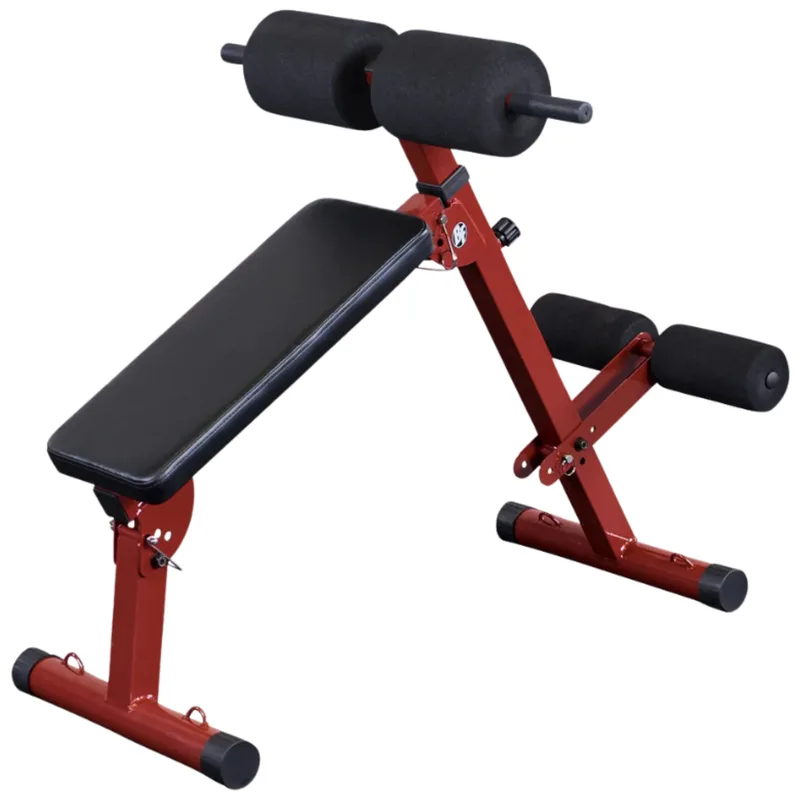
Body-Solid BFHYP10 Ab Board & Hyperextension Bench
Pros
- Six hyperextension support positions and three lower leg positions create 18 possible setup combinations — uncommon flexibility for a purpose-built machine at this price
- Three angle presets (15°, 20°, 25°) let you adjust difficulty and target lower back or glutes selectively — a 45-degree fixed Roman chair cannot replicate this
- Dual-function design works as a decline ab board and hyperextension bench from the same machine — one setup handles both exercise patterns
- 3-year frame warranty from Body-Solid's Best Fitness line covers the core structure against manufacturing defects
- At 30 lb, it is the lightest machine in this roundup — easy to reposition within the gym without help
Cons
- Does not include any resistance mechanism — progression relies entirely on bodyweight or holding a weight plate manually during hyperextensions
- The 29" width is wider than a typical FID bench, requiring more lateral floor clearance than some compact home gyms have available
- 1-year parts warranty is standard for this price point but shorter than premium machines
- Foam rollers compress over time under frequent heavy use — owner reports on long-term units suggest the 4" roller pad softens after 2+ years of daily training
The Body-Solid BFHYP10 is built for one job: combining a decline ab board and a hyperextension bench on the same adjustable frame. Six hyperextension pad height positions and three lower leg positions create significant variability in both difficulty and targeted muscle emphasis. The three angle presets — 15°, 20°, and 25° — differ meaningfully. A 15° angle produces a long, controlled hyperextension that emphasizes erector spinae engagement. The 25° setting increases the challenge and shifts more load toward the glutes and hamstrings at the top of the extension.
The design benefit over a fixed-angle Roman chair (like the Marcy below) is that the angle adjustment matters for lower back health and progression. Lifters with existing lower back sensitivity can start at 15° and add range as their erector strength develops. Athletes using the bench for glute hyperextension training specifically can lock into 25° and use a weight plate or band for external load.
At 30 lb, the BFHYP10 is the lightest machine in the roundup and can be moved without help. The 3-year frame warranty from Body-Solid’s Best Fitness line is among the strongest warranties in this price bracket. For home gym owners who want a focused, well-built dual-function machine strictly for ab and lower back work — without the extra modes of the Finer Form or the vertical components of the XMark — the BFHYP10 at $149 is the cleaner choice.
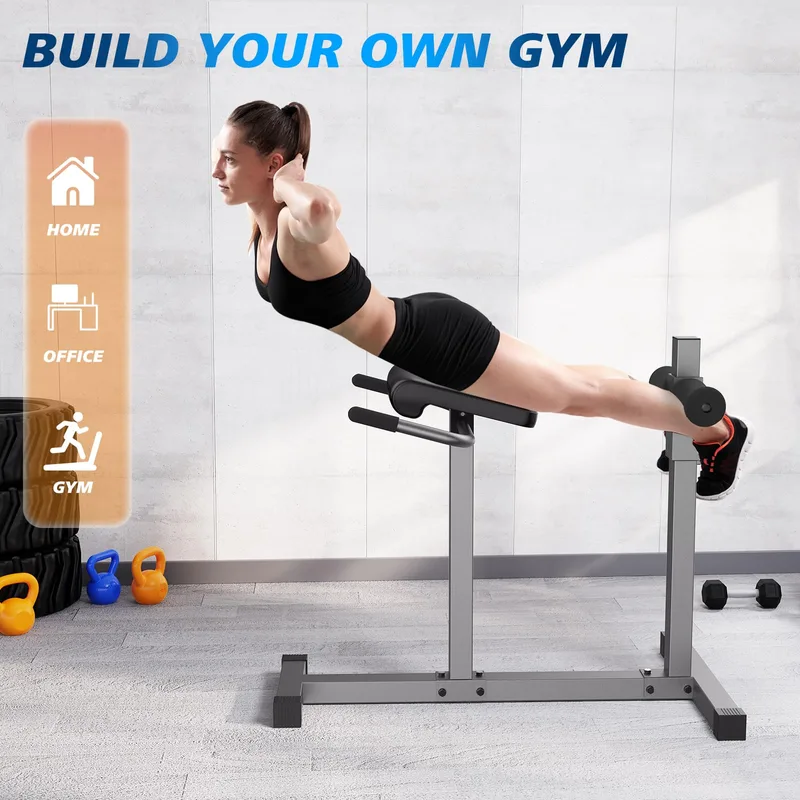
5. Marcy Adjustable Hyperextension Roman Chair JD-3.1 — Best Budget
Marcy Adjustable Hyperextension Roman Chair JD-3.1
Pros
- Under $110 delivered — the most accessible entry point for core machine training in this roundup
- Adjustable dual foam leg holders accommodate a wide range of user heights from the same setup
- 300 lb capacity is equal to the XMark power tower despite the significant price difference
- Powder-coated frame handles typical garage gym humidity without rusting prematurely based on owner reports across multiple review sites
- Assembly is the simplest in the roundup — most users report setup in under 30 minutes
Cons
- Lightweight at 22 lb means the machine can shift on smooth floors during aggressive hyperextension reps — rubber floor mats or a non-slip base are strongly recommended
- Fixed angle only — does not offer the multi-position adjustability of the Body-Solid BFHYP10
- Pad quality is adequate but thin — users over 200 lb report the hip pad becomes uncomfortable during longer sets
- No decline or sit-up configuration — strictly a Roman chair and hyperextension bench, nothing more
The Marcy JD-3.1 is the simplest machine in this roundup and, at $109, the most accessible entry point for home gym core training with a dedicated machine. It performs one function: hyperextension and Roman chair work. The powder-coated steel frame handles typical garage gym humidity without premature rusting based on owner reports, and the adjustable dual foam leg holders accommodate a wide range of user heights without tools.
The 300 lb weight capacity matches the XMark VKR despite the price difference. Assembly is the fastest in the roundup — most owners report setup in under 30 minutes. For a home gym builder who has purchased the basics (rack, barbell, bench, plates) and needs a Roman chair specifically for lower back and glute hyperextension work, the JD-3.1 covers that need without adding significant cost to the build.
The limitation to plan around: at 22 lb, the machine can shift on smooth flooring during forceful reps. Rubber gym mats or placing the JD-3.1 on interlocking tiles resolves this, but it requires addressing before training. The pad is also thin by the standards of the machines above it in this roundup — athletes over 200 lb frequently mention hip discomfort during longer hyperextension sets. For short, focused lower back sessions, the JD-3.1 delivers. For athletes who train core daily at higher volume, the Body-Solid BFHYP10’s better padding and adjustment range justify the additional $40.
Core Machine Buying Guide
Captain’s Chair vs. Roman Chair vs. Ab Coaster
These three machine types address core training differently, and buying one when you need another wastes both money and floor space.
Captain’s chair / VKR: Targets the abs and hip flexors through hanging leg and knee raises. Also functions as a dip station and pull-up anchor when combined (as in the XMark XM-4432). Best for home gym owners who want multi-function value and prefer hanging core exercises.
Roman chair / hyperextension bench: Targets the erector spinae, glutes, and hamstrings through a hip-hinge extension movement. Critical for lower back development and injury prevention for barbell lifters — deadlifts and squats demand erector strength that hyperextension work directly builds. The Marcy JD-3.1 and Body-Solid BFHYP10 are both this type.
Ab coaster / curved rail machine: Targets the rectus abdominis through a guided parabolic crunch from the knees upward. Produces higher direct abdominal contraction than hanging raises or crunches for most users. The most expensive category — the Ab Coaster CS1500 is the benchmark.
Weight Capacity
All five machines in this roundup are rated at 250–300 lb for user weight. The Finer Form FID Bench is the exception at 500 lb. Heavier athletes should confirm rated capacity before purchasing and verify whether that rating covers dynamic loading (bouncing, fast reps) or just static weight.
Stability and Flooring
Lighter machines (the Marcy JD-3.1 at 22 lb) require rubber flooring or mats to prevent shifting. Heavier machines (the Ab Coaster at 85 lb) are self-stabilizing on most surfaces. If your gym has concrete or sealed floors, prioritize machines with rubber feet or plan to install flooring before committing to a light machine.
Progression and Resistance
Captain’s chairs and Roman chairs provide bodyweight resistance by default. Progression comes from adding load: holding a weight plate during hyperextensions, using ankle weights during leg raises, or wearing a weight vest. The Ab Coaster CS1500 accepts Olympic plates directly on its resistance post — built-in progressive overload without improvising. Factor in how you plan to progress before choosing.
Space Requirements
The XMark VKR XM-4432 has the largest footprint due to its multi-station design (~42” W × 49” D) and the tallest height at ~87”. Confirm ceiling clearance and floor space before ordering. The Marcy JD-3.1 and Body-Solid BFHYP10 have smaller footprints and do not require ceiling clearance.
FAQ
What is the difference between a Roman chair and a captain’s chair? A Roman chair (hyperextension bench) positions you face-down with your hips supported, and you perform an extension movement by raising your torso or legs. It targets the lower back, glutes, and hamstrings. A captain’s chair positions you upright with forearms on padded rests, and you perform a leg or knee raise. It targets the abs and hip flexors. Both are core machines, but they train different muscle groups and movement patterns.
Is a dedicated ab machine worth buying for a home gym? For lifters who have already established the basics of a home gym (rack, barbell, bench, plates), a dedicated core machine adds value by providing a fixed movement pattern that free weights cannot replicate efficiently. Roman chair hyperextensions build erector strength that directly supports deadlift and squat performance. Captain’s chair leg raises produce a different hip flexor and abdominal stimulus than floor work. Whether the investment is worth it depends on training goals — powerlifters, in particular, benefit disproportionately from adding a hyperextension bench.
Can I build a strong core without a machine? Yes. Ab wheels, planks, hanging from a pull-up bar, and loaded carries produce strong cores without a dedicated machine. The machines in this roundup provide additional training variety, fixed movement paths, and in some cases (the Ab Coaster) a mechanically advantaged range of motion. They are supplements to a well-structured program, not prerequisites.
How much space does a core machine require? The smallest option in this roundup (the Marcy JD-3.1) uses approximately 52” L × 24” W of floor space. The largest (the XMark VKR) needs approximately 42” W × 49” D plus ceiling clearance to 87”. The Ab Coaster at 32” W × 40” D is compact for a machine of its function. Measure your gym floor before ordering any machine and account for the space needed to move around the equipment during use.
Which core machine is best for lower back pain prevention? A hyperextension bench — specifically the Body-Solid BFHYP10 or Marcy JD-3.1 — is the most direct tool for erector spinae development and lower back injury prevention. Regular controlled hyperextensions at a moderate angle strengthen the muscles that protect the lumbar spine under load. Athletes with existing lower back conditions should consult a physical therapist before beginning hyperextension training and start at the lowest available angle setting.
Conclusion
The best core machine for a home gym depends entirely on what you are trying to accomplish.
For barbell lifters who need lower back and posterior chain development: the Body-Solid BFHYP10 at $149 covers hyperextension training with multiple angle settings and solid build quality. The Marcy JD-3.1 at $109 handles the same job for a smaller budget with fewer adjustments.
For home gym owners who want multi-function value from one piece of equipment: the Finer Form FID Bench at $175 delivers Roman chair, hyperextension, and decline bench work alongside a full adjustable bench — no other machine in this roundup matches that range at the price.
For the most versatile upper body and core station: the XMark VKR XM-4432 at $249 adds dips, pull-ups, and push-ups to the captain’s chair function, making it the strongest return on investment in the roundup.
For serious core machine training where isolated abdominal work is the primary goal: the Ab Coaster CS1500 at $1,649 is in a category of its own. The parabolic rail produces a different stimulus than any other machine here, the build quality is light commercial, and the progressive overload via plate-loading is built into the design.
Start with what addresses your specific gap. Most home gym builders will find the BFHYP10 or Finer Form bench handles 80% of their core machine needs at a fraction of the CS1500’s cost.