Elliptical machines had a strong start to 2026. In February, Garage Gym Reviews updated its best ellipticals list with the NordicTrack AirGlide 14i as a top pick, citing its solid construction and iFIT integration as standouts in the current market. The ProForm Carbon EL also maintained a top budget recommendation following its 2025 update. The trend driving buying decisions right now: more home gym buyers are prioritizing low-impact cardio to protect joints while maintaining conditioning, and the machines have gotten meaningfully better at both interactive programming and quiet operation.
The elliptical has earned its place as the most joint-friendly piece of cardio equipment you can own. Unlike treadmills, running puts impact forces through the knees and hips with every stride. The elliptical eliminates that — the foot never leaves the pedal, so the motion is continuous, smooth, and significantly easier on the knees, hips, and lower back. For athletes coming back from injury, lifters doing cardio alongside heavy programming, or anyone who wants sustainable long-term cardio capacity, an elliptical makes more sense than a treadmill.
Here are the five best ellipticals for home gyms in 2026, covering every price point from $899 to $1,799.
Quick Picks
NordicTrack AirGlide 14i is the best overall home elliptical — the 14-inch iFIT touchscreen, 32 lb flywheel, and incline/decline programming deliver a gym-quality interactive experience. The stride auto-adjusts with incline changes for a natural motion throughout.
Schwinn 490 is the best value — JRNY app compatibility, 20-inch stride, motorized incline and decline, and 25 resistance levels at a price that undercuts the NordicTrack significantly. Available on Amazon.
Sole E35 is the best-built machine in this roundup — the lifetime frame warranty, 350 lb capacity, and 10.1-inch streaming screen make it the right pick for buyers who want durability over connected fitness bells and whistles.
Nautilus E618 is the best choice for tall users — the 22-inch stride is the longest here and meaningfully improves the workout for anyone over six feet tall. Best-in-class warranty at this price.
ProForm Carbon E7 is the best budget pick — at $899, you get a 7-inch iFIT touchscreen, 0–20 degree power incline, and a 25 lb flywheel. The only real trade-off is a shorter stride and warranty compared to pricier machines.
Comparison
| Elliptical | Stride | Incline | Resistance | Display | Capacity | Price |
|---|---|---|---|---|---|---|
| NordicTrack AirGlide 14i | 17.8–18.5” | -5% to 15% | 26 levels | 14” touch | 300 lbs | $1,799 |
| Schwinn 490 | 20” | -5% to 15% | 25 levels | 7” LCD | 330 lbs | Unavailable |
| Sole E35 | 20” | 0–20 levels | N/A | 10.1” touch | 350 lbs | Unavailable |
| Nautilus E618 | 22” | 0–10° | 25 levels | Dual LCD | 350 lbs | Unavailable |
| ProForm Carbon E7 | 19” | 0–20° | 24 levels | 7” touch | 325 lbs | Check price |
Buying Guide: How to Choose an Elliptical
Stride Length
Stride length determines how natural the elliptical motion feels for your height. Most people need at least 18 inches for a comfortable stride. Taller users (over 6 feet) should target 20–22 inches — shorter strides force a choppy, incomplete motion that reduces the workout quality and puts more stress on the knees.
The Nautilus E618 at 22 inches is the longest in this roundup and the best choice for tall users. The Schwinn 490 and Sole E35 both offer 20 inches, which works well for most adults. The NordicTrack AirGlide 14i’s stride technically auto-adjusts with incline changes (17.8” to 18.5”), but the front-drive mechanism makes it feel longer in practice than the measurement suggests.
Incline and Decline
Power-adjustable incline changes which muscles the elliptical targets. Higher incline shifts emphasis toward the glutes and hamstrings; lower incline targets the quads. Decline capability (negative incline) adds a unique quad-dominant motion that very few ellipticals offer.
The NordicTrack AirGlide 14i and Schwinn 490 both offer -5% to 15% incline range — the decline capability is a genuine differentiator for training variety. The Sole E35 and ProForm Carbon E7 go from 0 to 20 levels of incline (no decline), which still provides substantial variety. The Nautilus E618 offers 0–10 degrees, the most limited range in this group.
Connected Fitness vs. Standalone Use
iFIT (NordicTrack, ProForm) and JRNY (Schwinn, Nautilus) are the two dominant home fitness platforms for ellipticals. Both deliver instructor-led classes, scenic route videos, and adaptive workouts that auto-adjust the machine.
iFIT requires a monthly subscription ($39/month) to access full features — the first 30 days are included. The content library is extensive (17,000+ workouts) and the terrain-following capability is the most integrated in the industry.
JRNY offers a free tier with basic features, with the premium subscription at $15/month unlocking trainer-led classes and full video content. More cost-effective if you want optional connected fitness without a mandatory subscription.
Sole E35 operates with built-in apps (Netflix, Prime Video) via screen mirroring and a tablet holder — no fitness app subscription required. This suits buyers who prefer self-directed training over guided programming.
Weight Capacity
If weight capacity is a factor, the Sole E35 and Nautilus E618 both support 350 lbs — the highest in this group. The Schwinn 490 handles 330 lbs. The NordicTrack AirGlide 14i’s 300 lb limit is on the lower end for a $1,799 machine; heavier athletes should factor this in.
Warranty: What Actually Matters
The Nautilus E618 has the strongest warranty: 15 years on the frame, 5 years on parts and electronics, 2 years on labor. The Sole E35’s lifetime frame warranty is technically superior but only applies to the frame — not parts or electronics. The NordicTrack AirGlide 14i’s 10-year frame warranty is reasonable for the price. The ProForm Carbon E7’s 5-year frame warranty is the weakest in this group.
Bottom line: For long-term home gym use, the Nautilus E618 and Sole E35 offer the most durable warranty coverage.
Detailed Reviews
NordicTrack AirGlide 14i — Editor Pick
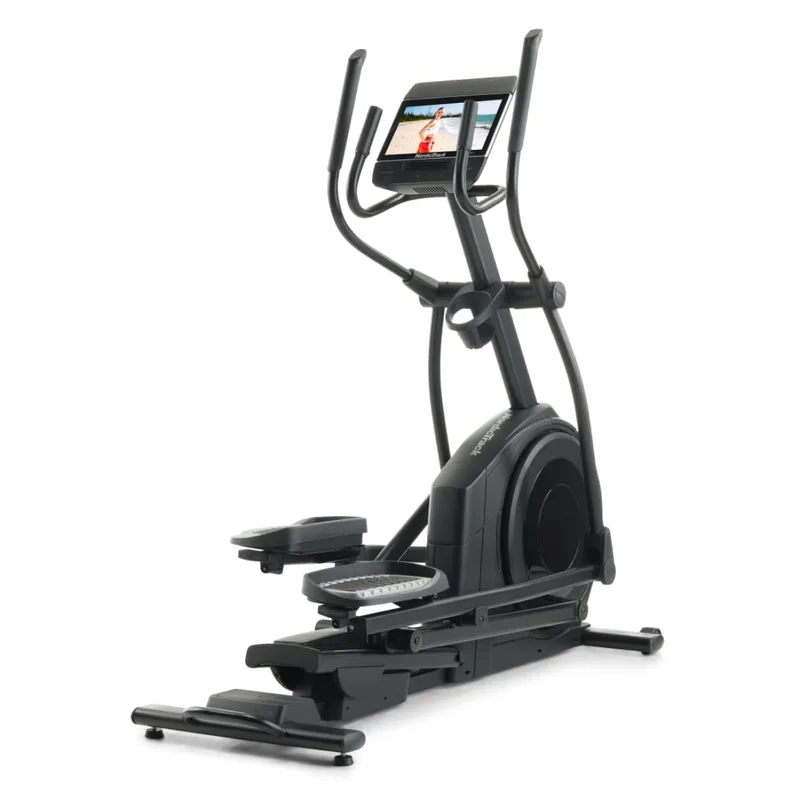
NordicTrack AirGlide 14i
Pros
- 14-inch touchscreen with iFIT delivers interactive terrain-based workouts that auto-adjust resistance and incline in real time
- 32 lb flywheel produces exceptionally smooth, quiet stride — one of the best-feeling front-drive machines in this price range
- Incline and decline capability (-5% to 15%) adds real variety to cardio programming beyond flat-terrain steady-state
- 26 digital resistance levels provide fine-grained control for interval training and progressive cardio
- Oversized, angle-adjustable pedals reduce foot numbness during longer sessions
Cons
- iFIT subscription required for interactive features ($39/month after 30-day trial)
- 300 lb weight capacity is lower than competitors at this price point
- Not sold on Amazon — must purchase direct from NordicTrack
The NordicTrack AirGlide 14i is the most capable home elliptical in this roundup. The combination of a 32 lb front-drive flywheel, automatic stride adjustment, and full incline/decline range produces a workout feel that sits a notch above everything else at this price.
The 14-inch HD touchscreen is large enough to follow workouts without squinting, and the iFIT integration is the deepest of any platform on the market. Workouts filmed on real terrain — from mountain trails to coastal roads — automatically adjust the machine’s resistance and incline in real time as the instructor moves through the course. For buyers who struggle with cardio motivation, this kind of interactive programming solves the problem more effectively than staring at a static screen.
The stride auto-adjustment is worth explaining. As you change incline from flat to 15%, the effective stride length shifts slightly to match the natural bio-mechanics of that angle. This is a technical detail that most manufacturers ignore — NordicTrack built it into the mechanism. In practice, it means the stride never feels awkward at extreme incline settings.
The 300 lb weight capacity is the most meaningful limitation here. At $1,799, buyers expect more. If you’re near that limit, the Sole E35 or Nautilus E618 are better choices structurally.
The iFIT subscription at $39/month adds up — $468/year on top of the machine price. Buyers who won’t use the interactive programming would be better served by the Sole E35 at $200 less with no required subscription.
Schwinn 490 — Best Value
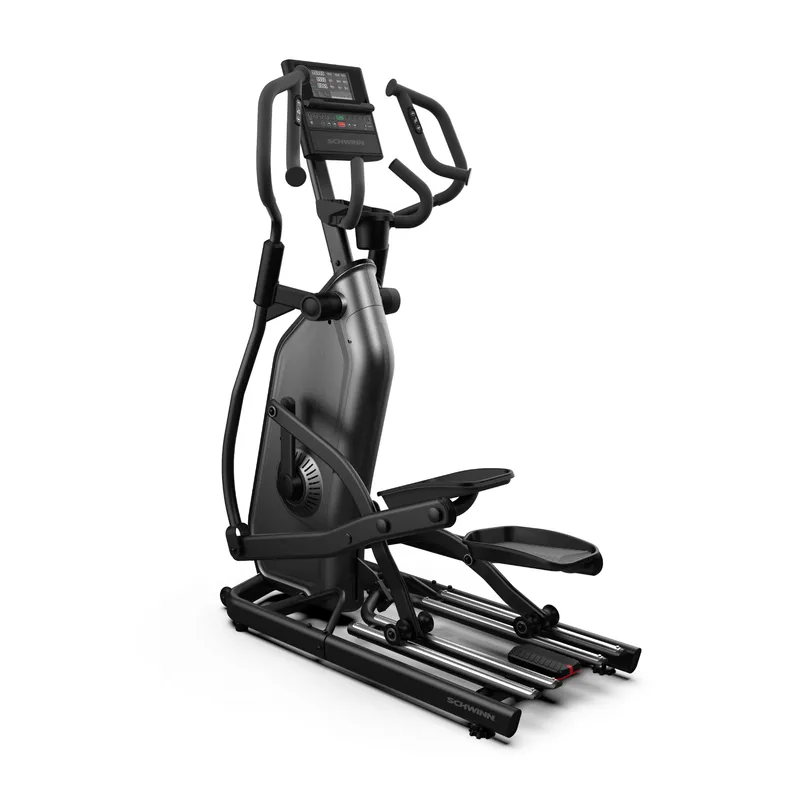
Schwinn 490 Elliptical
Pros
- JRNY adaptive fitness app delivers coach-guided workouts and scenic Explore the World routes without a subscription wall for core features
- 20-inch stride accommodates taller users and produces a natural, full-extension stride pattern
- Motorized incline and decline (-5% to 15%) handles terrain simulation at a competitive price
- 25 resistance levels give more control than most ellipticals in this category
- 187 lb assembled weight makes it significantly easier to move than heavier competitors
Cons
- 7-inch display is small compared to competitors at this price — no touchscreen capability
- 90-day labor warranty is short relative to the competition
- Bluetooth speakers not included — audio requires headphones or an external speaker
The Schwinn 490 is the most balanced elliptical at its price point. The 20-inch stride, motorized incline/decline, 25 resistance levels, and JRNY compatibility cover every feature that matters for a serious home cardio setup — at a price point that’s $500 below the NordicTrack.
The JRNY platform deserves attention. Unlike iFIT, JRNY has a meaningful free tier — Explore the World scenic routes, basic workout tracking, and heart rate monitoring are all available without a subscription. The premium tier at $15/month unlocks trainer-led classes, which is significantly cheaper than iFIT at $39/month. For buyers who want connected fitness without the ongoing cost, Schwinn’s platform makes more financial sense long-term.
The 20-inch stride is the right length for most adults and notably better than the NordicTrack’s auto-adjusting 17.8–18.5 inch range for users who prioritize a full, natural stride. At 187 lbs assembled, the Schwinn 490 is also the lightest machine in this group by a significant margin — easier to move and position in a home gym.
The 7-inch display is the main concession at this price. It’s functional but small, and there’s no touchscreen. Audio requires external speakers or headphones. These are real trade-offs worth considering if you plan to follow streaming workouts — squinting at a 7-inch screen during a 45-minute class gets old.
The 90-day labor warranty is short. Most competitors offer one to two years on labor; 90 days covers almost nothing beyond initial setup defects.
Sole E35 — Best Build Quality
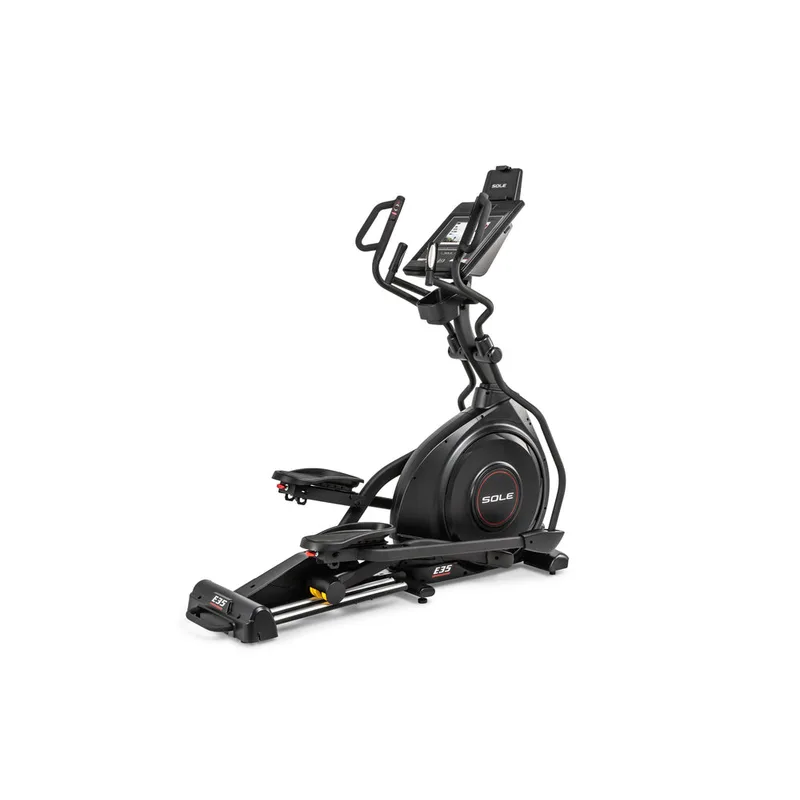
Sole E35 Elliptical
Pros
- Lifetime frame warranty is the strongest coverage available in this price range — backed by a brand with a reputation for honoring it
- 350 lb weight capacity handles a wider range of athletes than most machines in this roundup
- 10.1-inch touchscreen with screen mirroring supports Netflix, Prime Video, and built-in fitness apps without a subscription
- 25 lb flywheel produces a stable, fluid stride at all resistance levels
- Wireless device charger and Bluetooth audio speakers built into the console
Cons
- 10.1-inch screen is adequate but smaller than NordicTrack's 14-inch display
- 20-level incline range only goes up (no decline), unlike NordicTrack and Schwinn
- Larger footprint (70" × 31") requires more dedicated floor space than most competitors
The Sole E35 is built for buyers who want durability over technology. The lifetime frame warranty, 350 lb weight capacity, and 25 lb flywheel represent a structural commitment that most connected fitness brands don’t match. Sole has a strong reputation for honoring warranty claims — a meaningful factor for a machine that costs $1,599.
The 10.1-inch touchscreen with screen mirroring is a practical approach to content: connect your phone or tablet and watch whatever you want from any streaming service. No proprietary platform, no subscription wall, no mandatory monthly cost. The wireless device charger and Bluetooth speakers built into the console add usability without requiring separate accessories.
The 20-level power incline covers a wide training range. The absence of decline (the Sole E35 starts at flat) is a real difference from the NordicTrack and Schwinn — if decline training is on your programming list, this machine doesn’t deliver it.
The footprint (70” × 31”) is large. This machine needs dedicated space; it won’t fit comfortably in a small room. If space is constrained, the Schwinn 490’s more compact 58” × 34” profile or the ProForm Carbon E7’s narrow 25” width are better options.
Now available on Amazon with Prime delivery. Can also order direct from Sole Fitness.
Nautilus E618 — Best for Tall Users
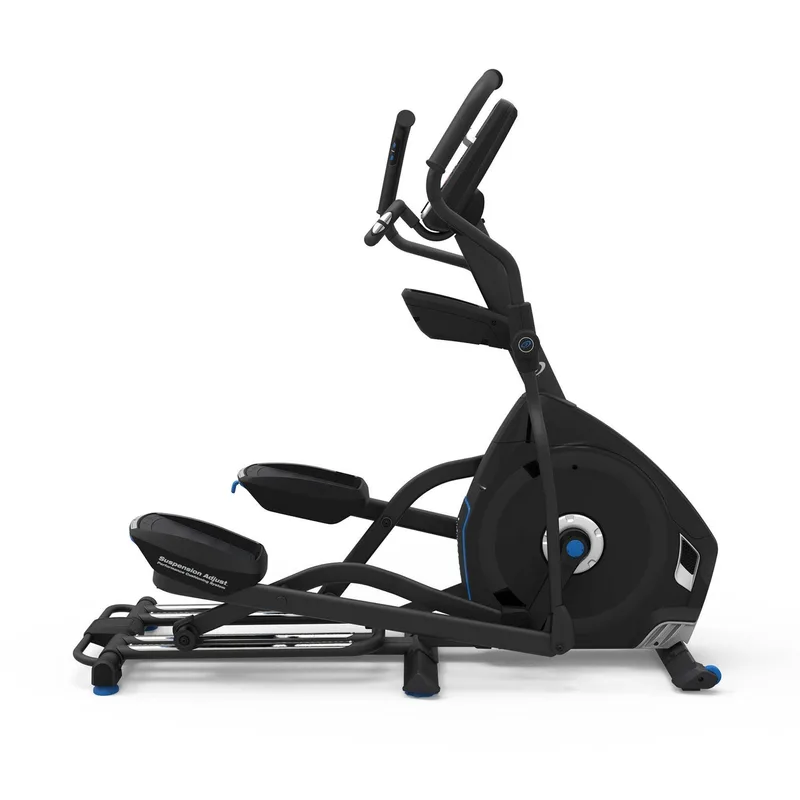
Nautilus E618 Elliptical
Pros
- 22-inch stride is the longest in this roundup — meaningfully better for users over 6 feet tall
- 15-year frame warranty and 5-year parts coverage are best-in-class at this price
- 350 lb weight capacity with a heavier-duty build than the Schwinn at a similar price
- 29 built-in workout programs plus JRNY app compatibility without mandatory subscription costs
- DualTrack console displays two data screens simultaneously for monitoring multiple metrics
Cons
- Dual LCD display lacks touchscreen and streaming capability of competing machines
- Incline range (0–10 degrees, no decline) is limited compared to NordicTrack and Schwinn
- Older display technology feels dated next to the NordicTrack and Sole screens
The Nautilus E618 makes the case for stride length above all else. At 22 inches, it’s the only machine in this roundup that fully accommodates users over six feet tall. The longer stride produces a complete, natural extension through the hip and knee — taller users who’ve felt cramped on 18–20 inch machines will notice the difference immediately.
The warranty is equally compelling. Fifteen years on the frame and five years on parts and electronics puts the E618 in a different tier of long-term reliability commitment. The Sole E35’s lifetime frame warranty gets more marketing attention, but Nautilus’s combined coverage of frame, parts, and electronics is the more comprehensive protection for the actual components that fail.
The DualTrack dual-screen console is functional but dated. It displays two screens of data simultaneously — useful for monitoring heart rate alongside speed and calories — but there’s no streaming capability, no touchscreen, and no connected fitness platform at the level of iFIT or JRNY. The 29 built-in programs provide structure, and the JRNY app adds coach-guided workouts via a phone connection, but users who want a dedicated on-machine screen experience will find this console limiting.
The 0–10 degree incline range is the narrowest in this group. It covers basic terrain simulation but won’t deliver the variety of the NordicTrack or ProForm’s wider ranges.
At $1,299, the E618 offers the best warranty-per-dollar in this roundup. For tall athletes prioritizing stride length and long-term durability over interactive programming, it’s the right pick.
ProForm Carbon E7 — Best Budget
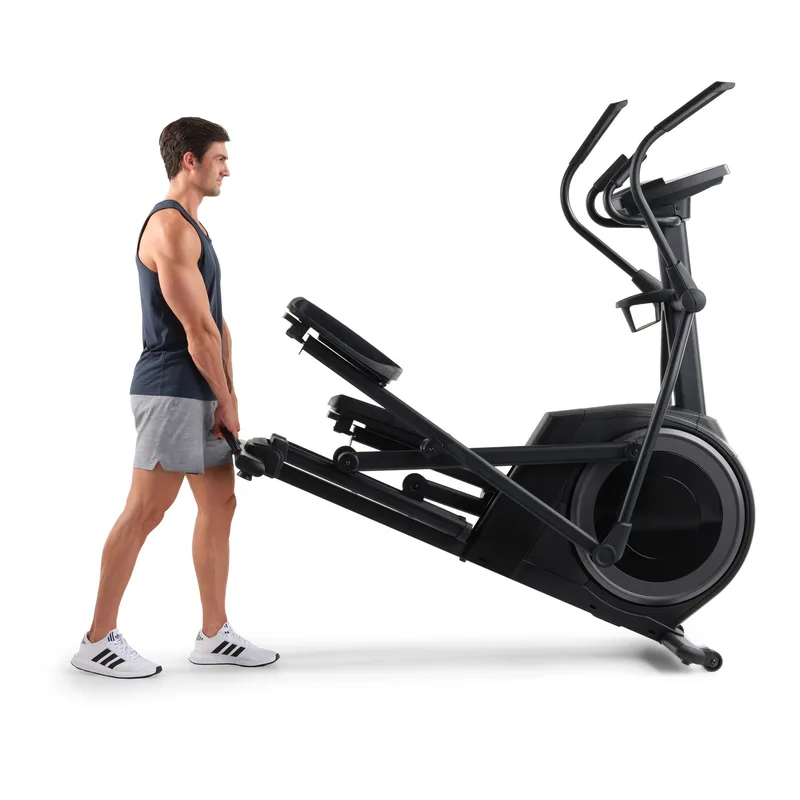
ProForm Carbon E7 Elliptical
Pros
- 0–20 degree power incline range beats the Schwinn and Nautilus for terrain variety at a much lower price
- 7-inch HD touchscreen with iFIT gives access to interactive trainer-led classes at the $899 entry point
- 25 lb inertia-enhanced flywheel delivers smooth resistance across all 24 levels
- Compact footprint (68.5" × 25") fits in smaller spaces than competing machines
- 325 lb weight capacity is solid for a machine at this price
Cons
- iFIT subscription required for interactive content ($39/month after 30-day trial)
- 19-inch stride is shorter than all other machines in this roundup
- 5-year frame warranty is significantly shorter than Nautilus (15 years) and Sole (lifetime)
The ProForm Carbon E7 delivers features at $899 that would have cost $1,500 four years ago. The 7-inch HD touchscreen, 0–20 degree power incline, 24-level SMR resistance, and 25 lb flywheel represent a genuinely capable cardio machine — not a cut-rate option with major compromises.
The 0–20 degree incline range is the broadest in this category (tied with the Sole E35) and better than both the Schwinn and Nautilus for terrain variety. iFIT auto-adjusts the incline during trainer-led workouts, turning this into an interactive experience that costs $700 less than the NordicTrack AirGlide 14i.
The 19-inch stride is the only ergonomic trade-off that matters. For users under 5’10”, it’s completely adequate. Taller users will notice the stride is slightly short at full extension — not uncomfortable, but not ideal. If height is a factor, moving up to the Schwinn 490 or Nautilus E618 is worth the price difference.
The 5-year frame warranty is short relative to the competition. ProForm builds solid machines, but the warranty coverage signals a shorter expected service life than a machine backed by Sole or Nautilus. Factor this into the total cost of ownership: at $899, even a 10-year lifecycle computes well, but warranty service after year 5 is out-of-pocket.
The iFIT subscription cost ($39/month) is the same as on the NordicTrack — so for buyers who intend to use the platform, the $900 price difference buys a larger screen, better flywheel, and decline capability on the AirGlide 14i.
FAQ
What’s the difference between a front-drive and rear-drive elliptical?
Front-drive machines (like the NordicTrack AirGlide 14i) place the flywheel at the front — the motion tends to feel slightly more like a stair-climbing motion, with the body leaning forward slightly. Rear-drive machines place the flywheel behind you — the motion tends to feel more like a running stride. Center-drive machines (less common for home use) split the difference. All three can deliver excellent workouts; the feel preference is personal. Most home ellipticals are rear-drive; the NordicTrack AirGlide 14i’s front-drive design is a distinguishing feature.
How much space does a home elliptical need?
Most ellipticals need a footprint of 5–6 feet long and 2–3 feet wide, plus at least 8 feet of ceiling height and 12–18 inches of clearance around the machine. The Sole E35’s 70” × 31” footprint is the largest in this roundup; the ProForm Carbon E7’s 68.5” × 25” and the NordicTrack AirGlide 14i’s 69” × 25” are both compact widths. Always measure your ceiling height before buying — the stride motion raises your center of gravity by 6–8 inches above the pedal height.
Is an elliptical good for weight loss?
Ellipticals deliver moderate-to-high calorie burn with significantly lower joint impact than running. A 170 lb person burns approximately 450–600 calories per hour at moderate intensity on an elliptical — similar to jogging at 5 mph but without the knee and hip impact. The upper body handles (when used actively) increase total muscle engagement and calorie burn. For consistent, sustainable cardio that doesn’t beat up the joints, ellipticals are one of the most effective options for long-term fat loss programming.
Do home ellipticals require maintenance?
Most home ellipticals require minimal maintenance: occasional cleaning of the console and rails, tightening of bolts every 6–12 months, and lubrication of moving parts per the manufacturer’s schedule (typically annually). Magnetic resistance systems require almost no maintenance compared to friction-based resistance systems. Front-drive machines have slightly more mechanical complexity than rear-drive designs. The biggest maintenance issue on most machines is pedal alignment drift over time — easily corrected per the owner’s manual.
iFIT vs. JRNY: which is better for home use?
Both platforms deliver quality content, but they serve different buyers. iFIT has a larger content library (17,000+ workouts), deeper machine integration (resistance and incline auto-adjust during workouts), and a more polished production quality — but at $39/month it’s the most expensive fitness subscription in this category. JRNY has a solid free tier with scenic routes and basic tracking, and the premium tier at $15/month is significantly cheaper for buyers who want coach-led classes without the full iFIT experience. Buyers who will use the platform daily can justify iFIT; buyers who want occasional guided variety get better value from JRNY.
Conclusion
The NordicTrack AirGlide 14i is the best overall home elliptical for buyers who want the full interactive experience. The 14-inch iFIT touchscreen, 32 lb flywheel, incline and decline capability, and auto-adjusting stride are the best combination of features in this roundup at $1,799.
For most buyers, the Schwinn 490 is the right answer. The 20-inch stride, motorized incline and decline, JRNY app compatibility, and Amazon availability at $1,499 cover every serious cardio need without the iFIT subscription cost.
Tall users should look at the Nautilus E618 first — the 22-inch stride and best-in-class 15-year frame warranty are hard to beat at $1,299.
Budget-conscious buyers who still want connected fitness will find the ProForm Carbon E7 delivers genuine value at $899 — the 0–20 degree incline and iFIT touchscreen at this price point are exceptional.