Recovery has become one of the most active categories in the fitness equipment market. The foam roller market was valued at $300 million in 2026 and is projected to grow at a 7–8% CAGR through 2033, driven by increasing interest in self-myofascial release, sports recovery, and physical therapy crossover into home training. In 2026, the product innovation has split into two clear camps: high-tech vibrating rollers and refined passive rollers with better surface design.
The science has gotten clearer, too. Research published in Scientific Reports found that foam rolling sessions lasting at least 120 seconds produce significantly better post-exertion recovery — the duration matters more than roller firmness. That finding changes how you use these tools, not necessarily which one you buy.
Here are the five best foam rollers and recovery tools for home gyms in 2026, covering every price point from $17 to $199.
Quick Picks
TriggerPoint GRID (13-inch) is the best all-around foam roller — trusted by physical therapists and athletes, the three-zone surface design produces noticeably better tissue release than smooth rollers at a price that makes sense for daily use.
Hyperice Vyper 3 is the best vibrating foam roller — the 34-watt motor delivers real vibration depth, the battery lasts two hours, and it’s TSA-approved for travel. For athletes who foam roll frequently, the vibration makes a measurable difference in warm-up effectiveness.
Amazon Basics 24-inch is the best budget option — a $17 solid-EPP roller that will outlast most cheap alternatives. The smooth surface is appropriate for beginners and for gentle pre-workout mobility work.
RumbleRoller Original is the best for deep tissue work — the firm TPE bump pattern targets muscle adhesions that flat-surface rollers skip over entirely. Not for beginners, but serious athletes swear by it.
Comparison
| Roller | Length | Type | Density | Price |
|---|---|---|---|---|
| TriggerPoint GRID 13” | 13 inches | Multi-density textured | Standard | Unavailable |
| Hyperice Vyper 3 | 12.7 inches | Vibrating | Standard | Unavailable |
| Amazon Basics 24” | 24 inches | Smooth solid | High | Unavailable |
| RumbleRoller Original | 31 inches | Bump textured | Firm | Unavailable |
| TriggerPoint GRID 2.0 | 26 inches | Multi-density textured | Standard | Check price |
Buying Guide: How to Choose a Foam Roller
Surface Texture
Smooth rollers provide broad, even pressure. They’re the right choice for beginners, for general warm-up rolling, and for athletes with acute muscle soreness where aggressive texture would cause more discomfort than release.
Textured rollers — like the TriggerPoint GRID and RumbleRoller — use varying surface patterns to create different pressure points along the same pass. The TriggerPoint’s three-zone design is moderate; the RumbleRoller’s bumps are aggressive. Both deliver more targeted release than a smooth roller, but require some baseline tissue conditioning first.
Who should start with smooth: Anyone new to foam rolling, anyone in acute soreness recovery, and anyone using a roller primarily for pre-workout mobility work.
Who should use textured: Experienced lifters, runners dealing with IT band tightness, athletes with chronic muscle adhesions, and anyone who finds smooth rollers feel ineffective.
Vibrating vs. Passive
Vibrating foam rollers add a motor-powered oscillation to the standard rolling action. The vibration increases blood flow to the tissue and can reduce perceived pain during rolling — which matters when you’re working through a tight IT band or piriformis. The Hyperice Vyper 3 is the category standard at $199.
The functional trade-off is weight and battery management. The Vyper 3 weighs 2.7 lbs versus 1.4 lbs for the TriggerPoint GRID, and requires charging. For home gym use, neither is a dealbreaker. For travel, the TSA-approved battery is useful but the added weight is real.
Verdict: Vibrating rollers are worth the premium for athletes who foam roll daily and prioritize warm-up efficiency. For occasional post-workout rolling, the additional cost over a quality passive roller is hard to justify.
Roller Length
The 13-inch standard is optimized for portability and spot work — quads, calves, IT band, upper back. For full thoracic spine coverage in a single setup, you need at least 24 inches. The TriggerPoint GRID 2.0 at 26 inches and the RumbleRoller at 31 inches both handle full-back rolling without repositioning.
If your gym bag goes with you, a 13-inch roller is the practical choice. If the roller lives at home, the longer options produce a better rolling experience for everything from mid-back to neck extensions.
Foam Density
Foam rollers are generally rated soft, medium, or firm. Most quality rollers target medium to firm density. Very soft rollers compress under body weight and lose their recovery effectiveness within a few months.
The Amazon Basics uses high-density EPP foam that resists compression. The TriggerPoint rollers use EVA over a rigid hollow core — the foam layer stays consistent while the core prevents compression altogether. The RumbleRoller uses solid construction with TPE bumps that maintain shape through years of use.
Avoid: Single-layer polyethylene foam rollers under $10. They compress flat within weeks of daily use.
Detailed Reviews
TriggerPoint GRID Foam Roller (13-inch) — Editor Pick
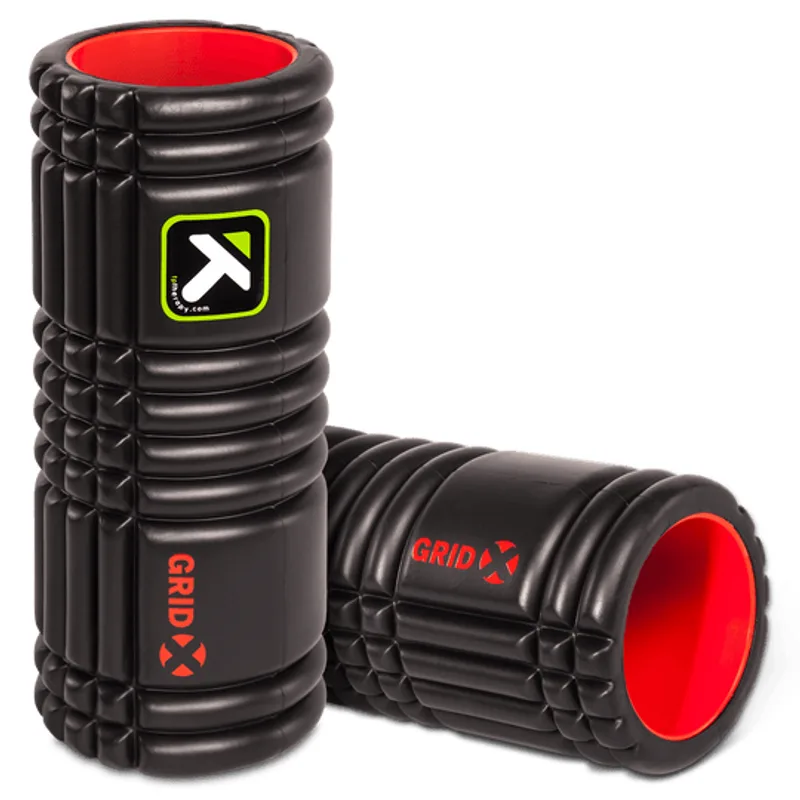
TriggerPoint GRID Foam Roller (13-inch)
Pros
- Three-zone surface mimics a massage therapist's hands more effectively than smooth rollers
- Hollow rigid core maintains shape and integrity through years of daily use
- 500 lb weight capacity handles every athlete regardless of size
- Compact 13-inch length stores easily in a gym bag or locker
- Free online video library covers every rolling technique
Cons
- 13-inch length too short for rolling the full back in a single pass
- Standard density may feel too soft for athletes accustomed to very firm rollers
- No vibration feature at this price point
The TriggerPoint GRID has been the gold standard in foam rolling since it introduced the multi-density surface concept. Physical therapists, strength coaches, and athletic trainers consistently recommend it — not because of brand loyalty, but because the three-zone Distrodensity surface (firm squares, tubular ridges, flat panels) genuinely performs better than a smooth cylinder.
The hollow rigid ABS core is the engineering element that separates TriggerPoint from cheap alternatives. Most budget rollers use solid foam that compresses under body weight over time. The GRID’s core never compresses — the foam wrapping maintains consistent surface pressure year after year.
At 13 inches, this is the go-to travel and spot-work roller. It fits in most gym bags and handles quads, calves, IT band, upper back, thoracic spine, lats, and glutes without an issue. The one limitation is full-back rolling — you need to reposition twice to cover the entire spine. Athletes who primarily target one muscle group per session won’t notice this.
The free online instructional video library from TriggerPoint demonstrates technique for every major muscle group — a genuinely useful resource that most competitors don’t include.
At $35, the TriggerPoint GRID is the most cost-effective quality foam roller available. It will outlast every cheap alternative you’ve tried.
Hyperice Vyper 3 — Best Vibrating
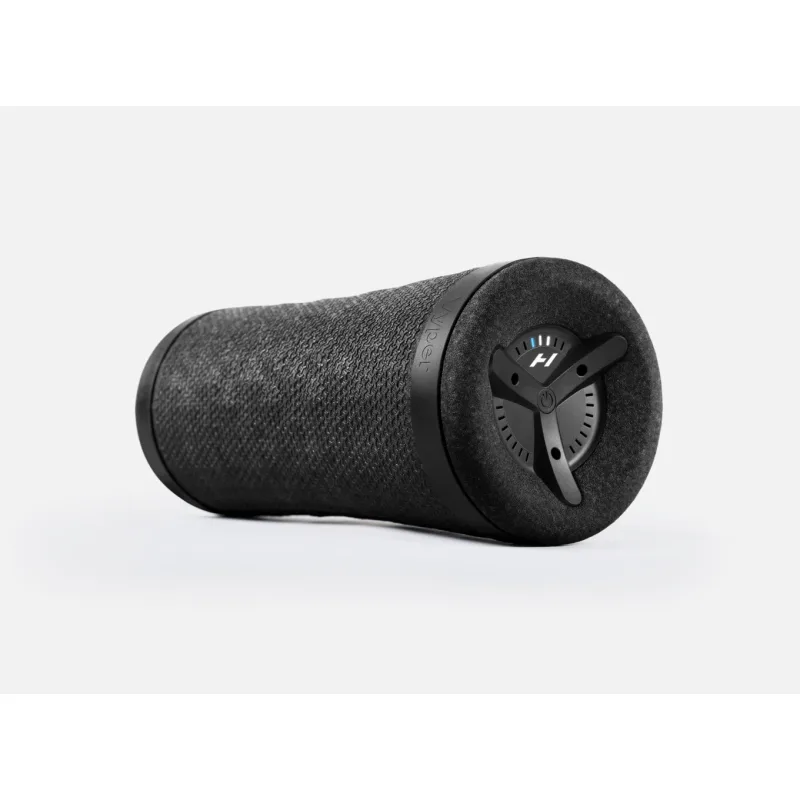
Hyperice Vyper 3
Pros
- 34-watt motor delivers meaningful vibration that penetrates through dense muscle tissue
- Three-speed control lets you progress from warm-up (low) to deep release (high)
- TSA-approved lithium-ion battery — takes this on travel without issues
- Rubber stabilization bands prevent lateral rolling during use
- Eco-friendly contoured exterior is more comfortable than standard cylindrical rollers
Cons
- $199 is premium pricing compared to passive rollers
- 12.7-inch length is shorter than most standard 13-inch foam rollers
- Battery adds weight — 2.7 lbs is nearly double a standard TriggerPoint GRID
The Vyper 3 is Hyperice’s third-generation vibrating foam roller, and it represents a meaningful refinement over the previous version. The 34-watt motor delivers higher torque while running quieter than the Vyper 2, and the contoured exterior shape is noticeably more ergonomic than a standard cylinder under weight-bearing positions.
The three vibration speeds map cleanly to use cases: low speed for general warm-up rolling, medium for moderate tissue release, high for targeting stubborn adhesions and post-workout recovery. The rubber stabilization bands on the ends prevent the roller from drifting laterally on hard floors — a small detail that becomes obvious the first time you use a vibrating roller without them.
Battery life of two hours is accurate for mixed-speed use. For a pre-workout warm-up (10 minutes) and post-workout cool-down (10 minutes), you’re looking at a week of daily use per charge. The USB-C charging is a genuine convenience upgrade from the proprietary charger on the Vyper 2.
For athletes who foam roll consistently, the vibration advantage is real. The neural response to vibration reduces perceived pain during rolling — which means you apply more pressure on tight spots, which means you get more tissue release. The $199 price is a real premium over passive rollers, but the functional difference is measurable.
Amazon Basics High Density Foam Roller (24-inch) — Best Budget
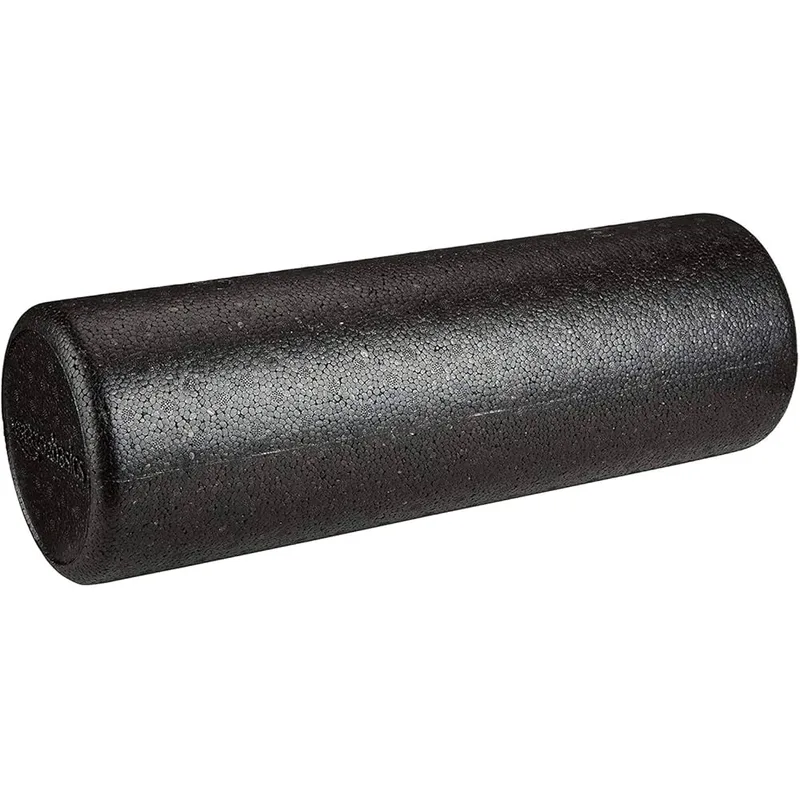
Amazon Basics High Density Foam Roller (24-inch)
Pros
- $17 price makes this accessible for complete beginners
- 24-inch length covers the full back, quads, and hamstrings in one pass
- Solid EPP foam construction resists compression over time better than cheap hollow-core budget rollers
- Smooth surface is gentler on sensitive muscles and beginners
- Available in multiple sizes (12, 18, 24, 36 inch)
Cons
- Smooth surface lacks the texture needed for targeted knot release
- Solid-core construction makes it slightly heavier than hollow-core alternatives
- No instructional resources included
The Amazon Basics foam roller is exactly what it claims to be: a straightforward, high-density EPP foam roller at a price that removes any barrier to entry. At $17, this is the right answer for beginners, for people who aren’t sure if foam rolling will be part of their regular routine, and for athletes who want a second roller for travel without caring about the travel model.
The 24-inch length is actually a genuine advantage over the 13-inch TriggerPoint for back rolling specifically. You can set up in a full thoracic extension and roll the entire back in one pass. For athletes focusing on back mobility and general muscle warm-up, the longer length produces a better session with less repositioning.
The high-density EPP foam (not cheap polyethylene) means this roller maintains its shape under daily use. Compared to typical $10 rollers at this price tier, the Amazon Basics holds up significantly better over months of regular use.
The limitation is the smooth surface. Smooth foam rolling delivers broad tissue pressure without the targeted release of textured alternatives. For beginners learning body positioning and rolling technique, that’s appropriate — smooth surface allows you to focus on the movement without managing texture intensity simultaneously.
If you’re buying a first foam roller or a budget backup, start here.
RumbleRoller Original Full Size (31-inch) — Best Deep Tissue
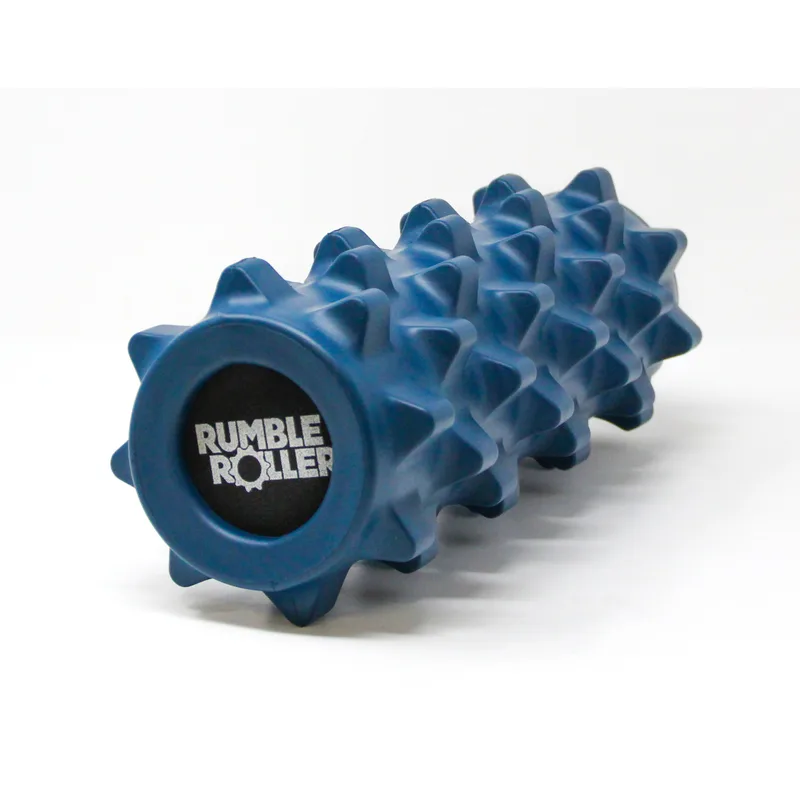
RumbleRoller Original Full Size (31-inch)
Pros
- Aggressive TPE bump pattern penetrates deep muscle layers that flat-surface rollers miss
- 31-inch length covers the full back, IT band, and quads without repositioning
- Bumps maintain shape and firmness through heavy use — no flattening over time
- Original Blue density is firm but manageable; Black version available for maximum intensity
- Effective on thoracic spine mobility work between the bumps
Cons
- Firm bump surface too aggressive for beginners or athletes with acute soreness
- $75 is higher than smooth-surface alternatives with similar basic function
- 250 lb weight capacity is lower than competitors in this roundup
The RumbleRoller is not a beginner tool. The firm TPE bumps that project from the surface create concentrated pressure points that penetrate muscle layers that a smooth roller or even the TriggerPoint GRID can’t access. If you’ve been foam rolling for years and the standard options feel ineffective, the RumbleRoller is what you’re missing.
The 31-inch full-size format covers every major muscle group in a single setup. For thoracic spine work specifically, the RumbleRoller’s bump pattern creates separation between vertebrae that helps mobilize the mid-back in ways passive flat-surface rolling doesn’t. Athletes dealing with chronic upper back tightness from desk work or overhead pressing consistently report the RumbleRoller delivers noticeable relief where other rollers don’t.
The two density options matter: the Original Blue is firm with moderate bump pressure — appropriate for experienced foam rollers making the transition from textured alternatives. The Extra Firm Black version is for athletes with years of aggressive tissue work and high pain tolerance.
One real limitation is the 250 lb weight capacity — lower than the TriggerPoint options rated to 500 lbs. Heavier athletes should note this before purchasing.
At $75 for the full 31-inch version, the RumbleRoller costs more than the TriggerPoint GRID but delivers significantly more aggressive myofascial work. For the right athlete, it’s the best investment in this roundup.
TriggerPoint GRID 2.0 Foam Roller (26-inch) — Best Full-Body
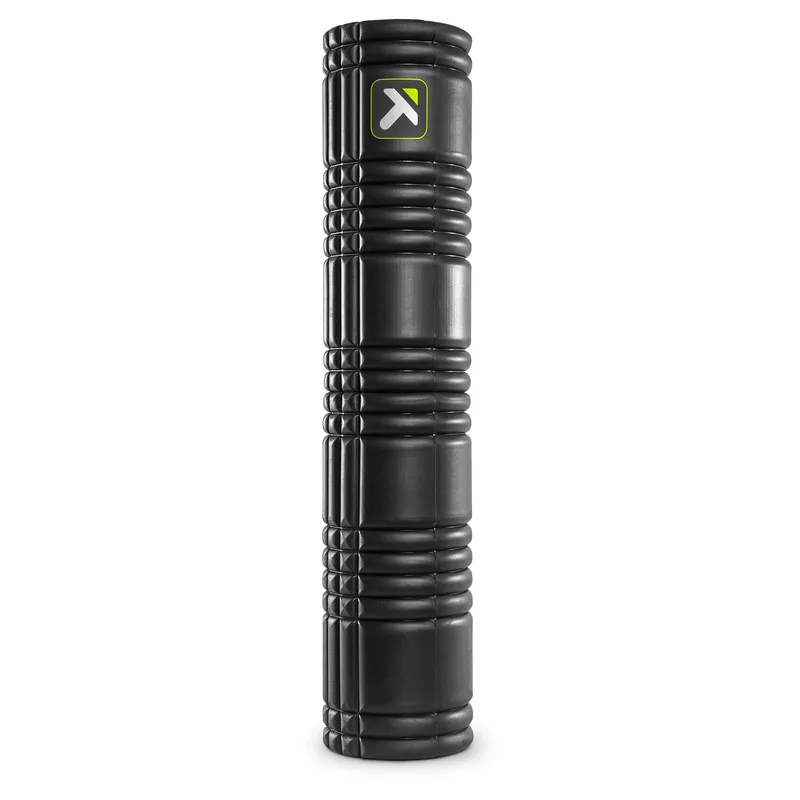
TriggerPoint GRID 2.0 Foam Roller (26-inch)
Pros
- 26-inch length is double the standard GRID — enables full-back rolling in one setup
- Same Distrodensity three-zone surface as the original GRID
- 500 lb weight capacity identical to the shorter model
- Wider stable base for thoracic extension and chest-opening mobility work
- Includes the same free online instructional video library
Cons
- Harder to transport than the 13-inch version — too long for most gym bags
- $55 is $20 more than the original GRID for the same surface technology
- Same standard density may still feel soft for high-intensity athletes
The GRID 2.0 takes everything that works about the original GRID and doubles the length. Same three-zone Distrodensity surface, same 500 lb weight-bearing capacity, same rigid hollow ABS core — but at 26 inches, this roller covers the full thoracic spine, lumbar, and hips in a single setup.
For back-focused rolling sessions, the GRID 2.0 is the superior version. Lying across the 26-inch roller in a T-spine extension position and rolling from lumbar to upper thoracic spine without repositioning is a notably more effective session than making two passes with the 13-inch version.
The trade-off is portability. At 26 inches, the GRID 2.0 doesn’t fit in a standard gym bag. It’s a home gym roller — and at home, the extra length is always useful. Athletes who primarily train at home and roll daily will notice the improvement over the shorter version.
At $55, it’s $20 more than the original GRID for the same surface technology in a longer format. The upgrade makes sense for any athlete focused on thoracic mobility, full IT band work, or full-back rolling as a daily routine.
FAQ
How long should I foam roll?
For post-workout recovery, 10–20 minutes of total rolling time is effective. Target each major muscle group for 60–120 seconds per side. Research supports at least 120 seconds per area for measurable recovery benefits — shorter sessions provide less mechanical benefit to tissue.
Should I foam roll before or after training?
Both, for different reasons. Pre-workout rolling (2–5 minutes, moderate pressure) improves tissue blood flow and helps address mobility restrictions before loading. Post-workout rolling (10–20 minutes, more thorough) addresses soreness and begins the recovery process. The post-workout session produces the most measurable recovery benefit.
Is a vibrating foam roller worth it?
For athletes who foam roll every day, yes. The vibration reduces perceived discomfort during rolling — which typically means you apply more consistent pressure and achieve better tissue release. The $199 premium over a $35 passive roller is harder to justify for occasional or casual users.
Can foam rolling cause injury?
Incorrect technique is the most common cause of foam rolling issues. Rolling directly on joints (knees, lower lumbar spine, neck) rather than the surrounding muscle tissue can cause problems. Roll muscle bellies — not joints. For acute injuries or significant pain, consult a physical therapist before starting a rolling routine.
What’s the difference between a foam roller and a massage gun?
Foam rollers apply broad, sustained pressure as you roll across tissue — effective for larger muscle groups (quads, hamstrings, IT band, upper back). Massage guns apply concentrated percussive impact to a smaller area — effective for pinpoint muscle knots and post-workout soreness in specific locations. Both have a place in a recovery toolkit; they’re complementary, not interchangeable.
Conclusion
The TriggerPoint GRID (13-inch) is the best foam roller for most home gym athletes. The multi-density surface outperforms smooth alternatives, the rigid core ensures years of consistent use, and $35 is a fraction of what comparable quality costs elsewhere.
For athletes who foam roll daily and prioritize warm-up efficiency, the Hyperice Vyper 3 justifies its $199 price with a 34-watt motor and two-hour battery that deliver real performance advantages over passive alternatives.
Beginners should start with the Amazon Basics 24-inch at $17. Get consistent with the habit before investing in a more specialized tool.
Athletes with chronic tightness who find standard rollers ineffective should try the RumbleRoller — the aggressive texture does things that flat-surface rollers simply can’t.