Gym flooring is the foundation that protects equipment, reduces noise, and prevents damage to the subfloor underneath. Dropping a loaded barbell on bare concrete cracks the concrete, damages the barbell, and sends shock waves through the house. Even without heavy lifting, a proper gym floor provides traction during squats, cushion during standing exercises, and a clear boundary that defines the training space.
The home gym flooring market ranges from $1 to $8+ per square foot. Here are the five best options for 2026, covering every budget and use case.
Quick Picks
Horse stall mats from a farm supply store remain the best value in gym flooring. At roughly $2 per square foot for 3/4-inch vulcanized rubber, nothing else comes close on price-to-performance. They handle deadlifts, Olympic lifts, and decades of heavy use.
Rubber-Cal Elephant Bark is the best rolled rubber option for lifters who want seamless coverage that’s easy to clean and install.
Prosource Puzzle Mats at $35 for 24 square feet work for yoga, bodyweight training, and light dumbbell work where heavy impact protection isn’t needed.
Buying Guide: Choosing the Right Gym Floor
Thickness Matters
Flooring thickness directly determines impact absorption. 3/4 inch (19mm) is the standard for any gym with barbell training — thick enough to protect the floor and equipment from dropped weights. 3/8 to 1/2 inch (10-13mm) works for machine-based training, dumbbells, and general fitness. 1/4 inch (6mm) or EVA foam is for bodyweight work only.
Material Types
Vulcanized rubber is the gold standard — dense, durable, and shock-absorbing. It’s used in commercial gyms and lasts 20+ years. Recycled rubber (crumb rubber pressed into tiles or rolls) is more affordable and adequate for most home gyms. EVA foam is the lightest and cheapest but compresses permanently under heavy loads and doesn’t protect subfloors from impacts.
Installation Format
Stall mats lay flat on the floor with no fastening — they’re heavy enough to stay put. Rolled rubber covers large areas with minimal seams but may need adhesive on smooth surfaces. Interlocking tiles snap together for easy installation and reconfiguration but seams can separate under shifting equipment.
Smell Factor
New rubber flooring smells. Stall mats are the worst offenders — the off-gassing period lasts 2-6 weeks depending on ventilation. Purpose-made gym tiles (Regupol, IncStores) undergo additional processing that significantly reduces odor. If the gym is in a living space rather than a garage, low-odor options are worth the premium.
Coverage Planning
Measure the training area and add 10% for cuts and waste. A typical home gym platform (8x8 feet) needs 64 square feet. A full garage gym (20x20 feet) needs 400 square feet. Buying extra is cheaper than reordering — shipping costs on rubber are significant due to weight.
Detailed Reviews
Horse Stall Mats — Editor’s Pick
Horse Stall Mats (4x6 ft, 3/4 inch)
Pros
- Best price per square foot for genuine rubber flooring
- 3/4 inch thickness absorbs deadlift drops and heavy impacts
- Virtually indestructible — lasts decades
Cons
- Strong rubber smell that takes weeks to off-gas
- Very heavy at ~100 lbs per mat — hard to transport alone
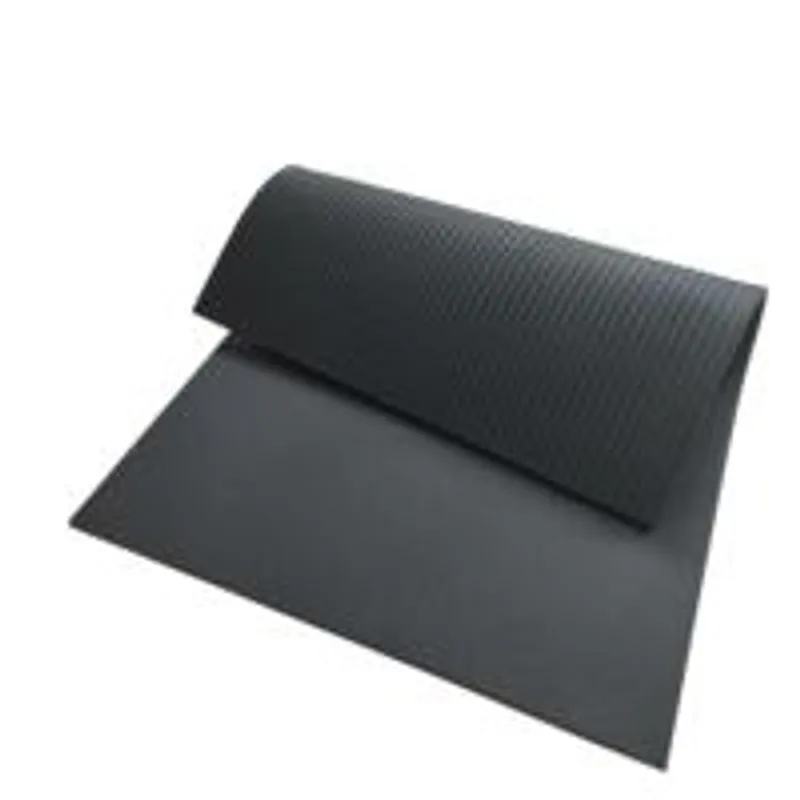
Horse stall mats from farm supply stores (Tractor Supply, Rural King) are the most popular gym flooring choice in the home gym community, and for good reason. Each 4x6 foot mat is 3/4-inch thick vulcanized rubber that weighs approximately 100 lbs. At $45-$55 per mat ($1.90-$2.30 per square foot), nothing matches the value.
Durability is virtually unlimited for gym use — these mats are designed for 1,200 lb horses standing on them for years. Deadlift drops, Olympic lifts, and decades of foot traffic won’t damage them. They lay flat on concrete without adhesive and stay put through sheer weight.
The downsides are the smell and the weight. New stall mats have a strong rubber odor that takes 2-6 weeks to dissipate in a ventilated space (longer in enclosed basements). Each mat requires significant effort to transport and position — plan on two people. Some users clean mats with soap and water and let them air out in the sun for a few days before bringing them inside.
For garage gyms with barbell training, stall mats are the clear winner. The r/homegym community overwhelmingly recommends them as the first flooring purchase for any new home gym.
Rubber-Cal Elephant Bark — Best Rolled Option
Rubber-Cal Elephant Bark Flooring
Pros
- Roll format means no seams where dirt collects
- Easy to cut to fit any room shape
- Recycled rubber is environmentally friendly
Cons
- 3/8 inch is thinner — less impact protection for dropping weights
- Requires flat, clean subfloor for proper adhesion
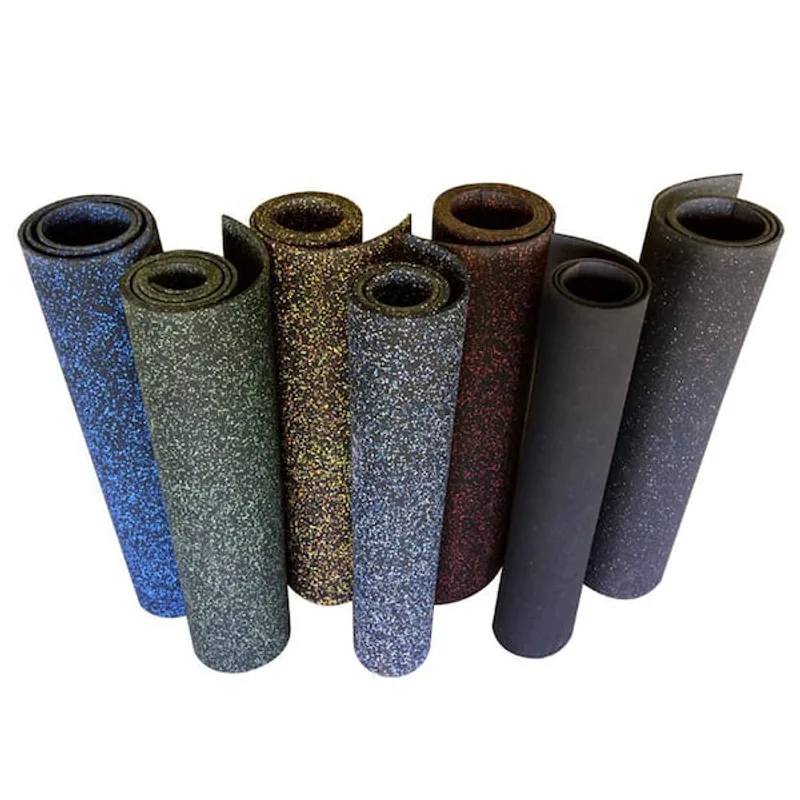
Rubber-Cal Elephant Bark rolls provide seamless coverage in 4x10 foot sections. The rolled format eliminates the gaps between tiles or mats where dirt, chalk, and sweat collect. For lifters who value easy cleaning and a clean visual aesthetic, rolled rubber is the preferred format.
At 3/8 inch thick, Elephant Bark is thinner than stall mats and provides less impact absorption for dropped barbells. However, it’s adequate for controlled lifts, dumbbell training, and machine-based work. The recycled rubber material is dense enough to protect both equipment and the subfloor from normal training impacts.
Installation involves unrolling on a flat surface and cutting to fit with a utility knife. On smooth surfaces (sealed concrete, hardwood), double-sided tape or rubber adhesive prevents shifting. On textured concrete, the weight and friction of the rubber is usually sufficient.
At $3.20 per square foot, Elephant Bark costs more than stall mats but is lighter, easier to handle, and has a notably less intense smell.
Prosource Fit Puzzle Exercise Mat — Best Budget
Prosource Fit Puzzle Exercise Mat
Pros
- Cheapest gym flooring option available
- Lightweight and easy to install or remove
- Good for bodyweight and light dumbbell work
Cons
- Compresses under heavy weight — not suitable for racks or heavy lifting
- Tiles shift over time without securing edges
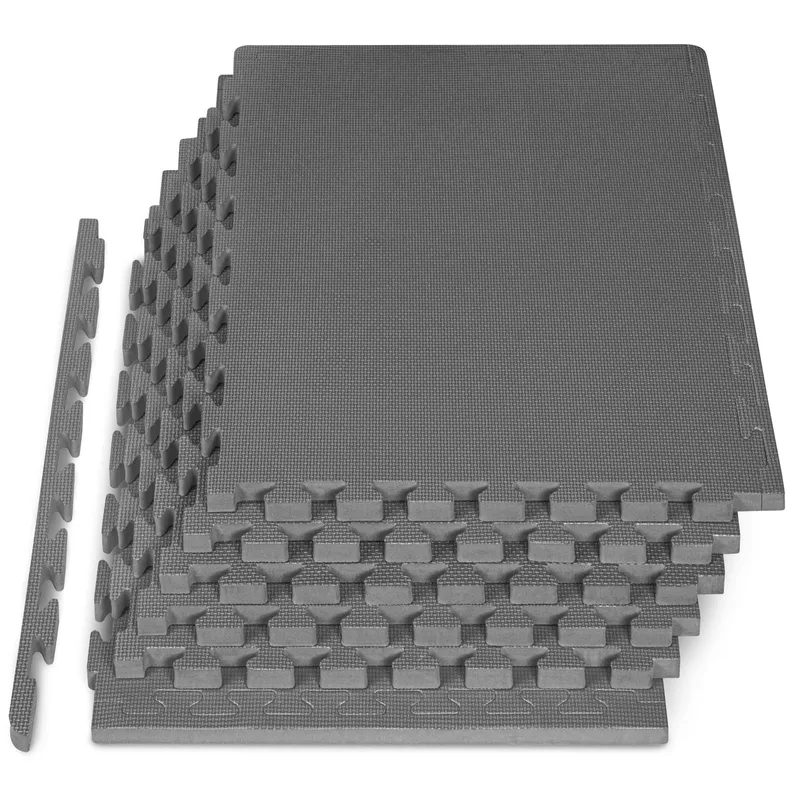
The Prosource puzzle mat system covers 24 square feet for $35, making it the cheapest gym flooring available. The 1/2-inch EVA foam tiles interlock and install in minutes with no tools or adhesive. For bodyweight training, yoga, stretching, and light dumbbell work, these mats provide adequate cushion and floor protection.
The critical limitation is load-bearing capacity. EVA foam compresses permanently under heavy weight — placing a power rack or loaded barbell storage on foam tiles creates permanent depressions. These mats are not appropriate for barbell training, heavy lifting, or areas under gym equipment.
For designated stretching zones, cardio machine pads, or home gyms focused on bodyweight and light resistance training, Prosource mats are perfectly functional. They’re also easy to remove and store if the gym space serves dual purposes.
IncStores Rubber Interlocking Tiles — Best for Easy Install
IncStores Rubber Interlocking Tiles
Pros
- Interlocking design makes installation straightforward
- Attractive color fleck options beyond plain black
- Good balance of price and durability
Cons
- 8mm thickness limits heavy impact protection
- Seams between tiles can separate under heavy equipment
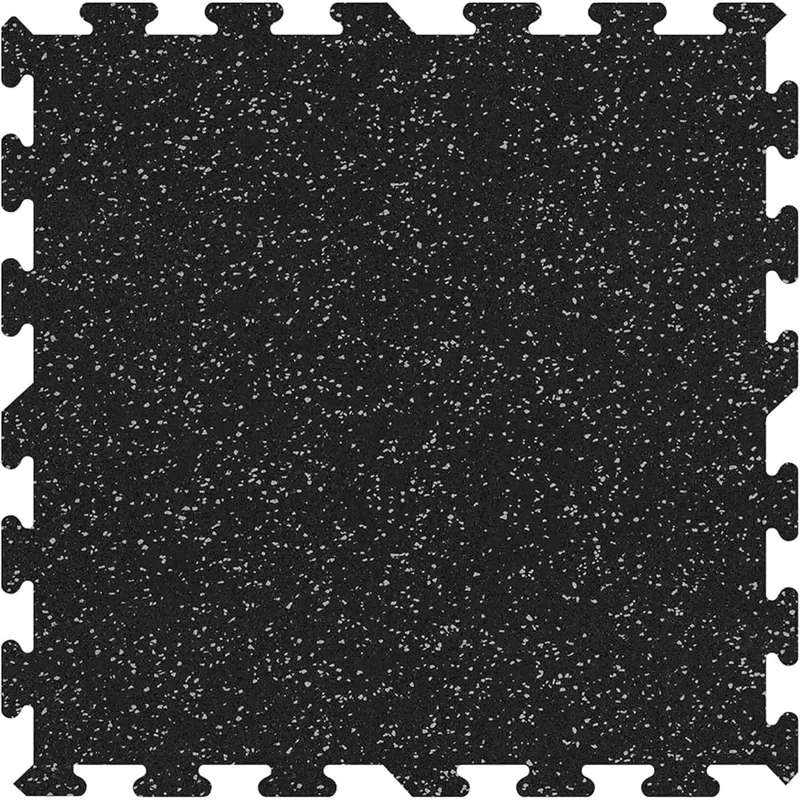
IncStores tiles combine genuine rubber construction with an interlocking design that snaps together like puzzle pieces. The result is a professional-looking gym floor that installs quickly and can be reconfigured if the gym layout changes.
The color fleck options (blue, red, gray, green mixed into black rubber) add visual appeal that plain black stall mats lack. At 8mm thick, these tiles handle dumbbell and machine training well. For Olympic lifting and heavy deadlift drops, they benefit from doubling up or placing stall mats underneath the platform area.
Seam integrity is the main concern. Under very heavy equipment or during lateral movements, tiles can shift and separate at the interlocking edges. Applying rubber adhesive to perimeter tiles and high-traffic seams prevents this issue.
| Spec | Horse Stall Mats (4x6 ft, 3/4 inch) | Rubber-Cal Elephant Bark Flooring | Prosource Fit Puzzle Exercise Mat | IncStores Rubber Interlocking Tiles |
|---|---|---|---|---|
| Rating | 9.2/10 | 8.8/10 | 8.0/10 | 8.6/10 |
| Price | Check price | Check price | $26.99as of Oct 18, 2026 | Check price |
| Material | Vulcanized rubber | Recycled rubber | EVA foam | Recycled rubber with EPDM flecks |
| Thickness | 3/4 inch | 3/8 inch | 1/2 inch | 8mm |
| Size | 4 x 6 feet per mat | 4 x 10 ft roll | — | 2 x 2 ft per tile |
| Weight | ~100 lbs per mat | 55 lbs per roll | 5 lbs total | — |
| Surface | Pebble or diamond pattern | Smooth | Textured | Interlocking edges |
| Coverage | — | — | 24 sq ft (6 tiles) | 20 sq ft per pack |
| Check Price → | Check Price → | Check Price → | Check Price → |
Prices change daily — tap Check Price for the current Amazon price. Numbers shown were verified on the "as of" date.
Frequently Asked Questions
Can I use horse stall mats in my basement gym?
Horse stall mats work in basements but the off-gassing odor is a bigger concern in enclosed spaces with limited ventilation. Allow 4-8 weeks for the smell to dissipate, or choose low-odor purpose-made gym tiles (IncStores, Regupol) for basement installations.
How thick should home gym flooring be?
For barbell training with potential drops: 3/4 inch (19mm) minimum. For dumbbell and machine work: 3/8 inch (10mm) is adequate. For bodyweight and yoga: any thickness works. When in doubt, go thicker — it protects both the floor and the equipment.
Do I need to put anything under rubber gym flooring?
On concrete, rubber flooring goes directly on the slab. On hardwood or finished floors, place a moisture barrier (plastic sheeting) underneath to prevent trapped moisture from damaging the subfloor. Rubber flooring should never go directly on carpet — it traps moisture and creates instability.
How do I clean rubber gym flooring?
Sweep or vacuum regularly, then mop with warm water and a mild detergent. Avoid harsh chemicals, bleach, or abrasive cleaners that can degrade rubber. For chalk residue, a stiff-bristle broom followed by damp mopping is effective.
The Verdict
Horse stall mats are the undisputed best value for any home gym with barbell training — $2 per square foot for flooring that lasts decades. For indoor gyms where odor matters, Regupol Aktiv provides commercial-grade quality without the stall-mat smell. And for light training or designated stretching areas, Prosource puzzle mats at $35 for 24 square feet get the job done without any investment risk.