Jump rope has had a sustained resurgence in home gym programming. CrossFit competitions in 2025 and 2026 have expanded jump rope events beyond standard double unders to include heavy rope double unders and crossover variations, driving demand for both high-performance speed ropes and weighted rope options. At the same time, HIIT athletes have pushed the jump rope market toward smarter, more structured training tools — the Crossrope AMP 2.0 with Bluetooth tracking being the clearest example of that shift.
This roundup covers five of the best jump ropes for fitness in 2026, ranging from $8 to $280. Each fills a specific role: the WOD Nation Attack for value-focused athletes who want both speed and weighted cables, the Crossrope Get Lean for weighted rope training, the Elite Jumps Surge 3.0 for pure double under performance, the DEGOL for beginners and general cardio, and the Crossrope AMP 2.0 for athletes who want Bluetooth tracking built into the hardware.
Quick Picks
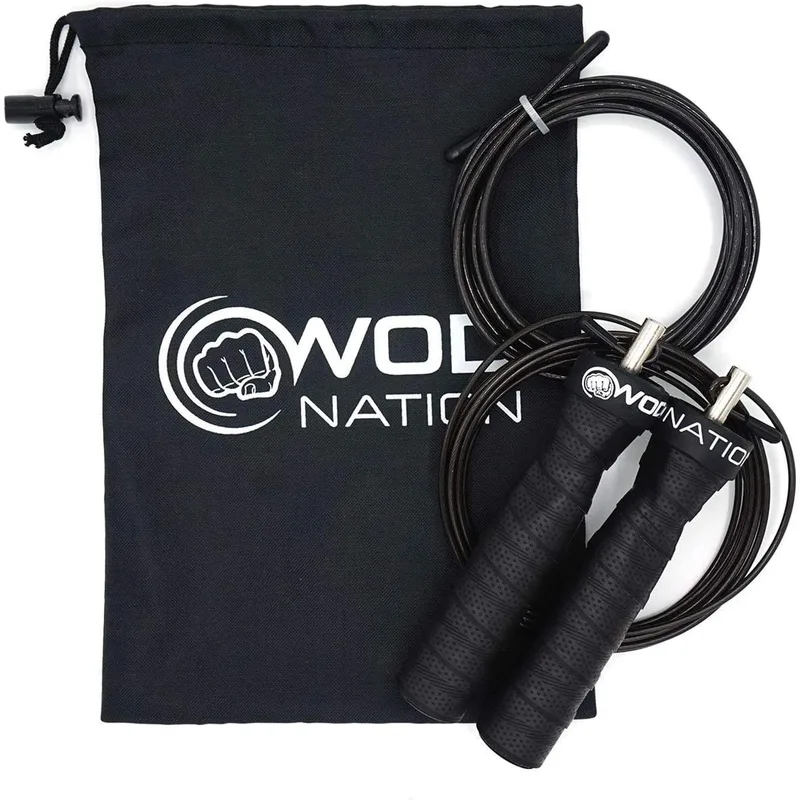
WOD Nation Attack Speed Jump Rope is the best overall pick — two cables, 4-bearing rotation, and sub-$22 pricing. The Editor Pick for anyone who doesn’t know which rope they need yet.
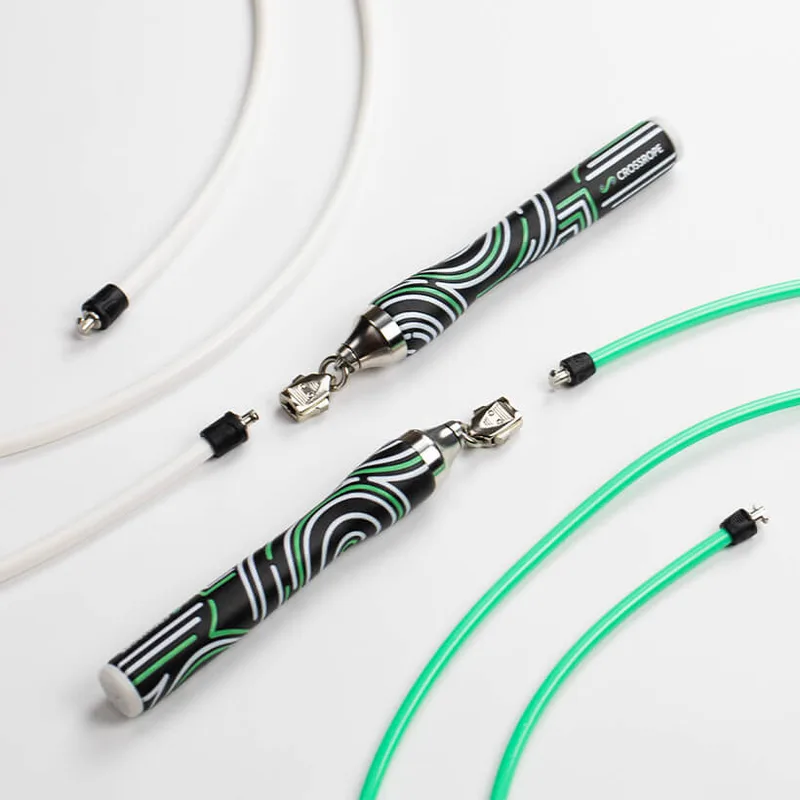
Crossrope Get Lean Set is the best weighted jump rope — interchangeable 1/4 lb and 1/2 lb ropes, lifetime handle warranty, and any-surface durability at $58–$72.
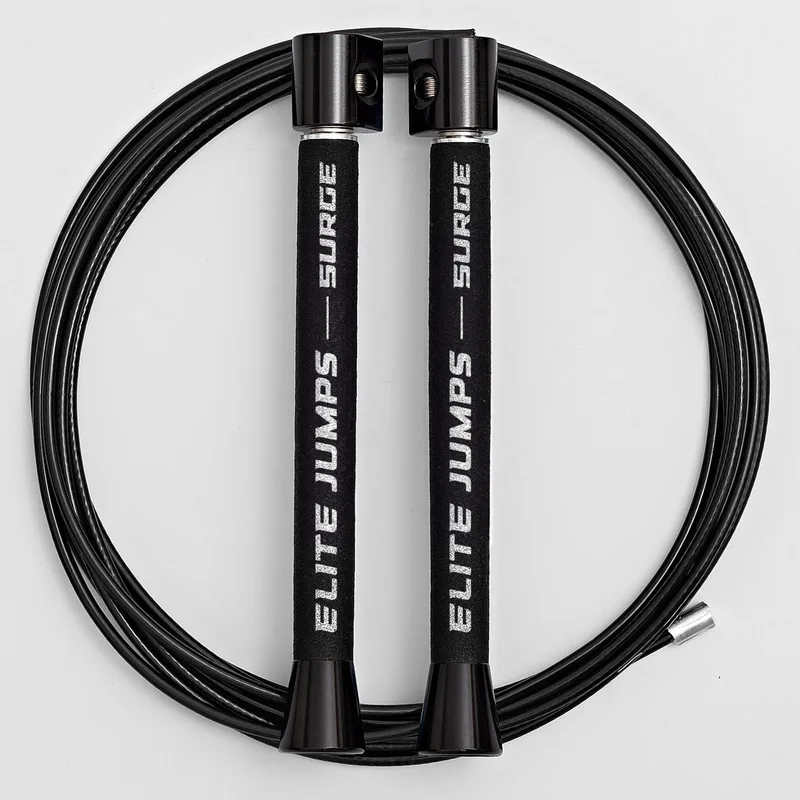
Elite Jumps Surge 3.0 is the best rope for CrossFit double unders — 1 oz aluminum handles, dual ball bearings, and a self-adjusting cable built for maximum RPM.
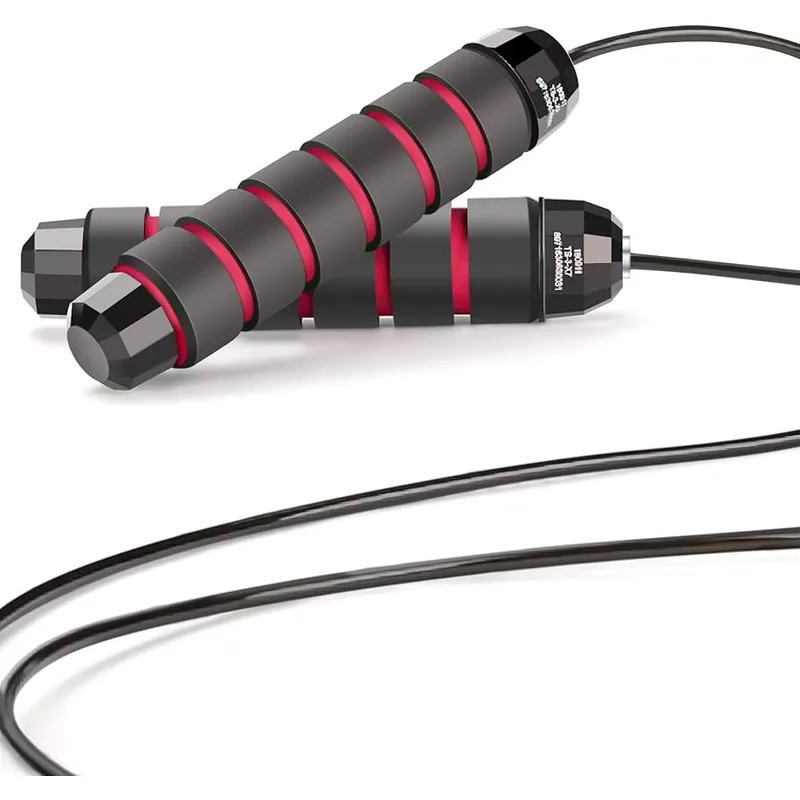
DEGOL Skipping Rope is the best budget pick — memory foam handles, ball-bearing rotation, and $8–$13 pricing for general cardio and HIIT work.
Crossrope AMP 2.0 is the best smart rope — Bluetooth tracking, three rope weights, and a structured training app for athletes who want guided jump rope programming.
Comparison
| Rope | Type | Cable | Best For | Price |
|---|---|---|---|---|
| WOD Nation Attack | Dual-cable speed + weighted | 2.2mm + 3.3mm steel | All-around value | Check price |
| Crossrope Get Lean | Weighted interchangeable | 1/4 lb + 1/2 lb | Weighted cardio | $129.00 as of Oct 18, 2026 |
| Elite Jumps Surge 3.0 | Competition speed | 1 oz aluminum handles | Double unders | Check price |
| DEGOL Skipping Rope | General fitness | PVC braided steel | Beginners, HIIT | Unavailable |
| Crossrope AMP 2.0 | Smart Bluetooth | 1/4 + 1/2 + 1 lb | App-guided training | $199.00 as of Oct 18, 2026 |
Buying Guide: How to Choose a Jump Rope
Speed Ropes vs. Weighted Ropes
Speed ropes use thin wire cables — typically 2–3mm — that spin fast with minimal air resistance. The goal is maximum RPM for double unders, triple unders, and high-intensity cardio intervals. Handle weight is minimized to reduce forearm fatigue at high speeds. The WOD Nation Attack and Elite Jumps Surge 3.0 fall in this category.
Weighted ropes shift the emphasis. Heavier cables (1/4 lb to 1 lb) create more resistance with each rotation, loading the shoulders, grip, and core more aggressively. You jump more slowly but with greater muscular demand. Crossrope’s Get Lean and AMP systems are built around interchangeable weighted ropes.
Neither is strictly better — they train different adaptations. Serious CrossFit athletes typically use a speed rope for WOD performance and a weighted rope for conditioning work. Casual athletes and HIIT practitioners usually do fine with a single weighted or mid-weight rope.
Bearings and Rotation Quality
The bearing system determines how smoothly the cable rotates and how consistently it spins at high RPM. Budget ropes often use a single swivel bearing, which works for casual jumping but develops wobble and friction under sustained fast rotation.
Dual ball-bearing systems — found in the Elite Jumps Surge 3.0 and WOD Nation Attack — maintain clean rotation at double-under speeds. The cable feeds through the bearing race with minimal resistance and no lateral play. For casual cardio, a single bearing is fine. For double unders, dual ball bearings are worth the price difference.
Handle Weight and Material
Handle weight affects fatigue and feedback differently depending on skill level. Beginners benefit from slightly heavier handles — the added mass makes it easier to feel the rope’s rotation and time jumps. Handles in the 3–5 oz range hit this sweet spot.
Advanced athletes doing high-rep double unders want the opposite — 1–2 oz handles eliminate forearm fatigue during long sets. The Elite Jumps Surge 3.0 at 1 oz per handle is the extreme end of this preference.
Handle material matters for grip security. Bare alloy handles are slippery when wet. Grip tape wrapping (WOD Nation) and memory foam (DEGOL) both outperform bare metal during sweaty training.
Surface Compatibility
Not all jump ropes work on all surfaces. Bare steel or nylon-coated wire cables are designed for smooth indoor flooring — rubber gym flooring, hardwood, or commercial sports flooring. Using them on concrete, asphalt, or rough outdoor surfaces destroys the cable coating within sessions.
PVC-coated cables (DEGOL) and Crossrope’s weighted ropes tolerate rougher surfaces better. If you’re jumping outdoors on concrete or in a garage on unfinished floor, PVC or Crossrope’s surface-rated ropes are the appropriate choice.
When the Smart Rope Is Worth It
The Crossrope AMP 2.0 costs $220–$280 before the subscription. The hardware pays for itself if you’re using the structured programming consistently — the Bluetooth tracking eliminates manual counting during long sets, and the guided workouts provide structure that most casual athletes don’t build on their own.
If you’re an experienced jumper who tracks work independently and just wants a quality rope, the AMP’s value is limited. The Get Lean Set delivers better dollars-per-training-quality for athletes who don’t need the app.
Detailed Reviews
WOD Nation Attack Speed Jump Rope — Editor Pick
WOD Nation Attack Speed Jump Rope
Pros
- Two-cable system (2.2mm speed + 3.3mm weighted) gives you two distinct training modes in one purchase — most competitors charge $35+ for a single cable rope
- 4-bearing rotation handles high-RPM double unders without tangling or snapping — cable feeds through cleanly during fast sets
- Tennis-racket grip tape wrapping stays secure during sweaty sets where bare alloy handles turn slippery
- At $17–$22, the dual-cable value is unmatched — equivalent functionality costs $50+ from specialty brands
- Ships with a carrying bag that keeps both cables tangle-free
Cons
- Steel cables must be used on smooth flooring only — rough concrete or asphalt degrades the PVC coating within a few sessions
- Grip tape wrap edges can peel with heavy use over several months — manageable with athletic tape
- Not forgiving for beginners still learning jump timing — the thin 2.2mm cable provides minimal feedback on mistimed jumps
The WOD Nation Attack earns the top position because it solves the most common jump rope problem: not knowing which rope you need. The dual-cable system ships with a 2.2mm speed cable for double unders and a 3.3mm weighted cable for conditioning — both fitted to the same alloy steel handles. Most athletes spend $30–$50 on a speed rope and then separately buy a weighted option. The WOD Nation covers both for $17–$22.
The 4-bearing system is the technical foundation. Four bearings on the same axis reduce lateral movement in the cable path, which translates to a more stable rotation at high RPM. This is the performance detail that separates it from cheap $10 ropes with a single swivel bearing — the cable maintains its arc under fast, sustained double under work instead of wobbling or catching.
The grip tape wrap is a genuine improvement over the bare alloy handles found on most comparably priced ropes. During a 50-calorie rowing-to-jump-rope HIIT session, wet palms on alloy handles means repositioning constantly. The tennis-style grip tape stays friction-positive throughout.
The surface limitation is real: steel cables used on rough concrete will noticeably degrade within a few outdoor sessions. Keep this rope on rubber gym flooring or smooth hardwood if you want it to last.
Crossrope Get Lean Set — Best Weighted
Crossrope Get Lean Set
Pros
- Fast Clip connection swaps ropes in seconds — switch between the 1/4 lb speed rope and 1/2 lb strength rope mid-workout without tools or threading
- Lifetime handle warranty covers the most expensive component — the ropes are sold individually at a lower cost than a full replacement set
- Weighted rope training builds grip strength and shoulder endurance alongside cardio — a fundamentally different stimulus than a bare wire rope
- Any-surface rating means no restrictions on outdoor use — concrete, rubber, hardwood, or asphalt without coating damage
- App workouts and jump tracking are functional during the 30-day trial
Cons
- $58–$72 is 3–4x the cost of the WOD Nation for users who only need a speed rope for double unders
- App subscription is required after the free trial to access structured workout content
- Medium handles require height verification before purchase — wrong size affects the rope arc and timing
The Crossrope Get Lean Set is the benchmark for weighted jump rope training. The interchangeable system — Fast Clip connection between the handles and rope — is the feature that justifies the price difference over buying two separate ropes. Switching between the 1/4 lb and 1/2 lb ropes takes about three seconds, which means you can program resistance progressions within a single session.
The lifetime handle warranty addresses the most expensive component. Crossrope handles aren’t cheap to replace — they’re precision-machined with the bearing system built in. Covering them for life eliminates the cost calculation that comes with high-use training equipment.
The any-surface rating is meaningful for athletes who jump outdoors or on garage flooring. Crossrope’s rope construction handles rougher surfaces than wire cables — you’re not limited to smooth gym flooring.
The medium handles fit approximately 5’5”–5’9” based on Crossrope’s sizing chart. Ordering the wrong size creates arc timing issues and makes the rope harder to control. Crossrope offers XS through XL — confirm your height against their chart before purchasing.
Elite Jumps Surge 3.0 — Best for Double Unders
Elite Jumps Surge 3.0
Pros
- 1 oz aluminum handles are among the lightest available — meaningfully less forearm fatigue than heavier alloy handles on high-rep double under sets
- Dual ball-bearing system delivers consistent spin at peak RPM without wobble — the primary performance factor for competitive double unders
- Self-adjusting cable system requires no tools, no cutting, and no re-threading — set length by pulling the cable through the handle
- Purpose-built for CrossFit-style double unders — not trying to cover weighted training or beginner use cases
- Kink-resistant cable maintains a clean arc after repeated use
Cons
- Single cable only — no weighted rope option if you want progressive loading across training sessions
- Lightweight handles reduce tactile feedback — beginners find heavier handles easier to learn timing with
- Higher price than the WOD Nation for a single-cable, speed-only rope
The Surge 3.0 is optimized for one thing: maximum double under performance. Every design decision prioritizes that goal. The 1 oz aluminum handles are as light as precision-machined handles get, which directly reduces forearm fatigue during high-rep sets. The dual ball-bearing system maintains clean rotation at the RPM needed for consecutive double unders. The kink-resistant cable holds its arc shape through repeated high-speed passes.
For athletes specifically training for CrossFit WODs that include double under targets — 150 DUs for time, Diane, Annie — this is the right rope. The lightweight handle feedback is different from beginner ropes: there’s less mass to feel, which requires better timing, but once dialed in, the arc is faster and more consistent than anything with heavier handles.
The self-adjusting cable system is a practical convenience. No tools, no cutting, no heating wire ends — pull the cable through the handle to set length, and it holds. Most athletes adjust rope length at least a few times before finding their optimal setting, and the Surge 3.0 makes that process straightforward.
The tradeoff is that this rope doesn’t try to do anything else. No weighted option, no app, no beginner-friendly features. If you want one rope for everything, the WOD Nation Attack handles more use cases. If you want the best pure double under rope in this price range, the Surge 3.0 is the answer.
DEGOL Skipping Rope — Best Budget
DEGOL Skipping Rope
Pros
- 6-inch memory foam handles are the most comfortable grip in this roundup for sustained cardio sessions — foam absorbs hand fatigue better than hard alloy
- Ball-bearing rotation prevents tangling during casual cardio use — functional performance well above typical sub-$15 ropes
- $8–$13 is the right entry point before committing to a speed rope or weighted set — no meaningful financial risk
- Forgiving PVC coating works on outdoor concrete without the damage risk of bare steel cables
- Solid choice for HIIT circuits, warm-ups, and general cardio where double unders aren't the goal
Cons
- Not suitable for double unders or competitive speed work — the cable weight and handle mass prevent the RPM needed for fast double unders
- Memory foam compresses over months of daily training, losing its cushioning effectiveness
- Some units report plastic handle end-caps loosening with extended use — inspect hardware on arrival
The DEGOL sits at the entry point of the category and does what entry-point equipment should do: perform reliably without asking you to care too much about it. The 6-inch memory foam handles are the standout feature at this price — most $10 ropes use bare plastic that compresses your hand during longer cardio sets. The foam distributes grip pressure more evenly and stays more comfortable for sustained HIIT intervals.
The ball-bearing system keeps the cable tangle-free during general cardio work. This is the performance floor for a functional jump rope — single-bearing or swivel-only ropes at lower prices tangle and snag more frequently, which interrupts sets. The DEGOL’s ball bearings clear that threshold.
The PVC-coated braided steel cable tolerates outdoor use on concrete better than bare wire alternatives. If you’re jumping in a driveway or on a patio, this rope survives the surface where a bare wire cable wouldn’t.
The performance ceiling is clear. Double unders are not reliably achievable with this rope — the cable weight and handle mass don’t support the RPM needed for consecutive passes. For CrossFit-style training, this is the wrong tool. For general cardio, warm-up circuits, and learning to jump rope, it’s the right one at the right price.
Crossrope AMP 2.0 Smart Jump Rope Set — Best Smart Rope
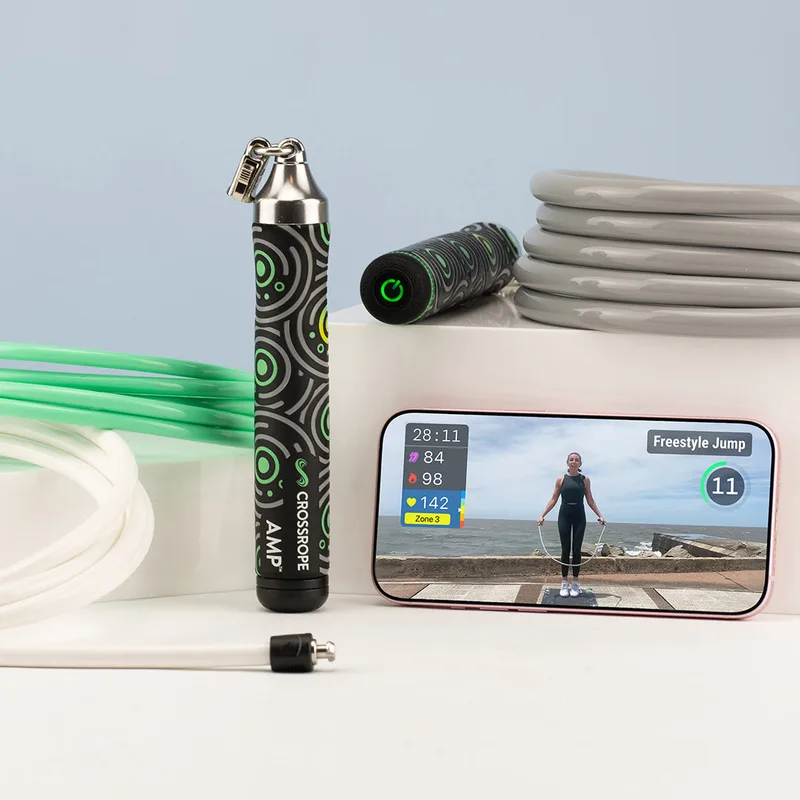
Crossrope AMP 2.0 Smart Jump Rope Set
The AMP 2.0 represents Crossrope’s tech-forward answer to the question of why a jump rope needs Bluetooth. The honest answer: automated jump counting. Manual counting during a 200-jump set is cognitively demanding, especially when combined with interval timing. The AMP’s handles track jump count automatically and sync to the app, which removes that overhead from the training session.
Three rope weights — 1/4, 1/2, and 1 lb — provide more progressive loading than the Get Lean Set’s two-rope system. For athletes building from basic cardio endurance to heavy-rope shoulder conditioning, the 1 lb rope adds a training tier that the Get Lean Set doesn’t include.
The battery life claim of six months per charge is credible given the low power demand of Bluetooth tracking — this isn’t a screen-on smartwatch; it’s a passive counter that connects only during sessions. Charging friction is minimal.
The cost structure requires honest evaluation. The hardware costs $220–$280. The structured workout content, beyond the basics, requires a subscription. Athletes who will genuinely use the app-guided programming can justify the premium. Athletes who want a quality weighted rope set and skip the app are better served by the Get Lean Set at less than half the price — the physical hardware performs comparably.
FAQ
What’s the difference between a speed rope and a weighted jump rope?
A speed rope uses a thin wire cable — typically 2–3mm — designed to minimize air resistance and enable high-RPM rotation. Speed ropes are built for double unders, triple unders, and fast cardio intervals. A weighted rope uses a heavier cable (1/4 lb to 1 lb or more) that increases the muscular demand on the shoulders, grip, and core with each rotation. Weighted ropes build strength alongside cardio. Speed ropes maximize cardio intensity and coordination training. Most serious jump rope athletes use both.
How do I choose the right rope length?
Stand with one foot on the center of the rope and hold both handles up. For speed ropes and double unders, the handle tops should reach approximately armpit height. For general cardio with a weighted rope, handles reaching shoulder height is acceptable and gives you more arc clearance on each pass. If you’re between sizes, go slightly longer — you can always cut or re-thread to shorten a rope, but you can’t add length.
Can I do double unders with a weighted rope?
You can do double unders with lighter weighted ropes (1/4 lb), but it requires more shoulder strength than a speed rope and is significantly harder to sustain for high-rep sets. Competition athletes use speed ropes for double under events. Weighted rope double unders are used as a strength-cardio conditioning tool — harder per rep, done for lower counts. Standard cardio and HIIT programming uses weighted ropes for single unders.
How long do jump ropes last with regular training?
Handles typically outlast cables significantly. Quality handles from Crossrope or WOD Nation last years with normal use. Cables are the consumable component — wire cables used on smooth surfaces last 6–18 months with 3–5 sessions per week; cables used on rough surfaces degrade faster. PVC-coated cables last longer than bare steel on rougher surfaces. Budget ropes with both cable and handles as a single unit require full replacement when the cable fails.
Is jump rope effective for weight loss?
Jump rope is among the most calorie-dense cardio tools per unit of time and equipment cost. A 150 lb athlete burns approximately 200 calories in 20 minutes of moderate jumping — comparable to running at a moderate pace. The calorie burn scales with intensity: high-intensity double under intervals burn more than steady-state single unders. Jump rope’s primary advantages for weight loss are its low equipment cost, zero space requirements for storage, and the ability to vary intensity within a single session.
Conclusion
The WOD Nation Attack Speed Jump Rope is the best jump rope for most home gym athletes in 2026. Two cables, a proven 4-bearing system, and $17–$22 pricing cover the widest range of use cases — speed training, light conditioning, and HIIT cardio — without requiring a commitment to a specific training style.
Athletes focused on CrossFit and double under performance should get the Elite Jumps Surge 3.0 — the lightest handles and best bearing system in the category for competitive-style training.
For weighted rope programming, the Crossrope Get Lean Set is the right call — interchangeable ropes, lifetime handle warranty, and any-surface durability justify the step up in price.
Beginners and general cardio athletes should start with the DEGOL — $8–$13 buys a genuinely functional rope with better-than-expected build quality at the entry price.
The Crossrope AMP 2.0 is the right choice only if you’ll use the app-guided programming consistently — the Bluetooth tracking is useful, but the premium only pays off if you engage with the structured workout content it unlocks.