Dedicated leg isolation machines are gaining ground in home gyms at a rate that wasn’t expected even two years ago. Industry observers tracking the home fitness equipment category have noted that more home gym owners in 2026 are adding leg extension and leg curl machines that were previously considered exclusive to commercial gym floors. The driver is simple: barbell squats and leg presses develop compound strength, but they do not isolate the quads and hamstrings the way dedicated isolation machines do — and serious home gym athletes are increasingly unwilling to skip that work just because a commercial machine isn’t nearby.
A leg extension machine is not a substitute for squatting. It is the tool you reach for when you want targeted quad hypertrophy work, knee rehabilitation volume, or isolation training that a barbell cannot replicate efficiently. The leg curl function on most machines adds hamstring isolation in a single unit, which makes these machines a meaningful investment for anyone building a well-rounded lower body training setup.
This roundup covers five machines from $249 to $750, all confirmed available in 2026, that represent the real buying decisions in the home gym leg isolation machine category.
Quick Picks
Body-Solid GCEC340B is the best overall at $750 — CAM-based resistance for consistent tension, 7-gauge steel frame, and commercial-grade DuraFirm pads that hold up over years of use.
RitFit PLC01 is the best value at $399 — cable-driven constant resistance, 700 lb capacity, lifetime warranty, and both seated extension and lying curl in one machine.
GMWD Leg Extension and Curl Machine is the most adjustable at $487 — 28+ leg position settings, 8 backrest positions, and a quick-swap pin system for switching between extension and curl modes.
Body-Solid Powerline PLCE165X is the best compact pick at $360 — 62” × 25” footprint, 44 lb assembled weight, and Body-Solid reliability in the smallest package in this roundup.
Valor Fitness CC-4 is the best budget option at $249 — 8-position thigh support, 6-position back adjustment, 150 lb plate capacity, and 1”/2” plate compatibility for most home gym plate collections.
Comparison
| Spec | Body-Solid GCEC340B CAM Series Leg Extension and Curl | RitFit PLC01 Leg Extension and Curl Machine | GMWD Leg Extension and Curl Machine | Body-Solid Powerline PLCE165X Leg Extension and Curl | Valor Fitness CC-4 Leg Extension and Curl Machine |
|---|---|---|---|---|---|
| Rating | 9.0/10 | 8.7/10 | 8.4/10 | 8.0/10 | 7.6/10 |
| Price | Unavailable | Unavailable | Check price | $348.01as of Oct 18, 2026 | $425.98as of Oct 18, 2026 |
| Frame | 7-gauge heavy-duty steel | — | — | Body-Solid steel construction | Solid steel construction |
| Resistance System | CAM-based plate-loaded | — | — | — | — |
| Plate Compatibility | 1" standard (Olympic adapter optional) | Olympic (2") | — | 1" standard | 1" standard (2" adapter sold separately) |
| Rollers | 8" foam rollers | — | — | — | — |
| Padding | DuraFirm seat and back pads | — | — | — | — |
| Functions | Seated leg extension + seated leg curl | Seated leg extension + lying leg curl | Seated leg extension + lying leg curl | Seated leg extension + supine leg curl | Seated leg extension + lying leg curl |
| Weight Capacity | — | 700 lb | — | — | — |
| Drive System | — | Cable-driven (constant resistance) | — | — | — |
| Footprint | — | 42" × 51" (48" × 66" clearance recommended) | — | — | — |
| Warranty | — | Lifetime | — | — | — |
| Leg Extension Positions | — | — | 28+ adjustment points | — | — |
| Backrest Positions | — | — | 8 | — | — |
| Seat Positions | — | — | 4 | — | — |
| Leg Hold-Down Positions | — | — | 8 | — | — |
| Machine Weight | — | — | Approx. 95 lb | 44 lb | — |
| Assembled Dimensions | — | — | — | 62" × 25" × 27" | — |
| Assembly | — | — | — | Moderate difficulty | — |
| Max Weight Capacity | — | — | — | — | 150 lb (plates) |
| Thigh Support Positions | — | — | — | — | 8 |
| Back Support Positions | — | — | — | — | 6 |
| Check Price → | Check Price → | Check Price → | Check Price → | Check Price → |
Prices change daily — tap Check Price for the current Amazon price. Numbers shown were verified on the "as of" date.
Detailed Reviews
Body-Solid GCEC340B — Editor Pick
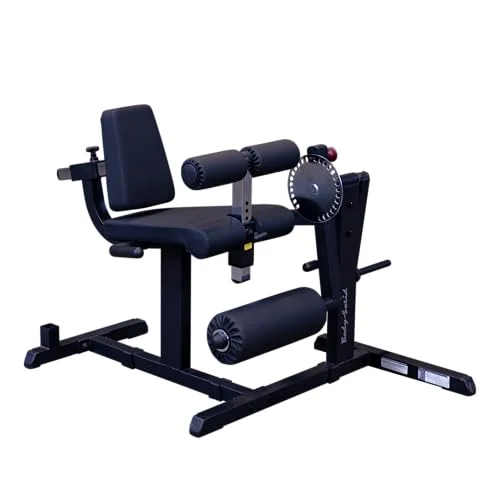
Body-Solid GCEC340B CAM Series Leg Extension and Curl
Pros
- CAM-based resistance system provides consistent tension throughout the full range of motion — the weight does not feel lighter at the top of the rep the way simpler plate-arm designs do
- 7-gauge steel frame is heavier-duty construction than most machines in this price range — the machine does not flex or shift during loaded extension sets
- 8-inch foam rollers are notably larger than the 4-6 inch rollers on budget machines, which distributes loading pressure across a wider shin contact area and reduces discomfort during heavy sets
- DuraFirm pads maintain their firmness over years of use rather than compressing flat, keeping pad height consistent for proper biomechanical positioning
- Accepted by commercial gyms and physical therapy facilities — the construction standard is not a home gym compromise but a genuine commercial-grade machine
Cons
- $750 price point is the highest in this roundup and requires a serious budget commitment — buyers should be consistent quad trainers before making this investment
- Plate-loaded design uses 1-inch standard sleeves by default; buyers with an Olympic (2-inch) plate collection need to purchase an adapter separately
- Machine dimensions are larger than compact options — measure your available floor space before ordering, particularly if you have a smaller garage gym
The Body-Solid GCEC340B is the machine that belongs in a home gym built for long-term serious use. The CAM-based resistance system — the defining feature — varies the effective lever arm as the leg moves through the range of motion in a way that keeps resistance consistent from the start of the movement to peak quad contraction. Most plate-arm designs become easier as the weight arm passes vertical; the GCEC340B does not, which means you’re getting consistent stimulus through the full rep rather than an easier top portion that lets the muscle partially recover mid-set.
The 7-gauge steel frame is heavier wall construction than most residential leg machines. Based on owner reports across multiple fitness forums and long-term use reviews, the machine does not flex or shift under loaded extension sets the way budget frames do. The DuraFirm seat and back pads maintain their firmness through years of use — a genuine practical advantage since flat, compressed pads alter the position of your hips and lower back during seated extension, which changes the biomechanics of the exercise.
The 8-inch foam rollers are substantially larger than the 4-6 inch rollers on entry-level machines. The larger surface area distributes shin-contact loading across a wider area, which reduces the localized discomfort that can limit the effective weight used during extension sets. This is a detail that experienced quad trainers notice immediately when moving from budget machines.
At $750, this is a serious investment — appropriate for home gym athletes who already have consistent training habits and know they’ll use quad isolation training long-term. For that buyer, the GCEC340B is the machine you buy and keep for 15 years.
RitFit PLC01 — Best Value
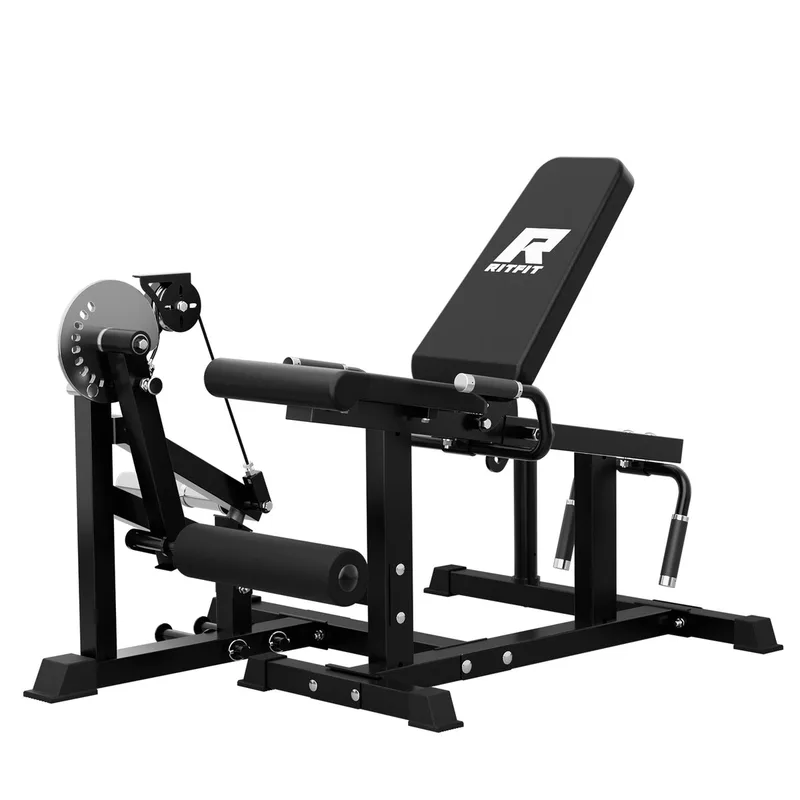
RitFit PLC01 Leg Extension and Curl Machine
Pros
- Cable-driven system maintains constant resistance throughout the full range of motion — unlike plate-arm machines where resistance drops off at the top, cable geometry keeps the quad under tension at peak contraction
- 700 lb rated weight capacity exceeds what any home gym athlete will realistically load — meaningful structural headroom that reflects heavy-duty frame construction
- Lifetime warranty is an unusual offering at this price point and signals the manufacturer's confidence in long-term mechanical reliability
- Seated extension and lying leg curl in one machine covers both quad and hamstring isolation without buying two separate units
- $399 street price is the strongest value in this roundup given the cable drive system, capacity, and warranty combination
Cons
- Cable-driven system requires occasional maintenance — checking cable tension and lubrication is part of long-term ownership compared to simpler plate-arm designs
- Footprint of 42" × 51" with 48" × 66" recommended clearance is not compact; measure your floor space including the lying curl position clearance
- Newer brand with a shorter track record than Body-Solid — long-term durability data is still accumulating from current owners
The RitFit PLC01 stands out from every other machine in this roundup because of its drive system. The cable-driven mechanism maintains constant resistance throughout the full range of motion — as the cable changes angle during leg extension, the resistance profile stays consistent rather than dropping off at the top of the movement the way plate-arm designs do. For quad isolation training, that constant tension at peak contraction is where much of the hypertrophy stimulus comes from.
The 700 lb rated weight capacity is structural overkill for any home gym athlete, but it accurately reflects the machine’s frame quality. A machine rated to 700 lbs is not doing so with cheap hardware — the frame and connection points are built to a standard that provides genuine headroom for long-term progressive loading. The lifetime warranty that comes standard with the PLC01 reinforces this — RitFit is backing their construction claims with a meaningful guarantee.
The machine covers both movements in one unit: seated leg extension for quads and lying leg curl for hamstrings. The footprint at 42” × 51” is not compact — plan for 48” × 66” total clearance when using the lying curl position — but for a machine that covers two isolation exercises with a cable drive system and 700 lb capacity, the space trade-off is justified.
At $399, the RitFit PLC01 is the strongest value proposition in this roundup. The cable drive system, capacity, and warranty combination at this price point has no direct competitor.
GMWD Leg Extension and Curl Machine — Most Adjustable
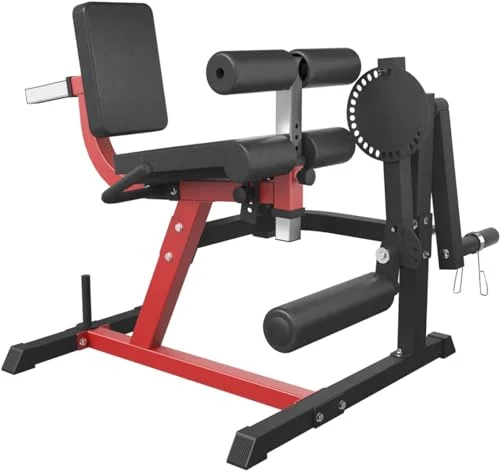
GMWD Leg Extension and Curl Machine
Pros
- More adjustment points than any other machine in this roundup — 28+ leg extension positions, 8 backrest positions, and 4 seat positions let tall and short athletes dial in exact positioning without compromise
- Removable pin mechanism switches the machine between leg extension and lying leg curl mode quickly — no tools required and no repositioning of major components
- 12-inch weight post with a storage pin accommodates a meaningful plate load and keeps plates organized at the machine rather than scattered around the gym floor
- Plate-loaded design accepts standard plates without proprietary accessories — compatible with most home gym plate collections out of the box
- Build quality and adjustability at $487 represents genuine value compared to entry-level machines that offer far fewer positioning options
Cons
- 95 lb machine weight is heavier than compact options and requires planning your gym layout before first assembly — repositioning after setup is a two-person job
- GMWD is a newer Amazon marketplace brand; long-term durability data beyond 12-18 months of owner use is limited compared to established manufacturers
- Plate-arm resistance system means the effective load varies slightly through the range of motion as the lever arm angle changes — acceptable for most users but not as linear as a CAM system
The defining characteristic of the GMWD machine is the depth of its adjustment system. Most leg extension machines offer 4-6 positions for thigh support and 3-4 positions for the backrest. The GMWD provides 28+ positions for the leg extension range, 8 backrest positions, 4 seat positions, and 8 leg hold-down positions. For home gym athletes who have specific anthropometric needs — unusually long femurs, shorter torso proportions, or knee rehabilitation requirements that demand precise starting position — this machine accommodates those needs where simpler machines force compromises.
The removable pin system switches the machine between seated leg extension and lying leg curl mode without tools. The pin acts as a structural component in extension mode and is removed to configure the machine for curl mode — the transition is quick and does not require re-threading cables or repositioning major components. A 12-inch weight post with an integrated storage pin keeps plates organized at the machine rather than scattered on the floor during training.
At 95 lbs assembled weight, the GMWD is a heavier machine than compact options, and repositioning after initial placement is a two-person job. Plan your gym layout before assembly. GMWD is a newer Amazon marketplace brand and does not have the 10-15 year track record that Body-Solid carries — early owner reports are positive, but long-term durability data at 3-5 years of consistent use is still accumulating.
For the athlete who needs maximum adjustability at a mid-range price, no other machine in this roundup matches the GMWD’s positioning range.
Body-Solid Powerline PLCE165X — Best Compact
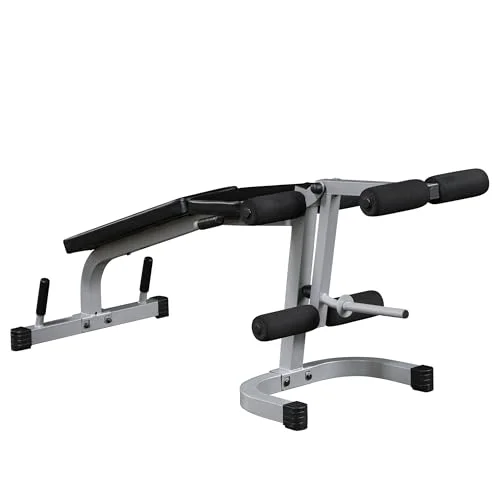
Body-Solid Powerline PLCE165X Leg Extension and Curl
Pros
- 62-inch length and 25-inch width is the most compact footprint in this roundup — fits in corners and along walls where full-size machines will not go
- 44 lb assembled weight allows a single person to move and reposition the machine during gym layout changes, unlike the 90+ lb machines in this category
- Body-Solid brand name carries real long-term reliability data — the Powerline line is their entry-level range, but manufactured to the same quality standards as their professional series
- Bench-mounted design doubles as a functional workout surface for exercises beyond leg extension and curl
- $360 price positions it between budget and mid-range with the added benefit of Body-Solid's brand reliability track record
Cons
- 1-inch standard plate compatibility is a limitation for athletes with an Olympic plate collection — check your existing plates before ordering
- Smaller machine weight (44 lb) means less inherent stability under heavy loading compared to heavier-frame machines — proper floor anchoring or weighting is recommended for serious loads
- Bench-based design means the leg extension and curl range of motion may not accommodate taller athletes as well as purpose-built dedicated leg machines
The Body-Solid Powerline PLCE165X is the correct pick for home gyms where floor space is genuinely limited. At 62 inches long, 25 inches wide, and 44 lbs assembled weight, it is the smallest and lightest machine in this roundup by a significant margin. It fits along walls, in corners, and in gym layouts where a 90+ lb machine with a 51-inch depth requirement would not fit without displacing other equipment.
The Powerline line is Body-Solid’s entry-level range, but it’s manufactured to consistent quality standards rather than being a stripped-down budget version. Based on the brand’s track record across their product line, the PLCE165X is built to hold up under consistent use — it’s not the heavy-gauge construction of the GCEC340B, but it’s genuinely reliable at its price point and size.
The bench-based design uses 1-inch standard plates, which is a consideration for athletes whose plate collection is entirely Olympic format — check your existing plates before ordering. The lighter machine weight (44 lbs) means the PLCE165X has less inherent stability under heavier loading than the GCEC340B or GMWD. For lighter-to-moderate quad and hamstring isolation work — which is the appropriate use case for this machine’s capacity — it performs reliably. For athletes who expect to load the machine heavily from the start, the GCEC340B or RitFit PLC01 is the more appropriate choice.
At $360 with Body-Solid’s reliability track record in the most compact available form factor, the PLCE165X fits a specific need well.
Valor Fitness CC-4 — Best Budget
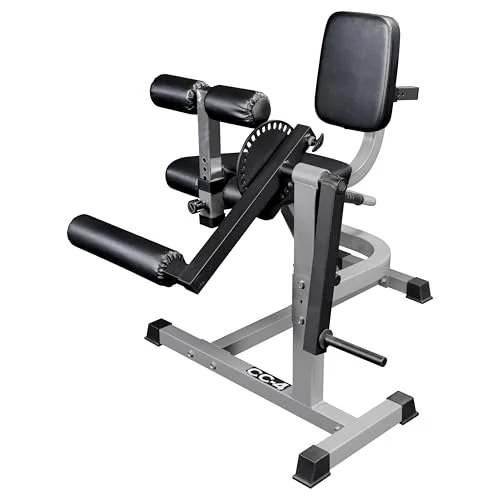
Valor Fitness CC-4 Leg Extension and Curl Machine
Pros
- 8-position thigh support adjustment and 6-position back adjustment allow meaningful fit customization for different body proportions at an entry-level price point
- Compatible with both 1-inch and 2-inch weight plates (2-inch adapter sold separately) — works with most existing home gym plate collections
- Compact footprint fits alongside other equipment in tight garage or basement gym layouts without requiring a dedicated zone
- Solid steel frame construction at the $249 price point is more durable than plastic-component competitors in the same range
- Straightforward entry point for lifters who want to add quad and hamstring isolation training without committing to a $400+ machine
Cons
- 150 lb plate capacity is the lowest in this roundup and will limit loading for intermediate to advanced athletes who regularly use 100+ lbs on isolation exercises
- Older machine design with fewer adjustment points than newer competitors like the GMWD — fit customization options are more limited
- 2-inch Olympic plate adapter is sold separately, adding cost for athletes whose entire plate collection is Olympic format
The Valor Fitness CC-4 is the entry point for home gym athletes who want to add leg isolation training without committing to a $300+ machine. The solid steel frame, 8-position thigh support, and 6-position back adjustment provide meaningful fit customization that plastic-frame budget machines in the same price range do not. Plate compatibility covers both 1-inch standard and 2-inch Olympic formats (the 2-inch adapter is sold separately) — the CC-4 works with most existing home gym plate collections.
The 150 lb plate capacity is the most significant limitation. Beginner and early-intermediate athletes will work comfortably within that range for months, but athletes who are already loading leg press or hack squat machines at 200+ lbs will outgrow the CC-4 relatively quickly on the curl and extension exercises. If you’re already at the 100-120 lb working weight range on leg extension, the RitFit or GMWD machines are the more appropriate investment from the start.
The older design means fewer adjustment positions than newer competitors like the GMWD — fit customization is limited to what the 8+6 position system allows. For taller athletes or those with specific knee positioning requirements, this may mean less-than-ideal starting positions.
For a first leg isolation machine — particularly for athletes coming from band-only or bodyweight lower body work — the CC-4 provides a functional starting point at $249.
Buying Guide: What to Look for in a Home Gym Leg Extension Machine
Resistance System: Plate-Arm vs. CAM vs. Cable
Plate-arm machines are the most common and least expensive. The weight plate or plates are mounted on a lever arm, and as you extend your leg, the lever arm changes angle relative to the pivot — which means the effective resistance varies through the range of motion. The exercise tends to feel easier at full extension and harder at the mid-range.
CAM-based machines (like the Body-Solid GCEC340B) use an eccentric cam shape at the pivot point to compensate for the arm-angle change, keeping resistance more consistent through the full movement. This is the closest a plate-loaded machine gets to a weight-stack selectorized machine’s resistance profile.
Cable-driven machines (like the RitFit PLC01) use a cable and pulley system that maintains more consistent resistance through the range of motion than a simple plate arm. The cable angle changes as the leg moves, but it stays more linear than a plate-arm design. Cable systems require occasional maintenance — checking tension and lubricating moving parts — but provide a training feel that many athletes prefer.
Weight Capacity and Plate Loading
A leg extension machine rated at 150 lbs (Valor CC-4) serves beginners through early intermediates. A machine rated at 200+ lbs of plate capacity covers most intermediate athletes. The RitFit PLC01’s 700 lb rating reflects solid frame construction rather than a practical loading limit — no home gym athlete loads 700 lbs on a leg extension.
Check the weight post length and diameter. Shorter posts limit how many plates you can stack. Machines with Olympic (2-inch) posts are more versatile if you already have an Olympic plate collection. Standard (1-inch) posts are more common on budget and entry-level machines.
Adjustment Range for Proper Biomechanics
Position adjustments on a leg extension machine determine whether you can set up the machine correctly for your body proportions. The key adjustments are: thigh pad position (how far from the seat the roller contacts your shin), seat-to-pivot distance (affects the starting position of the knee joint), and backrest angle. A machine with 3 adjustment positions will work adequately for average-height athletes but may produce suboptimal positioning for those with longer or shorter femurs. If you’re outside average height ranges or have knee issues that require precise setup, prioritize machines with 6+ positions on key adjustment points.
Assembly Difficulty
Most leg extension machines in this price range require moderate assembly — expect 45-90 minutes for the first setup. Heavier machines (90+ lbs) benefit from two people for the assembly process, particularly when installing the leg pad assembly and the frame sections that require alignment under load. The Body-Solid Powerline PLCE165X is the lightest at 44 lbs and the most manageable for a single person; the GMWD at 95 lbs is the heaviest and benefits from a second set of hands.
Space Planning
Measure your available floor space before ordering, and account for the exercise clearance beyond the machine footprint. A seated leg extension is compact — the athlete stays close to the machine. The lying leg curl position extends the athlete’s body length beyond the machine’s back edge, which requires additional floor clearance behind the machine. The RitFit PLC01 recommends 48” × 66” total clearance for the lying curl position — that’s a meaningful floor area that needs to be open during the exercise.
FAQ
What muscles does a leg extension machine work?
The leg extension targets the quadriceps as the primary mover — specifically all four heads of the quad (rectus femoris, vastus lateralis, vastus medialis, and vastus intermedius). It’s the most direct isolation exercise for the quadriceps available on a machine. The leg curl function on combination machines targets the hamstrings (biceps femoris, semitendinosus, and semimembranosus) in the lying position. Neither the extension nor the curl provides meaningful glute activation — they’re genuine isolation exercises rather than compound movements.
Is a leg extension machine bad for your knees?
This is a frequently repeated concern that the evidence does not fully support for most people. Leg extensions do create anterior shear force at the knee joint, which is higher at the bottom of the range of motion (the starting position). Most physical therapists and sports medicine practitioners recommend beginning the exercise at a reduced range of motion (avoiding the last 30-40 degrees of flexion at the bottom) for athletes with existing knee issues. For healthy knees, moderate loading with full range of motion is well-tolerated. Start light, focus on controlled movement, and avoid letting the weight drop ballistically at the bottom of each rep.
How much weight should I use on a leg extension machine?
Leg extension is an isolation exercise, not a strength demonstration. Loading the machine to the point where you cannot control the full range of motion defeats the purpose. Most athletes use 30-70% of their bodyweight for leg extension training — a 180 lb athlete working in the 54-126 lb range covers most useful loading scenarios for hypertrophy and strength. Start at the lower end of that range, ensure you have full control through the complete range of motion, and add weight only when form is solid.
Can I use a leg extension machine if I’m doing barbell squats?
Yes — they serve different training purposes and complement each other well. Barbell squats are compound movements that develop overall lower body strength, stability, and athletic capacity. Leg extensions are isolation movements that target the quad specifically without involving the hip extensors or stabilizers. Many strength programs include both: compound movements for primary strength development and isolation work to target specific weaknesses or add targeted volume to lagging muscle groups. The leg extension is particularly useful for finishing quad volume after heavy squatting without adding additional hip and lower back fatigue.
What’s the difference between a leg extension machine and a leg press?
A leg press is a compound pushing exercise where you sit with your back angled and push a platform away from you — quads, glutes, and hamstrings all contribute. A leg extension is an open-chain isolation exercise where you sit upright and extend your lower leg against resistance — the quads are the only primary mover. Leg extensions produce significantly higher quad activation in isolation but do not develop the hip extension strength or glute involvement that leg press provides. They’re not interchangeable — they serve different training purposes and most well-designed programs include both.
Conclusion
The Body-Solid GCEC340B is the top pick for home gym athletes who want the best available leg extension machine and are willing to invest at the $750 level. The CAM-based resistance system, 7-gauge steel frame, and DuraFirm padding represent a genuine quality step above mid-range options — this is a machine built to the same standard as commercial gym equipment.
The RitFit PLC01 is the right pick for most home gym builders. The cable-driven system, 700 lb capacity, and lifetime warranty at $399 deliver the strongest value combination in this roundup — particularly for athletes who want consistent resistance through the full range of motion without the $750 investment.
The GMWD is the correct choice for athletes who need maximum adjustability. The Body-Solid Powerline PLCE165X handles small-space gyms where footprint is the primary constraint. The Valor Fitness CC-4 is the appropriate starting point for athletes new to isolation machine training who want to establish the movement pattern before upgrading.