Recovery is no longer optional for serious home gym athletes. The American College of Sports Medicine listed recovery-focused training as one of its top fitness trends for 2026, and the home gym market has responded with a surge of cold plunge tubs, percussion massagers, and compression systems that would have seemed like professional-athlete-only gear five years ago. The science has also continued to build: cold water immersion, percussive therapy, and sequential compression each have meaningful evidence behind them. The debate has shifted from “does recovery work?” to “which protocols are worth your time and money?”
This guide covers what the research and owner feedback agree on — four tools that form the foundation of an effective home gym recovery routine, plus the protocols that actually get results.
The Recovery Hierarchy: What Matters Most
Before spending on equipment, get the fundamentals right. No recovery tool compensates for consistently poor sleep or chronic under-eating. Here is the honest priority order:
1. Sleep (free) — Seven to nine hours is where muscle protein synthesis peaks and growth hormone secretion occurs. If you’re sleeping less than six hours consistently, no recovery tool will fully offset the deficit. Prioritize sleep before purchasing anything on this list.
2. Protein timing (low cost) — Consuming 30–40 grams of protein within two hours post-training is well-supported for muscle repair. Whole food sources or a quality protein supplement accomplishes this without specialized equipment.
3. Hydration (free) — Muscle tissue is approximately 75% water. Training in a dehydrated state increases perceived soreness and delays recovery. Rehydrating to match training fluid losses is non-negotiable before using any tool below.
4. Active tissue work — Once the fundamentals are dialed in, active recovery tools deliver real returns. The four tools below are ordered by accessibility and evidence strength.
The Four Recovery Tools Worth Owning
| Spec | Hyperice Hypervolt Go 2 | TriggerPoint GRID Foam Roller (13-Inch) | CalmMax Oval Ice Bath Tub (XL) | Hyperice Normatec Go Calf |
|---|---|---|---|---|
| Rating | 8.8/10 | 8.7/10 | 8.0/10 | 8.5/10 |
| Price | $139.00as of Oct 18, 2026 | $28.99as of Oct 18, 2026 | Unavailable | $379.00as of Oct 18, 2026 |
| Amplitude | 12mm | — | — | — |
| Speeds | 3 speeds (2200 / 2750 / 3200 PPM) | — | — | — |
| Motor | 40W brushless | — | — | — |
| Battery Life | 3 hours | — | — | 2 hours |
| Weight | 1.5 lbs | — | — | 1 lb |
| Attachments | 2 included | — | — | — |
| Noise Level | QuietGlide (~55 dB) | — | — | — |
| Length | — | 13 inches | — | — |
| Diameter | — | 5 inches | 41 inches | — |
| Surface | — | Multi-density GRID exterior | — | — |
| Core | — | Hollow EVA | — | — |
| Weight Capacity | — | 500 lbs | — | — |
| Warranty | — | 1 year | — | — |
| Capacity | — | — | 140 gallons | — |
| Construction | — | — | 6-layer insulated walls | — |
| Shape | — | — | Oval | — |
| Cover | — | — | Included | — |
| Setup | — | — | Portable, no tools required | — |
| Compression Zones | — | — | — | 3 overlapping zones |
| Pressure Levels | — | — | — | 7 intensity settings |
| Max Calf Fit | — | — | — | 22-inch circumference |
| Connection | — | — | — | Hyperice App (Bluetooth) |
| TSA Approved | — | — | — | Yes |
| Check Price → | Check Price → | Check Price → | Check Price → |
Prices change daily — tap Check Price for the current Amazon price. Numbers shown were verified on the "as of" date.
Tool 1: Percussion Massager — Daily Active Recovery
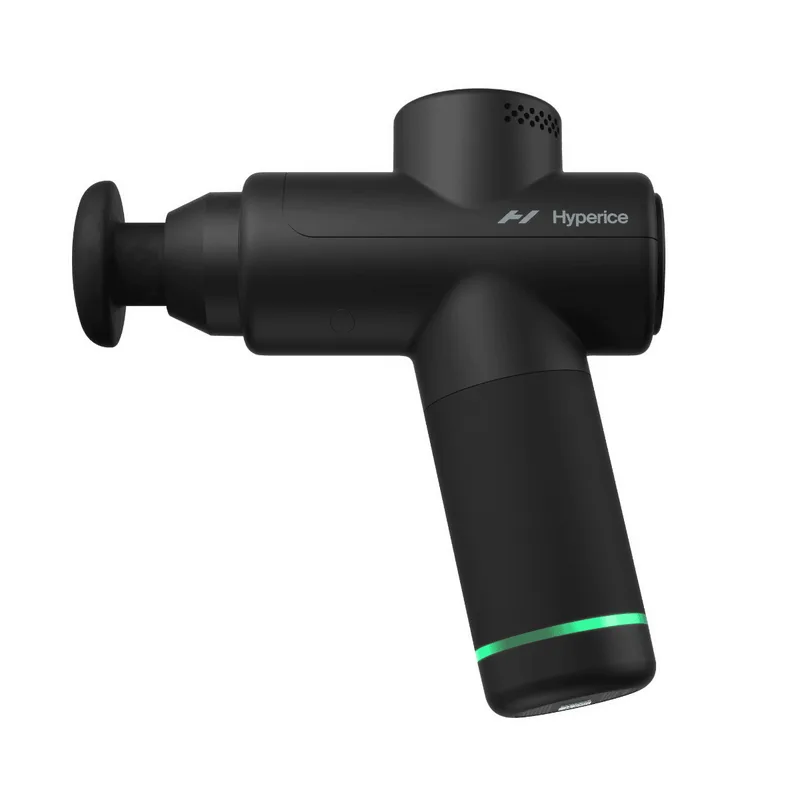
Hyperice Hypervolt Go 2
Pros
- 12mm amplitude and three-speed range (2200–3200 PPM) covers both light lymphatic flushing and deeper tissue work — versatile enough for pre-training warm-up and post-training recovery
- At 1.5 lbs, it holds overhead and at awkward angles without fatigue — practical for upper back, traps, and posterior shoulder work that heavier guns make difficult
- Three-hour battery handles a full week of daily 20-minute sessions on a single charge — no mid-week charging interruptions
- QuietGlide technology runs significantly quieter than entry-level percussion guns, making it practical in apartments, shared spaces, or late-night sessions
Cons
- 12mm amplitude is shorter than the Theragun Prime's 16mm — measurably less effective at reaching deep into glutes, lats, and quad bulk where greater tissue penetration matters
- Only two interchangeable heads included; four-attachment kits on the Prime and Pro Plus cover more specialized applications like bony areas and trigger points
- Stall force in the 20–25 lb range — maintaining full-pressure contact on very dense muscle groups requires deliberate attention to angle and pressure
A percussion massager addresses what foam rolling cannot: deep tissue penetration at speed. The rapid mechanical input at 2,200–3,200 percussions per minute increases local blood flow, reduces muscle stiffness, and delivers a neurological pain-gating effect that decreases perceived soreness within minutes of use.
The Hypervolt Go 2 is the most practical daily-use percussion gun for home athletes. At 1.5 lbs with a three-hour battery, it actually gets picked up between sets, before bed, and on rest days — which is where recovery habits succeed or break down. The 12mm amplitude is shorter than professional-grade guns but covers the 90% of use cases that matter for gym soreness: quads, hamstrings, glutes, upper back, and calves.
Protocol for home gym athletes:
- Pre-training: 30–60 seconds per muscle group at low speed (2200 PPM) to increase circulation and reduce warm-up time
- Post-training: 90–120 seconds per worked muscle group at medium to high speed (2750–3200 PPM) targeting peak soreness sites
- Rest days: 2–3 minutes across major muscle groups at low speed for lymphatic circulation
Tool 2: Foam Roller — Foundation of Tissue Quality
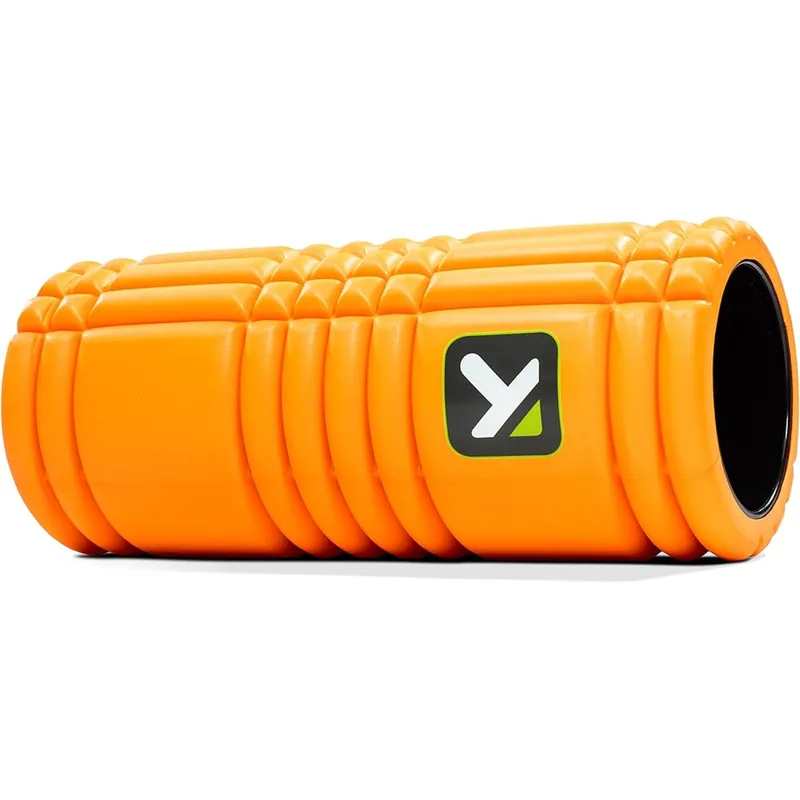
TriggerPoint GRID Foam Roller (13-Inch)
Pros
- Hollow EVA core maintains structural integrity under repeated daily use — this roller holds its firmness and shape after 12+ months of consistent training, unlike solid-foam options that compress over time
- Multi-density GRID surface combines flat zones for broad pressure across large muscle groups with ridged zones for targeted myofascial release along dense tissue and IT bands
- At $35, it delivers the highest frequency-of-use return on any recovery tool — a foam roller used daily outperforms a $300 device used once per week
- Compact 13-inch length stores in any home gym corner and travels easily to competition, outdoor sessions, or weekend trips
Cons
- 13-inch length requires repositioning three to four times to work through the full back — the 26-inch GRID 2.0 covers the spine in a single pass for faster sessions
- Does not vibrate — athletes who specifically need the neurological inhibition response from vibration-assisted rolling should look at the Theragun Wave Roller
- Single-density firmness level only; advanced tissue work on heavily restricted or post-injury areas may benefit from a firmer option like the RumbleRoller Firm
Foam rolling is the most research-supported active recovery method available. Meta-analyses consistently show that pre-workout foam rolling increases range of motion without decreasing force production, and post-workout rolling reduces delayed onset muscle soreness (DOMS) over the 24–72 hour window that follows hard training.
The TriggerPoint GRID remains the benchmark foam roller because it solves the durability problem that budget options fail on. The hollow EVA core holds its firmness. The multi-density surface actually differentiates pressure zones rather than presenting a uniform surface. At $35, it is the highest-value recovery investment on this list — the only variable is whether you use it consistently.
Protocol for home gym athletes:
- 60–90 seconds per muscle group on major posterior chain: glutes, hamstrings, thoracic spine, calves
- Move slowly over restricted zones — find the tight spot and maintain pressure for 30 seconds before moving on
- Daily use yields measurably better tissue quality at four to six weeks than using it only on training days
Tool 3: Cold Water Immersion — High-Volume Training Recovery
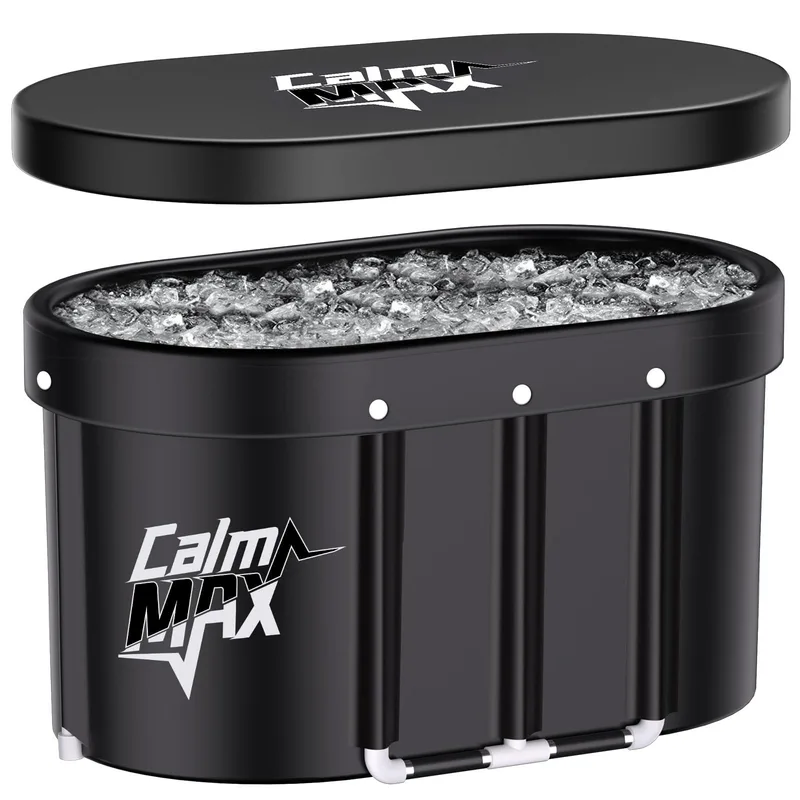
CalmMax Oval Ice Bath Tub (XL)
Pros
- Full-body seated cold water immersion accommodates athletes up to 6'5" — complete leg, hip, and torso coverage in a single protocol session
- Six-layer insulated walls slow temperature rise significantly versus single-layer inflatables, maintaining the 50–59°F target window through a complete 15-minute protocol after standard ice loading
- At $139, this is the most accessible entry point to the cold water immersion protocol used by professional strength-and-conditioning programs — no permanent installation needed
- Included cover locks in temperature between sessions and keeps debris out, reducing how frequently you need to fully drain and refill
Cons
- Requires ongoing ice supply — plan 20–40 lbs per session depending on ambient temperature and starting water temperature, adding $4–8 per use in ice cost
- Not practical for most indoor setups — water spillage and drainage logistics require outdoor use or a large utility space with a floor drain
- No active chiller — temperature maintenance depends entirely on ice quantity and ambient conditions; sessions in summer heat will consume significantly more ice to hold target temperature
Cold water immersion at 50–59°F for 10–15 minutes post-training is one of the most studied recovery interventions in sports science. The mechanism involves cold-induced vasoconstriction that reduces inflammatory markers and decreases tissue temperature — a response that correlates with reduced next-day soreness and faster readiness to train again at high intensity.
The CalmMax tub makes this accessible for home athletes at a price point that does not require a second thought. The 140-gallon oval accommodates full-body seated immersion. The 6-layer insulated walls hold temperature well enough to complete a 15-minute protocol after loading with a 20-gallon ice supply, which holds temperature reasonably even on warm days.
Key note on cold immersion timing: Current evidence suggests cold water immersion is most effective for endurance athletes and for reducing DOMS in high-volume training blocks. Strength athletes focused on maximizing hypertrophy should use cold immersion selectively — some research indicates it may blunt the acute inflammatory signaling that drives muscle protein synthesis. Use it on high-volume conditioning days and deload weeks; use percussion and compression on pure strength training days.
Protocol:
- Target water temperature: 50–59°F
- Duration: 10–15 minutes (build from 3–5 minutes initially)
- Within 2 hours post-training for maximum soreness reduction
- 3–4 sessions per week during high-volume training blocks
Tool 4: Compression Therapy — Circulation and Swelling Control
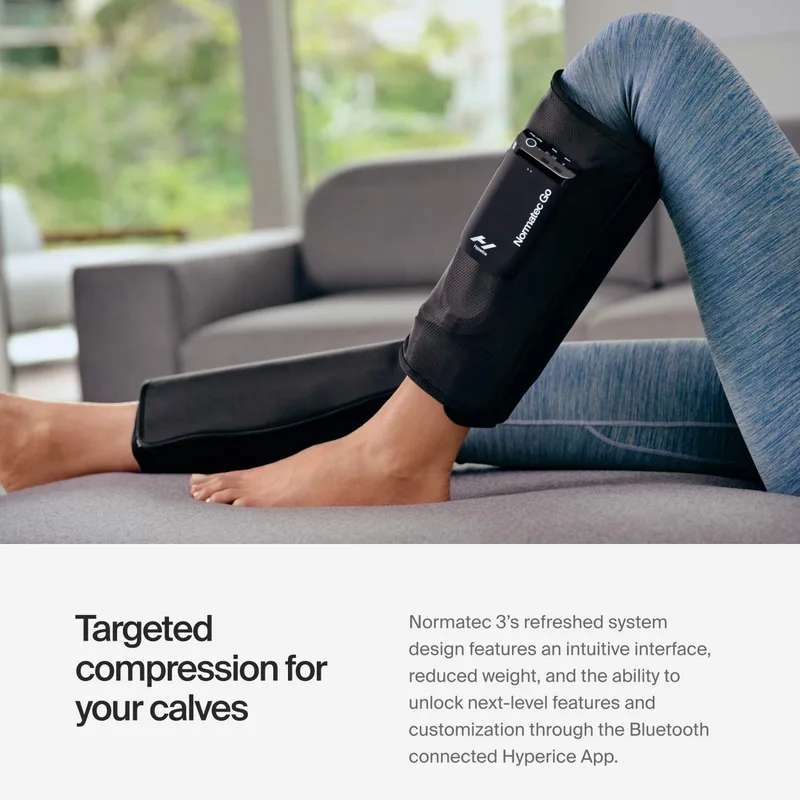
Hyperice Normatec Go Calf
Pros
- Three overlapping gapless compression zones deliver 360-degree pressure around the calf — no gaps between zones that leave tissue untreated the way segmented wraps create
- Seven customizable intensity levels allow gradual protocol progression from light lymphatic drainage (level 2–3) to active recovery compression (level 5–7)
- At 1 lb total weight, it is fully wearable during desk work, reading, or passive rest — zero interference with off-training-day recovery habits
- Hyperice App integration runs timed programs and saves recovery routines without manual device management during each session
Cons
- Covers the calf only — athletes who need full-leg compression for quad and hamstring recovery require the Normatec 3 Legs system ($799), a significant budget step up
- Two-hour battery limits back-to-back sessions on the same training day; athletes running twice-daily sessions may need to charge between uses
- At $249 for calf coverage only, the cost-per-body-part comparison favors the full Normatec 3 Legs for athletes with high-volume leg programming four or more times per week
Sequential air compression targets the circulatory mechanism of recovery. The alternating inflation and deflation of compression zones replicates the lymphatic pumping action, moving metabolic waste products out of muscle tissue and reducing fluid accumulation that contributes to post-training swelling and tightness.
The Normatec Go Calf is the entry point into compression therapy from the brand that supplies professional sports teams. The three-zone gapless design and seven-level intensity control deliver a clinically-derived protocol in a 1-lb wearable that you can use while sitting. It’s passive recovery — no active effort required once the device is running.
The honest limitation is scope: it covers the calf only. If your training is heavily quad-dominant (squatting, leg pressing, running), the full Normatec 3 Legs ($799) is a meaningfully better investment for the upper leg tissue that accumulates the most loading. The Go Calf makes most sense for athletes whose primary soreness and swelling occurs in the lower leg — endurance runners, HIIT athletes, and those with frequent calf cramps or tightness post-training.
Protocol:
- 20–30 minutes post-training on worked muscle groups
- Start at intensity level 3–4, progress to 5–7 as tolerance builds
- Before-bed sessions on hard training days consistently reduce next-morning stiffness based on owner feedback
Building Your Recovery Stack by Training Type
Not every athlete needs every tool. Match your investment to your training style:
2–3 days/week, moderate intensity: Foam roller ($35) and percussion massager ($139) cover the essentials. Combined investment under $175. Add cold immersion or compression only if you have specific recovery complaints.
4–5 days/week, high intensity: Add cold water immersion (CalmMax, $139) during heavy training blocks. Total stack: foam roller + percussion + cold = under $315. This combination addresses tissue quality, circulation, and inflammation across the full training week.
6+ days/week or two-a-days: Full stack including the Normatec Go Calf ($249). Compression therapy makes the biggest relative impact when recovery windows are short between sessions. Total investment for the complete four-tool stack: under $640.
FAQ
How long after training should I wait before using a cold plunge?
Most evidence points to cold water immersion within 30 minutes to 2 hours post-training as the most effective window for soreness reduction. Waiting longer than 2 hours reduces the benefit. On strength training days focused on hypertrophy, consider using percussion and foam rolling instead — cold immersion timing relative to muscle protein synthesis is an active area of ongoing research.
Is foam rolling before training better or worse than after?
Both applications have evidence behind them. Pre-training foam rolling increases range of motion without impairing strength output — useful for improving squat depth or shoulder mobility before upper body work. Post-training foam rolling reduces DOMS in the 24–72 hour window following hard sessions. For most home athletes, doing both (brief pre-training, longer post-training) delivers the best combined outcome.
Can I use the Normatec Go Calf and the percussion massager in the same session?
Yes, and the order matters slightly. Using the percussion massager first — working the calf and lower leg tissue — followed by the Normatec compression session is consistent with the sequence used in professional recovery rooms: percussive tissue mobilization, then compression to flush the loosened tissue. The reverse order is less effective because compression on tight tissue produces less circulatory benefit than compression after tissue has been mobilized.
Does sleep quality matter more than recovery tools?
Substantially. Peer-reviewed research consistently shows that sleep deprivation impairs muscle protein synthesis, increases cortisol, reduces growth hormone secretion, and extends perceived soreness duration more than any other variable. A full night of seven to nine hours of sleep produces greater recovery than any combination of tools used after a poor five-hour night. Recovery tools amplify good sleep and nutrition habits — they do not replace them.
How do I know if my recovery protocol is working?
Track two metrics: resting heart rate and performance readiness. A resting heart rate that trends downward or stays stable week-over-week indicates adequate recovery. Performance readiness — the ability to match or exceed last session’s output — confirms the protocol is working. If resting heart rate spikes and performance drops across two consecutive weeks, recovery volume needs to increase before training volume does.
Conclusion
The Hypervolt Go 2 ($139) and TriggerPoint GRID ($35) form the core of an effective home gym recovery routine at under $175 combined. Both get used daily, both address the tissue work that improves session-to-session readiness, and both deliver measurable results within two to three weeks of consistent use.
Add the CalmMax Ice Bath ($139) once your training volume passes four sessions per week — cold water immersion earns its keep at high training frequencies where baseline soreness would otherwise accumulate.
The Normatec Go Calf ($249) rounds out the stack for athletes whose calves take significant loading from running, HIIT, or heavy calf raises, providing the passive compression protocol that rounds out a complete recovery toolkit.
Build the stack from the bottom up. Use every tool consistently. Recovery compounds the same way training does — the athletes who show up ready to train hard every session are the ones who take both sides of the equation seriously.