A power rack is the centerpiece of any serious home gym. It holds the barbell for squats, bench press, and overhead press while providing safety bars that catch failed reps — eliminating the need for a spotter. The good news for home gym builders in 2026: competition between REP Fitness, Titan, and newer brands like Major Fitness has driven quality up and prices down. A sub-$1,000 rack today matches what cost $1,500+ just a few years ago.
Here are the five best power racks under $1,000 for home gym use, evaluated on build quality, safety features, attachment compatibility, and overall value.
Quick Picks
REP Fitness PR-4000 is the gold standard for home gym power racks under $1,000. The 3x3 11-gauge steel, 1-inch hole spacing, and massive attachment ecosystem make it the rack most lifters grow into rather than out of.
Titan Fitness T-3 delivers the best value at $549, with 11-gauge steel and cross-compatibility with Rogue Monster Lite accessories. For lifters who want quality without approaching $900, this is the pick.
REP Fitness PR-1100 at $399 is the entry point for a legitimate power rack with cable attachment options, perfect for lifters on a tight budget.
Buying Guide: What Matters in a Power Rack
Steel Gauge and Upright Size
The two numbers that define a rack’s strength are the upright dimensions and steel gauge. 3x3 inch uprights with 11-gauge steel is the current gold standard for home racks — enough strength for any realistic home gym load. 2x3 inch 11-gauge is a solid middle ground. 2x2 inch racks work fine for most lifters but limit attachment options.
Hole Spacing
Hole spacing determines how precisely J-cups and safety bars can be positioned. 1-inch spacing through the bench zone (roughly chest to knee height) allows fine-tuning for bench press setup. 2-inch Westside spacing is adequate but less precise for bench press positioning.
Weight Capacity
Marketed weight capacities often exceed what any human will load on a rack. The real concern is how the rack handles dynamic loading — re-racking a heavy squat creates more force than the static weight. Any rack rated at 700+ lbs is sufficient for the vast majority of home gym lifters.
Attachment Compatibility
This is where long-term value lives. Racks with large attachment ecosystems (REP PR-4000, Titan T-3/X-3) allow adding lat pulldowns, cable crossovers, dip attachments, and landmine setups over time without replacing the rack itself.
Footprint and Ceiling Height
Measure your space before buying. Standard rack depth is 24 inches (inside), with 30-36 inch deep options for lifters who want to squat inside the rack. Ceiling height matters — most racks are 80-90 inches tall, and short (72-inch) versions exist for low-ceiling basements.
Detailed Reviews
REP Fitness PR-4000 — Editor’s Pick
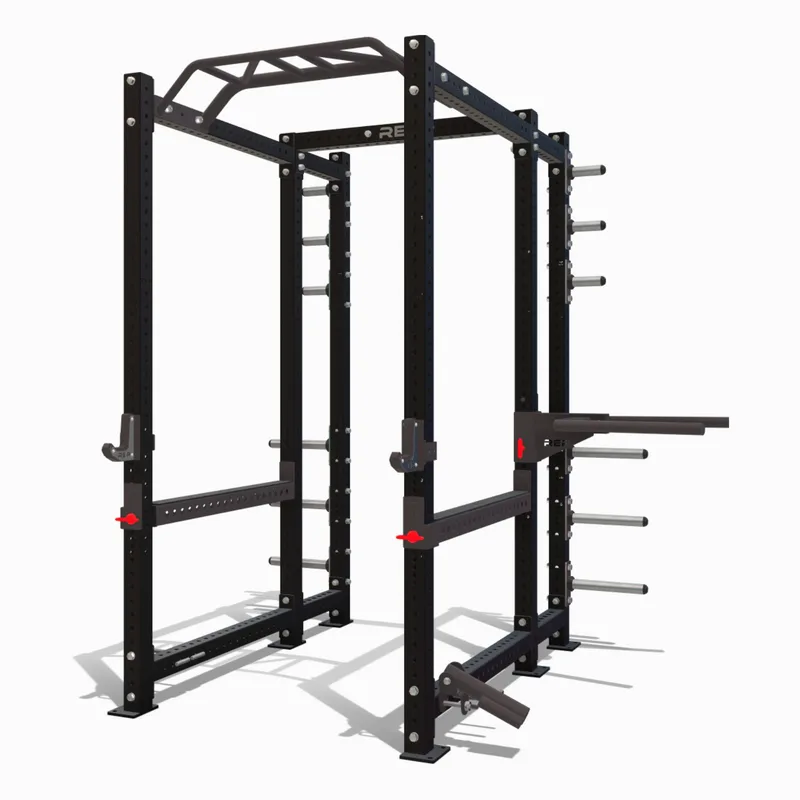
REP Fitness PR-4000
Pros
- 1,000 lb capacity with premium 11-gauge steel
- Massive attachment ecosystem with 50+ compatible accessories
- 1-inch hole spacing through bench zone for precise J-cup placement
Cons
- Base price rises quickly with attachments
- Heavy — requires two people for assembly
The PR-4000 has dominated the enthusiast home gym market since its release, and for good reason. The 3x3 inch 11-gauge steel uprights provide genuine commercial-gym rigidity. With a 1,000 lb weight capacity and 1-inch hole spacing through the bench zone, this rack handles everything from casual fitness to competitive powerlifting prep.
What sets the PR-4000 apart is its attachment ecosystem. REP sells over 50 compatible accessories — lat pulldowns, cable crossovers, dip stations, belt squat attachments, j-cups in multiple styles, and more. The rack grows with the lifter’s needs and budget. Six color options also let home gym owners customize aesthetics.
The base PR-4000 starts around $600, but most buyers add j-cups, safety arms, and at least one cable attachment, pushing the total closer to $900. Assembly requires two people and takes 2-3 hours. The 24-inch depth model fits most garage gym setups, while the 30-inch depth version is better for squatting inside the rack.
Community feedback on r/homegym and Garage Gym Reviews consistently ranks the PR-4000 as the best rack under $1,000 — a reputation earned through years of proven reliability.
Titan Fitness T-3 Series — Best Value
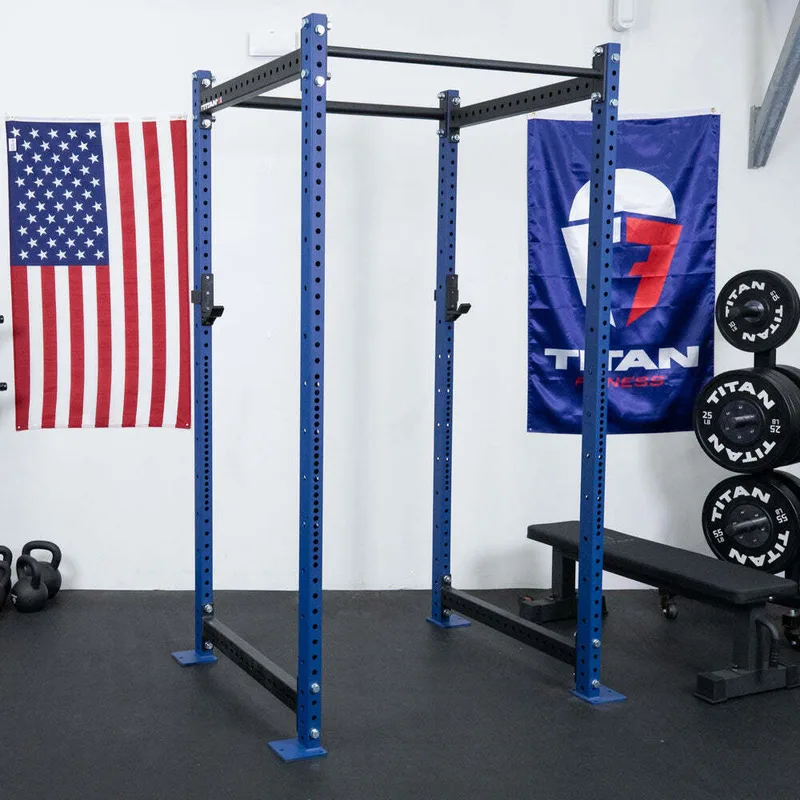
Titan Fitness T-3 Series
Pros
- Excellent price-to-quality ratio under $600
- Compatible with many Rogue Monster Lite accessories
- 1,100 lb weight capacity exceeds most home gym needs
Cons
- 2x3 uprights limit some attachment options
- Finish quality occasionally inconsistent
The Titan T-3 offers 11-gauge steel construction and a 1,100 lb weight capacity at a price that significantly undercuts REP and Rogue. The 2x3 inch uprights are strong and rigid, though the smaller dimension means some 3x3 attachments won’t fit.
The T-3’s key advantage is cross-compatibility with Rogue Monster Lite accessories. This gives T-3 owners access to a wider accessory market than the rack’s own price suggests. Titan’s own attachment lineup is also growing, with lat pulldowns, dip stations, and cable systems available.
Build quality is generally good, though user reports note occasional paint finish inconsistencies and slightly rough welds compared to REP. These are cosmetic issues that don’t affect structural integrity or performance.
At $549, the T-3 leaves significant budget for attachments, plates, and a barbell. For lifters building a complete gym on a fixed budget, putting savings toward quality plates and a barbell may yield better overall results than spending more on the rack itself.
REP Fitness PR-1100 — Best Budget
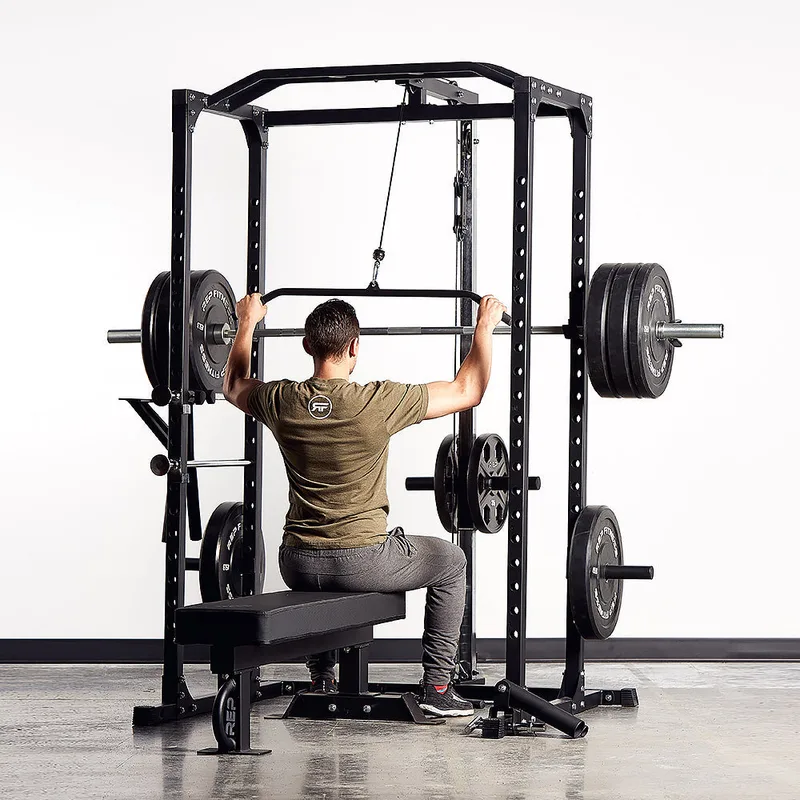
REP Fitness PR-1100
Pros
- Under $400 makes it the most accessible full power rack
- Compatible with lat pulldown and cable attachments
- Flat foot design needs no bolting to floor
Cons
- 700 lb capacity limits heavy squatters
- Lighter gauge steel flexes under very heavy loads
The PR-1100 proves that a quality power rack doesn’t require a $700+ investment. At $399, it delivers 2x2 14-gauge steel with a flat foot design that requires no floor bolting — a major advantage for renters and lifters with finished garage floors.
The 700 lb weight capacity is sufficient for the large majority of home gym users. The 1-inch hole spacing through the bench zone matches the PR-4000’s precision. And crucially, the PR-1100 is compatible with REP’s lat pulldown and low row cable attachment, adding cable training capability for about $200 more.
The lighter gauge steel does flex more under heavy loads compared to 11-gauge racks. Lifters who squat 400+ lbs or plan to compete in powerlifting should consider the PR-4000 or T-3 instead. But for general fitness and intermediate strength training, the PR-1100 is more than adequate.
Multiple color options and a small footprint make it particularly suitable for home gyms that share space with other activities.
Major Fitness PLM03 — Best All-in-One
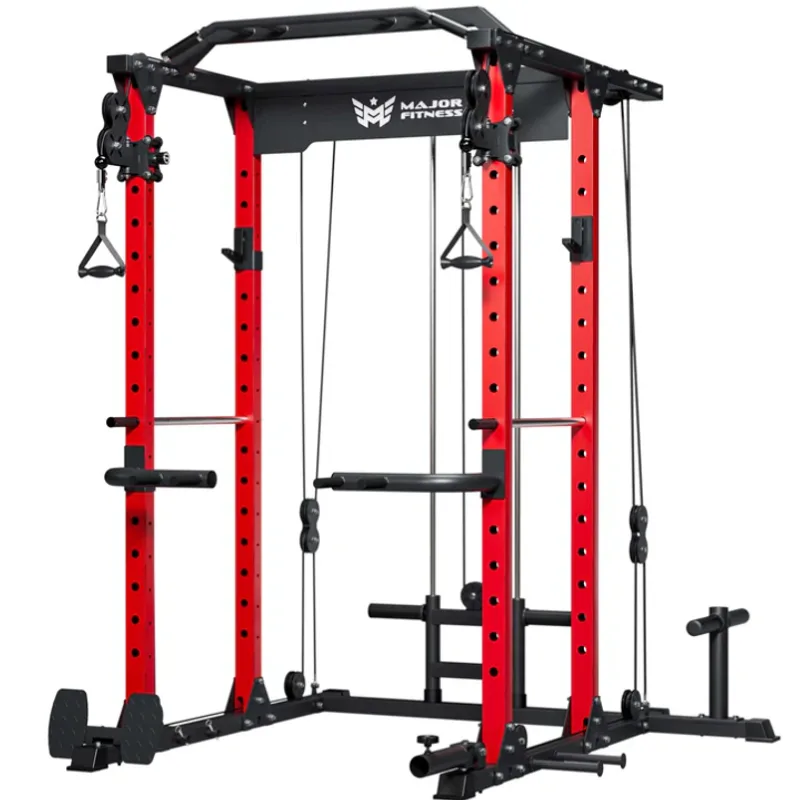
Major Fitness PLM03
Pros
- All-in-one design includes cable crossover system
- 1,600 lb rated capacity is best in class
- Included attachments would cost $300+ separately
Cons
- Large footprint requires significant floor space
- Cable pulleys not as smooth as dedicated functional trainers
The Major Fitness PLM03 takes a different approach by including a cable crossover system in the base package. For lifters who want rack training and cable exercises without buying separate equipment, the PLM03 delivers substantial value at $799.
The 3x3 11-gauge steel construction and 1,600 lb rated capacity put it at the top of this roundup for raw structural specs. The included cable crossover, lat pulldown, and low row functionality would cost $300-$500 as add-ons to other racks. That bundled value makes the PLM03 competitive despite the higher base price.
The trade-off is footprint. The cable towers add significant width, requiring more floor space than a standard power rack. The cable pulleys, while functional, don’t match the smoothness of dedicated functional trainers like the REP FT-5000. For lifters who prioritize cable work, a separate functional trainer may be a better long-term investment.
Titan Fitness X-3 Flatfoot — Best Mid-Range
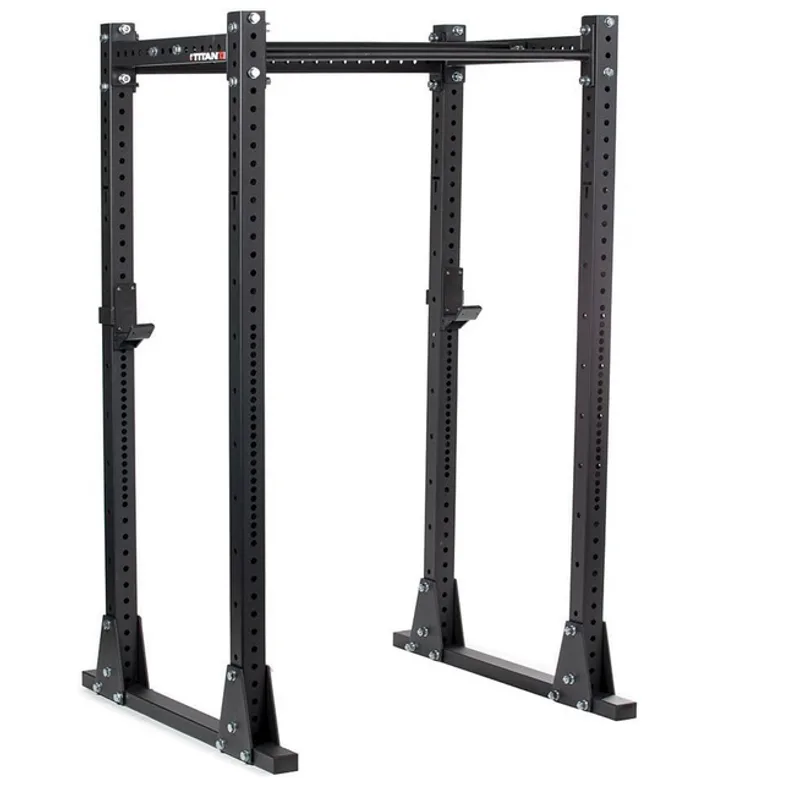
Titan Fitness X-3 Flatfoot
Pros
- 3x3 uprights at a sub-$700 price point
- No need to bolt to floor with flat foot design
- Compatible with Rogue Monster accessories
Cons
- Paint finish chips more easily than REP racks
- Customer service response times can be slow
The X-3 Flatfoot splits the difference between the budget T-3 and premium options. The 3x3 inch 11-gauge steel matches the REP PR-4000’s construction at a lower price. The flat foot design eliminates the need for bolting, and cross-compatibility with Rogue Monster accessories opens up a wide attachment market.
At $699, the X-3 undercuts the PR-4000 while matching its core structural specs. The 1,650 lb weight capacity is the highest in this roundup. For lifters who want 3x3 quality without approaching $900, the X-3 is a strong choice.
Paint durability is the most common complaint in user reviews — the finish chips more easily than REP’s powder coat. Structurally and functionally, the X-3 performs at a level that matches racks costing $200-$300 more.
| Spec | REP Fitness PR-4000 | Titan Fitness T-3 Series | REP Fitness PR-1100 | Major Fitness PLM03 | Titan Fitness X-3 Flatfoot |
|---|---|---|---|---|---|
| Rating | 9.4/10 | 8.8/10 | 8.5/10 | 8.6/10 | 8.7/10 |
| Price | $899 | Check price | Unavailable | Check price | $389.99as of Oct 18, 2026 |
| Steel | 3x3" 11-gauge | 2x3" 11-gauge | 2x2" 14-gauge | 3x3" 11-gauge | 3x3" 11-gauge |
| Weight Capacity | 1,000 lbs | 1,100 lbs | 700 lbs | 1,600 lbs | 1,650 lbs |
| Hole Spacing | 1" through bench zone | 2" Westside pattern | 1" through bench zone | — | Westside pattern |
| Depth | 24" or 30" options | 24" or 36" options | 24" | 30" | 24" or 36" options |
| Colors | 6 color options | Black, silver | 4 color options | Black, red | Black |
| Included | — | — | — | Cable crossover, lat pulldown | — |
| Check Price → | Check Price → | Check Price → | Check Price → | Check Price → |
Prices change daily — tap Check Price for the current Amazon price. Numbers shown were verified on the "as of" date.
Frequently Asked Questions
Do I need to bolt my power rack to the floor?
Flat foot racks (REP PR-1100, Titan X-3 Flatfoot) are designed to be stable without bolting. Standard racks benefit from bolting, especially when re-racking heavy weight or using cable attachments that create lateral pull. Most garage gym owners bolt using concrete anchors — a 30-minute job.
What ceiling height do I need for a power rack?
Standard racks are 80-90 inches tall. Add at least 6 inches for pull-up clearance. A standard 8-foot (96-inch) ceiling works for most racks. Low-ceiling basements (84 inches or less) need short racks — both REP and Titan offer 72-80 inch versions.
Is a power rack worth it over a squat stand?
A power rack provides four-sided safety and a more stable structure for heavy lifts. Squat stands save space and cost less but require wall-mounted or standalone safety arms. For serious home gym training, a power rack is the better long-term investment.
How much should I spend on a power rack?
For most home gym owners, $500-$900 buys an excellent rack that will last decades. Spending under $400 requires compromises on steel gauge and attachment compatibility. Spending over $1,000 enters premium territory (Rogue, Sorinex) with diminishing returns for non-competitive lifters.
The Verdict
The REP Fitness PR-4000 earns the top recommendation for its unmatched combination of build quality, attachment ecosystem, and community-proven reliability. Budget-conscious builders should look at the Titan T-3 at $549 — the savings can go toward plates and a quality barbell. And at $399, the REP PR-1100 proves that a legitimate power rack setup is accessible to nearly any budget.