Stair climbers have quietly become one of 2026’s fastest-growing home cardio categories. The push toward compact revolving stairmills has pushed manufacturers to shrink footprints by 30–40% compared to older commercial designs, and the sub-$500 market has filled in with machines that deliver a genuine lower-body burn without a gym membership. Rotating stair climbing activates glutes, quads, hamstrings, and calves under load — calorie-per-minute output rivals running without the joint impact. This list cuts through the noise: five machines under $500 that are actually worth the floor space.
| Spec | Signature Fitness Continuous Climber | Xiser Commercial Mini Stairmaster | MaxiClimber XL-2000 | Sunny Health & Fitness SF-S021001 Climber Stepper | Stamina Spacemate 40-0069 Folding Stepper |
|---|---|---|---|---|---|
| Rating | 8.8/10 | 8.5/10 | 8.2/10 | 8.0/10 | 7.4/10 |
| Price | Check price | $479.20-$577.00as of Oct 18, 2026 | Check price | Check price | Unavailable |
| Type | Continuous Stair Climber | Mini Stair Stepper | Vertical Climber | Stair Stepper with Handlebar | Folding Mini Stepper |
| Weight Capacity | 375 lbs | 400 lbs | 300 lbs | — | 250 lbs |
| Resistance Levels | 15 | — | 12 (hydraulic) | — | — |
| Dimensions | 54" L × 38" W × 51" H | — | — | — | — |
| Display | Electronic LED (time, calories, heart rate, mileage, steps) | — | — | — | Battery-operated digital monitor |
| Extras | Water bottle holder, reading rack | — | — | — | — |
| Machine Weight | — | 14 lbs | — | — | — |
| Dimensions (In Use) | — | 21" × 13" × 14" | — | — | — |
| Dimensions (Folded) | — | 20.5" × 13" × 4" | — | — | — |
| Frame | — | Aircraft-grade cast aluminum | Aluminum | — | Steel |
| Warranty | — | 5 years (consumer), 1 year (institutional) | — | — | — |
| Max User Height | — | — | 6'6" | — | — |
| Folded Footprint | — | — | 14" × 26" | — | — |
| App | — | — | MaxiClimber Fitness App (free) | — | — |
| Step Height Range | — | — | — | 3.6" – 16.9" | — |
| Resistance System | — | — | — | Dual hydraulic cylinders | 2 adjustable hydraulic cylinders |
| Handlebar | — | — | — | Ergonomic with pulse heart rate sensors | — |
| Connectivity | — | — | — | Bluetooth (SunnyFit app) | — |
| Workouts | — | — | — | 1,000+ trainer-led via SunnyFit | — |
| Design | — | — | — | Foldable, transport wheels | — |
| Assembled Size | — | — | — | — | 30" L × 16" W × 54" H |
| Folded Size | — | — | — | — | 38.5" L × 16" W × 9.5" H |
| Check Price → | Check Price → | Check Price → | Check Price → | Check Price → |
Prices change daily — tap Check Price for the current Amazon price. Numbers shown were verified on the "as of" date.
Best Stair Climbers Under $500 for Home Gyms in 2026
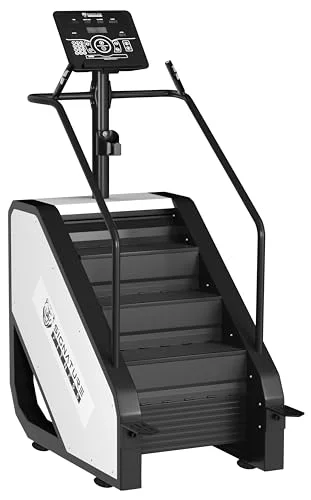
1. Signature Fitness Continuous Climber — Best Overall
Signature Fitness Continuous Climber
Pros
- Continuous rotating pedal action closely replicates climbing real stairs — more sport-specific than piston-style mini steppers
- 375 lb weight capacity is the highest in this price tier among continuous climbers
- 15 resistance levels span light cardio warm-ups through demanding HIIT intervals
- LED display tracks five metrics simultaneously including heart rate via pulse grip sensors
- Under $500 puts commercial-style stair climbing within reach of home gym budgets
Cons
- Large footprint (54" × 38") requires significant floor space — not suitable for small apartments
- At 418 lbs, placement is permanent once assembled — this machine does not move after setup
- Some owner reports note customer service response time can be slow for warranty claims
The Signature Fitness Continuous Climber is the closest you get to a stepmill experience without spending $2,000. Its pedals rotate continuously rather than bouncing back up on a piston — the motion more closely matches actual stair climbing than any mini stepper at this price. Owner reports consistently highlight the smooth pedal action and the 375 lb weight capacity, which stands out in a market where most continuous climbers cut off at 250–300 lbs.
The 15 resistance levels cover enough range to work as a warm-up machine or a serious HIIT tool. The electronic display tracks five metrics simultaneously, and the included water bottle holder and reading rack signal that Signature Fitness designed this for sustained session use, not just short bursts.
The footprint is the honest tradeoff. At 54 × 38 inches, this machine claims territory in a garage or dedicated gym room. Apartments and small spaces should look elsewhere. And at 418 lbs assembled, position it correctly before plugging it in — it does not move afterward.
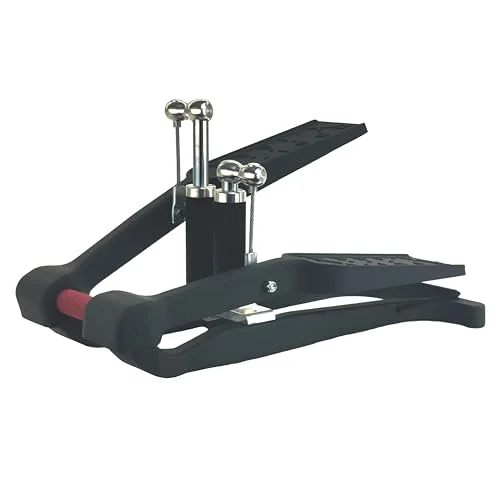
2. Xiser Commercial Mini Stairmaster — Most Durable
Xiser Commercial Mini Stairmaster
Pros
- 400 lb weight capacity is the highest on this list — the only sub-$500 mini stepper rated for heavier users
- Cast aluminum frame matches the build quality of commercial equipment without the commercial price
- 5-year consumer warranty is three to five times longer than any competing model in this price range
- 14 lb weight and 4-inch folded profile make it genuinely portable — fits under a desk or in a closet
- Patented hydraulic cylinder system provides smooth, consistent resistance with no electronics to fail
Cons
- No digital display — tracks nothing; you will need a phone app or watch for metrics
- No handlebar — requires core engagement for balance, which can be challenging for beginners
- Some owners report minor hydraulic creaking after extended use that requires occasional lubrication
The Xiser is an outlier in this category. Most sub-$500 steppers are consumer-grade machines with plastic frames and 1-year warranties. The Xiser is cast aircraft-grade aluminum, rated for 400 lbs, and backed by a 5-year warranty — specs that belong on machines costing three times as much.
The entire unit weighs 14 lbs and folds to 4 inches tall. Based on owner reports, it handles years of daily use without the frame flex and wobble that shows up in cheaper hydraulic steppers. The patented hydraulic system uses no electronics, which means there is nothing to fail. The resistance is adjustable, and the step feel is smooth enough to use at high cadence during interval work.
The tradeoffs are real: no display, no handlebar. You step on it and go. For users who track pace on a watch or phone and value durability above all else — athletes, heavier lifters, garage gym owners who buy once and keep it forever — the Xiser earns its price. For beginners who want metrics and handlebar support, the Sunny Health below is the better fit.
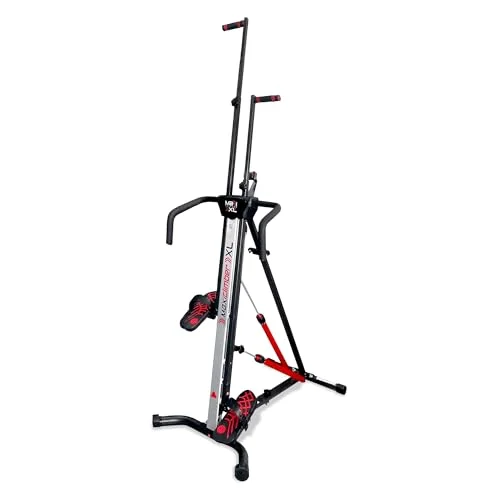
3. MaxiClimber XL-2000 — Best Full-Body Climber
MaxiClimber XL-2000
Pros
- Dual-cable climbing motion engages arms, shoulders, core, glutes, and legs simultaneously — more muscle groups than a standard stepper
- 12 hydraulic resistance levels let beginners start slow and progress without purchasing new equipment
- Folds to 14" × 26" — the most space-efficient full-body cardio machine under $400
- Ships 90% pre-assembled and the free fitness app provides structured workouts from day one
- Aluminum frame keeps machine weight low enough for one person to move or reposition
Cons
- 300 lb weight capacity is the lowest on this list — not suitable for heavier users
- Vertical climbing motion has a learning curve — balance and coordination take 1–2 weeks to feel natural
- No LCD display built in; metric tracking depends entirely on the companion app
The MaxiClimber XL-2000 is a vertical climber, not a step machine. Your arms and legs move in opposition through a full climbing range of motion — the result is a full-body cardio stimulus that standard steppers cannot replicate. Glutes, quads, hamstrings, calves, lats, shoulders, and core all engage in each repetition.
The 12-level hydraulic resistance system starts light enough for complete beginners and provides enough load for intermediate athletes to feel challenged. The aluminum frame folds to 14 × 26 inches — the most compact full-body cardio machine under $400, by a significant margin. Assembly is 90% complete out of the box, and the free MaxiClimber app gives beginners a structured starting point.
The 300 lb weight capacity is the binding constraint. Heavier athletes should choose the Xiser or Signature Fitness. Vertical climbing also has a learning curve — balance and coordination take a week or two to feel natural. Once that curve passes, the calorie burn and muscle engagement per session rivals machines that cost twice as much.
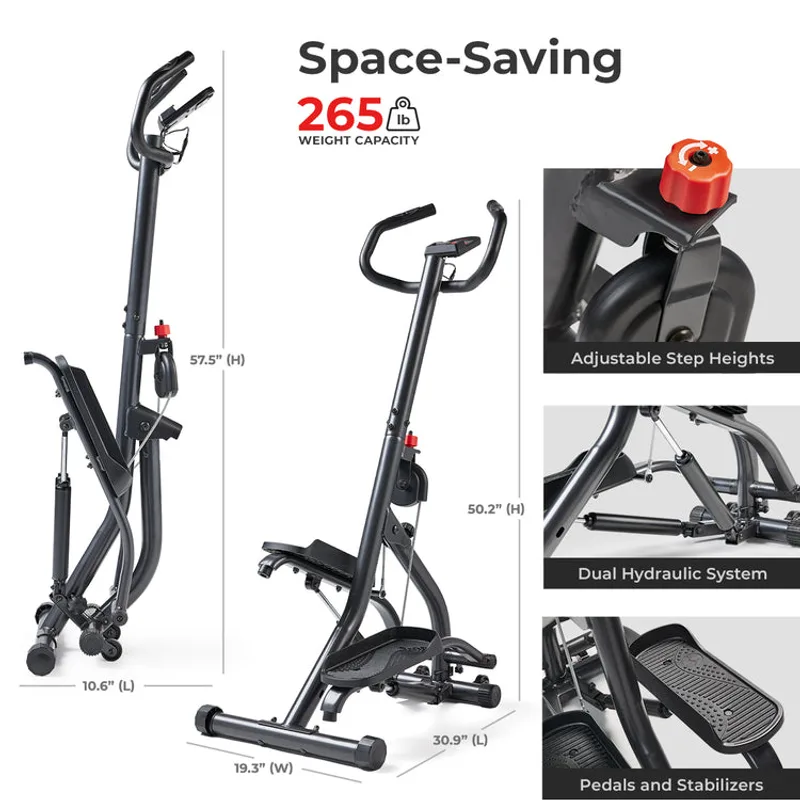
4. Sunny Health & Fitness SF-S021001 — Best Value
Sunny Health & Fitness SF-S021001 Climber Stepper
Pros
- Adjustable step height from 3.6 to 16.9 inches accommodates both short recovery strides and deep full-range climbs
- SunnyFit app unlocks 1,000+ trainer-led workouts and 10,000+ virtual scenic routes for less than the cost of a gym month
- Pulse grip sensors on the handlebar give continuous heart rate feedback without a chest strap or wearable
- Foldable frame with transport wheels stores upright in a closet or against a wall between sessions
- At $249, it delivers handlebar stability and app integration that similar machines charge $100–$150 more to offer
Cons
- Hydraulic step resistance is not adjustable by level — intensity comes from stride speed and depth only
- LCD display shows basic metrics only — no touchscreen, no streaming content
- Handlebar height is fixed, which may not suit very tall or very short users equally well
The SF-S021001 earns the best value badge by packing handlebar stability, app connectivity, and a wide step height range into a $249 package. Step height adjusts from 3.6 to 16.9 inches — a span that lets you dial in short, rapid strides for cardiovascular work or deep, slow climbing strides that load the glutes more aggressively.
The SunnyFit app connection is the feature that separates this from similarly priced machines. Access to 1,000+ trainer-led workouts and 10,000+ virtual scenic routes means you have structured programming from day one without a subscription fee. The pulse grip sensors on the handlebar track heart rate in real time — useful for zone training without buying a separate monitor.
The honest limitation: resistance is not adjustable by level selector. Difficulty changes by changing your stride pace and depth, which gives you control but not the clean resistance feedback of a numbered dial. For home gym owners building their first cardio setup under $300, this is the pick.
5. Stamina Spacemate 40-0069 — Best Budget
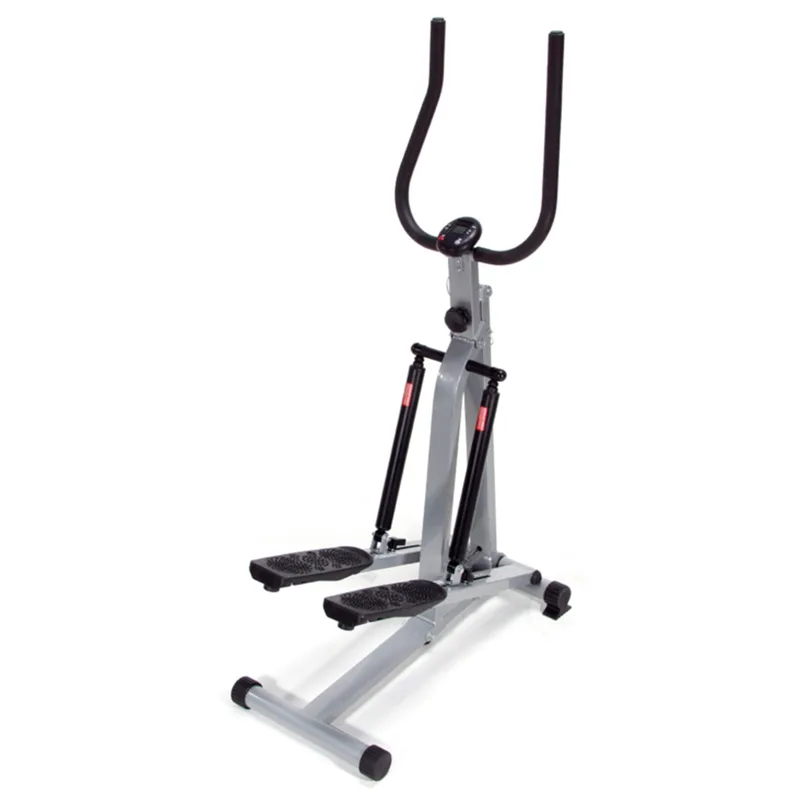
Stamina Spacemate 40-0069 Folding Stepper
Pros
- Under $100 with free shipping makes it the lowest barrier to entry for stair stepping in a home gym
- Dual hydraulic cylinders are independently adjustable — you can increase or decrease resistance on each side
- Folds to 9.5 inches tall for flat storage under a bed or behind a door
- Transport wheels mean one person can move it across the room without lifting
- Digital monitor tracks steps per minute, total steps, time, and calories — all the basics without an app
Cons
- 250 lb weight capacity is the most restrictive on this list — larger athletes should look at the Xiser or Signature Fitness
- Foam-covered handlebars provide grip but no heart rate sensing — needs an external wearable for HR data
- Hydraulic resistance maxes out faster than premium steppers — advanced users will outgrow it within months
Under $100, the Stamina Spacemate delivers the core function of stair stepping — repetitive lower-body climbing motion, adjustable resistance, and calorie tracking — without anything extra. The dual hydraulic cylinders are independently adjustable, which is a feature most mini steppers at this price eliminate.
The folded profile of 9.5 inches tall makes it genuinely storable in a closet, under a bed, or against a wall. The digital monitor covers steps per minute, total steps, elapsed time, and calories — enough for tracking progressive workouts over weeks. Steel frame construction is heavier than aluminum but keeps costs down.
The 250 lb weight capacity is the clearest limitation. Users near or above that limit should step up to the Sunny Health or Xiser. The hydraulic resistance will also reach its ceiling faster for trained athletes — this is a beginner machine that works well as a starting point before investing in a mid-range option.
Buying Guide: What to Look for in a Stair Climber Under $500
Machine Type
Three distinct machine types appear in this price range, and each delivers a different training experience.
Continuous climbers (Signature Fitness) use rotating pedals that mimic real stair biomechanics. The pedal never bounces back — you push it down, it rotates, you step on the next one. This is the closest sub-$500 experience to a commercial stepmill.
Mini steppers (Xiser, Stamina Spacemate) use hydraulic pistons that compress and return under foot pressure. The motion is shorter and less sport-specific than a continuous climber but far more compact and portable.
Vertical climbers (MaxiClimber XL-2000) add arm involvement through a full climbing range of motion. More muscles engaged per session, but the motion takes longer to learn and the machines require ceiling clearance.
Weight Capacity
This is the most important spec to verify before purchasing. Budget steppers often cut weight capacity to 250 lbs to keep costs down. Check your current weight against the machine’s limit and add a margin — sudden movements during climbing can create brief load spikes above your body weight.
- 400 lbs: Xiser Commercial Mini Stairmaster
- 375 lbs: Signature Fitness Continuous Climber
- 300 lbs: MaxiClimber XL-2000
- 250 lbs: Stamina Spacemate
Resistance System
Hydraulic resistance (most machines here) provides smooth stepping feel but cannot always be adjusted in numbered levels — resistance varies with step speed and depth. The Signature Fitness offers 15 numbered levels; the Xiser uses a continuously adjustable hydraulic knob; the Stamina uses independently adjustable cylinders per side.
Electromagnetic resistance (more expensive machines) provides precise, repeatable resistance levels. Not available in the sub-$500 range.
Footprint and Storage
Measure your space before ordering. The Signature Fitness needs 54 × 38 inches of permanent floor space. The Xiser folds to 4 inches tall and stores anywhere. The MaxiClimber folds to 14 × 26 inches and stands upright.
If space is the binding constraint, the Xiser is the correct answer regardless of other preferences.
Display and App Connectivity
Entry-level machines (Stamina) include basic LCD monitors tracking steps, time, and calories. Mid-range machines (Sunny Health) add Bluetooth and full app ecosystems. The Xiser has no display at all.
App connectivity is not a performance feature — it is a motivation and tracking feature. If structured workouts and metric history motivate you to train consistently, prioritize the Sunny Health. If you just want to climb, the Xiser or Signature Fitness are simpler and more durable.
FAQ
Q: Is a stair climber better than a treadmill for a home gym?
It depends on your goals and your joints. Stair climbing loads glutes, quads, and hamstrings more directly than flat treadmill running and produces similar calorie burn in less time. The motion is lower-impact on knees than running. Treadmills offer more versatility — jogging, walking, incline walking, sprints. Both earn their place; a stair climber supplements a treadmill well and can replace one if glute/lower-body development is the priority.
Q: How much space does a stair climber require?
Range widely by type. The Stamina Spacemate folds to 9.5 inches tall and stores under a bed. The Xiser occupies 21 × 13 inches in use and 4 inches folded. The Signature Fitness Continuous Climber requires a dedicated 54 × 38-inch floor space and cannot be moved once assembled. Measure before ordering.
Q: Can a $500 stair climber handle daily use?
The Xiser Commercial Mini Stairmaster is built for institutional use and handles daily training without structural concerns — its 5-year warranty backs that claim. The Signature Fitness Continuous Climber is commercial-grade construction and performs well under regular home use. Budget mini steppers (Stamina, MaxiClimber) are designed for moderate use — 3–5 sessions per week — and will show wear faster under daily high-intensity work.
Q: What is the difference between a stair stepper and a stair climber?
The terms are often used interchangeably, but there is a functional distinction. Mini steppers use pistons — you step down, the platform compresses, then bounces back. Continuous climbers and stairmills use rotating mechanisms — the pedal moves in a continuous downward arc, replicating actual stair climbing biomechanics. Continuous climbers tend to feel more natural to athletes who train on real stairs or have used commercial stairmills in a gym.
Q: Are stair climbers good for weight loss?
Stair climbing is a high-calorie-per-minute activity. A 155 lb person burns approximately 223 calories in 30 minutes on a stair climber, comparable to moderate jogging, according to Harvard Health Publishing data. Combined with appropriate nutrition, regular stair climbing creates a meaningful calorie deficit. The weight-bearing nature of the exercise also preserves lean muscle mass better than non-weighted cardio like cycling.
Conclusion
The Signature Fitness Continuous Climber earns the top spot for buyers who have the floor space and want the most realistic stair-climbing experience under $500. The continuous pedal motion, 375 lb capacity, and 15 resistance levels cover serious training use.
For durability and portability in a compact form, the Xiser Commercial Mini Stairmaster is built to outlast everything else on this list. The 5-year warranty, 400 lb capacity, and cast aluminum frame justify the $409 price for users who prioritize longevity.
Budget-constrained buyers who want structured workouts and app connectivity should look at the Sunny Health SF-S021001 at $249 — the best feature set available at that price point. For a first stair climber under $100, the Stamina Spacemate covers the basics without overcomplicating the purchase.