The 2026 home treadmill market has seen notable updates. NordicTrack refreshed the Commercial 1750 with a more powerful 4.25 CHP motor, a 400 lb weight capacity upgrade, and a larger 16” pivoting touchscreen — addressing complaints that the previous model underserved heavier users. Brushless DC motor technology is entering more mid-range models, improving efficiency and reducing long-term heat wear. Peloton rereleased the Tread+ with a rear safety guard added.
For home gym training, a treadmill needs to handle sustained cardio, survive daily use, and fit your actual space. Subscription costs and screen size matter less than motor durability, belt dimensions, and weight capacity. These five treadmills cover every use case from serious runners to connected fitness enthusiasts, from $1,599 to $2,495.
Quick Picks
NordicTrack Commercial 1750 is the best overall home treadmill — 4.25 CHP, 400 lb capacity, decline capability, and iFIT access at $2,499.
Sole F80 delivers a lifetime warranty, 15% incline, and zero subscription requirement at $1,799. The best pick for serious runners who don’t need a screen ecosystem.
Horizon 7.4 AT brings full-size specs to $1,599 with no monthly fees and open Bluetooth that connects to any third-party fitness app.
Bowflex Treadmill 10 is the only machine in this roundup with both meaningful incline and decline, a 400 lb capacity, and a compact fold at $1,999.
Peloton Tread offers the best screen and live class experience at $2,495, but requires a subscription and has the narrowest belt in this group.
Buying Guide: Choosing the Right Home Treadmill
Motor Size and Sustained Use
Treadmill motor ratings in continuous horsepower (CHP) are more meaningful than peak horsepower figures. A 3.0 CHP motor handles walking and light jogging for occasional use. Dedicated runners averaging 30+ miles per week, or users over 225 lbs, should target 3.5 CHP or higher. The NordicTrack 1750’s 4.25 CHP and Bowflex’s 4.0 HP motors handle sustained daily use with minimal heat stress.
Belt Dimensions
A standard full-size home treadmill belt runs 20” x 55” to 22” x 60”. The 22” width provides comfortable shoulder clearance for most runners. The 60” length accommodates long strides up to 6’4”. If you’re tall or have a long running stride, prioritize 22” x 60” belts. The Peloton Tread’s 20” x 59” belt is the only narrower option in this roundup.
Incline and Decline
Standard max incline is 15%, simulating steep hill training. The key differentiator in 2026 is decline: running downhill engages the quadriceps and tibialis anterior in ways that flat and incline training neglects. Only the NordicTrack 1750 (-3%) and Bowflex Treadmill 10 (-5%) offer decline in this roundup. If downhill simulation matters to your programming, these are your two options.
Subscription Costs
Connected treadmills from NordicTrack and Peloton require monthly subscriptions for their full content libraries. The Horizon 7.4 AT and Sole F80 function completely without any subscription. Bowflex’s JRNY app has a free tier, but advanced coaching costs extra. Over three years, a $39–44/month subscription adds $1,404–1,584 to the machine’s total cost — a number worth factoring into any price comparison.
Space and Folding
Full-size treadmills occupy 68–85” of floor length in use. Most fold vertically for storage. The Bowflex Treadmill 10 folds to 44.5” L — the most compact stored option in this roundup. Measure your training space before purchasing: width matters as much as length. Add 24” of clearance behind the belt for safety.
Weight Capacity
Home treadmill weight limits in this roundup range from 300 to 400 lbs. Capacity should account for both user weight and the dynamic loading from running stride impact, which can momentarily exceed static bodyweight. Users over 250 lbs should prioritize the 400 lb capacity machines: NordicTrack 1750 and Bowflex Treadmill 10.
Detailed Reviews
NordicTrack Commercial 1750 — Editor’s Pick
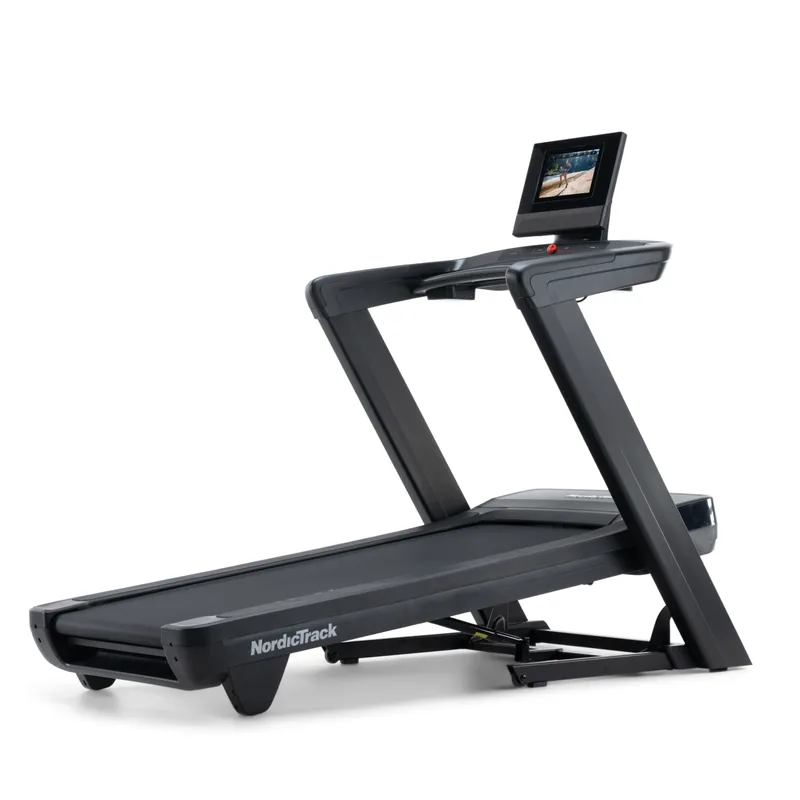
NordicTrack Commercial 1750
Pros
- 400 lb weight capacity — among the highest in its class
- 4.25 CHP motor handles sustained running and heavier users with minimal strain
- 16" pivoting touchscreen with access to iFIT global workout library
- -3% decline enables downhill running for complete lower-body training
- SpaceSaver folding design reduces stored footprint by roughly 40%
Cons
- iFIT subscription required for full workout library ($39/month)
- 12% max incline is lower than Sole F80 and Horizon 7.4 AT
- Some Amazon reviewers report inconsistent customer service experiences
The 2026 Commercial 1750 is a meaningful upgrade over previous versions. The motor has increased to 4.25 CHP, weight capacity jumped to 400 lbs, and the display upgraded to a 16” pivoting touchscreen that rotates for off-treadmill exercises. The belt remains 22” x 60”, and the -3% to 12% incline range covers the majority of training scenarios.
The iFIT integration provides guided workouts, automatic trainer control of speed and incline, and virtual running routes through 50+ countries. The subscription ($39/month or bundled annually) adds real value for runners who benefit from structured programming. Without iFIT, the treadmill functions in manual mode — but the screen experience is substantially diminished without it.
The SpaceSaver fold lifts the deck vertically and locks in place, reducing the footprint by roughly 40% for storage. Assembly takes 90 minutes with two people. At $2,499, the 1750 delivers premium specs without premium-brand pricing. For runners who want iFIT content, serious motor power, and 400 lb capacity, it leads this roundup.
Sole F80 — Best for Runners
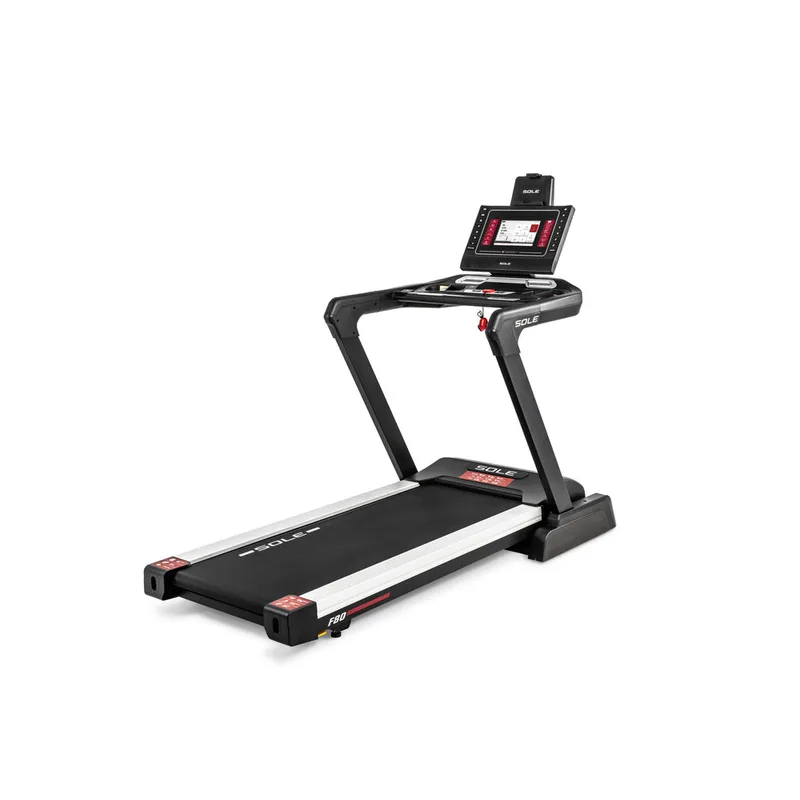
Sole F80
Pros
- Lifetime warranty on frame and motor — best coverage in this price range
- Cushion Flex Whisper Deck reduces joint impact up to 40% versus road running
- No subscription required — all features accessible from the console
- 15% incline delivers steep hill training capacity
- Bluetooth links to Wahoo, Zwift, and other fitness platforms
Cons
- 10.1" display is smaller than NordicTrack and Peloton competitors
- 274 lb machine weight makes repositioning a two-person task
- No decline option for downhill running simulation
The Sole F80 is built for runners who prioritize performance over screen size. The lifetime frame and motor warranty is the most generous coverage in this roundup — Sole backs the machine for the life of ownership, which is rare at $1,799.
The 3.5 CHP motor paired with a 22” x 60” belt handles up to 12 MPH and 15% incline. The Cushion Flex Whisper Deck absorbs impact, reducing joint stress during daily high-mileage training. At 274 lbs, the machine is heavy and stable — minimal vibration at high speeds is a consistent note from long-term users.
No subscription required. The 10.1” Android touchscreen provides basic workout tracking and media connectivity. Sole’s optional Bluetooth app links to fitness tracking platforms, but the machine works completely offline with all programming accessible through the console.
The 10.1” display is functional but visually unimpressive compared to NordicTrack’s 16” or Peloton’s 23.8”. Runners who don’t stream content while training won’t notice. Those who need a screen ecosystem should consider the NordicTrack.
Horizon 7.4 AT — Best Value
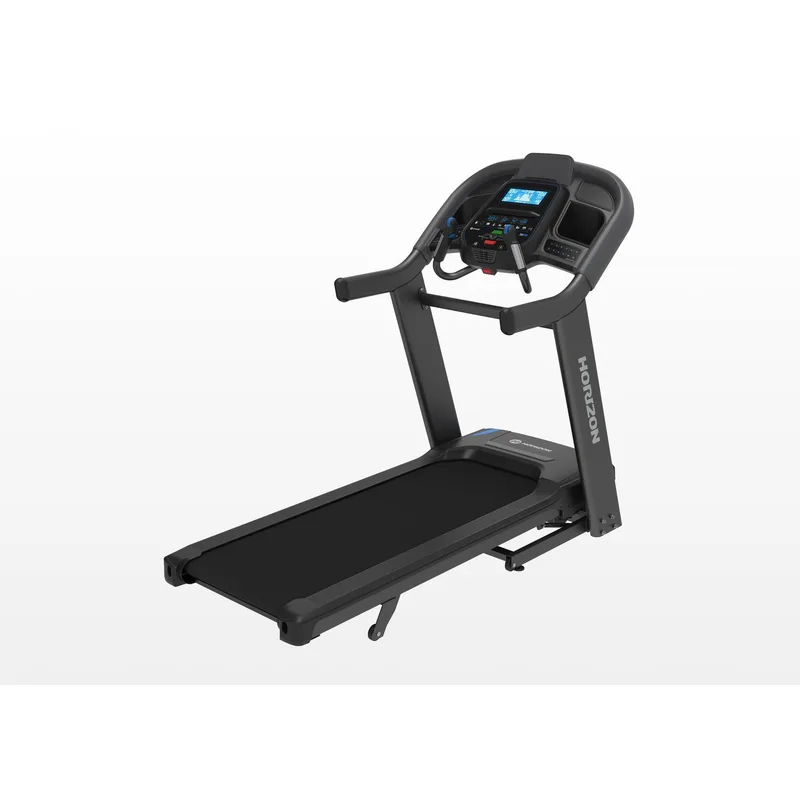
Horizon 7.4 AT
Pros
- No subscription required — SPRINT8 HIIT programming built directly into console
- Open Bluetooth connects to Peloton app, Zwift, Apple Fitness+, and more
- 15% incline matches premium competitors at $500 less
- Lifetime motor warranty at a mid-range price point
- SPRINT8 protocol provides eight automated interval programs without any app
Cons
- No built-in touchscreen — requires phone or tablet for video content
- 325 lb weight capacity is the lowest in this roundup
- No decline option
The Horizon 7.4 AT matches the belt size, incline range, and motor output of treadmills priced $200–500 higher, without requiring any subscription. The SPRINT8 HIIT protocol is built directly into the console — eight automated interval programs run without an app or membership. Each program cycles through sprint and recovery phases based on user-selected intensity.
The Bluetooth connectivity is genuinely open: the 7.4 AT pairs with the Peloton app, Zwift, Apple Fitness+, and any other fitness platform that accepts speed and incline data. You’re not locked into a proprietary ecosystem. Use whatever platform you prefer.
The missing feature is a built-in touchscreen. The 7.4 AT has a basic LCD console — adequate for pace and workout data, but you’ll need a phone or tablet mount for video content. At $1,599, the 7.4 AT is the strongest value proposition in this roundup for buyers who don’t need a proprietary screen experience.
Bowflex Treadmill 10 — Best Decline Option
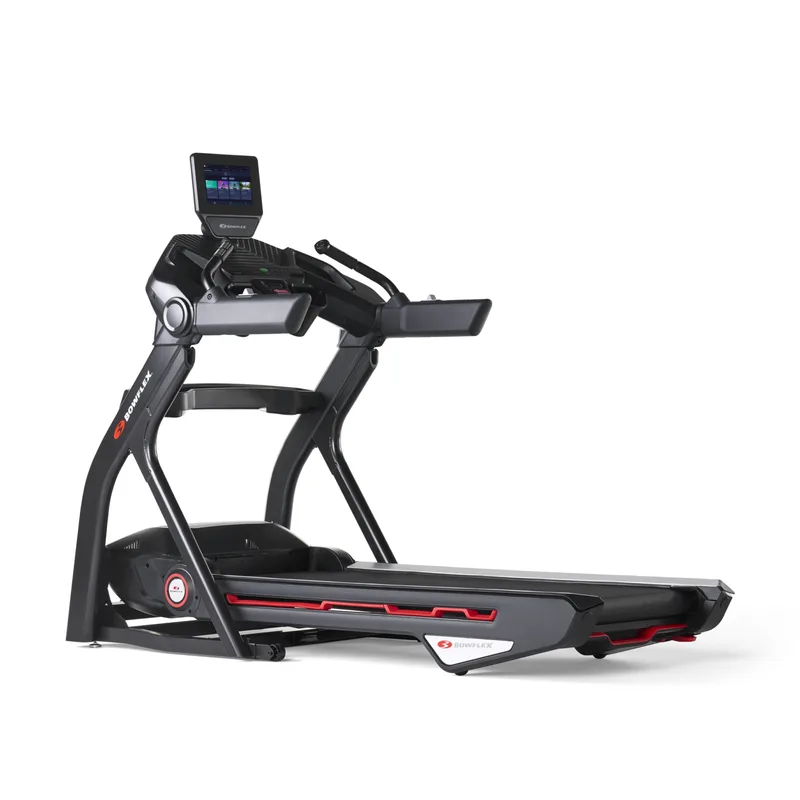
Bowflex Treadmill 10
Pros
- -5% to 15% incline range — widest span in this roundup
- 400 lb weight capacity matches NordicTrack at a $500 lower price
- JRNY coaching automatically adjusts speed and incline during workouts
- 15-year frame and motor warranty
- Folds to 44.5" — the most compact stored footprint in this roundup
Cons
- JRNY subscription required for full programming library
- 10" display is smaller than NordicTrack and Peloton screens
- 323 lb machine weight requires assistance to reposition
The Bowflex Treadmill 10 has the widest incline/decline range in this roundup: -5% decline to 15% incline. For strength-focused runners who include eccentric quad loading through downhill running, or who want complete incline walking protocols, no other machine in this price range matches that span.
The 4.0 HP motor and 400 lb capacity make it appropriate for heavier users. The JRNY coaching system provides automatic speed and incline adjustments during workouts — genuinely useful for interval training sessions. A free JRNY tier is available, but the full programming library requires subscription.
The fold to 44.5” is the best space-saving design in this roundup. The 15-year frame and motor warranty is second only to Sole’s lifetime coverage. At $1,999, the Bowflex undercuts the NordicTrack 1750 by $500 while matching its 400 lb capacity and adding greater decline range.
The 10” display is the main compromise. For buyers who need decline capability without paying NordicTrack prices, the Bowflex delivers.
Peloton Tread — Best Connected Experience
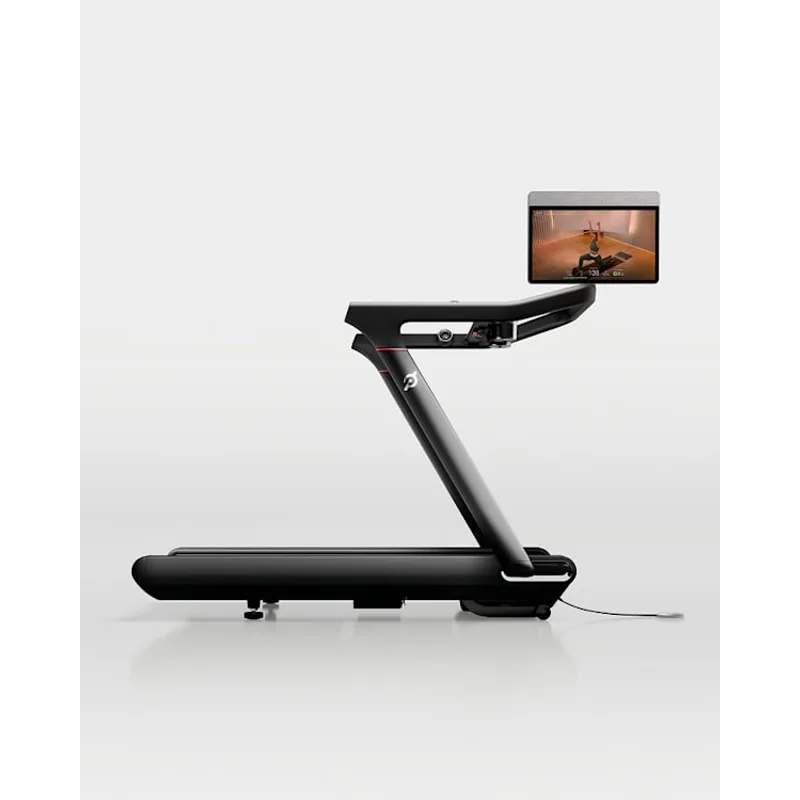
Peloton Tread
Pros
- 23.8" rotating touchscreen is the largest display in this roundup
- Live and on-demand class library with instructor-led running workouts
- Compact 68" footprint fits in smaller spaces than most full-size treadmills
- Auto-follow adjusts speed and incline to match instructor pace in real time
- Apple Watch integration delivers heart rate data directly to the platform
Cons
- $44/month All-Access Membership required for full class library
- 20" belt width is narrower than all four other machines in this roundup
- 12.5% max incline lower than Sole, Horizon, and Bowflex competitors
- Also available on Amazon with Prime delivery
The Peloton Tread is the best option for runners who want live and on-demand classes with high production quality. The 23.8” rotating touchscreen is the largest display in this roundup — it delivers a studio-grade experience for instructor-led workouts. Peloton’s class library covers running, walking, bootcamp, and strength, with live classes that create genuine training accountability.
The auto-follow feature adjusts speed and incline in real time to match instructor cues, removing manual adjustments mid-run. Apple Watch integration provides heart rate data directly to the Peloton platform without a chest strap.
The limitations are real. The 20” running belt is narrower than the 22” standard — noticeable for taller runners or those with wide strides. The 12.5% max incline is lower than Sole, Horizon, and Bowflex. The $44/month All-Access Membership is required for the full class library. At $2,495 plus $44/month, total cost of ownership is the highest in this group by a significant margin.
Peloton’s value proposition is the class experience. Runners motivated by instructor-led group workouts get a genuinely premium product. Those who train independently or use third-party apps are paying a premium for features they won’t use.
| Spec | NordicTrack Commercial 1750 | Sole F80 | Horizon 7.4 AT | Bowflex Treadmill 10 | Peloton Tread |
|---|---|---|---|---|---|
| Rating | 9.2/10 | 9.0/10 | 8.8/10 | 8.6/10 | 8.4/10 |
| Price | $2,499 | $1,799 | $1,599 | $1,999 | $2,495 |
| Motor | 4.25 CHP | 3.5 CHP | 3.5 CHP | 4.0 HP | 3.0 HP |
| Speed | 0–12 MPH | 0–12 MPH | 0–12 MPH | 0–12 MPH | 0–12.5 MPH |
| Incline | -3% to 12% | 0–15% | 0–15% | -5% to 15% | 0–12.5% |
| Belt | 22" x 60" | 22" x 60" | 22" x 60" | 22" x 60" | 59" x 20" |
| Display | 16" pivoting touchscreen | 10.1" touchscreen | — | 10" HD console | 23.8" HD rotating touchscreen |
| Weight Capacity | 400 lbs | 350 lbs | 325 lbs | 400 lbs | 300 lbs |
| Footprint | 77.3" L x 37" W | 82.5" L x 38" W | Folds for storage | 85" L x 39.6" W (folds to 44.5") | 68" L x 33" W |
| Assembly | Moderate (90 min, 2 people) | Moderate (2 people recommended) | Moderate | Moderate | Moderate |
Frequently Asked Questions
How much should I spend on a home treadmill?
The $1,400–$2,500 range covers the most capable home treadmills. Under $1,000, you trade motor durability and belt size for price — motors in that range typically run at or near maximum capacity, wearing faster. Above $2,000, you’re primarily paying for larger screens and content ecosystems. The Horizon 7.4 AT at $1,599 and Sole F80 at $1,799 deliver professional-quality performance without premium branding costs.
Do I need an iFIT or Peloton subscription?
No. The Sole F80 and Horizon 7.4 AT work completely without subscriptions — all features accessible from the console. NordicTrack and Peloton treadmills function in manual mode without subscriptions, but the screen experience is substantially reduced. If you train independently or use third-party apps, the Horizon 7.4 AT’s open Bluetooth is a better fit than a locked ecosystem.
What treadmill is best for heavier users?
The NordicTrack Commercial 1750 and Bowflex Treadmill 10 both carry 400 lb capacities at $2,499 and $1,999 respectively. Both are appropriate for users over 250 lbs who want a meaningful safety margin. The Sole F80’s 350 lb capacity handles most users. Avoid treadmills with 300 lb capacities if you weigh over 225 lbs — running stride impact can momentarily exceed static bodyweight.
How loud are home treadmills?
Treadmill noise comes from two sources: motor and belt-foot impact. Higher CHP motors run below peak strain at typical speeds, producing less noise. The Sole F80’s Cushion Flex Whisper Deck is specifically designed to reduce both impact noise and vibration. At comparable speeds and user weights, most modern folding treadmills produce 65–75 dB during running — audible through interior walls but manageable in a basement or garage gym.
Can a treadmill damage a wood or concrete floor?
Yes. Unanchored treadmills vibrate and can scratch hardwood or leave marks on concrete. A rubber equipment mat (minimum 4mm thickness) under the machine prevents floor damage, reduces vibration, and adds stability. A rubber mat combined with the machine’s built-in cushioning also significantly reduces impact noise transmitted to rooms below.
The Verdict
The NordicTrack Commercial 1750 is the best all-around home treadmill for most buyers — 4.25 CHP, 400 lb capacity, decline capability, and a strong iFIT library at $2,499. Runners who don’t want subscription dependency should go with the Sole F80: lifetime warranty, 15% incline, and zero recurring costs at $1,799. Budget-conscious buyers who want subscription-free operation and full incline training get the Horizon 7.4 AT at $1,599. The Bowflex Treadmill 10 at $1,999 is the right call for anyone who wants both incline and decline without paying NordicTrack prices. And connected fitness subscribers who want the best class experience should go directly to the Peloton Tread at $2,495.