Weighted vests became one of the most discussed fitness tools in early 2026. A March 2026 report from Healio described them as “the trend of the moment,” with consumer interest driven by social media, and Consumer Reports updated their weighted vest rankings in March 2026 after testing multiple new models. The market is expected to grow past $310 million by 2031 — a figure that reflects how quickly weighted vests have moved from niche CrossFit gear to standard home gym equipment.
The appeal is practical: a vest adds load to movements that would otherwise plateau. Pull-ups, dips, push-ups, runs, and ruck marches all become more productive at 15–20 lbs than at bodyweight alone. No machine required, no barbell needed — a vest converts any bodyweight movement into a weighted one.
This roundup covers five vests at different price points and design philosophies: a premium plate carrier, the top adjustable Amazon option, the best value fixed-weight vest, the best budget adjustable, and the lightest running-focused pick.
Quick Picks
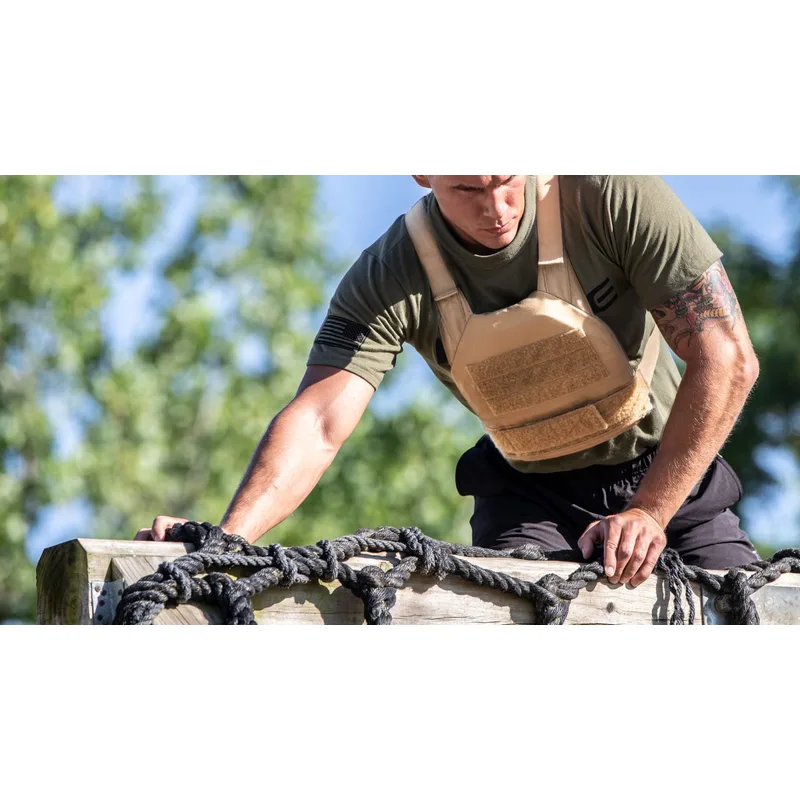
Rogue Plate Carrier is the Editor Pick — open design, plate-based loading, and American construction make it the best vest for serious pull-up work and high-intensity training at $165. Plates are extra.
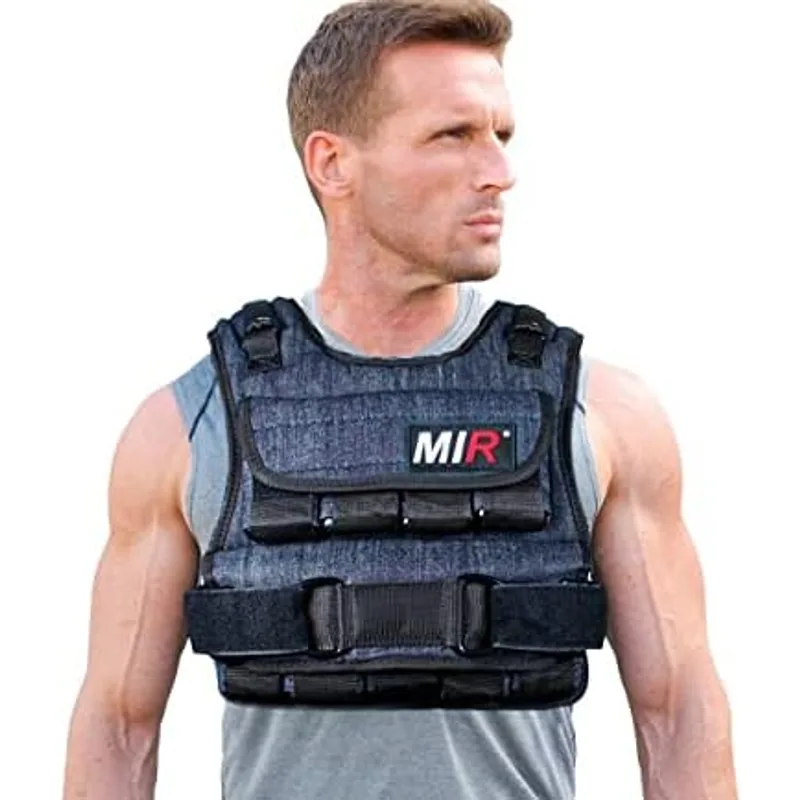
MiR Air Flow Adjustable Vest is the best Amazon pick for trainees who want a single vest from 20 to 60 lbs. Compact, low-profile, lifetime warranty.
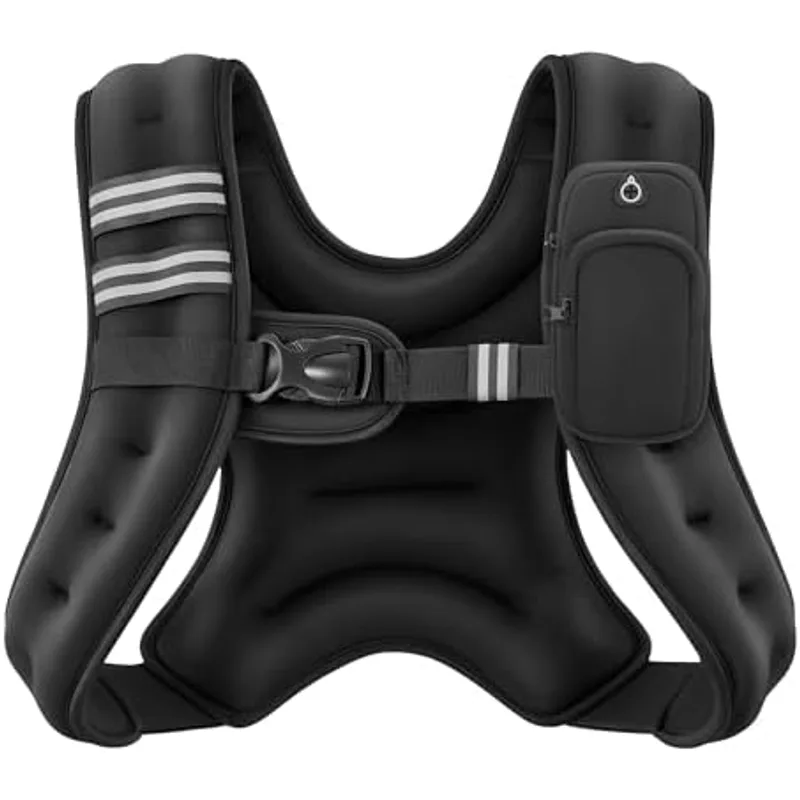
ZELUS Weighted Vest is the best value under $50 — seven weight options, reflective strips, and a durable chloroprene shell that outperforms cheaper neoprene alternatives.
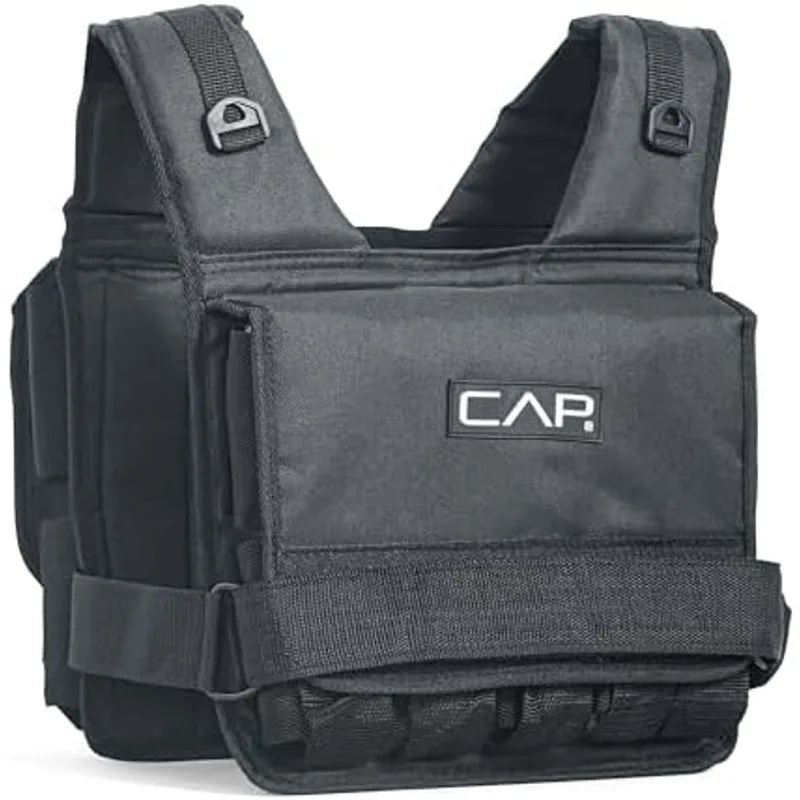
CAP Barbell Adjustable Vest is the best budget adjustable option — removable 0.75 lb packs let you build up load in small increments for under $65.
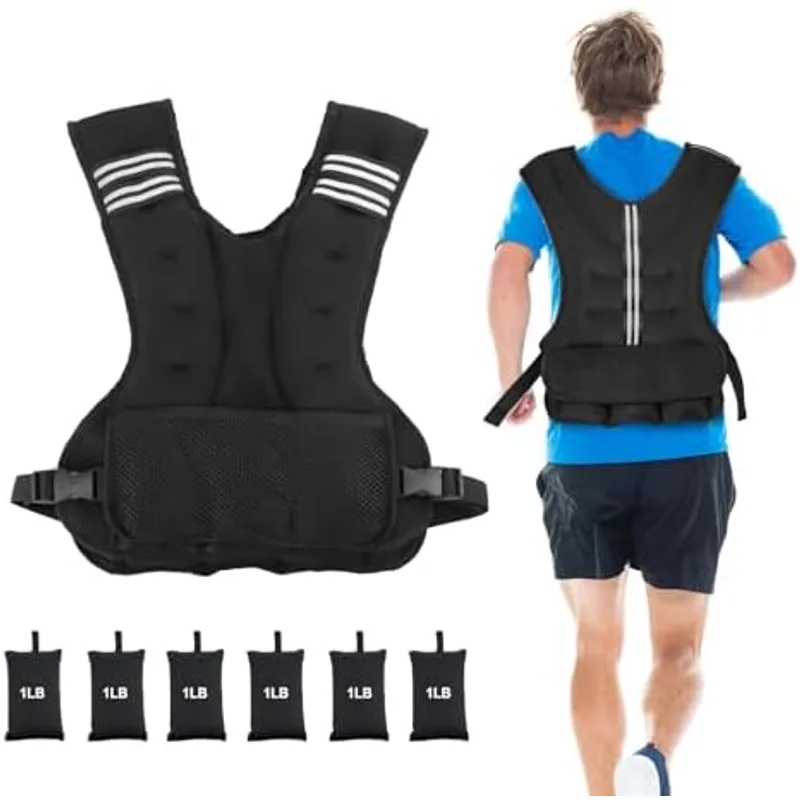
Henkelion Adjustable Vest is the best running vest in this roundup — closest-fitting profile with reflective strips and a 11–20 lb range appropriate for cardio and rucking.
Comparison
| Vest | Type | Weight Range | Key Feature | Price |
|---|---|---|---|---|
| Rogue Plate Carrier | Plate carrier | Up to 40 lbs | Open design, USA-made | $165 (plates extra) |
| MiR Air Flow | Adjustable plugs | 20–60 lbs | Widest range, lifetime warranty | $230.62 as of Oct 18, 2026 |
| ZELUS 20lb | Fixed weight | 6–30 lb options | Reflective, best value | Check price |
| CAP Barbell 20lb | Adjustable packets | Up to 20 lbs | Small increments, neoprene pad | Check price |
| Henkelion 20lb | Adjustable bags | 11–20 lbs | Slim running profile | Check price |
Buying Guide: How to Choose a Weight Vest
Plate Carrier vs. Fill-Based Vest
Plate carriers (like the Rogue) use rigid cast iron or steel plates in defined front and back pockets. The weight sits close to the body, doesn’t shift during movement, and the load path is predictable. This makes them superior for pull-ups, barbell movements, and running form — but plates are sold separately and the initial investment is higher.
Fill-based vests (MiR, CAP, ZELUS, Henkelion) use steel plugs, iron shot packets, or iron sand bags distributed in multiple pockets across the vest. They’re generally less expensive and easier to get into the correct weight immediately, but the fill can shift slightly during dynamic movements. The MiR’s plug system minimizes this more than sandbag designs.
How Much Weight Do You Need?
For running: Stay between 10–15% of bodyweight. For a 180 lb person, that’s 18–27 lbs. Too much weight changes gait mechanics and increases injury risk. The Henkelion (11–20 lb) and ZELUS (20 lb) hit this range cleanly.
For pull-ups and dips: 20–45 lbs is the useful working range for most intermediate trainees. Beyond 45 lbs, a dip belt is often more practical. The Rogue carrier (up to 40 lbs) and MiR (up to 60 lbs) cover this range.
For rucking: 25–45 lbs is the standard loaded ruck range. The MiR at 40–60 lbs and the Rogue at up to 40 lbs are the right tools for sustained load carry. Avoid sandbag fill at high weights for long rucks — shifting weight is fatiguing over distance.
For general conditioning: A fixed 20 lb vest (ZELUS or CAP) works for most conditioning circuits, kettlebell flows, and HIIT work. Buy the weight you’ll actually use rather than the maximum available.
Fit and Comfort
A vest that bounces during runs or binds during overhead work will be abandoned. Key fit factors:
- Chest strap: Every vest here has one, but the tightness range varies. Measure your chest and compare to the listed fit range before buying.
- Shoulder pad depth: CAP’s neoprene shoulder pads are the most cushioned for extended wear. The Rogue’s minimal padding works because the plate weight is close-fitted, not resting entirely on the shoulders.
- Profile: The Rogue and MiR sit closest to the body. The CAP and Henkelion have slightly more bulk but are still manageable.
Fixed Weight vs. Adjustable
Fixed-weight vests (ZELUS) are simpler — no packets to manage, no risk of a pocket opening mid-workout. The limitation is that you’re stuck at that weight. Adjustable vests let you progress and let multiple people of different strengths use the same vest.
If you’re buying for a single purpose (runs at 20 lbs), fixed works well. If you’re using it across multiple training types, adjustable is worth the extra cost.
Detailed Reviews
Rogue Plate Carrier — Editor Pick
Rogue Plate Carrier
Pros
- Open design allows full range of motion for pull-ups, dips, and push-ups without the vest binding at the shoulders or restricting the arms
- 1000D Cordura and X-box reinforced stitching hold up to daily high-intensity training — handles the abrasion that destroys cheaper vests
- Plate carrier design concentrates weight directly at the sternum and upper back — a cleaner, more stable load path than sandbag-filled vests
- Low-profile cut doesn't restrict shoulder movement during overhead work or interfere with arm swing during runs
- Upgradeable — start with a single plate and add weight incrementally as strength improves without buying a new vest
Cons
- Rogue plates sold separately, adding $30–70+ to the total cost at purchase
- Designed around Rogue's own plate dimensions — most third-party plates won't fit correctly
- Only available direct from Rogue, not on Amazon
The Rogue Plate Carrier is purpose-built for training, not general fitness. The open-side design is what separates it from fill-based vests — there’s no material connecting the front and back panels under the arms, so shoulder abduction and rotation during pull-ups, push-ups, and dips is completely unrestricted. This matters for overhead pressing and any movement that requires the arm to move away from the torso.
The plate system is the other differentiator. Rogue’s contoured cast plates sit flush against the chest and upper back without creating pressure points. A 10 lb plate in the front pocket feels different from 10 lbs of sandbag fill — the rigid plate doesn’t shift, so the load doesn’t move as you move. Athletes who have used fill-based vests during pull-up ladders and then switched to a plate carrier notice the difference immediately.
1000D Cordura and X-box stitching at stress points are not marketing terms — they’re construction choices that extend product life under the specific stresses of daily CrossFit-style training. The vest handles sweat, abrasion, and daily use without degrading.
The honest limitations: the vest costs $165 empty, and you need to buy plates separately. Rogue’s Echo Cast Plates (designed to fit this carrier) run approximately $30–70 depending on weight. Total investment for a loaded vest starts around $200. If you want something working out of the box under $100, look at the ZELUS or CAP.
MiR Air Flow Adjustable Weighted Vest — Best Adjustable
MiR Air Flow Adjustable Weighted Vest
Pros
- Widest adjustable weight range in this roundup — 20 lbs to 60 lbs in 3 lb increments covers everything from conditioning runs to heavy resistance work
- 3 lb steel plugs load and seat more securely than sandbag systems and don't develop leaks or tearing over time
- Compact, low-profile silhouette doesn't add bulk during compound movements or moderate-pace runs
- Lifetime warranty is uncommon for fitness accessories and reflects genuine confidence in the build quality
- Front and back independent loading lets you bias weight forward or backward based on the exercise
Cons
- Higher upfront cost than the fixed-weight options in this roundup
- Additional weight plugs cost extra when purchased as add-ons to reach 60 lbs
- At max weight (60 lbs), better suited for strength training than running
The MiR Air Flow is the best adjustable vest on Amazon for athletes who want a single purchase that covers multiple use cases. Starting at 20 lbs and scaling to 60 lbs in 3 lb increments, it bridges conditioning work at lighter loads and strength-focused weighted bodyweight training at heavier ones.
The 3 lb steel plug system deserves attention. Most adjustable vests use small sandbags or iron shot packets. These work, but they develop wear at the seams over time and the packets themselves are fiddly to handle. The MiR’s steel plugs are rigid units that drop into dedicated pockets and don’t shift during movement. Loading is faster and the vest’s weight distribution stays consistent across sessions.
The “Air Flow” designation refers to ventilation channels built into the vest construction. At 20–30 lbs during moderate training, this reduces heat buildup meaningfully compared to solid-fill vests. At 50–60 lbs during heavy strength work, the benefit is less noticeable.
The lifetime warranty is unusual in this product category and reflects genuine confidence in construction quality. Most fitness accessories offer 1–2 year warranties; the MiR’s lifetime guarantee means any structural failure gets addressed.
The price range ($120–$190) is higher than the other Amazon options here, but this is the only vest in this roundup that scales from a moderate conditioning load to a serious strength training load without buying a second product.
ZELUS Weighted Vest 20lb — Best Value
ZELUS Weighted Vest 20lb
Pros
- Available in seven weight options from 6 lbs to 30 lbs — right size regardless of training stage, and easy to select the exact weight you need rather than buying an oversized vest and removing packs
- Reflective strips on the shoulders and back are a genuine safety feature for low-light outdoor runs — absent on most vests at this price
- Chloroprene rubber shell resists moisture and abrasion better than basic neoprene alternatives in the same price tier
- Adjustable buckle strap holds the vest flush against the body during movement and doesn't loosen mid-set
- Under $50 for a 20 lb vest represents the strongest price-to-quality ratio in this roundup
Cons
- Not expandable — reaching more weight means buying a heavier version rather than adding weight
- Iron sand can shift toward the base of each pocket during extended wear
- No front or back pocket organization for key storage or phone
The ZELUS stands out in this price range because it doesn’t cut the corners that most sub-$50 vests cut. The chloroprene rubber shell is more durable than the neoprene used in cheaper alternatives — it handles sweat and repeated compression better and doesn’t crack or peel at the fold points after months of regular use.
The availability in seven weight options (6–30 lbs) means you don’t have to buy a 20 lb vest and remove weight if you’re starting lighter. A 12 lb version for conditioning runs and a 20 lb version for weighted bodyweight training are different purchases targeting different training goals. That specificity is useful.
The reflective strips are a legitimate safety feature. Running with a dark-colored vest in the morning or evening is a visibility issue. Most vests at this price omit reflective elements entirely; the ZELUS includes them on both shoulders and the back.
The iron sand fill does shift slightly during rapid direction changes and jumping movements — a characteristic of any fill-based vest compared to a plate carrier. For most users this is a minor issue, but athletes doing lateral agility work or box jumps will notice it more than those doing pull-ups and runs.
For a first vest, or a dedicated 20 lb conditioning tool, the ZELUS at $35–$50 is genuinely difficult to beat.
CAP Barbell Adjustable Weighted Vest 20lb — Best Budget Adjustable
CAP Barbell Adjustable Weighted Vest 20lb
Pros
- Removable 0.75 lb weight packets let you dial from near-empty to 20 lbs in small steps — useful for gradual load progression across weeks
- Neoprene shoulder padding spreads the load more evenly than hard-shell plate carriers on sensitive shoulders
- CAP Barbell is a widely distributed brand — product availability and replacement parts are consistent
- Under $65 for a fully adjustable 20 lb vest makes it accessible for first-time vest buyers
- Works cleanly for bodyweight training, walking, and light cardio at 10–15 lb loads
Cons
- 20 lb ceiling limits usefulness for advanced trainees who need 25 lbs or more
- Small 0.75 lb weight packets are more time-consuming to manage than the larger 3 lb MiR plugs
- Bulkier profile than the ZELUS or MiR at equivalent weight
The CAP Barbell vest fills the gap for buyers who want adjustability at the lowest possible price. The 0.75 lb removable iron shot packets let you add load in smaller increments than any other vest in this roundup — useful for weight progressions over a training cycle or for sharing a single vest across multiple household users at different strength levels.
The neoprene shoulder padding is the vest’s strongest comfort feature. On pull-up ladders where the vest is compressing against the traps and neck at the top of each rep, the padded shoulder panels distribute the load more evenly than bare-material alternatives. For extended wear during conditioning circuits, this reduces fatigue at the shoulders.
CAP Barbell’s wide distribution makes this vest consistently available in stock — a practical point for buyers who want fast shipping and confidence in replacement parts.
The 20 lb ceiling is the primary limitation. Once a trainee has adapted to 20 lbs on pull-ups and dips, the only option is to buy a heavier vest or switch to a dip belt for further progression. Beginners and intermediate trainees will find 20 lbs sufficient for 6–12 months; advanced trainees will outgrow it faster.
Henkelion Adjustable Weighted Vest 20lb — Best for Running
Henkelion Adjustable Weighted Vest 20lb
Pros
- Slim, form-fitting profile designed for running — sits close to the body and minimizes bounce compared to bulkier plate-carrier-style vests
- Reflective strips are present on both shoulders and the back — visibility during early morning and evening runs is a real safety benefit
- 11 to 20 lb adjustable range covers the recommended weight for running with a vest (typically 10–15% of bodyweight) without over-loading the joints
- Iron sand bags are well-sealed and more tear-resistant than sandbag designs in cheaper vests
- Lowest price point in this roundup for a functional, adjustable running vest
Cons
- 20 lb maximum rules this out for pull-ups or strength training progressions beyond intermediate level
- Still produces some bounce at faster running paces compared to a fitted plate carrier
- Chest strap is the only size adjustment — limited fit options for very broad or narrow torsos
The Henkelion’s design philosophy is different from the other vests in this roundup — it’s optimized for running and walking rather than for pull-ups or heavy resistance training. The form-fitting cut keeps the vest close to the torso, which reduces the bounce that plagues bulkier designs at jogging and running pace.
The 11–20 lb adjustable range maps well to running use. Most running-with-weight protocols target 10–15% of bodyweight, which for athletes between 130 and 200 lbs puts the useful range right in the Henkelion’s window. Loading more than 20 lbs for running increases impact forces at the hips and knees in ways that aren’t productive for training adaptation.
The reflective strips are present on both shoulders and across the back — critical for road runners logging morning or evening miles. The adjustable chest strap firms up the fit for faster paces where a loose vest would start moving independently of the torso.
The vest still produces some bounce at faster paces compared to a fitted plate carrier, which is an inherent limitation of the fill-based design. Runners doing recovery jogs or rucks at moderate pace won’t notice it; athletes training at 7–8 min/mile or faster will. For that use case, the Rogue Plate Carrier’s form-fit plate design is worth the additional cost.
At $28–$42, this is the lowest-cost entry point for weighted running in this roundup, and the iron sand bag construction is more durable than the cheapest alternatives at similar prices.
FAQ
What weight vest is best for weighted pull-ups?
The Rogue Plate Carrier is the best option for pull-ups. The open-side design allows the shoulder and arm to move through a full range of motion without restriction, and the plate-based weight system doesn’t shift during the dynamic pull phase. For Amazon-available options, the MiR Air Flow at 20–40 lbs provides enough resistance for pull-up progression without the vest binding during the movement.
How much weight should I use in a vest for running?
The general guideline is 10–15% of bodyweight. For a 160 lb person, that’s 16–24 lbs. Starting at 10 lbs and adding 2–5 lbs every few weeks is more sustainable than jumping to 20 lbs immediately. The Henkelion (11–20 lbs) and ZELUS 20 lb cover this range directly. Avoid running with more than 20–25 lbs unless training specifically for rucking — the impact mechanics at higher loads can stress hips and knees.
Are weight vests worth it for home gyms?
For any athlete doing pull-ups, push-ups, dips, or loaded carries as primary training methods, a vest delivers a significant increase in training stimulus without requiring a barbell, rack, or additional floor space. At $35–$165, the cost-per-exercise enabled is low compared to most machines. The best use cases are pull-up and dip progressions, running with load, and rucking training.
Can I use a weight vest for squats and deadlifts?
Technically yes, but a weight vest is not the right tool for those movements. Squats and deadlifts require load distributed specifically to the bar for proper mechanics and spinal loading patterns. A vest adds anterior (chest) and posterior (back) loading that changes the load distribution in ways that aren’t productive for those lifts. Use a vest for bodyweight-based movements and loaded carries; use a barbell for squats and deadlifts.
Do weight vests work for bone density and general health?
Research supports loaded movement for improving bone density, particularly in the spine and hips — the areas most at risk for age-related bone loss. Studies on walking and exercise with weighted vests show improvements in bone mineral density with consistent use. The key is consistency and appropriate loading rather than maximum weight. For this use case, a 10–20 lb fixed vest (ZELUS or Henkelion) worn during daily walks or bodyweight sessions is the practical recommendation.
Conclusion
The Rogue Plate Carrier is the best weight vest for pull-ups, dips, and serious training. Open-side design, plate-based loading, and American construction set it apart from fill-based alternatives. At $165 plus plates, it’s the highest upfront cost in this roundup, but the right tool for athletes building on weighted calisthenics.
The MiR Air Flow Adjustable Vest is the best Amazon option if you need a single vest that scales from conditioning work to strength training. 20–60 lb range, steel plug system, lifetime warranty.
The ZELUS Weighted Vest is the strongest value under $50 — durable chloroprene shell, seven weight options, and reflective strips make it a complete tool for most buyers who need a fixed-weight conditioning vest.
The CAP Barbell Adjustable Vest is the right pick for gradual progressors or households sharing one vest — small increments, padded shoulders, and a budget-accessible price.
The Henkelion Adjustable Vest is the best choice for runners specifically — closest profile, lightest build, and reflective safety features for low-light use.