The 2026 World Rowing Virtual Indoor Championships — held in February and sponsored by Concept2 for the second consecutive year — drew competitors from over 100 countries, all pulling on the same machine: the RowErg. That’s not a coincidence or marketing arrangement. It’s because the RowErg has been the performance standard for indoor rowing since the 1980s, and nothing available in 2026 has displaced it on the merits that matter most to serious athletes.
This review covers both the Standard Legs ($990) and Tall Legs ($1,100–$1,155) versions — essentially the same machine with a 6-inch seat height difference — and answers the question that keeps coming up in home gym communities: is a ~$1,000 erg with no screen and no subscription the right call in 2026?
For most people who actually want to train, yes.
Quick Comparison
| Spec | Concept2 RowErg (Standard Legs) | Concept2 RowErg (Tall Legs) |
|---|---|---|
| Rating | 9.3/10 | 8.8/10 |
| Price | Check price | Check price |
| Resistance | Air (adjustable damper 1–10) | Air (adjustable damper 1–10) |
| Seat Height | 14 in (36 cm) | 20 in (51 cm) |
| Dimensions | 96" L × 24" W (in use) | 96" L × 24" W (in use) |
| Storage Dimensions | 33" L × 25" W × 54" H | 33" L × 25" W × 60" H |
| Weight | 57 lbs | 65 lbs |
| Weight Capacity | 500 lbs | 500 lbs |
| Monitor | PM5 (Bluetooth + ANT+) | PM5 (Bluetooth + ANT+) |
| Warranty | 5-year frame / 2-year parts | 5-year frame / 2-year parts |
| Assembly | Easy (30–45 min) | Easy (30–45 min) |
| Check Price → | Check Price → |
Prices change daily — tap Check Price for the current Amazon price. Numbers shown were verified on the "as of" date.
Concept2 RowErg (Standard Legs)
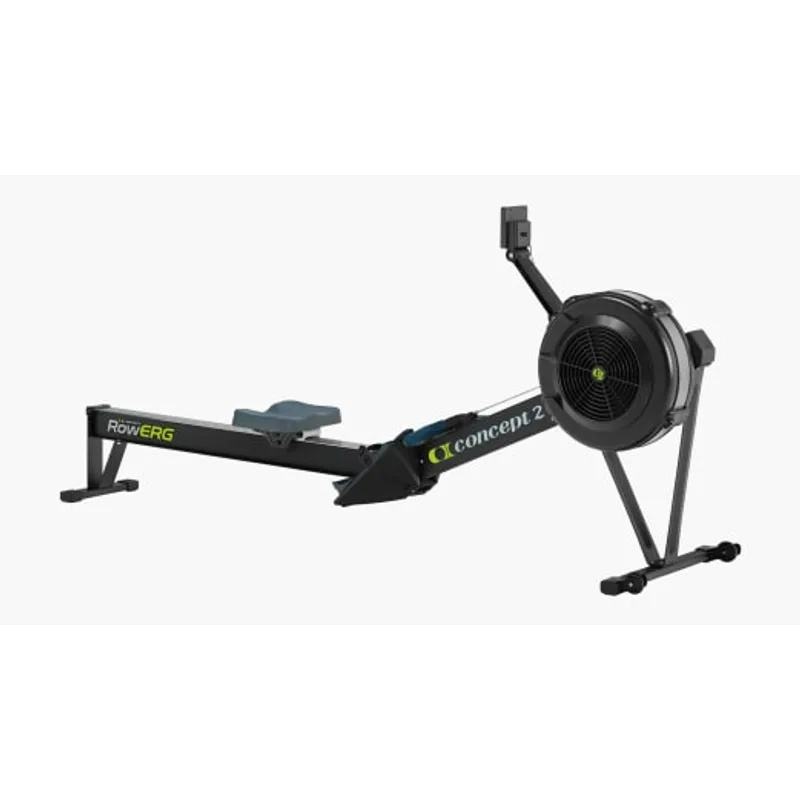
Concept2 RowErg (Standard Legs)
Pros
- 500 lb weight capacity accommodates virtually every user
- Splits into two pieces in seconds — no tools required — for vertical wall storage
- PM5 monitor is the industry standard for tracking pace, watts, SPM, and calories
- No subscription or connected fitness fee — ever
- Air resistance automatically scales with effort, so intensity is self-regulating
- Massive owner community: ranked workouts, online races, and the Concept2 logbook
- Resale value holds extremely well — used units sell for $600–$800 after years of use
- Chain replaced with nickel-plated steel — smoother and more corrosion-resistant than older models
Cons
- Flywheel and chain produce noticeable noise — louder than water or magnetic rowers
- No integrated display, live classes, or touchscreen (third-party apps via Bluetooth only)
- Plastic seat can become uncomfortable on sessions over 30 minutes without a pad
- At 96 inches, the footprint when open is substantial — requires clear floor space
The Standard RowErg has a 14-inch seat height — low to the ground, which some users find slightly awkward to mount but stable during hard efforts. The 96-inch length when open is the same across both versions. The two-piece separation takes about 10 seconds and requires no tools, making vertical wall storage practical even in smaller garages or spare bedrooms.
The PM5 Monitor
The PM5 is the reason coaches and competitive athletes won’t use anything else. It tracks pace per 500m, watts, strokes per minute, heart rate (ANT+ chest strap required, sold separately), and calorie burn — all in real time. It also connects via Bluetooth to third-party apps including Ergdata (Concept2’s own app), Coxswain, EXR, Hydrow’s workout mode on some plans, and a growing number of fitness platforms. Every workout logs automatically to the Concept2 online logbook if you choose, enabling ranking comparisons with athletes worldwide.
What the PM5 doesn’t have: a touchscreen, built-in live classes, or a camera. For athletes who want Netflix while they row, that’s a real limitation. For athletes optimizing 2k splits or building aerobic base, having clean, accurate data without subscription overhead is the whole point.
Air Resistance and the Damper
The flywheel pulls air through a cage as the handle is pulled. Damper settings (1–10) control how much air enters the cage per stroke, which changes the feel — not the intensity. Setting 10 feels like rowing a heavy, wide boat; setting 1 feels like a narrow racing shell. Most competitive rowers train at 3–5. The actual resistance is always determined by how hard you pull, which means two athletes on identical damper settings can have wildly different workouts — a 150 lb beginner and a 250 lb former collegiate rower aren’t limited to the same output by the machine.
This self-regulating air resistance is why the RowErg is used for everything from rehab work at low intensity to 100% sprint intervals. A peloton bike maxes out. A RowErg doesn’t.
Noise
The flywheel and chain are the loudest part. It’s not screaming noise, but it’s clearly audible through walls at full effort. In apartment buildings with thin floors, this is a legitimate consideration — especially for early morning or late-night use. Water rowers and magnetic rowers are quieter. If noise is a hard constraint, that’s worth weighing.
The nickel-plated chain upgrade (introduced several years ago and now standard on all RowErgs) is smoother and more resistant to corrosion than the older plain steel chain. The chain does need occasional oiling — every 50 hours of use, Concept2 recommends a few drops of oil on the chain. This is the maintenance protocol for an otherwise extremely low-maintenance machine.
Durability and Resale
Used RowErgs sell consistently on Facebook Marketplace and Craigslist for $600–$800, sometimes higher depending on age and condition. That’s 60–80% of retail for a machine that may be 10 years old. That resale value reflects both the machine’s longevity and the low cost of ownership. The frame warranty is five years. The functional lifespan of most RowErgs is measured in decades.
Concept2 RowErg (Tall Legs)
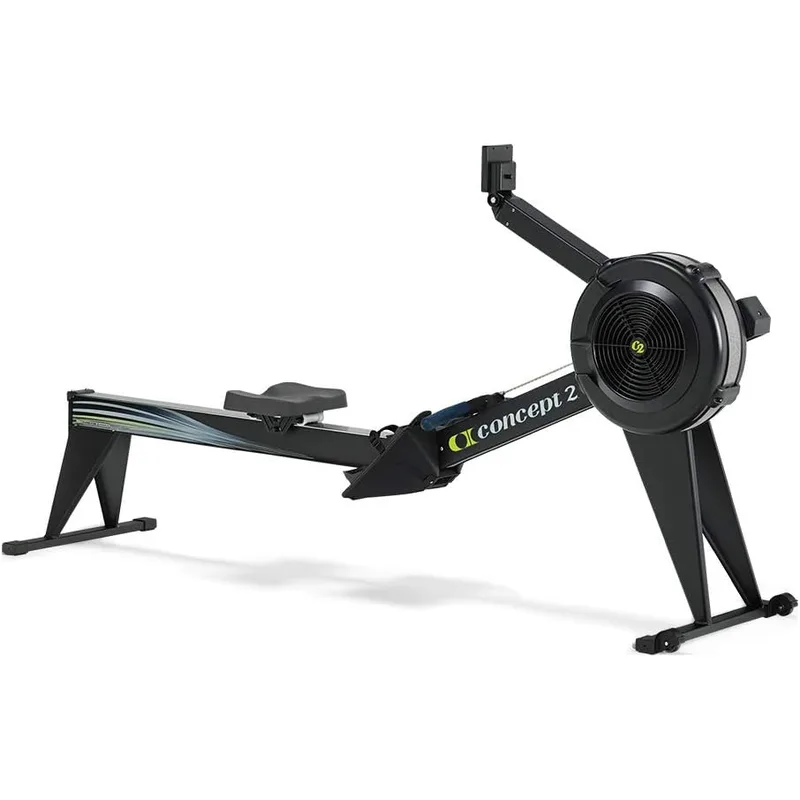
Concept2 RowErg (Tall Legs)
Pros
- 20-inch seat height significantly eases on/off for athletes with knee, hip, or mobility limitations
- Larger caster wheels roll more smoothly on uneven garage or basement floors
- Identical workout quality to standard legs — no performance difference
- Same 500 lb weight capacity and 5-year frame warranty
Cons
- $110–$165 more than the standard legs version for a height adjustment only
- 8 lbs heavier, which matters slightly for wall storage
- Most users without mobility needs won't notice a functional difference
The Tall Legs version raises the seat from 14 inches to 20 inches — chair height rather than floor height. The machine is otherwise identical: same flywheel, same PM5 monitor, same 500 lb weight capacity, same dimensions. The taller legs also come with larger caster wheels, which roll more smoothly on uneven surfaces.
The 20-inch seat height is a practical improvement for athletes with knee replacements, hip mobility restrictions, or any condition that makes getting on and off a low seat uncomfortable. For a competitive athlete without those concerns, the height difference won’t change the workout — but it adds $110–$165 to the price and 8 lbs to the weight.
The standard legs version is the right choice for most people. The tall legs version is the right choice for those with specific mobility needs or anyone who finds the standard seat height genuinely difficult to use.
Concept2 RowErg vs Connected Rowers
The obvious 2026 comparison is against connected rowing machines — the Hydrow Wave (~$1,195), the NordicTrack RW900 ($1,599), or the Peloton Row ($3,195). Each of these offers a large touchscreen and access to instructor-led live and on-demand rowing classes.
The trade-off is straightforward:
- Concept2 RowErg: Better resistance quality, more accurate data, no ongoing subscription fee (~$0/month), 10+ year lifespan, universally recognized performance metrics
- Connected rowers: Better entertainment and structured programming, subscription fees ($13–$44/month ongoing), shorter product support lifespan, typically lower weight capacities
If you already follow a structured rowing program or train for performance metrics, the RowErg wins without debate. If you need the accountability and variety of coached classes to actually use the machine, a connected rower may drive more consistent use — which matters more than technical superiority if the RowErg sits unused.
What to Look for in a Rowing Machine
Resistance type determines feel and sound. Air resistance (RowErg) is self-regulating and used for competitive training. Water resistance (WaterRower) is quieter and has a different pull feel. Magnetic resistance (most budget rowers) is the quietest but often feels less natural.
Weight capacity is the most commonly overlooked spec. Many budget rowers cap at 250–300 lbs. The RowErg’s 500 lb capacity is exceptional and eliminates sizing concerns for heavier athletes.
Monitor accuracy matters if you train by metrics. The PM5 is trusted by world-class athletes. Budget machine monitors vary widely in reliability.
Storage requires realistic planning. A RowErg in use is 96 inches long. Vertical storage requires about 33” L × 25” W floor space. Most garages and basements have room for this — most apartments don’t.
Subscription costs add up. A connected rower at $44/month costs $528/year — after five years, that’s $2,640 in platform fees on top of the equipment purchase.
FAQ
Is the Concept2 RowErg still worth buying in 2026? Yes. The RowErg remains the most accurate, durable, and resalable rowing machine available for home use. Nothing in the connected fitness space matches its performance data quality or its 500 lb capacity. The lack of a touchscreen is a real limitation only if you need coached classes to stay consistent.
What’s the difference between the Concept2 RowErg and the old Model D? Nothing functional. Concept2 rebranded the Model D and Model E in May 2021. The RowErg with Standard Legs is the Model D; the RowErg with Tall Legs is the Model E. The machine itself has had incremental improvements (nickel-plated chain, updated PM5 firmware) but the core design has been consistent for decades.
What damper setting should I use? Start at 3–5. Many beginners set the damper to 10 thinking more resistance means harder workout — it doesn’t. Higher damper settings change the feel (more drag per stroke) but intensity is determined by your output. Most competitive rowers train between 3 and 6.
How loud is the Concept2 RowErg? Moderately loud. The flywheel and chain are audible in adjacent rooms and through floors. It’s not disruptive at conversational distances, but apartment residents with noise-sensitive neighbors should test in-store first or consider a water/magnetic rower instead.
Does the Concept2 RowErg work with fitness apps? Yes. The PM5 connects via Bluetooth and ANT+ to Ergdata (Concept2’s free app), EXR, Coxswain, Garmin Connect, Apple Health, and several other platforms. It doesn’t have a native streaming service, but third-party integrations are extensive and growing.
How do I maintain the Concept2 RowErg? Chain oiling every 50 hours of use (a few drops of chain oil). Wipe down the rail and seat occasionally. There’s no other scheduled maintenance. Replacement parts — chains, footrests, seats — are available directly from Concept2 and are relatively affordable.
Verdict
The Concept2 RowErg is the standard by which every other rowing machine is measured, and nothing available in 2026 has changed that standing. At $990 for the Standard Legs version, it’s not a budget purchase — but the combination of 500 lb capacity, PM5 accuracy, no subscription costs, and genuine 10–20 year lifespan makes the per-year cost of ownership lower than most alternatives.
Buy the Standard Legs ($990) if you don’t have specific mobility concerns about seat height. It’s the same machine at a lower price.
Buy the Tall Legs ($1,100–$1,155) if getting on and off a 14-inch seat is genuinely difficult, or if the larger caster wheels matter for your floor surface.
Either way — if rowing is part of your training, this is the machine to own.