Home cardio buyers default to treadmills and exercise bikes first, but three other machines deliver equal or better cardiovascular training with a fraction of the joint stress: ellipticals, stair climbers, and rowing machines. All three are weight-supported or low-impact by design — no ground-reaction forces slamming through your knees and ankles with every stride like running does. For anyone managing joint pain, recovering from injury, or just trying to protect their knees for the long haul, one of these three is almost certainly the better buy.
The catch is that “low-impact” doesn’t mean “identical.” Each machine trains the body differently, and the right pick depends on which joints you’re protecting, which muscles you want to hit, and how much space and budget you’re working with.
Quick Comparison
| Spec | Horizon Fitness EX-59 Elliptical | Niceday Elliptical Machine | Sole CC81 Cardio Climber | Xiser Commercial Mini Stairmaster | Concept2 RowErg | Sunny Health & Fitness SF-RW5801 |
|---|---|---|---|---|---|---|
| Rating | 8.5/10 | 8.0/10 | 8.7/10 | 8.3/10 | 9.5/10 | 7.8/10 |
| Price | Unavailable | $659.99as of Oct 18, 2026 | $1699.99as of Oct 18, 2026 | $479.20-$577.00as of Oct 18, 2026 | $990.00as of Oct 18, 2026 | $399.99as of Oct 18, 2026 |
| Stride Length | 18" | 15.5" | — | — | — | — |
| Flywheel | 14.3 lbs | — | 25 lbs, 20-level magnetic resistance | — | — | — |
| Resistance | 10 levels, motorized | 16-level magnetic | — | Hydraulic piston, 3 settings (high/medium/low) | — | — |
| Weight Capacity | 300 lbs | 400 lbs | 400 lbs | 400 lbs | 500 lbs | 285 lbs |
| Machine Weight | 145 lbs | — | 265 lbs | 14 lbs | 57 lbs | 46.3 lbs |
| Programs | 5 built-in | — | — | — | — | — |
| Pedal Design | Q-Factor ZEROgap overlapping pedal path | — | — | — | — | — |
| Warranty | Lifetime frame, 3-yr mechanical, 1-yr electronics/labor | — | Lifetime frame, 5-yr electronics | — | 5-yr frame, 2-yr parts | — |
| Noise Level | — | Rated ~20dB (hyper-quiet magnetic drive) | — | — | — | — |
| Assembly | — | ~90% pre-assembled, roughly 30 minutes | — | — | — | — |
| Display | — | LCD (time, speed, distance, calories, pulse) | — | None (interval timer sold separately) | — | Basic LCD (no presets) |
| Motion | — | — | Vertical climb (handles move up/down, not front/back) | — | — | — |
| Step Height | — | — | 10" | — | — | — |
| Dimensions | — | — | 86"H x 59"L x 31"W | — | 96" x 24" (244 x 61 cm) | — |
| Connectivity | — | — | Bluetooth, syncs to SOLE+ app | — | — | — |
| Frame Material | — | — | — | Aircraft-grade aluminum alloy | — | — |
| Footprint | — | — | — | Compact, no rails or console | — | ~12.3 sq ft |
| Resistance Type | — | — | — | — | Air (flywheel) | Magnetic, 16 levels |
| Seat Height | — | — | — | — | 14" standard | — |
| Monitor | — | — | — | — | PM5 | — |
| Storage | — | — | — | — | Separates into 2 pieces | — |
| Slide Rail | — | — | — | — | — | 43" (foldable) |
| Check Price → | Check Price → | Check Price → | Check Price → | Check Price → | Check Price → |
Prices change daily — tap Check Price for the current Amazon price. Numbers shown were verified on the "as of" date.
The Elliptical Picks
Horizon Fitness EX-59 Elliptical
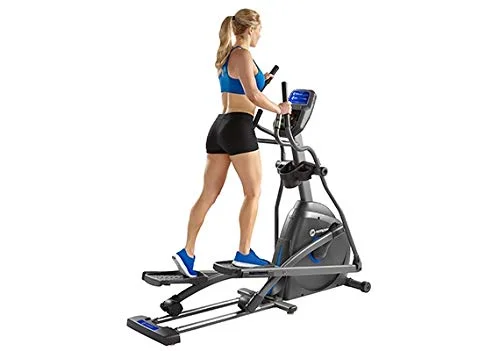
Horizon Fitness EX-59 Elliptical
Pros
- 18" stride length fits most users comfortably without the cramped feel of budget compact ellipticals
- SixStar Certified frame design keeps the foot path natural, which owner reports link to less knee and hip strain over long sessions
- Dual-handlebar setup (stationary and moving) lets you target upper body or isolate the lower body
- 300 lb weight capacity and a 145 lb frame give it a stable, non-wobbly feel most budget ellipticals lack
- Low step-on height makes it easier to mount for users with limited hip mobility
Cons
- 10 resistance levels is fewer than premium ellipticals with 20+ increments for fine-tuning intensity
- No touchscreen — console is a basic LCD display with 5 preset programs
- At 145 lbs, repositioning it once assembled is a two-person task
The Horizon EX-59 is the elliptical to buy if you want a genuinely natural stride without paying for a premium machine. The 18” stride length accommodates most adults comfortably, and Horizon’s SixStar Certified frame design uses an overlapping pedal path (Q-Factor ZEROgap) that mimics a real walking gait rather than the awkward, too-wide stance cheaper ellipticals force on your hips.
At 145 lbs with a 14.3 lb flywheel, the EX-59 feels stable through the full pedal stroke — no side-to-side wobble at higher resistance. The dual-handlebar setup lets you alternate between a full-body workout (moving handles) and a lower-body-focused session (stationary handles), which is more versatility than most machines under $1,200 offer.
The console is basic — five programs, no touchscreen, no app sync. If you’re looking for guided content or metrics tracking beyond the essentials, that’s the tradeoff for the EX-59’s frame quality and stride comfort.
Niceday Elliptical Machine
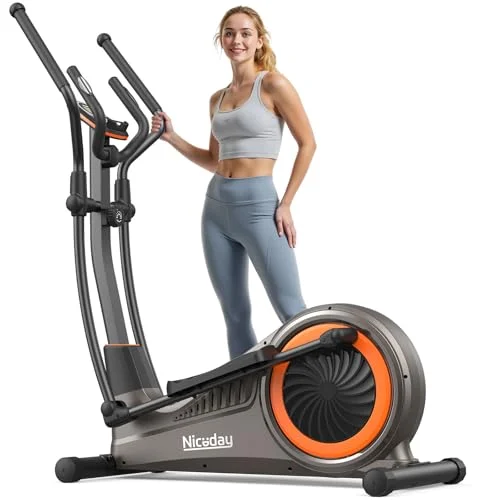
Niceday Elliptical Machine
Pros
- 400 lb listed weight capacity is unusually high for a sub-$700 elliptical
- Magnetic drive system runs quiet enough for apartments or early-morning sessions without disturbing others
- 16 resistance levels give more granular control than most machines in this price bracket
- Ships mostly pre-assembled — owner reports cite roughly 30 minutes to finish setup
Cons
- 15.5" stride length is short and will feel cramped for users over about 5'10"
- Some heavier owner reports describe frame flex approaching the advertised weight limit — stay well under 400 lbs for longevity
- No motorized resistance or app connectivity, and no incline adjustment
The Niceday is the pick for buyers who want a genuinely quiet, low-cost elliptical without committing to a full-size machine. The magnetic drive system runs quiet enough that owner reports describe using it during early-morning sessions without waking anyone else in the house — a real advantage over belt-driven budget ellipticals that squeak and rattle within months.
The 400 lb listed weight capacity stands out at this price point, though some heavier owner reports mention frame flex as you approach that limit — treat it as a comfortable ceiling around 300-325 lbs rather than a hard 400. The 15.5” stride is the real limitation: users over roughly 5’10” will feel cramped, and there’s no way to adjust it.
Assembly is straightforward — Niceday ships the unit roughly 90% pre-assembled, and most owners report finishing setup in about 30 minutes without help.
The Stair Climber Picks
Sole CC81 Cardio Climber
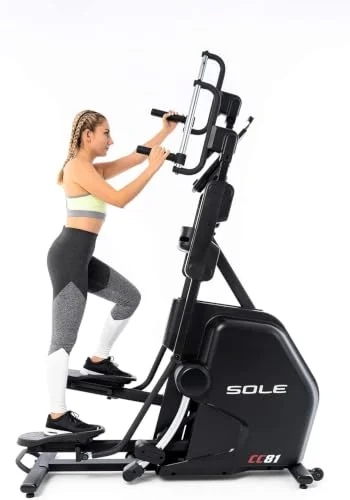
Sole CC81 Cardio Climber
Pros
- Full-body vertical climbing motion engages arms, core, and legs simultaneously — a more total-body session than a stair stepper alone
- 10" step height keeps the motion low-impact while still elevating heart rate quickly
- 400 lb weight capacity and a 265 lb frame make it the most stable machine in this guide
- Lifetime frame warranty matches what Sole offers on its treadmill line — strong long-term confidence
- Adjustable handle height and orientation (facing forward or to the side) accommodate different training styles
Cons
- $1,699.99 is the most expensive machine in this comparison
- 86" height and 265 lb weight mean it needs a dedicated spot with real ceiling clearance
- Steeper learning curve than a treadmill or bike — the climbing motion takes a session or two to feel natural
The Sole CC81 isn’t a traditional stepper — it’s a vertical climber where the handles move up and down instead of front and back, engaging your arms, core, shoulders, and legs in one continuous motion. That full-body recruitment is the CC81’s biggest advantage over both a standard elliptical and a plain stepper: you get more muscle groups working per minute of cardio.
The 10” step height keeps ground-reaction impact low while still spiking heart rate fast — climbing motions are notoriously efficient for calorie burn per minute. A 25 lb flywheel and 20 levels of magnetic resistance give real range from easy recovery pace to genuinely hard interval work. At 265 lbs with a 400 lb weight capacity, it’s the most stable, planted machine in this whole comparison.
The tradeoffs are price and footprint. At $1,699.99 and 86” tall, this needs a dedicated spot with real ceiling clearance — not a machine you tuck into a closet corner. The lifetime frame warranty (matching Sole’s treadmill coverage) is a meaningful confidence signal for that price tag.
Xiser Commercial Mini Stairmaster
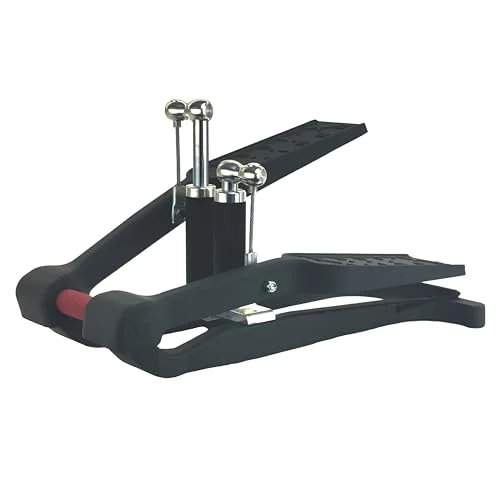
Xiser Commercial Mini Stairmaster
Pros
- 14 lb aluminum frame is light enough to store in a closet and pull out for a HIIT session
- Hydraulic piston resistance is smooth and nearly silent — no motor, no belt, minimal moving parts to wear out
- Aircraft-grade aluminum construction and all-metal build hold up to daily commercial gym use, according to long-term owner reports
- 400 lb weight capacity in a machine this compact and portable is rare
Cons
- No handlebars, console, or display — you'll need a phone timer and something nearby to hold onto for balance
- Only 3 resistance settings versus the 10-20 increments on full-size stair machines
- Small step platform requires more core stabilization than a full-size stepper, which takes adjustment for beginners
The Xiser is the opposite approach: no console, no handlebars, no frills — just a 14 lb aircraft-grade aluminum stepping platform with hydraulic piston resistance. It’s the machine gyms and physical therapy clinics buy because it’s nearly indestructible and takes up almost no space.
The hydraulic resistance is genuinely smooth, with three settings (high, medium, low) that cover everything from rehab-pace stepping to brutal HIIT intervals. Long-term owner reports consistently highlight durability — the all-metal construction with no belts or motors means there’s very little to wear out or break.
The lack of handlebars is the real limitation for beginners: you’ll want a wall, counter, or sturdy chair back nearby for balance until you build stepping confidence. There’s also no built-in timer or display, so you’re tracking intervals on your phone. For anyone who wants a genuinely portable, closet-storable stepper that will outlast most full-size machines, the tradeoff is worth it.
The Rowing Machine Picks
Concept2 RowErg
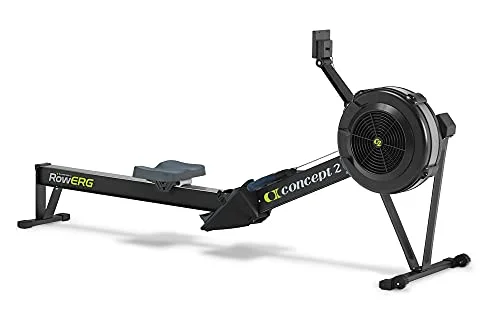
Concept2 RowErg
Pros
- Gold-standard PM5 monitor tracks pace, watts, calories, and stroke rate with competition-accurate data
- 500 lb weight capacity accommodates virtually any athlete
- Air resistance automatically scales to effort — pull harder, get more resistance, with zero settings to fumble with
- Splits into two pieces for apartment-friendly storage in under 30 seconds
- Strong resale value — used RowErgs hold a significant portion of original price for years
Cons
- No touchscreen or streaming workouts — pure mechanical simplicity
- Air flywheel gets audible during hard efforts — not ideal for shared-wall apartments
- Rowing has a real technique learning curve; poor form limits results and can strain the lower back
The Concept2 RowErg is the rowing machine every serious home gym eventually converges on. Air resistance scales automatically with effort — pull harder and the flywheel pushes back harder, with no dial or setting to fuss with. The PM5 monitor delivers competition-accurate data (pace, watts, stroke rate, calories) that CrossFit boxes and Olympic training centers rely on, which is a level of precision no budget rower in this guide matches.
Rowing is arguably the most complete low-impact cardio movement of the three categories here — it recruits legs, back, core, and arms in a single stroke, with essentially zero ground-reaction impact since you’re seated throughout. The 500 lb weight capacity and separable two-piece frame (splits in under 30 seconds) make it practical for almost any body size and almost any living space.
The air flywheel is the one real drawback for noise-sensitive households — it gets audibly louder as you pull harder, which matters in apartments with thin walls. Technique also has a real learning curve; poor rowing form (rounding the back, muscling with arms before legs) limits results and can aggravate lower back issues.
Sunny Health & Fitness SF-RW5801
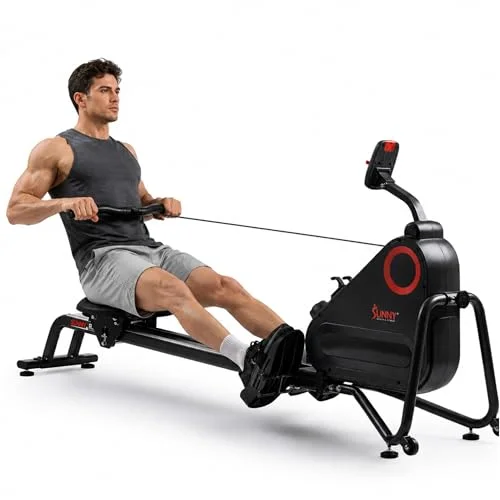
Sunny Health & Fitness SF-RW5801
Pros
- Smooth, stable stroke for the price — owner reports consistently note it doesn't wobble like other budget rowers
- Folds upright for storage, a real advantage over the Concept2's flat 96" footprint
- Quiet magnetic resistance is a good fit for apartments and shared walls
- 16 resistance levels give reasonable range for a machine under $400
Cons
- 285 lb weight capacity is well below the Concept2's 500 lbs
- Several plastic components in the frame and console — durability under heavy daily use is a real question long-term
- Basic LCD console has no preset programs or app connectivity
The SF-RW5801 is the budget entry point into rowing, and it earns that spot by not cutting corners on the stroke feel. Owner reports consistently note it doesn’t wobble side-to-side the way many sub-$400 rowers do — the sturdy rail and magnetic resistance produce a genuinely smooth pull.
At 46.3 lbs and foldable into an upright position, it solves the storage problem the Concept2’s 96” flat footprint creates for smaller spaces. Sixteen resistance levels give a reasonable range for interval work, and the magnetic system is quiet enough for shared walls.
The 285 lb weight capacity is the clearest limitation versus the Concept2’s 500 lbs, and several components in the frame and console are plastic — a real question mark for anyone planning years of daily use. For occasional or moderate rowing a few times a week, it’s a legitimate way to try the movement pattern before committing to a premium machine.
Elliptical vs Stair Climber vs Rower: Head-to-Head
Joint Impact
All three are genuinely low-impact, but not equally so. Rowing is the gentlest — you’re seated, and there’s zero weight-bearing impact on knees or ankles at any point in the stroke. Ellipticals are close behind; your feet never leave the pedals, so there’s no impact, though your body weight is still supported through your legs. Stair climbers and vertical climbers carry your full body weight with every step, which is still far gentler than running but does put more cumulative load through knees and hips than rowing or the elliptical.
For anyone with acute knee pain, a rower is usually the safest starting point. For hip or lower-back issues, an elliptical’s smooth, continuous motion is often more comfortable than a rower’s repeated hip-hinge.
Calorie Burn
Stair climbing and vertical climbing machines like the Sole CC81 generally burn calories fastest per minute — lifting your body weight repeatedly is metabolically expensive. Rowing is close behind at high intensity because it recruits so much total muscle mass in each stroke. Ellipticals tend to burn slightly less per minute at matched perceived effort, though the gap narrows significantly at higher resistance and incline settings.
Muscles Worked
Rowing hits the most complete range: legs (drive phase), back and core (the “swing”), and arms (the finish) in one continuous movement. Vertical climbers like the CC81 are similarly full-body. Standard ellipticals and mini steppers like the Xiser are more lower-body dominant, though ellipticals with moving handlebars add meaningful upper-body engagement.
Space Requirements
The Xiser Mini Stairmaster wins decisively — it’s 14 lbs and stores in a closet. The Sunny Health rower folds upright for a small footprint. Ellipticals and the Sole CC81 need a permanent dedicated spot; the CC81 in particular needs 86” of ceiling clearance. The Concept2, while large when assembled (96” long), separates into two pieces that lean against a wall in seconds.
Noise
Magnetic resistance (both ellipticals here, the SF-RW5801) is the quietest category — genuinely apartment-friendly. Hydraulic resistance (Xiser) is also very quiet. Air resistance (Concept2) gets audibly louder as effort increases. Motorized/mechanical stair climbers and vertical climbers fall in the middle, generating some mechanical noise but nothing disruptive at moderate pace.
Learning Curve
Ellipticals are the easiest machine to pick up — the motion is intuitive from the first stride. Stair climbers and vertical climbers take a session or two to find your balance and rhythm. Rowing has the steepest learning curve by far; proper sequencing (legs, then back, then arms on the drive; reverse on the recovery) takes real practice, and poor form is the main reason first-time rowers report back discomfort.
Who Should Buy Which Machine
Buy an elliptical if: you want the most intuitive, lowest-learning-curve option, you’re managing hip or lower-back sensitivity, or you want a machine the whole household can hop on without instruction.
Buy a stair climber or vertical climber if: calorie burn per minute is your priority, you want to build serious lower-body and glute strength alongside cardio, and you have (or don’t mind skipping) the ceiling clearance a full-size unit requires — otherwise a compact option like the Xiser solves the space problem entirely.
Buy a rowing machine if: you have any knee sensitivity at all, you want the most complete full-body engagement per session, or you’re willing to invest a few sessions in learning proper technique for a movement that pays off long-term.
Buying Guide: What to Look For
Stride length matters more than most buyers realize on ellipticals. Anything under 16” will feel cramped for users over 5’8”. The Horizon EX-59’s 18” stride accommodates a wider range of heights than the Niceday’s 15.5”.
On stair climbers, decide between a stepper and a vertical climber. A stepper (like the Xiser) isolates the lower body. A vertical climber (like the Sole CC81) adds the arms and core for a full-body session — but costs more and takes up significantly more vertical space.
On rowers, air resistance (Concept2) scales with effort; magnetic resistance (Sunny Health) requires manually dialing intensity. Air is more intuitive for interval training since harder pulling automatically means harder resistance. Magnetic is quieter and better suited to steady-state, apartment-friendly sessions.
Weight capacity numbers deserve scrutiny, not just trust. A machine’s advertised capacity is a ceiling, not a comfortable operating range. Staying meaningfully under the listed number — especially on budget machines with more plastic components — extends the equipment’s working life.
Check your ceiling height before buying a vertical climber. The Sole CC81 stands 86” tall. Standard 8-foot ceilings (96”) leave workable clearance, but basements with ductwork or drop ceilings can be tighter than expected.
Frequently Asked Questions
Which is better for bad knees: elliptical, stair climber, or rower? A rowing machine is generally the gentlest on knees since you’re seated and there’s no weight-bearing impact at any point in the stroke. An elliptical is a close second. Stair climbers and vertical climbers, while still far lower-impact than running, do load the knees more since you’re supporting your full body weight with each step — worth discussing with a doctor or physical therapist if you have an active knee injury.
Do stair climbers or ellipticals burn more calories? Stair climbing and vertical climbing machines generally burn calories faster per minute because lifting your body weight repeatedly is more metabolically demanding than the elliptical’s supported gliding motion. The gap shrinks at higher elliptical resistance and incline settings.
Is rowing bad for your back? Rowing is safe and often beneficial for the back when done with correct technique — the sequence is legs, then back, then arms on the drive, reversed on the recovery. Most rowing-related back discomfort comes from rounding the spine or pulling with the arms and back before the legs finish driving. A few sessions focused on form, or a session with a coach, resolves this for most people.
Can I fit one of these machines in a small apartment? Yes, with the right pick. The Xiser Mini Stairmaster (14 lbs) and the Sunny Health SF-RW5801 (foldable) are both built for small spaces. The Concept2 RowErg separates into two pieces for storage despite its 96” length when assembled. Full-size ellipticals and the Sole CC81 vertical climber need a permanent dedicated footprint and are better suited to a spare room or garage.
What’s a realistic budget for a quality low-impact cardio machine? Rowing offers the widest range: a genuinely good rower starts around $400 (Sunny Health SF-RW5801) and tops out around $990 for the Concept2 RowErg, which most buyers never need to upgrade from. Ellipticals and stair climbers both range from roughly $600 for a solid budget option up to $1,700 for premium build quality and features.
Conclusion
All three machines deliver genuine low-impact cardio — the right one depends on which joints you’re protecting and which muscles you want in the mix.
Get an elliptical if you want the most intuitive, no-learning-curve option. The Horizon Fitness EX-59 ($1,129.99) offers the best stride comfort and frame stability in this guide. For a quieter, cheaper entry point, the Niceday Elliptical ($659.99) delivers solid value if you’re under 5’10”.
Get a stair climber if calorie burn per minute and full-body engagement matter most. The Sole CC81 Cardio Climber ($1,699.99) is the premium full-body pick. The Xiser Commercial Mini Stairmaster ($577.00) proves you don’t need a big machine or big budget to get a serious stepping workout.
Get a rowing machine if you have any knee sensitivity or want the single most complete movement pattern in this comparison. The Concept2 RowErg ($990.00) remains the gold standard for a reason. The Sunny Health SF-RW5801 ($399.99) is the easiest way to find out if rowing is for you before spending four figures.
If space and budget allow more than one, a rower for high-intensity days and an elliptical or stair climber for steady-state sessions covers nearly every low-impact training need.