Home gym maintenance is the most neglected part of owning equipment — right up until something breaks. In 2026, with quality home gym gear costing anywhere from $500 for a basic setup to $5,000+ for a premium build, protecting that investment with consistent maintenance is straightforward and inexpensive. A $25 kit of brushes, oil, and cleaner prevents the kind of rust, belt wear, and flooring degradation that ends a barbell’s life early or forces a $200 treadmill repair call.
This guide covers the three areas that matter most — barbells and free weights, cardio and cable machines, and rubber gym flooring — with a maintenance schedule you can actually stick to and the specific products that get each job done properly.
Why Maintenance Matters More in a Home Gym
Commercial gyms have dedicated staff cleaning and servicing equipment daily. In your home gym, you are that staff. The difference is that commercial gyms see hundreds of users generating constant heat, sweat, and chalk exposure. Your home gym sees two to four sessions per week from one to three people — but environmental factors make maintenance more critical, not less.
Garage gyms deal with humidity swings between seasons, condensation in winter, and heat buildup in summer. Basement gyms face consistent moisture from concrete floors. Both environments accelerate rust on bare steel, degrade rubber mat adhesion, and increase friction in pulleys and belt drives. Without regular cleaning and lubrication, equipment that should last 10 to 20 years starts showing wear in three.
The maintenance tasks outlined here require about 30 minutes monthly with a quarterly deep session. That’s the maintenance overhead for protecting thousands of dollars in equipment.
The Three Maintenance Essentials
Every home gym needs exactly three categories of maintenance products:
| SUMMIT FITNESS Barbell Kit | TreadLife Silicone Lubricant | Zogics Flooring Cleaner | |
|---|---|---|---|
| Price | $22.99 | $27.95 | $23.95 |
| Covers | Barbells, free weights | Treadmills, ellipticals, cables | Rubber flooring, mats |
| Frequency | Monthly (or after chalk sessions) | Every 3 months | Monthly |
| Format | Brush + oil kit | 64oz liquid with syringe | 1-gallon concentrate |
| Time Per Session | 5–10 min per bar | 10 min per machine | 15–20 min per session |
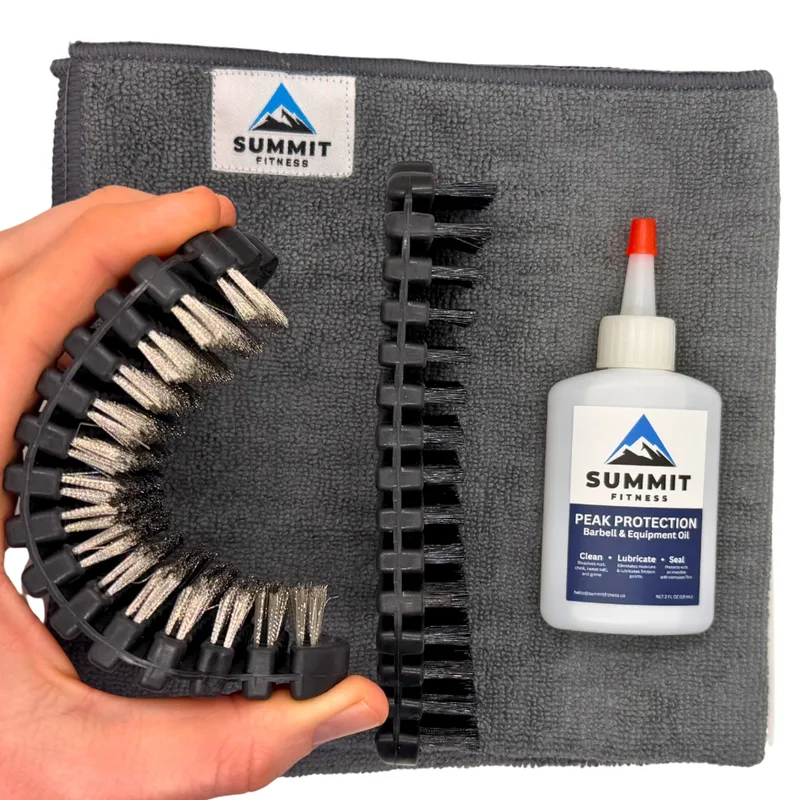
SUMMIT FITNESS Premium Barbell Care Kit
Pros
- Dual brush system covers routine cleaning (nylon) and rust spot removal (steel) without buying two separate brushes
- Included 3-in-1 oil handles light lubrication and rust prevention in one step after brushing
- Microfiber towel removes oil residue and leaves a clean dry finish — no lint or fiber transfer to knurling
- Compact storage bag keeps the kit together and accessible near the rack
- Works on all barbell finishes except Cerakote and stainless, which need only the nylon brush
Cons
- Steel brush should only be used on bare steel or black oxide — not zinc or chrome (will scratch finish)
- Oil bottle volume is modest — heavy users will go through it faster than expected
- Kit does not include a dedicated bristle brush for loading sleeve bearing cleaning
Barbells are the most maintenance-intensive pieces of free weight equipment, and finish type determines how aggressive that maintenance needs to be. Bare steel and black oxide bars — which includes most Rogue Ohio bars, CAP barbells, and many budget bars — need monthly cleaning and oiling to prevent surface rust. Zinc and chrome bars can go two to three months between sessions. Cerakote and stainless steel bars need only occasional wipe-downs.
The SUMMIT FITNESS kit covers the routine barbell maintenance workflow in four steps:
Step 1: Brush the knurling. Use the nylon brush along the knurl pattern lengthwise to remove chalk dust, dried sweat, and surface grime. For a bar that hasn’t been cleaned in months, you may need two or three passes. For bare steel or black oxide bars with active surface rust, switch to the steel brush for the rusted section only.
Step 2: Wipe the shaft. A microfiber pass removes dislodged debris from brushing and prepares the surface for oil application. Don’t skip this — applying oil over chalk residue traps particles in the knurling.
Step 3: Apply 3-in-1 oil. Apply a light coating to the shaft and work it into the knurling with the microfiber cloth. The goal is a thin, even film — not a soaking. Over-oiling attracts chalk and creates a buildup that defeats the purpose.
Step 4: Rotate the sleeves. Spin each sleeve by hand after oiling. If you feel resistance, apply a drop of oil to the sleeve bushing or bearing through the small gap at the collar end. Stiff sleeves during a clean or snatch are a safety issue, not just a performance annoyance.
For kettlebells and dumbbells, a monthly wipe with the microfiber cloth and a light oil application to any bare steel surfaces covers routine maintenance. Rubber-coated dumbbells need only cleaning — no oil.
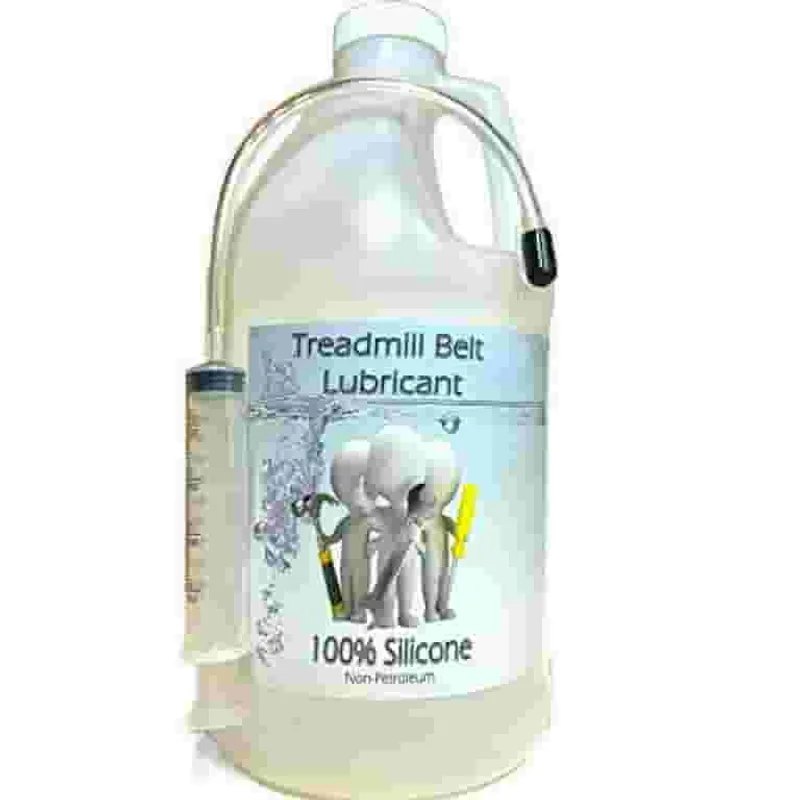
TreadLife Fitness 100% Silicone Treadmill Lubricant (64oz)
Pros
- 100% silicone formula is safe for all treadmill deck and belt combinations — no chemical degradation
- 64oz bulk size covers years of maintenance for a single home gym treadmill at one-third the cost per ounce vs single-use packets
- Included syringe applicator reaches under the belt to the deck without disassembly
- No odor and no propellants — safe to apply in enclosed garages or basements
- Also works on elliptical guide rails and rowing machine seat tracks to reduce friction
Cons
- 64oz is more than most home gym owners need for a single treadmill — best if you have multiple cardio machines
- Syringe requires steady hand to avoid over-application, which can cause belt slippage
- Not appropriate for cable machine pulleys or guide rods — those require dry PTFE or silicone spray, not liquid silicone
Cardio and cable machines have two distinct lubrication needs: belt/deck systems (treadmills) and pulley/guide rod systems (cable machines, functional trainers). These require different lubricants applied differently. Using the wrong type — or worse, WD-40 — causes more damage than no lubrication at all.
Treadmill belt and deck: The treadmill belt rides on a lubricated deck surface. As the lubricant wears away through use, friction increases, causing the motor to work harder, the belt to heat up, and both components to wear prematurely. Symptoms of an under-lubricated treadmill include a burning smell during use, belt hesitation or slipping underfoot, and motor heat during otherwise normal sessions.
The TreadLife 100% silicone lubricant applies under the belt using the included syringe. Lift the belt at the center-left and center-right edges and slide the syringe halfway along the deck in each direction. One application covers the full deck width from two insertion points. Apply every three months for a home gym treadmill used three to five times per week. After application, run the belt at a low speed for two to three minutes to distribute the lubricant evenly before resuming normal use.
Cable machines and functional trainers: Cable machine maintenance uses a different approach. For pulleys, guide rods, and the cable sheath itself, use a dry silicone or PTFE spray, not liquid silicone oil. Liquid lubricant in a pulley housing attracts dust and creates a sticky residue. The TreadLife silicone is ideal for treadmill decks; for cable machines, use it only on smooth guide rods where liquid application makes sense. Spray canned silicone (available separately) is more appropriate for pulley bearings and the cable sheath itself.
For rowing machine maintenance, apply a drop of chain oil (or the 3-in-1 oil from the barbell kit) to the drive chain every month if your rower uses a chain drive. Air rowers with fan blades need only a quarterly wipe-down of the fan cage interior to remove dust buildup that reduces airflow resistance.
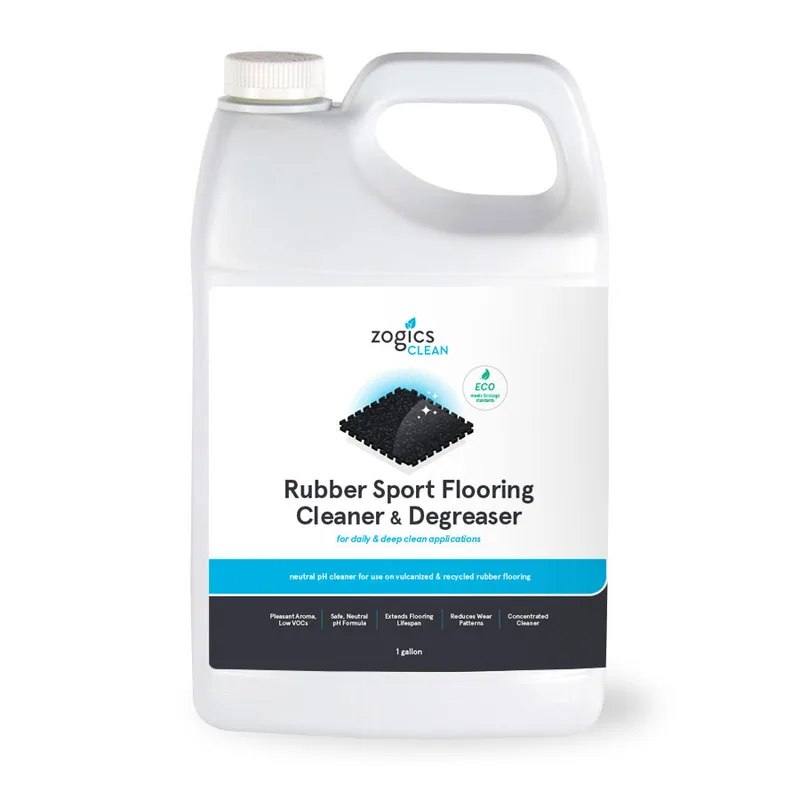
Zogics Rubber Flooring Cleaner and Degreaser (1 Gallon)
Pros
- Biodegradable and non-toxic formula safe for enclosed spaces — no harsh fumes from cleaning a sealed garage gym
- Works on every rubber flooring type: rolled rubber, interlocking tiles, horse stall mats, and foam tiles
- 1-gallon concentrate provides dozens of cleaning sessions per bottle — cost-effective versus spray bottles
- Removes chalk dust and rubber off-gassing film that builds up on new flooring without bleaching or fading color
- Used by commercial gyms, so the formula is tested at scale before making it into home gym use cases
Cons
- Concentrate requires dilution — you need a separate spray bottle and measuring for routine use
- Light citrus scent is not unpleasant but may be noticeable in small enclosed spaces during cleaning
- Does not sanitize against bacteria and viruses — you will need a separate disinfectant for high-touch surfaces
Rubber gym flooring — whether horse stall mats, rolled rubber, or interlocking tiles — accumulates two types of buildup that standard floor cleaners don’t address well: chalk dust and rubber off-gassing film. Chalk dust works into the surface texture and creates a slippery film when wet. New rubber flooring off-gasses a chemical compound for the first few months that leaves a tacky residue on the surface and anything stored on it.
The Zogics concentrate is formulated specifically for rubber and doesn’t contain bleach or harsh solvents that degrade the rubber surface over time. Dilute it for routine monthly cleaning (check the bottle label for the recommended ratio) and use it at full or half strength for quarterly deep-cleaning sessions.
Monthly cleaning routine (30 minutes):
- Sweep or vacuum the entire surface to remove loose chalk, debris, and hair
- Mix Zogics concentrate with water in a spray bottle at the recommended dilution ratio
- Spray one section (roughly 4x4 feet) at a time and scrub with a stiff-bristle deck brush
- Mop or squeegee each section before moving to the next — don’t let the solution pool
- Allow the floor to dry fully before training on it (15–30 minutes depending on ventilation)
For horse stall mats in a garage gym, quarterly cleaning also addresses the texture grooves on the underside. Flip the mats if possible to check for moisture trapped underneath — a common source of mold and mildew in humid garage environments.
Home Gym Maintenance Schedule
| Task | Frequency | Time Required |
|---|---|---|
| Wipe barbells and dumbbells with microfiber | After each chalk session | 2 min |
| Brush and oil barbells (bare steel/black oxide) | Monthly | 5–10 min per bar |
| Brush barbells (zinc/chrome) | Every 2–3 months | 5 min per bar |
| Wipe cardio machine frames and consoles | Weekly | 5 min |
| Lubricate treadmill deck with silicone | Every 3 months | 10 min |
| Clean rubber flooring | Monthly | 20–30 min |
| Deep-clean flooring + flip mats | Quarterly | 45–60 min |
| Inspect cable for fraying or kinks | Monthly | 5 min |
| Lubricate cable machine guide rods + pulleys | Every 3 months | 15 min |
| Clean padded surfaces (bench, seat) | Monthly | 5 min |
| Check all bolts and hardware for tightness | Quarterly | 20 min |
Common Maintenance Mistakes
Using WD-40 on barbells or pulleys. WD-40 is a water displacer and degreaser, not a lubricant. It removes the existing protective oil coating and leaves the surface bare, accelerating rust. Use 3-in-1 oil or a dedicated barbell oil for steel bars, and dry PTFE spray for pulley systems.
Cleaning padded surfaces with bleach or isopropyl above 70%. High-concentration disinfectants extract plasticizers from vinyl padding over time, causing cracking and brittleness. Use diluted dish soap or a purpose-made vinyl cleaner instead. The Zogics flooring cleaner should only be used on rubber surfaces — not on bench padding.
Over-lubricating treadmill decks. More is not better here. Excess silicone lubricant migrates to the belt surface, causing the belt to slip underfoot and potentially triggering emergency stops. Apply a thin, even coat on the deck only. If the belt feels slippery after application, wipe the top surface of the belt with a dry cloth to remove any transferred lubricant.
Ignoring the sleeves. Barbell sleeves (the spinning ends where plates load) contain either bushings or bearings that require periodic lubrication. A sleeve that doesn’t spin freely affects clean catches, snatch turnover, and deadlift lockout positioning. One drop of 3-in-1 oil at the sleeve collar gap per side, applied monthly, prevents this.
Letting chalk build up on the floor before cleaning. Chalk is abrasive, and when ground into rubber flooring by shoe soles and dropped weights, it scratches the surface texture. Monthly cleaning prevents this accumulation from reaching the point where it’s embedded.
FAQ
How often should I oil a bare steel barbell? Monthly for a bare steel or black oxide bar in a garage or basement environment. If you use chalk heavily or live in a humid climate, every two to three weeks. The indicator is the surface feel — a well-oiled bar should feel lightly tacky, not dry or gritty. Rust spots appearing between cleaning sessions mean you need to increase frequency or improve storage (off the floor, away from concrete walls).
Can I use WD-40 to lubricate my treadmill? No. WD-40 removes existing lubricant from the belt and deck, which accelerates wear and can damage the motor by increasing friction load. Use only 100% silicone lubricant specifically formulated for treadmills. Products labeled “treadmill belt lubricant” or “100% silicone treadmill lube” are the correct type.
My cable machine is squeaking. What should I spray on it? Check three things: the cable sheath where it runs through pulley grooves, the guide rods where the weight stack slides, and the pulley axle bearings. For the guide rods, wipe them down and apply a light coat of white lithium grease or dry PTFE spray. For pulley bearings, use a dry silicone or PTFE spray. For the cable sheath, a light wipe with silicone spray is usually enough. If the squeak persists after addressing all three, the cable itself may need replacement.
How do I remove rust from a barbell that’s already rusted? Use the steel brush from the SUMMIT FITNESS kit on the affected section, brushing along the knurl pattern. For moderate rust, add a few drops of 3-in-1 oil to the rusted area and scrub with the steel brush to create a mild abrasive slurry. Wipe clean, then apply a fresh coat of oil. For deep pitting rust, a 3-in-1 oil + steel wool (0000 grade) session removes most of it. After rust removal, oil the entire bar and store it horizontally in a dry environment — storing vertically on the sleeve end accelerates rust at the collar.
Does rubber gym flooring need a special cleaner, or is any floor cleaner fine? Rubber requires a pH-neutral or mildly alkaline cleaner without bleach, acetone, or high concentrations of isopropyl alcohol. Standard household floor cleaners often contain one or more of these. Over time, they degrade the rubber surface, cause discoloration, and can make interlocking tile edges brittle. The Zogics concentrate is specifically formulated for rubber and is safe for long-term use on all rubber types.
Conclusion
Home gym maintenance comes down to three tasks done consistently: oil your barbells, lubricate your cardio machine belts and cable systems, and clean your rubber flooring. The SUMMIT FITNESS barbell care kit, TreadLife silicone lubricant, and Zogics rubber flooring cleaner cover all three at a combined cost of under $75 — less than a single repair call for a worn treadmill belt or a replacement barbell.
Top pick for most home gym owners: SUMMIT FITNESS Premium Barbell Care Kit. Free weights are in every home gym, and barbells take the most maintenance abuse from chalk, sweat, and humidity. Start here. Add the TreadLife lubricant when you install a treadmill, and the Zogics cleaner once you’ve laid rubber flooring. Thirty minutes per month keeps gear that was built to last 15 years actually lasting 15 years.