Home gym builds are accelerating in 2026. A February 2026 analysis found that garage gym conversions have become one of the most requested home renovation projects, with total build costs ranging from $2,000–$8,000 for full-featured setups. But the intimidating high-end cost obscures a simpler truth: a disciplined five-piece starter kit — flooring, rack, bar, plates, and bench — runs under $1,000 and handles everything from beginner programming through years of serious compound lifting.
This guide breaks the build into phases, explains what to prioritize and what to skip, and includes a complete starter kit with real prices checked against live Amazon listings. No upselling, no fluff.
What You Need to Sort Out First
Most first-time garage gym builders think about equipment before they think about the space. Do these checks first:
Ceiling height. Most power cages need 7–8 feet minimum. Measure from floor to the lowest obstruction — door tracks, light fixtures, HVAC runs. The Fitness Reality 810XLT is 83.5” tall. That’s too tall for a 7.5-foot ceiling.
Electrical. If you plan to add cardio equipment later, a dedicated 20-amp circuit prevents tripped breakers during treadmill or bike use. A licensed electrician typically charges $200–$400 for a dedicated circuit — worth doing before flooring goes down.
Climate. Uninsulated garages see extreme temperature swings. Below freezing, rubber flooring becomes brittle and cast iron gets condensation. A basic mini-split or even a portable space heater extends equipment life and makes the space usable year-round.
Floor condition. Cracked or severely uneven concrete needs leveling compound before flooring. A sloped concrete floor (common in garages with drainage) affects rack stability — shim legs if needed.
Get the space right first. The equipment comes second.
Phase 1: Flooring
Flooring is the most skipped phase and the one you’ll regret skipping most. Bare concrete destroys plates, destroys bars, and is loud enough to wake the house on 6 a.m. pulls.

IncStores 8mm Heavy Duty Rubber Flooring Tiles (10'×10' Set)
Pros
- Covers a full power rack footprint with surrounding floor space
- Interlocking puzzle edges require no glue or tape
- Shock-absorbing rubber protects concrete and reduces noise
- Waterproof and easy to wipe clean
- Cheaper than horse stall mats at most hardware stores
Cons
- 8mm is thinner than the 3/4" horse stall mat standard — add a lifting platform for heavy drops
- Tiles can shift under heavy equipment without adhesive
- New rubber odor fades within 1-2 weeks
The IncStores 8mm interlocking rubber tiles run about $149 for a 10’×10’ set — enough to cover a standard power cage footprint (50”×46”) plus several feet of surrounding floor. The recycled rubber absorbs modest barbell drops and protects concrete from plate contact during deadlifts.
A note on thickness: 8mm is adequate for most garage gym work. If you regularly drop loaded barbells from above knee height — failed deadlifts, missed cleans — add a 3/4” horse stall mat or a wooden lifting platform in the drop zone. At $50–$80 per mat at Tractor Supply, it’s cheap insurance for the bar and the floor. The rubber tiles stay under the rack and surrounding area; the platform handles the heavy landings.
Phase 2: The Rack
A power cage is the better first purchase over a squat stand for most beginners. The safety bars catch failed reps, so you can train alone at max effort without a spotter. That single advantage covers hundreds of solo training sessions.
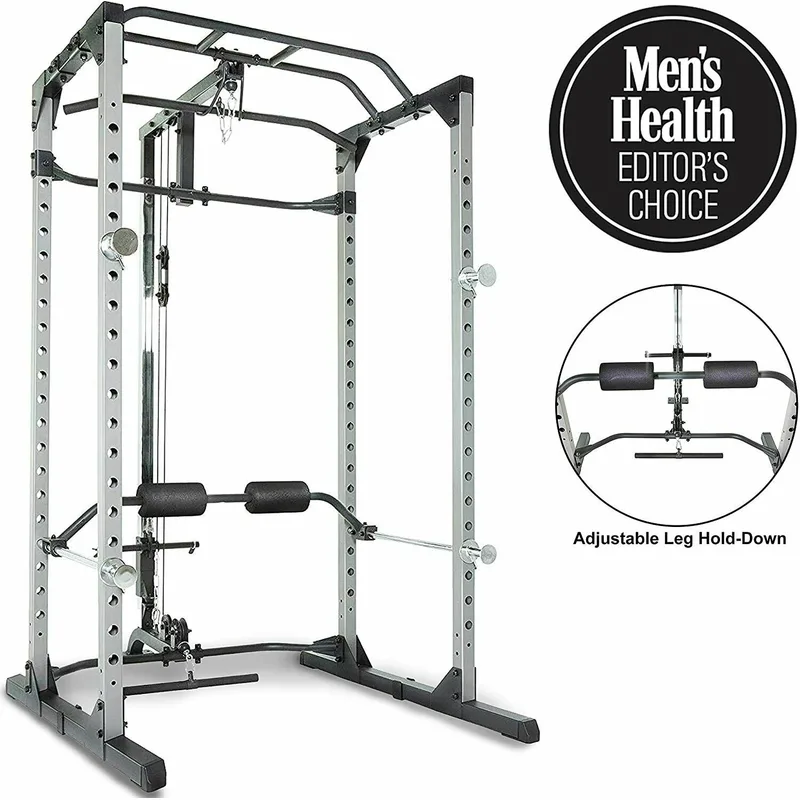
Fitness Reality 810XLT Super Max Power Cage
Pros
- Only full 4-post cage on Amazon under $300
- Long floor feet keep it stable without floor bolts
- Multi-grip pull-up bar handles chin-ups and wide pulls
- Optional lat pulldown attachment expands functionality
- 800 lb rated capacity exceeds beginner and intermediate needs
Cons
- 14-gauge steel (thinner than 11-gauge on premium racks)
- 46" upright spacing is narrower than competition standard 49"
- Basic chrome J-hooks — UHMPE-lined upgrades worth the cost
- No compatibility with aftermarket attachment ecosystems
The Fitness Reality 810XLT is the only full 4-post power cage on Amazon under $300 that earns a genuine recommendation. The long floor feet provide stability without floor bolting. The multi-grip pull-up bar handles pull-ups, chin-ups, and neutral-grip variations. An optional lat pulldown attachment (sold separately, ~$120) turns it into a more complete setup without additional floor space.
The real trade-offs are real: 14-gauge steel is thinner than the 11-gauge used in premium racks, and the 46” upright spacing is 3” narrower than competition standard. Neither limitation matters at the loads a beginner or intermediate lifter will use. The 810XLT handles squats and benches up to 400–500 lbs safely. When you’re regularly exceeding that, you’re in the market for a Rogue or REP rack anyway.
If your ceiling is under 84”, the 810XLT won’t fit. In that case, a squat stand with lower uprights or a wall-mounted folding rack is the workaround. For rooms where height allows, the full cage is the right call.
Phase 3: The Bar
One bar handles everything. Buy one quality starter bar and upgrade it when your training demands more — not before.
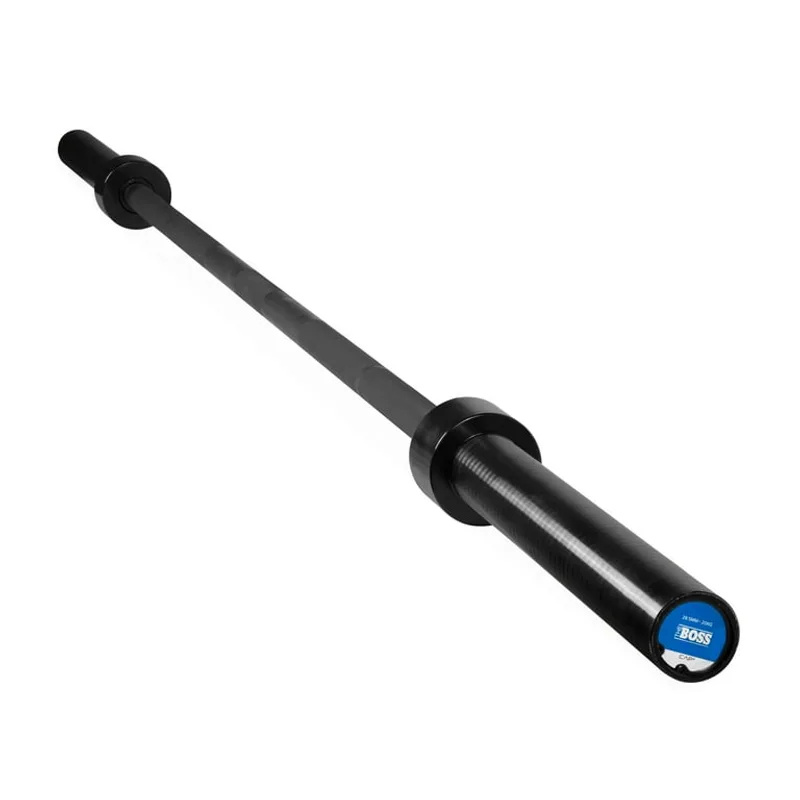
CAP Barbell Classic 7-Foot Olympic Bar
Pros
- 500 lb capacity is plenty for beginner through intermediate training
- Fits all standard 2" Olympic plates
- Handles all major compound lifts — squat, bench, deadlift, OHP
- Consistently in stock on Amazon unlike many budget competitors
- 30mm shaft works with most lifting straps and wrist wraps
Cons
- 63,800 PSI tensile strength — not rated for Olympic lifting drops
- Bushing sleeves spin less freely than needle bearings
- No center knurl for back squatting
- 30-day warranty is minimal
The CAP Barbell Classic 7-Foot Olympic Bar covers every major compound movement: squat, bench, deadlift, overhead press, and barbell row. Its 30mm shaft fits standard lifting accessories, and the 2” sleeves accept all Olympic plates. At 63,800 PSI tensile strength, it’s not rated for Olympic lifting drops, but for controlled strength training with rubber bumper plates it performs reliably.
Upgrade the bar when you’re consistently squatting over 300 lbs or want better sleeve spin for Olympic movements. A $300 Rogue Ohio Bar or Texas Power Bar is a meaningful improvement at that point. For the first 12–24 months of training, the CAP bar holds up fine. Put the savings into plates.
Phase 4: Plates
Bumper plates over iron plates — always, for a garage gym.
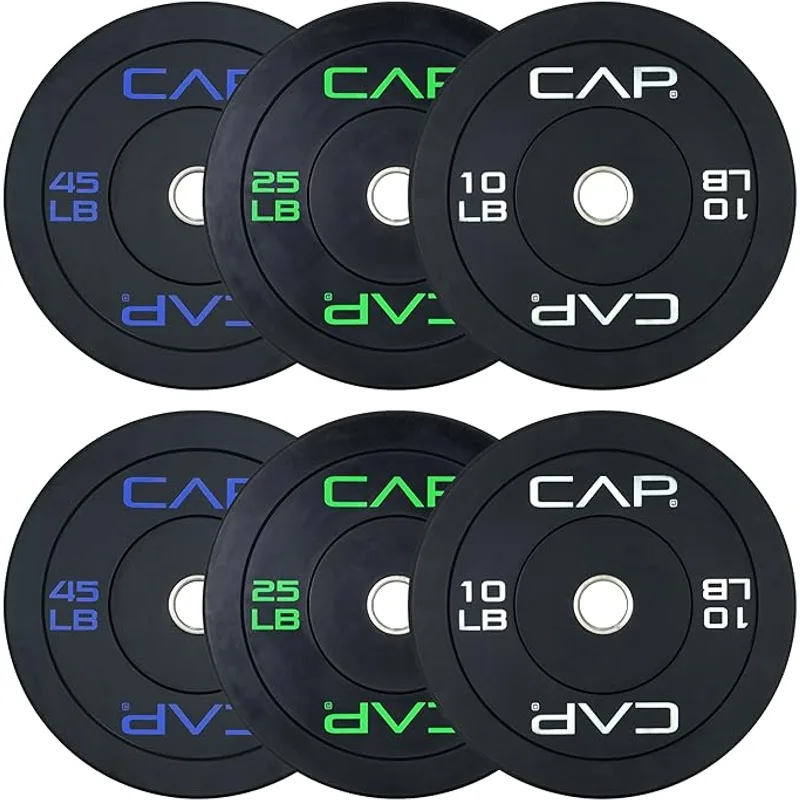
CAP Barbell Premium Bumper Plates Bundle (160 lbs)
Pros
- Bumper construction allows drops without destroying concrete or the bar
- Uniform 450mm diameter keeps all plates at the same floor height for deadlifts
- Color coding makes weight selection fast
- 160 lb set covers squat, bench, deadlift, and OHP for beginners
- Steel insert reinforcement reduces wobble on the bar
Cons
- Entry-level rubber — not competition hi-temp quality
- Noticeable rubber odor when new (dissipates within a few weeks)
- 160 lbs is a modest starting point — budget for plate additions within 6-12 months
Iron plates are cheaper but not designed to be dropped on concrete. Dropped iron plates crack, chip, and destroy bar sleeves. Bumper plates are engineered to bounce. The CAP 160 lb bundle — 2×10 lb, 2×25 lb, and 2×45 lb — provides enough weight to deadlift 205 lbs, bench around 135–155 lbs, and overhead press 95–115 lbs. For a first-year lifter running a beginner program, that’s 6–12 months of progressive overload before you hit the limits of this set.
Add plates in pairs as you progress. The set is missing 35 lb plates, which creates an awkward jump between 25 lb and 45 lb increments. A pair of 35 lb bumpers is the first addition most lifters need.
Phase 5: Bench
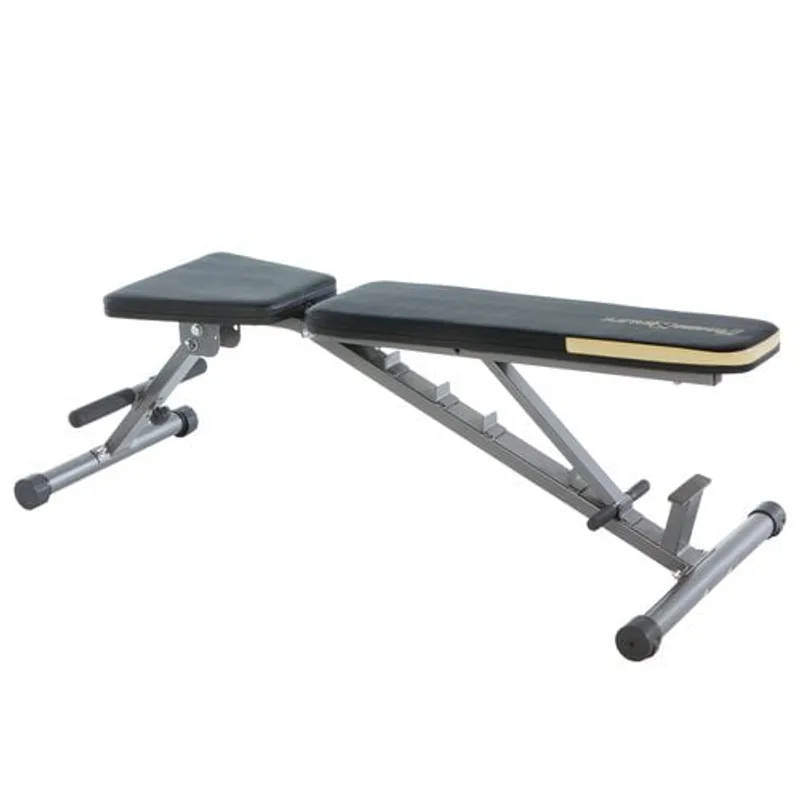
Fitness Reality 1000 Super Max Adjustable Weight Bench
Pros
- 12 adjustment positions cover flat, incline, and decline angles
- Folds to 9" height for wall storage
- Transport wheels for easy repositioning
- Pairs directly with the 810XLT cage as a matching set
- 800 lb weight capacity far exceeds typical home gym loads
Cons
- 10-12" pad width is narrow for heavier pressing
- Some wobble reported with heavier loads on extreme inclines
- Foam pad will compress and soften over 1-2 years of heavy use
The Fitness Reality 1000 Super Max folds to 9” for wall storage, pairs directly with the 810XLT cage, and offers 12 backrest positions from -20° decline to +80° incline. At $120–$160, it covers flat, incline, and decline pressing without the $300+ premium of a Rep AB-3000 or Rogue flat bench.
The narrow pad (10–12” width) is the real limitation. Bigger lifters doing heavy sets will find it uncomfortable. For initial setup, the 1000 Super Max is the right value decision. Budget up to a wider pad bench once you’re benching 225+ lbs regularly and want a more stable surface.
Complete Starter Kit
| Spec | IncStores 8mm Heavy Duty Rubber Flooring Tiles (10'×10' Set) | Fitness Reality 810XLT Super Max Power Cage | CAP Barbell Classic 7-Foot Olympic Bar | CAP Barbell Premium Bumper Plates Bundle (160 lbs) | Fitness Reality 1000 Super Max Adjustable Weight Bench |
|---|---|---|---|---|---|
| Rating | 8.2/10 | 8.5/10 | 7.8/10 | 8.0/10 | 8.3/10 |
| Price | $579.99as of Oct 18, 2026 | Check price | Check price | Check price | Unavailable |
| Thickness | 8mm | — | — | — | — |
| Coverage | 100 sq ft (10'×10') | — | — | — | — |
| Tile Size | 24"×24" interlocking | — | — | — | — |
| Material | Recycled rubber | — | — | Rubber over steel insert | — |
| Colors | Black, Gray, Confetti | — | — | — | — |
| Install | No adhesive required | — | — | — | — |
| Steel | — | 2"×2" 14-gauge | — | — | — |
| Footprint | — | 50.5"×46.5" | — | — | — |
| Height | — | 83.5" | — | — | — |
| Weight Capacity | — | 800 lbs | 500 lbs | — | 800 lbs |
| Upright Spacing | — | 46" | — | — | — |
| J-Hook Positions | — | 19 | — | — | — |
| Length | — | — | 84" (7 ft) | — | — |
| Shaft Diameter | — | — | 30mm | — | — |
| Sleeve Diameter | — | — | 2" (50mm) | — | — |
| Bar Weight | — | — | 35 lbs | — | — |
| Tensile Strength | — | — | 63,800 PSI | — | — |
| Contents | — | — | — | 2×10 lb, 2×25 lb, 2×45 lb | — |
| Total Weight | — | — | — | 160 lbs | — |
| Collar Opening | — | — | — | 2" (50mm) | — |
| Plate Diameter | — | — | — | 450mm standard | — |
| Color Coded | — | — | — | Yes | — |
| Backrest Positions | — | — | — | — | 12 |
| Seat Height | — | — | — | — | 17.5" |
| Dimensions | — | — | — | — | 59"×23.5"×48.5" |
| Foldable | — | — | — | — | Yes (folds to 9" height) |
| Leg Attachment | — | — | — | — | Detachable, 3-position |
| Check Price → | Check Price → | Check Price → | Check Price → | Check Price → |
Prices change daily — tap Check Price for the current Amazon price. Numbers shown were verified on the "as of" date.
Total starter kit at current Amazon prices: $778–$878 depending on timing. That covers every major compound movement — squat, bench, deadlift, overhead press, pull-up, and chin-up variations — and five or more years of progressive strength training before any component becomes the limiting factor.
What to Build Next
Once the foundation is in, add equipment in this order:
More plates first. Add a pair of 35s or extra 45s. Budget $80–$120 per pair for rubber bumpers.
Resistance bands. Useful for warm-ups, pull-aparts, banded variations, and mobility work. Light investment, high return. See our best resistance bands guide.
Lat attachment. The 810XLT’s optional lat pulldown attachment (~$120) bolts to the existing cage and adds cable rows and lat pulldowns without adding floor space.
Cardio. A rowing machine, treadmill, or exercise bike is a phase 2 purchase, not phase 1. Check our best treadmills for home and best rowing machines guides when you’re ready.
Climate control. A portable AC unit handles summer. A space heater handles winter. A wall-mounted fan improves air circulation year-round. All three together run under $400.
Frequently Asked Questions
How much does a garage gym cost to build?
A functional 5-piece starter kit runs $780–$900 at current Amazon prices. A full-featured setup with cardio, cable attachment, extra plates, and climate control runs $2,000–$4,000. The $8,000+ builds involve commercial-grade equipment, full rubber flooring throughout a two-car garage, and HVAC systems. Most home gym builders land in the $1,500–$3,000 range after 12–18 months of gradual additions.
What ceiling height do I need for a power cage?
Most power cages require 8 feet of clearance minimum. The 810XLT is 83.5” tall — you need at least 7 feet with a few inches to spare for loading plates and the bar overhead. Measure to the lowest obstruction, not the ceiling itself. Garage door tracks, light fixtures, and ceiling-mounted storage systems are common surprises. In tight spaces, a squat stand or wall-mounted folding rack are lower-profile alternatives.
Do I need to bolt a power cage to the floor?
The Fitness Reality 810XLT does not require floor bolting — the long floor feet provide sufficient stability for standard training loads. Wall-mounted racks and lightweight squat stands should be anchored. If you’re consistently loading above 400 lbs or training with dynamic movements, floor anchoring adds a meaningful safety margin regardless of the manufacturer’s recommendation.
Should I get a squat stand or a power cage first?
A power cage is almost always the better first purchase. Safety bars let you train alone at max effort — squat, bench, and press without a spotter. Squat stands cost less but require either a training partner or the willingness to bail loaded barbells. The 810XLT closes the price gap significantly: a 4-post cage for under $280 is a genuine value.
Can I fit a garage gym in a one-car garage?
Yes. A standard one-car garage offers 150–200 sq ft of floor space. The 810XLT occupies a 50”×46” footprint. Add 3–4 feet on each side for safe movement, and the cage needs roughly 10’×10’ of total floor space. A bench fits inside the cage footprint during pressing. That leaves room along the walls for plates, bands, and other small equipment. A wall-mounted folding rack like the PRx Profile PRO reduces the footprint to under 20” depth when folded if you need to park a car in the same space.
The Verdict
Build in order: flooring → rack → bar → plates → bench. Don’t reverse-engineer it. Flooring protects what you invest in. The rack defines the training you can do. The bar and plates are the actual training. The bench unlocks horizontal pressing.
The five products above run under $900 combined and cover five-plus years of serious strength training before any component becomes the limiting factor. Start there. Add plates and accessories systematically. A well-maintained garage gym outlasts any membership — and doesn’t close at 10 p.m.