The barbell market in 2026 has more options than ever — from budget bars under $150 to premium American-made steel above $400. The problem is that a powerlifter and an Olympic weightlifter can buy what looks like the same bar and get completely different results. Shaft diameter, tensile strength, and sleeve spin matter far more than brand name, and most buyers don’t find that out until they’ve already made the wrong call.
This guide covers the five specs that actually separate good barbells from bad ones, then matches those specs to the five best bars across every budget and training style.
The 5 Specs That Actually Matter
1. Tensile Strength (PSI)
Tensile strength measures how much force the steel can absorb before it permanently deforms. It’s the single most important number on a barbell spec sheet — a bent bar stays bent.
- Under 150,000 PSI: Entry-level. Handles lighter training and beginning loads, but avoid dropping heavy sets from height or pushing toward true maximums.
- 150,000–190,000 PSI: The sweet spot for most home gym lifters. Covers serious powerlifting and strength work without concerns about permanent flex.
- 190,000–200,000+ PSI: Premium territory. Built for competition loading, dropped Olympic sets, and decades of abuse.
Buy more tensile strength than you think you need. You won’t regret it.
2. Shaft Diameter
Two diameters dominate the market:
- 28–28.5 mm: Standard for Olympic lifting and all-purpose bars. Slightly thinner, which produces more whip (flex) under load during cleans and snatches. Most home gym barbells live here.
- 29–32 mm: Powerlifting bars. Stiffer shaft reduces whip for more predictable behavior under a max squat or deadlift. IPF standard is 29 mm.
For general home gym training — squats, bench press, deadlifts, rows — a 28.5 mm shaft is the right call.
3. Knurling
Knurling is the crosshatch texture that gives you grip. Three things matter:
- Aggressiveness: Ranges from barely-there to skin-shredding. Medium is the right balance for most lifters across all movements.
- Knurl marks: Dual marks (IPF inner + IWF outer) let you find proper hand placement for both powerlifting and Olympic movements. Single or no marks indicate cheaper manufacturing.
- Center knurl: A textured patch in the middle of the shaft that grabs your upper back during barbell squats. Many all-purpose bars omit it. If you squat heavy, you want it.
4. Bearings vs. Bushings
Sleeves need to rotate so plates can spin freely — especially during cleans and snatches where the bar rotates through your hands at full extension.
- Bushings (bronze or composite): Rings inside the sleeve that allow rotation. Adequate for powerlifting and general training. Composite bushings are quieter and more durable than bronze.
- Needle bearings: Multiple small cylinders arranged radially inside the sleeve. Spin far more freely. Required for competitive Olympic lifting. More expensive to manufacture.
For squats, bench, and deadlifts, bushings work fine. For cleans and snatches at heavier weights, needle bearings protect your wrists.
5. Finish
The finish determines rust resistance and how the bar feels in your hands:
| Finish | Rust Resistance | Notes |
|---|---|---|
| Bare steel | Poor | Oil regularly; best raw feel |
| Black oxide | Low | Minimal protection; clean look |
| Zinc | Moderate | Slippery new; wears in over time |
| Chrome | Good | Common on mid-range bars |
| Cerakote | Excellent | Best for garage gyms; premium cost |
| Stainless steel | Best | Most expensive; lasts indefinitely |
For garage gyms with temperature swings and humidity above 50%, cerakote or stainless is worth the premium from the start.
Quick Comparison
| Spec | Rogue Ohio Bar (Black Oxide) | REP Fitness Colorado Bar (20kg) | Titan Fitness Elite Series Olympic Bar (20 KG) | Valor Fitness OB-86-1000SB Olympic Barbell | CAP Barbell "The Beast" Olympic Bar (OB-86B) |
|---|---|---|---|---|---|
| Rating | 9.5/10 | 9.0/10 | 8.5/10 | 7.8/10 | 7.5/10 |
| Price | $320 | $320 | $299.99as of Oct 18, 2026 | $184.98as of Oct 18, 2026 | Unavailable |
| Weight | 20 kg (44 lbs) | 20 kg (44 lbs) | 20 kg (44 lbs) | 44 lbs (20 kg) | 20 kg (44 lbs) |
| Shaft Diameter | 28.5 mm | 28.5 mm | 28 mm | 30 mm | 28.5 mm |
| Tensile Strength | 190,000 PSI | 190,000 PSI | 200,000 PSI | 150,000 PSI | 110,000 PSI |
| Bearings | Bronze bushings | Composite bushings | 8 brass needle bearings | Brass bushings (2 total) | Bushings |
| Knurling | Medium — dual IPF/IWF marks | Medium — dual IPF/IWF marks | Medium — dual marks, no center knurl | Light with center knurl | Medium diamond — dual marks, no center knurl |
| Finish | Black oxide | Hard chrome or cerakote | Chrome | Chrome-plated shaft and sleeves | Black oxide |
| Weight Capacity | 1,260 lbs | 1,500 lbs | 1,500 lbs | 1,000 lbs | 1,000 lbs |
| Warranty | Lifetime | Lifetime | 1 year | 3 years | 1 year |
| Check Price at Rogue → | Check Price at REP Fitness → | Check Price → | Check Price → | Check Price → |
Prices change daily — tap Check Price for the current Amazon price. Numbers shown were verified on the "as of" date.
The Best Barbells for Home Gyms in 2026
#1 — Best Overall
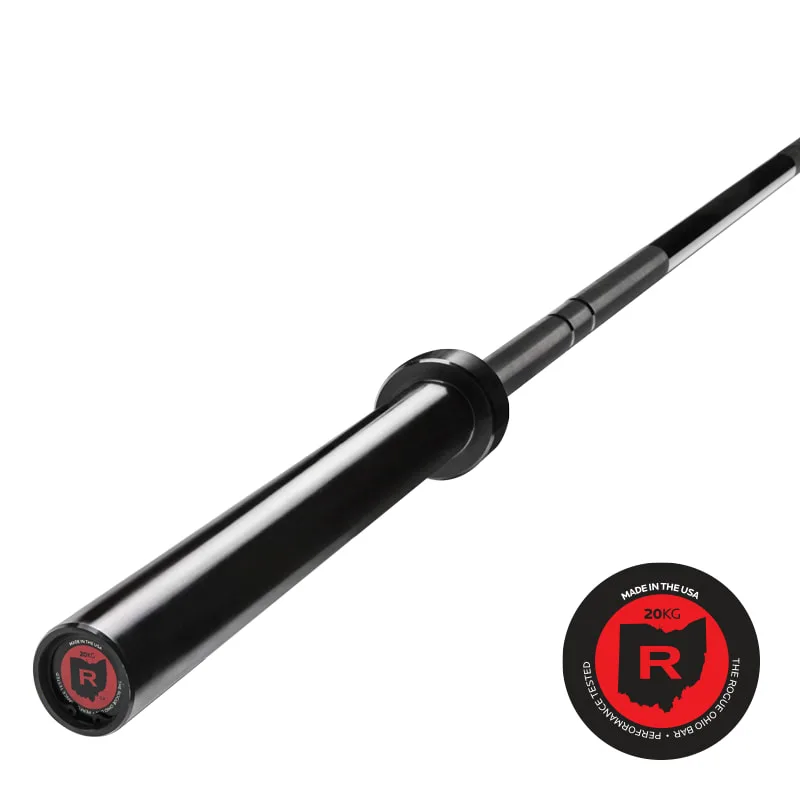
Rogue Ohio Bar (Black Oxide)
Pros
- 190,000 PSI tensile strength handles serious abuse for years without permanent flex
- Dual IPF and IWF knurl marks cover both powerlifting and Olympic lifting hand positions
- Medium "Volcano" knurling grips firmly without tearing hands during high-rep sets
- Made in the USA from American steel with consistent quality control
- Lifetime warranty — Rogue's no-questions-asked replacement policy is industry-leading
Cons
- No center knurl — bar can migrate during heavy back squats
- Bronze bushings limit sleeve spin compared to needle-bearing bars
- Premium price puts it out of reach for budget-limited buyers
The Rogue Ohio Bar is what most serious home gym lifters end up buying — and in 2026, it remains the top recommendation across every major barbell roundup. Rogue builds it in Columbus, Ohio from American steel, specs it at 190,000 PSI, and backs it with a lifetime warranty. The black oxide version at $320 is the most accessible entry point; the stainless steel version at $465 lasts indefinitely in any environment.
The “Volcano” knurling pattern hits medium aggression — grips your hands firmly across all movements without tearing skin on high-rep sets. Dual IPF and IWF marks are machined in, not painted. The grooved sleeves load and unload cleanly.
The main trade-off: no center knurl and bronze bushings limit sleeve spin. For the vast majority of home gym lifters not competing in Olympic weightlifting, those are acceptable trade-offs. For back squats, chalk on your traps compensates adequately.
#2 — Best Hybrid Bar
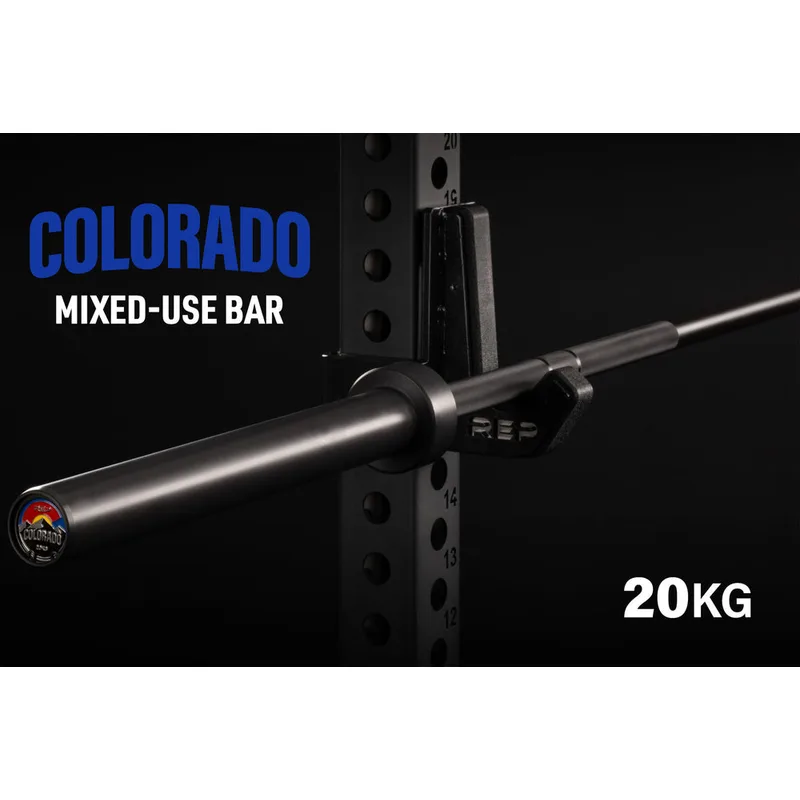
REP Fitness Colorado Bar (20kg)
Pros
- 1,500 lb rated capacity exceeds the Rogue Ohio Bar by over 200 lbs
- Composite bushings are quieter and more durable than traditional bronze
- Lifetime warranty at $320 delivers outstanding long-term value
- Hard chrome finish resists corrosion well in garage gym environments
- Versatile across powerlifting, Olympic lifting, and general strength work
Cons
- Composite bushings still limit spin compared to needle bearings — not ideal for competitive snatches
- Sold direct only — no Amazon option and longer shipping windows during peak periods
- Not specialty-optimized for either powerlifting or weightlifting — intentional trade-off
REP’s Colorado Bar competes directly with the Ohio Bar at the same $320 price with a different set of advantages. Where Rogue wins on brand reputation and US manufacturing, REP counters with a higher rated weight capacity (1,500 lbs vs. 1,260 lbs), composite bushings that outperform bronze on both quietness and longevity, and a hard chrome finish that handles garage humidity reliably.
The lifetime warranty matches Rogue’s coverage. For lifters who want premium all-around performance without paying for the Rogue brand name, the Colorado Bar is the strongest alternative argument at $320.
One important note: REP sells direct only. Shipping runs 3–7 business days, and returns go back through REP’s site — no Amazon convenience.
#3 — Best for Olympic Lifting
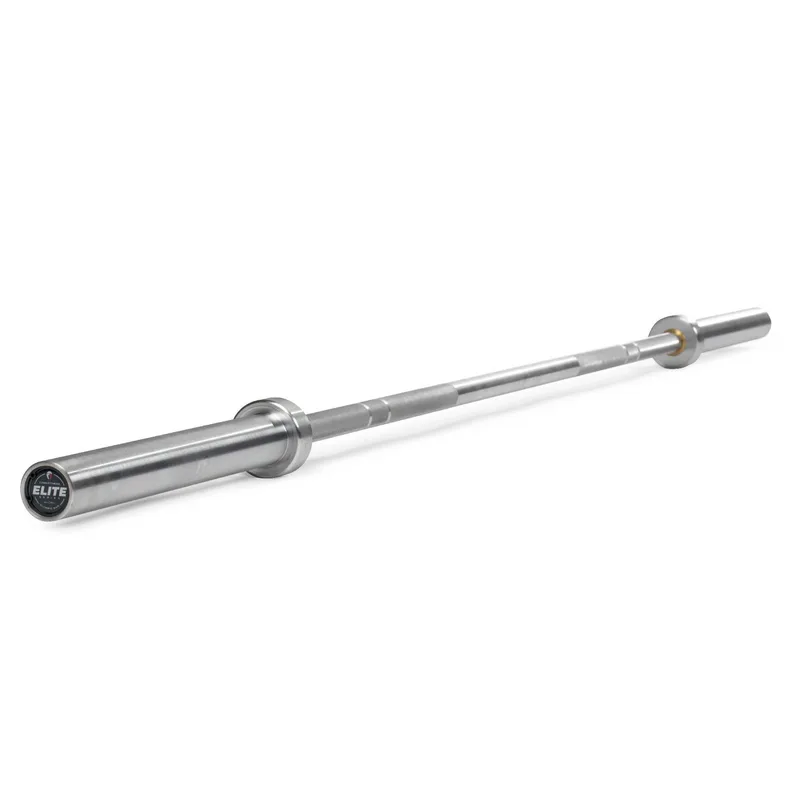
Titan Fitness Elite Series Olympic Bar (20 KG)
Pros
- 8 needle bearings under $300 — most bars at this price use inferior bushings
- 200,000 PSI tensile strength matches the Rogue Ohio Bar at a lower price
- 28 mm shaft produces proper bar whip for clean and jerk movements
- 1,500 lb capacity well above entry-level alternatives
- Available on Amazon Prime for fast delivery and easy returns
Cons
- Only 1-year warranty versus lifetime coverage on Rogue and REP bars
- Titan's quality consistency runs behind premium brands — inspect carefully on arrival
- Chrome finish requires regular maintenance in humid environments to prevent rust
The Titan Elite Series delivers 8 needle bearings and 200,000 PSI tensile strength for $285 — a combination that typically costs $500 or more. For lifters who do cleans, snatches, and jerks regularly, needle bearings are non-negotiable. Free-spinning sleeves absorb rotational force during heavy pulls and overhead catches, protecting your wrists at max effort.
The 28 mm shaft produces proper bar whip for Olympic movements, and the chrome finish holds up under regular use. The compromise is a 1-year warranty versus the lifetime coverage on Rogue and REP bars. Titan’s quality control has improved consistently but still runs behind the premium brands — inspect your bar on arrival.
Available on Amazon Prime with easy return access if there’s an issue.
#4 — Best for Powerlifting
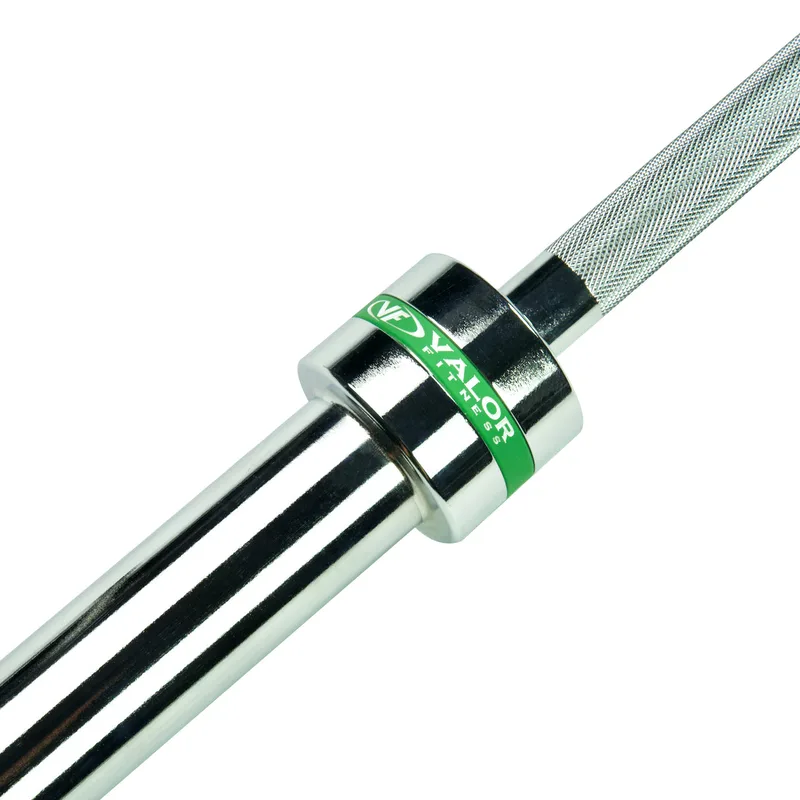
Valor Fitness OB-86-1000SB Olympic Barbell
Pros
- 30 mm shaft provides a stiffer feel for squats and deadlifts
- Center knurl keeps the bar planted during heavy back squats — rare at this price
- 3-year warranty is the longest offered by any Amazon barbell in this price range
- Chrome finish on both shaft and sleeves provides a clean, durable look
- Solid powerlifting-focused bar well under $200
Cons
- 150,000 PSI tensile strength is below premium standards — avoid extreme loading or drops
- Minimal sleeve spin from 2 brass bushings — not suitable for Olympic-style movements
- Owner reports indicate rust issues at moderate humidity (~45%) — requires regular maintenance
- 1,000 lb capacity is the lowest in this guide
Powerlifters want a stiff shaft, center knurl, and predictable behavior under a max squat or deadlift. The Valor OB-86-1000SB delivers all three under $200. The 30 mm shaft is stiffer than 28.5 mm alternatives, reducing unwanted bar whip at heavy loads. The center knurl locks onto your upper back during squats — a feature most bars in this price range skip.
The 3-year warranty beats every other Amazon option at this price. The trade-offs are real: 150,000 PSI means avoid extreme loading or dropping from height, and owner reports flag rust in humid environments above 45% humidity. Apply a light coat of oil monthly and store it properly, and this bar earns its place in a powerlifting-focused home gym.
Not a bar for Olympic movements — the 2-bushing setup provides minimal sleeve spin.
#5 — Best Budget
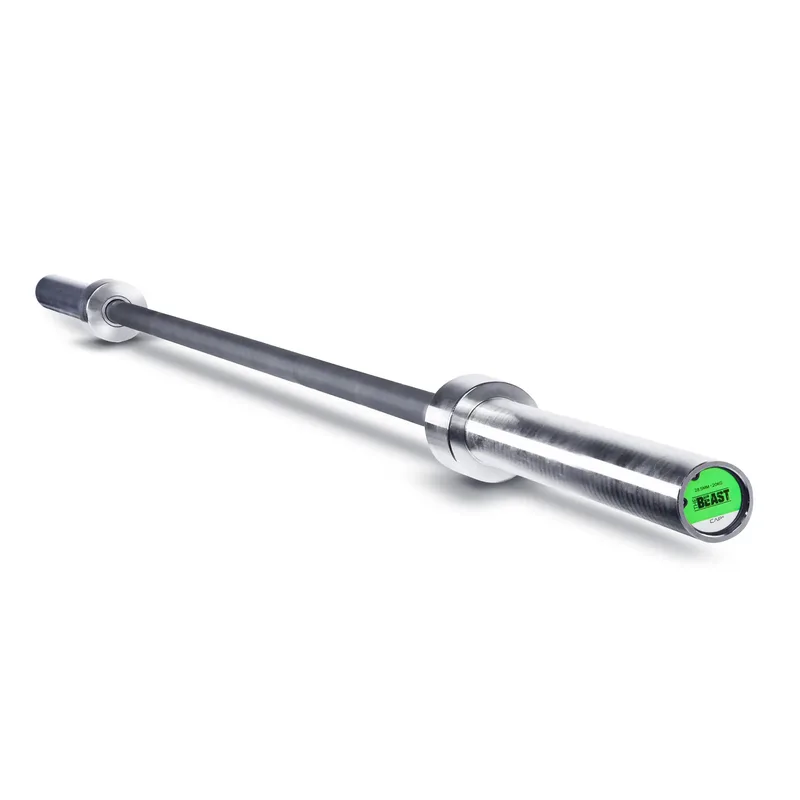
CAP Barbell "The Beast" Olympic Bar (OB-86B)
Pros
- Most affordable full-spec Olympic bar on Amazon — regularly available under $165
- Knurling receives consistent praise from thousands of verified buyers
- Handles 315+ lbs without bending under normal training conditions per extensive owner reports
- Black oxide finish gives a clean, matte appearance
- Available on Prime for fast shipping when you're ready to start training
Cons
- 110,000 PSI tensile strength is the lowest in this guide — avoid dropping from overhead
- Noticeable sleeve lateral play (2–3 mm) that produces a clunking sound during lifts
- Not appropriate for Olympic dropping or max-effort clean and jerk
- Minimal warranty support — customer service reports are mixed
CAP’s “The Beast” has shipped in huge volume for good reason: the knurling is genuinely excellent for the price. Thousands of owner reviews describe it as indistinguishable from bars found in commercial gyms, which is high praise for a $155 bar. Based on owner reports, it handles 315 lbs and above without bending under normal training conditions.
The 110,000 PSI tensile strength is the limiting factor. Avoid dropping it loaded and don’t use it for Olympic-style movements. The sleeve wobble (2–3 mm lateral play) is real but doesn’t affect safety under normal loading. For a first home gym where budget is the constraint and you’re squatting, benching, and deadlifting below 300 lbs, this bar gets the job done reliably.
Buying Guide: Which Bar Matches Your Training?
For powerlifting-focused training (slow, heavy squats, bench, and deadlifts): The Rogue Ohio Bar is the top overall pick. The Valor OB-86-1000SB covers the same bases under $200 with an actual center knurl.
For Olympic lifting (cleans, snatches, jerks): The Titan Elite Series is the best-value needle-bearing bar on Amazon. If budget allows, step up to the REP Colorado Bar.
For general strength training (mixed movement variety): The REP Colorado Bar or Rogue Ohio Bar both hit the ideal all-purpose balance. The CAP Beast works at the budget end.
For first home gym, tight budget: CAP Beast OB-86B. It works for real training. Upgrade when your lifts demand it.
For garage gym in a humid climate: Prioritize finish over everything else. Rogue’s cerakote or stainless versions are worth the premium. At minimum, choose the REP Colorado Bar in hard chrome.
FAQ
What shaft diameter should I choose?
For most home gym lifters — squats, bench press, deadlifts, and accessory work — a 28–28.5 mm shaft is correct. It’s the standard for all-purpose and Olympic lifting bars. If your primary focus is powerlifting with slow, heavy singles and doubles, a 29 mm shaft delivers a stiffer feel. The 30 mm Valor shaft is on the stiffer end and may feel unusual if you’re used to standard bars.
Do I need needle bearings?
Only if you regularly do cleans, snatches, or other Olympic movements where the bar rotates through your hands. For squats, bench press, and deadlifts, bushing bars perform well. Most home gym lifters don’t need needle bearings, but if Olympic movements are part of your programming, they’re a meaningful upgrade.
What’s the minimum tensile strength I should buy?
Aim for at least 150,000 PSI if you plan to lift above 300 lbs regularly. The 110,000 PSI CAP Beast handles lighter training fine but can deform under extreme load or if dropped repeatedly. For long-term use at higher weights, 190,000+ PSI provides the safety margin serious lifting demands.
Can I use any barbell for Olympic lifting?
Not safely. Olympic lifting requires adequate sleeve spin so plates rotate freely when you catch the bar overhead. A bushing bar with minimal spin transfers rotational force directly to your wrists — a common injury source at heavier weights. Prioritize needle bearings if cleans and snatches are in your regular programming.
How do I keep my barbell from rusting?
Wipe the shaft down after every session. A light coat of 3-in-1 oil applied monthly maintains bare steel and black oxide bars effectively. For garage gyms with humidity above 50%, a cerakote or stainless finish from the start is significantly cheaper than replacing a corroded bar in two years.
Conclusion
The Rogue Ohio Bar is the top pick for most home gym lifters in 2026 — 190,000 PSI steel, dual knurl marks, and a lifetime warranty for $320 is a combination that holds up for decades. If you want equivalent specs with a different strength profile, the REP Fitness Colorado Bar is a lifetime-warranty alternative with a higher rated capacity at the same price.
For Olympic lifting on a budget, the Titan Elite Series is the best needle-bearing bar on Amazon. Powerlifters working with limited funds should look at the Valor OB-86-1000SB. And for a first home gym where cost is the constraint, the CAP Beast OB-86B handles real training weight at under $100.
Buy for the lifts you’re doing today, with enough spec headroom for where your training is heading. A quality barbell is a 20-year purchase if you choose right.