Garage gym owners in cold climates and the southern hemisphere heading into winter 2026 face the same set of problems: rust forming on barbells, moisture warping flooring, equipment that’s painful to touch in sub-freezing temperatures, and a space that’s simply too miserable to train in for months at a time. Most of these problems are preventable with the right preparation — and fixing them retroactively costs far more than the equipment to prevent them.
This guide covers the practical steps to protect your garage or outdoor home gym through cold weather: how to control moisture, how to heat the space efficiently, how to maintain metal equipment, and what products are worth buying versus what’s overkill.
Why Cold Weather Is Hard on Home Gym Equipment
Cold air itself is not the problem. The cycle of temperature swings is.
When a cold garage heats up during a training session, condensation forms on cold metal surfaces — barbells, weight plates, cable pulleys, and machine frames. That moisture, repeated daily over a winter season, accelerates oxidation. Chrome finishes corrode. Bare steel develops surface rust. Cable housings develop small cracks. Rubber flooring becomes brittle below freezing, and aggressive temperature swings can cause foam tiles to delaminate.
Here is what actually damages equipment in winter:
- Moisture cycles — condensation from training heat hitting cold metal
- Freezing rubber — mats that become slick and brittle below 32°F
- Unlubricated cables and pulleys — standard grease thickens and stops lubricating in the cold
- Unprotected bare steel — barbells, plates, and racks with no rust-inhibiting finish will oxidize noticeably in one humid winter season
Address these four issues and your equipment will come out of winter in the same condition it went in.
Step 1: Control Moisture First
Moisture is the root cause of most winter gym damage. Before investing in heating, get humidity under control.
In a typical garage, humidity comes from two sources: outdoor air that enters through gaps in the door seal and floor, and condensation from the temperature differential during training sessions. A dehumidifier running continuously through the winter season keeps relative humidity below 50% — the threshold where rust formation slows significantly.
The hOmeLabs 40-Pint Dehumidifier is the most practical option for a garage gym. The built-in pump and 16.4-foot drain hose means you can route collected water to a floor drain or utility sink and run it continuously without monitoring a bucket. At 6,000 sq ft coverage, it’s oversized for most garages — which means it cycles less often and runs quieter.
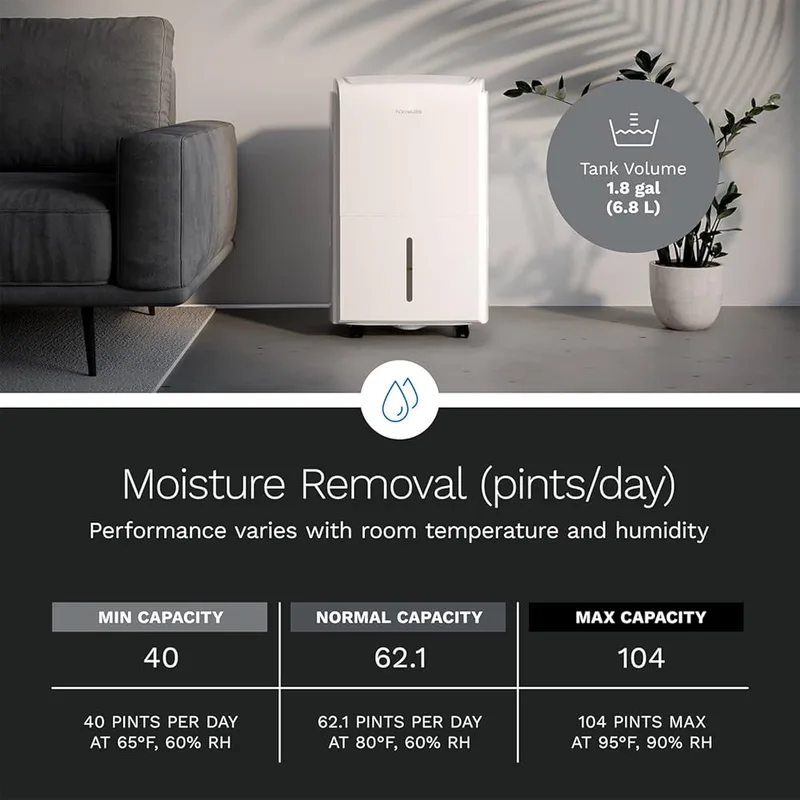
hOmeLabs 40-Pint Dehumidifier with Built-In Pump
Pros
- Built-in pump eliminates manual bucket emptying — run it continuously through winter
- 16.4-foot drain hose reaches most floor drains or utility sink setups
- Energy Star certified — lower operating cost than budget dehumidifiers
- Handles garages up to 6,000 sq ft, covering most multi-car setups
- Auto shut-off prevents overflow and protects flooring
Cons
- At 25" tall, it takes up meaningful floor space in tight gym setups
- Pump noise is audible — louder than the dehumidifier fan alone
- Below 41°F, dehumidifier efficiency drops significantly — pair with a heater in very cold climates
Important limitation: Below about 41°F, standard refrigerant-cycle dehumidifiers lose most of their effectiveness. If your garage regularly drops below freezing, a dehumidifier alone is not enough — pair it with heating to keep the space above 45°F before the dehumidifier becomes useful.
One practical alternative for very cold, uninsulated spaces: store moisture-sensitive equipment (barbells, chrome accessories) inside the house during hard freezes, and let the dehumidifier manage the normal cold-weather humidity range.
Step 2: Insulate and Seal Before Heating
Adding a heater to a poorly sealed garage is expensive and largely ineffective. Seal first, heat second.
Garage door insulation is the single highest-impact improvement. A single-layer metal garage door has essentially no insulation value. A foam insulation kit (available at hardware stores for $50–$100) attaches directly to the door panels and cuts heat loss significantly. This is also the loudest door you have — weatherstripping along the bottom seal and the side jambs stops cold drafts from flooding the floor area where you train.
Additional sealing points to address:
- The gap under a side entry door — add a door sweep
- Any wall penetrations for electrical or plumbing — expanding foam
- Cracks in the concrete floor — these let cold air and moisture rise directly into the slab
- Windows — plastic film window insulation kits stop drafts without losing light
Spend $50–$150 on sealing before you size a heater. A well-sealed 2-car garage needs significantly less heating capacity than a drafty one.
Step 3: Heat the Space Effectively
Once sealed, a 400-500 sq ft garage gym needs roughly 5,000–7,500 BTU of heating capacity to reach comfortable training temperatures (55°F–65°F) from a cold start in moderate winter conditions (20°F–30°F outside). In severely cold climates, you may need a dedicated 240V unit or propane heater.
For most home gym owners, a 1,500W infrared electric heater is the right starting point. Infrared heaters warm objects and surfaces directly — including your equipment, barbell, and flooring — rather than only heating the air. This means you feel warm faster, and your equipment reaches usable temperature sooner.
The Dr Infrared DR-968 is the most widely recommended portable garage gym heater for good reason. Its dual-element system combines an infrared quartz tube with a PTC (positive temperature coefficient) secondary element, producing more effective heat than single-element portables at the same wattage. At 39 dB, it is quiet enough that you can train without it becoming a distraction. The 3-year warranty is significantly better than the 1-year coverage typical for portable heaters.
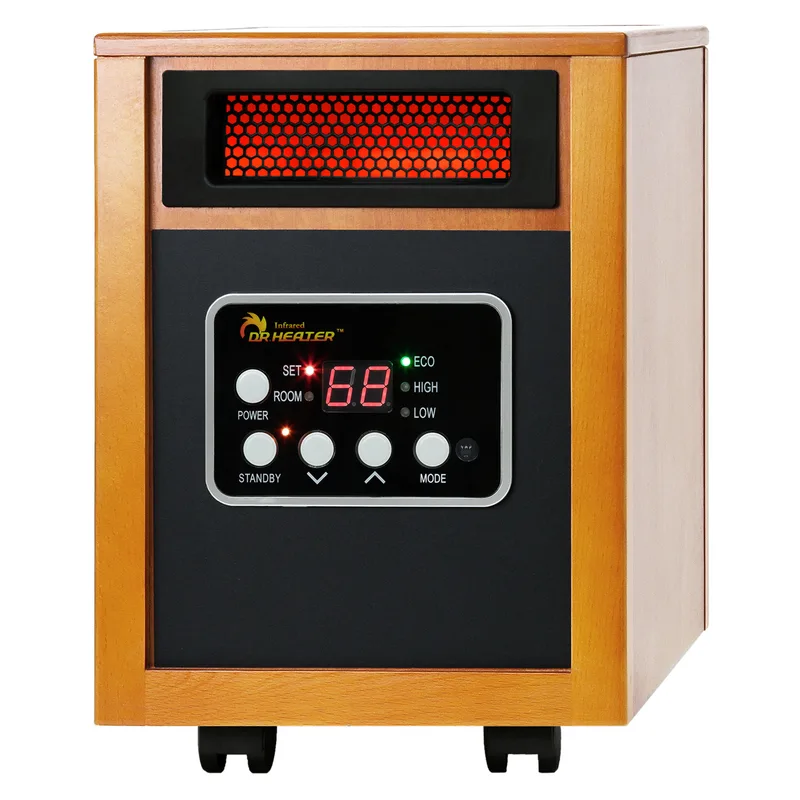
Dr Infrared DR-968 Portable Space Heater
Pros
- Dual-element system (infrared quartz + PTC) heats a 400 sq ft garage in under 15 minutes
- 39 dB noise level is quieter than most fans — you can train without distraction
- Auto shut-off and tip-over protection meet UL safety certification standards
- Remote control lets you adjust temperature without leaving the rack
- Three-year warranty is unusually long for a portable space heater
Cons
- At 1,500W, it draws a full 12.5A circuit — dedicate an outlet or risk tripped breakers
- Wood cabinet housing can get warm to the touch after extended use
- Only rated for indoor spaces — not suitable for open-air or semi-exposed setups
Electrical note: The DR-968 draws 12.5 amps at full power. On a shared 15-amp circuit with other equipment, it will trip the breaker. Run it on a dedicated 15-amp or 20-amp outlet. If your garage only has a single outlet shared with the door opener, add a dedicated circuit before winter — a licensed electrician typically charges $150–$250 for a single circuit addition.
Alternative for severe cold: In climates that regularly see temperatures below 10°F, a propane or natural gas garage heater (mounted to the wall or ceiling) provides significantly more BTU output. The trade-off is that gas heaters require ventilation, cannot be used in fully sealed spaces, and need professional installation for natural gas.
Step 4: Protect Metal Equipment from Rust
Heating and dehumidifying the space handles most moisture. But metal equipment that already has minor surface rust, or equipment in unheated storage areas, needs direct protection.
Barbells: Wipe down after every session with a dry cloth to remove sweat and moisture. At the start of winter, clean the knurling with a nylon brush to remove chalk and debris, apply a light coat of 3-in-1 oil to the shaft and sleeves, and wipe off the excess. The goal is a thin protective film — not a pooled coating that attracts more chalk.
The Barbell Cleaning Kit is a practical all-in-one solution. It includes everything needed for seasonal maintenance: a nylon brush for the knurling, mineral-based 3-in-1 oil for rust inhibition, and a microfiber cloth for the final wipe. Repeat this cleaning process monthly through winter if your garage regularly sees temperature swings.
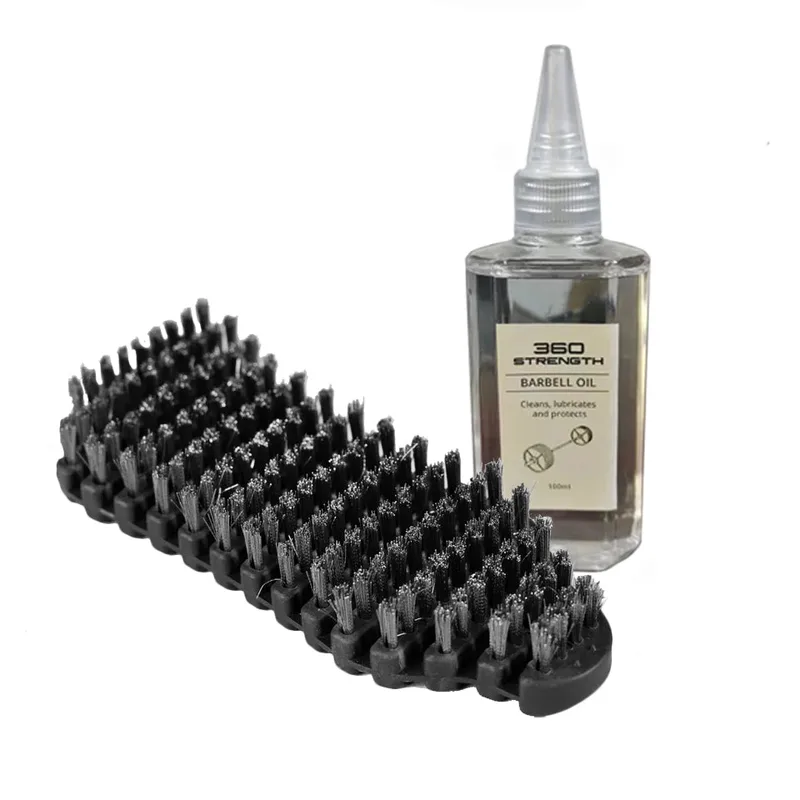
Barbell Cleaning Kit with 3-in-1 Oil and Nylon Brush
Pros
- Nylon bristle brush clears chalk and light rust from knurling without scratching the finish
- 3-in-1 oil penetrates, cleans, and leaves a protective moisture barrier in one pass
- Includes microfiber cloth — no need to find a separate rag
- Carrying case keeps the kit organized and portable
- Comparable protection to Rogue's kit at a lower price point
Cons
- Brush handle is shorter than some prefer for full-bar passes
- Oil bottle size is modest — plan on restocking if maintaining multiple bars
- Does not include rust remover for heavily oxidized bars (use 0000 steel wool first)
Weight plates: Cast iron plates oxidize faster than barbells. Wipe with a lightly oiled rag before storage. Bumper plates do not rust (rubber exterior), but check the steel insert around the collar hole for surface oxidation — that area is exposed and commonly missed.
Cable machines and functional trainers: Cable housings and pulley wheels need lubrication at the start of winter. Standard cable machine lubricant or 3-in-1 oil on the cable housing keeps it pliable in the cold. Cable that freezes in a kinked position will develop permanent kinks that weaken the cable over time.
Racks and frames: Powder-coated racks are largely rust-resistant, but the J-cups, safety arms, and any bare steel hardware bolts are not. Wipe hardware with an oiled rag and check for any areas where the powder coat is chipped — bare metal is directly exposed and needs protection.
Step 5: Protect Your Flooring
Rubber flooring holds up well in cold conditions but reacts poorly to repeated freeze-thaw cycles.
Horse stall mats (3/4” thick): These are the most durable option and handle cold well. At sub-freezing temperatures, they become firmer and less shock-absorbing. If your garage drops below 20°F regularly, mats will be cold and stiff at the start of training sessions — this is normal and they recover as the space heats up.
Interlocking rubber tiles: The interlocking edges can separate in hard freezes if they were installed without adhesive. Check edges at the start of each cold season and re-lock any separations before they become trip hazards.
Foam tiles: Foam is the least cold-resistant option. Below 40°F, foam tiles compress differently and can develop cracks at interlocking edges under heavy equipment loads. If your gym uses foam tiles in an unheated space, consider swapping to rubber in the high-traffic areas under your rack and deadlift zone.
Step 6: Cover and Store What You’re Not Using
For equipment that won’t be used through winter (bikes, rowing machines, or secondary pieces), covers prevent dust and moisture accumulation.
Purpose-built equipment covers exist for most major cardio equipment, but heavy-duty moving blankets and industrial plastic sheeting work equally well for stationary equipment. The goal is blocking direct moisture contact and dust accumulation during inactive periods.
For barbells stored in a wall-mounted holder or vertically in a rack, wipe and oil them before covering — do not seal moisture against the metal by covering before drying.
Quick Reference: Winter Gym Protection Checklist
| Task | Frequency | Priority |
|---|---|---|
| Seal garage door and gaps | Once per season | High |
| Run dehumidifier | Continuous | High |
| Wipe down barbells after use | Every session | High |
| Oil barbells and metal equipment | Monthly | High |
| Check flooring edges for separation | Monthly | Medium |
| Lubricate cable machine | Start of season | Medium |
| Cover unused cardio equipment | Once per season | Medium |
| Check rack hardware for rust | Once per season | Medium |
Buying Guide: What’s Worth It vs What to Skip
Worth every dollar:
- A quality dehumidifier with a pump — this runs continuously without your attention
- Garage door insulation — highest return on heat retention
- A 1,500W portable heater with a thermostat — set it and forget it
- Barbell maintenance kit — one winter of skipped maintenance can surface-rust an expensive barbell that takes minutes to protect
Usually overkill for most home gyms:
- Permanent HVAC systems in mild climates — a portable heater does the job in most garages
- Specialty rust inhibitors — standard 3-in-1 oil does the same job for a fraction of the cost
- Wall-mounted propane heaters in climates that rarely see freezing temperatures
Common mistakes to avoid:
- Heating before sealing — you are heating the outdoors
- Skipping barbell maintenance because “it looks fine” — subsurface oxidation is invisible until the finish fails
- Using WD-40 as a long-term rust inhibitor — it displaces water short-term but evaporates quickly; use mineral oil or 3-in-1 oil instead
FAQ
How cold is too cold for a home gym? Metal equipment can be used at any temperature, but below 32°F rubber flooring becomes brittle and rigid, making it a slip risk. Below 20°F, most portable heaters struggle to maintain comfortable training temperatures in an insulated garage. At these temperatures, a more powerful fixed heater or better insulation becomes necessary.
Will my barbell rust in an unheated garage? Yes — if it is a bare steel or lightly finished barbell (black oxide, cerakote, or chrome), uncontrolled humidity in winter will cause surface oxidation. Stainless steel barbells are the exception and require minimal maintenance. For all others, monthly oiling through winter is the minimum to prevent rust.
Should I run a dehumidifier in a heated garage? Yes. Heating the air raises its capacity to hold moisture, but does not remove moisture from the space. A heated garage without humidity control can still have enough moisture to cause oxidation on metal equipment and mold growth on foam materials.
How do I protect my squat rack from rust in the winter? Most power racks and squat stands are powder-coated and largely rust-resistant. Focus protection on hardware: the J-cups, safety bars, pin and pipe safeties, and any bare steel bolts. Wipe these with an oiled cloth at the start of winter. Check any areas where powder coat is chipped — bare metal there is exposed and will oxidize faster than the surrounding coated steel.
Is it safe to use an electric space heater in a garage gym? Yes, with two conditions: the heater must be UL-listed (certified for safety), and it must be on a dedicated or adequately rated circuit. The Dr Infrared DR-968 is UL-certified and includes tip-over protection and overheat shut-off. Do not use propane or kerosene heaters in a closed garage without proper ventilation — carbon monoxide buildup is a serious hazard.
Conclusion
Winterizing a home gym is less about a single product purchase and more about addressing the four core problems: moisture, cold, unlubricated metal, and inadequate electrical capacity. Fix those in order and your equipment will last years longer.
Start with sealing the garage, add a dehumidifier that can run continuously, get the space to a usable temperature with a quality portable heater, and commit to a monthly barbell maintenance routine. The investment in those four areas is modest relative to the cost of replacing a rusted barbell or a delaminated rack finish.
Top picks:
- Best heater: Dr Infrared DR-968 — 3-year warranty, quiet, and dual-element output that exceeds single-element portables
- Best dehumidifier: hOmeLabs 40-Pint with Pump — continuous drainage, Energy Star, handles any garage size
- Best maintenance kit: Barbell Cleaning Kit — nylon brush, 3-in-1 oil, and carrying case at a competitive price