Incline walking exploded in 2026. The 12-3-30 workout — 12% incline, 3 mph, 30 minutes — has remained a persistent trend on fitness platforms, and it’s pushed a specific question to the top of every treadmill buyer’s mind: do I need an incline trainer, or does a regular treadmill with 15% incline cover everything I need?
The honest answer depends on how you actually train. This comparison puts four machines on the table — two incline-focused and two standard running treadmills — to give you a clear verdict.
Quick Comparison
| Spec | NordicTrack X24i Incline Trainer | NordicTrack Commercial 1750 Treadmill | Sole F80 Folding Treadmill | ProForm Pro 2000 Treadmill |
|---|---|---|---|---|
| Rating | 8.8/10 | 9.0/10 | 8.7/10 | 8.2/10 |
| Price | $2,999 | Check price | Unavailable | Check price |
| Motor | 4.0 CHP | 4.25 CHP | 3.5 CHP | 3.25 CHP |
| Belt | 22" x 60" | 22" x 60" | 22" x 60" | 20" x 60" |
| Incline Range | -6% to 40% | -3% to 15% | 0–15% | -3% to 12% |
| Decline Range | Yes (-6%) | Yes (-3%) | None | Yes (-3%) |
| Speed | 0–12 mph | 0–12 mph | 0–12 mph | 0–12 mph |
| Display | 24" HD touchscreen | 14" HD touchscreen | Bluetooth console with tablet holder | 10" HD touchscreen |
| Weight Capacity | 400 lb | 300 lb | 375 lb | 300 lb |
| Folding | SpaceSaver design | SpaceSaver EasyLift Assist | Yes | SpaceSaver design |
| Warranty | Lifetime motor, 10-yr frame, 2-yr parts, 1-yr labor | Lifetime motor, 10-yr frame, 2-yr parts, 1-yr labor | Lifetime frame and motor, 3-yr parts/electronics, 1-yr labor | 10-yr frame, 2-yr parts, 1-yr labor |
| Check Price at NordicTrack → | Check Price → | Check Price → | Check Price → |
Prices change daily — tap Check Price for the current Amazon price. Numbers shown were verified on the "as of" date.
| Feature | X24i | 1750 | Sole F80 | ProForm Pro 2000 |
|---|---|---|---|---|
| Max incline | 40% | 15% | 15% | 12% |
| Decline | -6% | -3% | None | -3% |
| Motor | 4.0 CHP | 4.25 CHP | 3.5 CHP | 3.25 CHP |
| Belt width | 22” | 22” | 22” | 20” |
| Weight capacity | 400 lb | 300 lb | 375 lb | 300 lb |
| Subscription | iFIT req. | iFIT req. | None | iFIT req. |
| Price | $2,999 | $2,499 | $1,799 | $1,499 |
The Incline Trainer Case: What You Actually Gain
Before getting into individual machines, here’s the core argument for an incline trainer over a standard treadmill.
Every 1% of incline increases calorie burn by roughly 12% compared to walking flat. At 15% — the ceiling of most standard treadmills — you’re burning meaningfully more calories than flat walking. At 40% (the X22i’s maximum), you’re working in an entirely different physiological zone. EMG research shows glute activation increases by 30–40% once incline exceeds 9%, and walking at 40% grade burns approximately five times the calories of flat walking at the same pace.
That’s the case for a dedicated incline trainer.
The counterargument: most home gym users don’t train above 10–12% regularly. The 12-3-30 workout uses 12% — well within the capability of any treadmill in this comparison. If you run more than you walk, high incline capability matters less than motor quality, belt size, and warranty terms.
NordicTrack X24i Incline Trainer
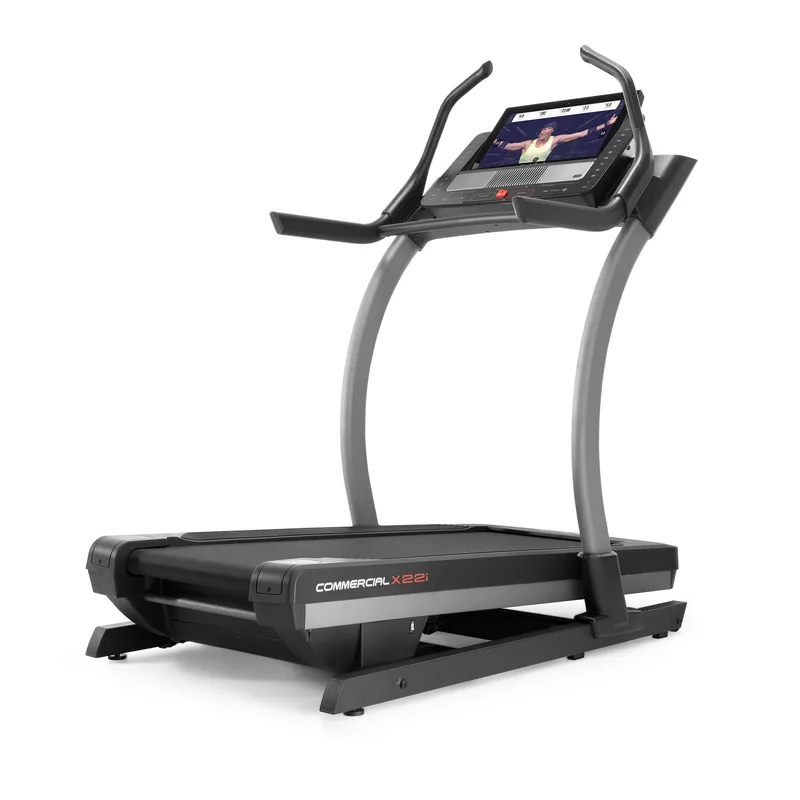
NordicTrack X24i Incline Trainer
Pros
- 40% incline and -6% decline — the widest range available in a home treadmill
- Walking at max incline burns roughly 5x the calories of flat walking at the same speed
- Large 22" x 60" belt handles long strides and tall users comfortably
- iFIT integration streams coach-led workouts that auto-adjust the incline in real time
- 400 lb weight capacity accommodates heavier users — exceeds the Sole F80 (375 lb)
Cons
- At $2,999 it costs significantly more than a standard treadmill
- iFIT membership required to use most features ($396/year family or $180/year individual)
- Very tall at maximum incline — ceiling clearance of 10+ ft recommended
- Not sold on Amazon — purchase direct from NordicTrack or Dicks Sporting Goods
The X24i is designed for one thing: extreme incline training. The 40% maximum grade and -6% decline give it a range that no standard treadmill can touch. At $2,999 it’s a premium purchase — $500 less than its predecessor, the discontinued X22i — but the machine is built around a specific training philosophy that the other options in this comparison can’t replicate.
The 24” touchscreen streams iFIT workouts where the incline adjusts automatically to match the terrain in on-screen runs — whether a mountain trail or a virtual coach-led session. The auto-adjust feature is where the iFIT ecosystem earns its subscription cost; manually punching in a 38% incline is awkward, but having the machine respond to your trainer’s voice command is genuinely different.
Ceiling clearance is a real consideration. At max incline, the X24i raises the back of the deck significantly — owner reports consistently mention needing 10+ ft of ceiling clearance to run at extreme grades. Garages with standard 8 ft ceilings are fine for moderate inclines but may limit the top end.
The 400 lb weight capacity exceeds the Sole F80’s 375 lb limit — a genuine improvement over the previous model. Note that the X24i is only available direct from NordicTrack or at Dick’s Sporting Goods; it is not sold on Amazon.
Bottom line: The right machine if extreme incline training is your primary cardio mode. Unnecessary if you’re primarily a runner or only use incline occasionally.
NordicTrack Commercial 1750 Treadmill
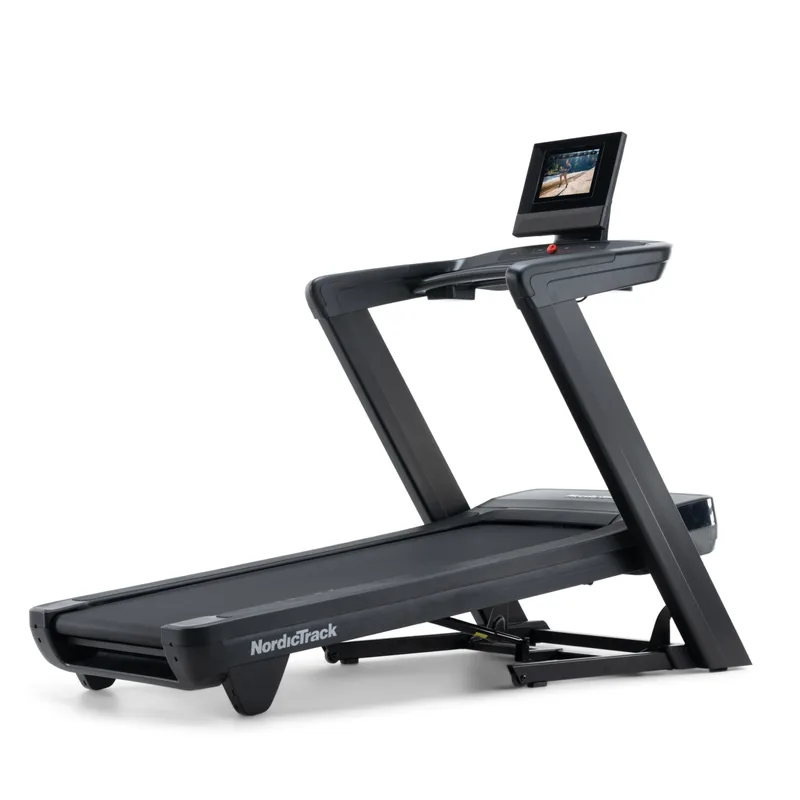
NordicTrack Commercial 1750 Treadmill
Pros
- 4.25 CHP motor handles sustained high-speed running without heat buildup
- -3% decline adds lower-leg eccentric variety most standard treadmills skip
- SpaceSaver EasyLift Assist folds the deck with one hand — no effort required
- Lifetime motor warranty is rare at this price point and reflects NordicTrack confidence in the motor
- iFIT auto-adjusts incline and speed to match on-screen trainers in real time
Cons
- iFIT subscription required for full functionality ($180–$396/yr depending on plan)
- 300 lb weight capacity — same as the X22i but lower than the Sole F80
- Console bezels and aesthetics feel plasticky for a $2,499 machine
- Touchscreen functionality requires an active iFIT account after the trial period
The 1750 is the most popular treadmill NordicTrack makes, and the sales numbers reflect a machine that hits the right balance. The 4.25 CHP motor is the strongest in this comparison. The 22” x 60” belt is the same generous surface as the X22i. And the -3% to 15% incline range covers everything a serious home gym user realistically needs.
The 2026 iteration trimmed the frame’s physical length while maintaining the same belt surface — a notable improvement for garages where every inch of floor space matters. The SpaceSaver EasyLift Assist deck folds vertically with minimal effort, reducing the footprint by nearly 43% in stored position.
Where the 1750 lands in this comparison: it’s the strongest all-around machine at $2,499. If you run five days a week and occasionally use incline for variety or walking workouts, the 1750 covers the full range without paying $3,499 for the X22i’s extreme grades.
The iFIT requirement is the main caveat. The 30-day free trial converts to a $180/year individual or $396/year family plan. The machine functions as a basic treadmill without a subscription, but the touchscreen and auto-adjust features go dark.
Bottom line: Best all-around treadmill in this comparison. The right choice for most home gym users who want both running capability and meaningful incline range.
Sole F80 Folding Treadmill
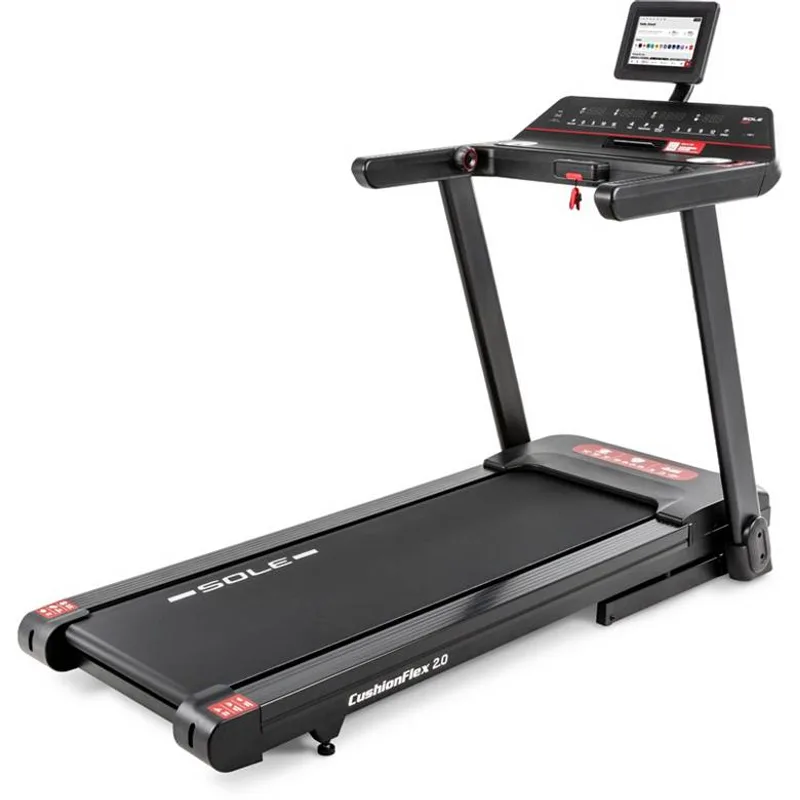
Sole F80 Folding Treadmill
Pros
- 375 lb weight capacity — highest in this comparison and appropriate for heavier users
- Lifetime frame and motor warranty is the best coverage in the category
- No subscription required — all features work out of the box, forever
- Cushion Flex Whisper Deck absorbs impact effectively for long run sessions
- Bluetooth connectivity pairs with fitness apps without forcing a proprietary platform
Cons
- No decline — 0% flat is as low as it goes
- 3.5 CHP motor is the lowest in this group — fine for home use, but less headroom under load
- Console display is dated compared to the touchscreen options in this comparison
- No auto-incline adjustment via app integration
The F80 is the outlier in this group: no decline, no touchscreen, no subscription. What it does offer is the best weight capacity (375 lb), the best warranty coverage (lifetime frame and motor), and a machine that works without a recurring platform cost.
The 3.5 CHP motor is the lowest in this comparison, but owner reports are consistent — it handles sustained running without the heat or noise issues that plague cheaper machines. The Cushion Flex Whisper Deck absorbs impact well, which matters over long training sessions. The Bluetooth console connects to Zwift, Peloton Digital, and other apps without locking you into a proprietary ecosystem.
For runners who don’t need incline training beyond 15% and want a subscription-free machine that simply works for years, the F80 is the strongest option here. The lifetime motor warranty — rare at this price — signals Sole’s confidence in the motor’s durability.
The obvious gap: no decline at all, and the console looks dated next to the NordicTrack touchscreens. If app-driven workouts or automatic incline adjustment are priorities, the F80 isn’t the machine for you.
Bottom line: Best choice for runners who prioritize durability, warranty, and subscription-free operation over incline training capability.
ProForm Pro 2000 Treadmill
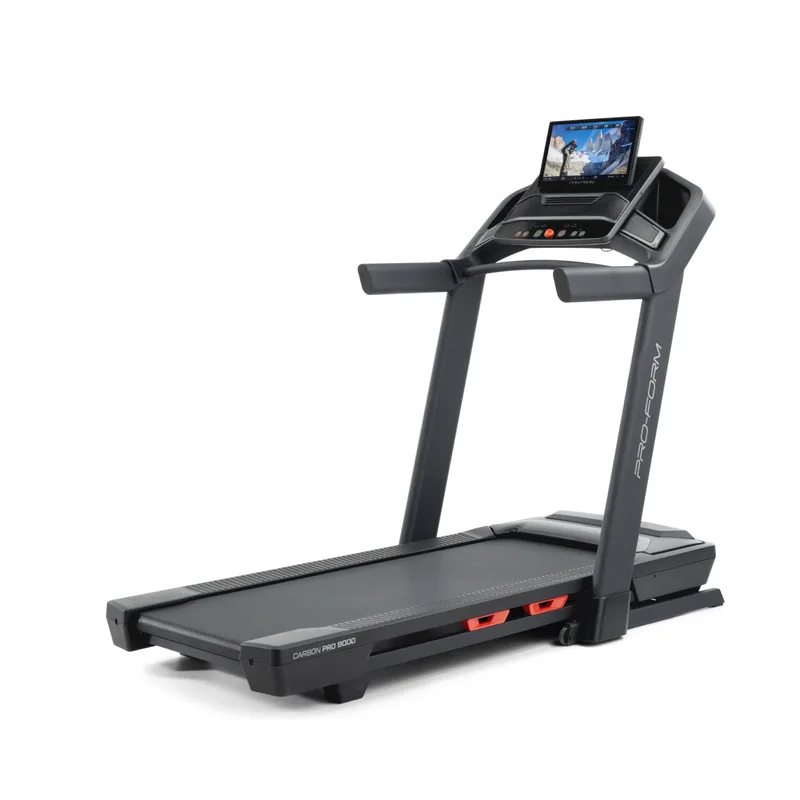
ProForm Pro 2000 Treadmill
Pros
- Lowest price in this comparison at $1,499 — strong entry point for a capable machine
- -3% decline adds training variety at a price point where competitors skip it
- iFIT auto-adjust works with on-screen trainers to change speed and incline automatically
- SpaceSaver folding design cuts the footprint significantly for storage between sessions
- Compact 20" belt width is adequate for most users and walkers
Cons
- 20" belt width is narrower than the 22" standard — less comfortable for tall runners or wide strides
- 3.25 CHP motor is the lowest in this comparison — not ideal for sustained fast running
- iFIT subscription required for most smart features after the trial
- 12% max incline is the shallowest here — no serious incline training capability
At $1,499, the ProForm Pro 2000 is the most accessible machine in this comparison. The -3% to 12% incline range, 10” touchscreen, and iFIT auto-adjust functionality hit the core feature set of the 1750 at a lower price — with some meaningful tradeoffs.
The 20” belt width is narrower than the 22” standard. For most walkers and shorter runners this is fine. For tall runners or anyone with a wide stride, 20” can feel constraining during faster sessions. The 3.25 CHP motor is similarly capable for moderate use but less equipped for sustained fast running.
Where the ProForm 2000 makes sense: new home gym builders who want app-connected incline training without committing $2,500+ to a first machine. The iFIT integration works identically to the 1750’s system — same auto-adjust, same workout library — at a lower entry cost. If you later outgrow it, the trade-in or resale path is straightforward.
The 12% maximum incline means you’re giving up the top third of the 1750’s range. For the 12-3-30 workout, 12% is exactly the number you need — so the limitation only matters if you plan to push beyond that.
Bottom line: The right entry point for budget-conscious buyers who want iFIT connectivity and incline training. Upgrade to the 1750 if you plan to run fast or push incline above 12%.
Head-to-Head Breakdown
Calorie Burn and Training Intensity
X22i wins — but only if you use it. The 40% incline opens a physiological zone unavailable on any other machine here. If you train at 30–40% regularly, the calorie and glute activation advantages are significant. If you cap out at 12–15%, the 1750 or Sole F80 cover the same territory at half the cost.
Running Performance
1750 wins. The 4.25 CHP motor, 22” x 60” belt, and -3% decline make it the strongest pure running machine in this comparison. The Sole F80 is competitive for steady-state running but lacks the motor headroom for sustained speed work.
Subscription Independence
Sole F80 wins outright. The NordicTrack and ProForm machines require iFIT for full functionality. The Sole F80 works completely without any subscription — forever. If paying $180–$396/year for a treadmill platform sounds like a poor use of money, the F80 is your machine.
Price to Performance
ProForm Pro 2000 wins at the entry level. 1750 wins in the mid-range. The X24i is worth its price only if extreme incline training is a planned weekly practice, not an occasional experiment.
Durability and Warranty
Sole F80 wins. Lifetime frame and motor warranty, 375 lb capacity, and no critical electronics that can fail (no mandatory subscription screen). The NordicTrack machines carry a 10-year frame warranty, which is solid but not lifetime.
Who Should Buy Each Machine
Buy the NordicTrack X24i if:
- Incline walking above 20% is a core part of your training plan
- You want the widest possible incline/decline range
- Ceiling clearance is 10+ ft in your gym space
- You’re committed to iFIT and find the coaching valuable
- You’re comfortable purchasing direct from NordicTrack (not available on Amazon)
Buy the NordicTrack 1750 if:
- You want the best all-around machine at a reasonable price
- Running and moderate incline training are both priorities
- You like iFIT-connected workouts and auto-adjust incline
- Folding convenience and strong motor matter
Buy the Sole F80 if:
- You run more than you walk and don’t need extreme incline
- Subscription-free operation is a hard requirement
- Durability and warranty terms are top priority
- Your household has heavier users (375 lb capacity)
Buy the ProForm Pro 2000 if:
- Budget is the primary constraint
- The 12-3-30 workout or 12% incline covers your training goals
- You want iFIT connectivity at the lowest entry cost
- You expect to upgrade in 2–3 years as your training evolves
FAQ
Does the 12-3-30 workout require an incline trainer? No. The 12-3-30 protocol uses 12% incline — every machine in this comparison hits that number. An incline trainer like the X22i is only necessary if you plan to train consistently above 15%. For 12-3-30 specifically, the 1750 or ProForm Pro 2000 are more cost-effective options.
How much ceiling height do I need for an incline treadmill? For a standard treadmill at 15% incline, 8 ft of ceiling clearance is usually adequate. For the NordicTrack X24i at 40% incline, owner reports consistently recommend 10+ ft. The back of the deck rises significantly at extreme grades — factor in your height on top of that.
Is the iFIT subscription worth it? For NordicTrack and ProForm machines, iFIT unlocks the auto-adjust incline feature (which is genuinely useful), a large workout library, and streaming classes. The $180/year individual plan works out to $15/month. If you use it regularly, the value is reasonable. If you prefer running freely without coaching, the Sole F80’s subscription-free model may suit you better.
What’s the difference between an incline trainer and a regular treadmill? The primary difference is incline range. Standard treadmills typically max out at 12–15% incline. Dedicated incline trainers like the NordicTrack X24i reach 30–40%. That higher range targets glutes, hamstrings, and calves more aggressively and allows cardio training at lower speeds — important for users with joint issues who can’t sustain running pace.
Does incline walking replace running for cardio fitness? Research shows incline walking is effective cardiovascular training and produces less tibial impact stress than flat running. For users who can’t run due to joint issues, high-incline walking on a machine like the X24i is a viable alternative. For athletes training for running events, incline walking supplements but doesn’t replace pace-specific running training.
Verdict
For most home gym buyers, the NordicTrack Commercial 1750 is the right answer. The strongest motor in this group, the full -3% to 15% incline range, lifetime motor warranty, and iFIT connectivity cover every realistic home cardio scenario at $2,499.
If subscriptions are a non-starter and durability is the priority, the Sole F80 wins — lifetime frame and motor warranty, 375 lb capacity, and no recurring cost.
The NordicTrack X24i is the right machine for a specific buyer: someone who has genuinely committed to high-incline training as a training method, not as an occasional challenge. At $2,999 with a mandatory iFIT subscription, it’s a premium choice that earns its cost only if you consistently train at inclines above 15%. Note it’s sold direct from NordicTrack, not through Amazon.
The ProForm Pro 2000 makes sense as a first machine if budget is the constraint — iFIT integration and -3% to 12% incline at $1,499, the lowest entry price in this comparison.