Sole updated the F80 in April 2026 — the biggest change to the model in years. The old brushed motor is out, replaced by a brushless 3.25 HP unit Sole says runs quieter and lasts roughly ten times longer under continuous use. The deck also switched to a new CushionFlex 2.0 layer, and the running surface narrowed slightly from 22” to 20” wide while staying at 60” long. None of that changes the F80’s core pitch: no subscription, no app requirement, a treadmill you own outright and run on the day it arrives.
That pitch matters more in 2026 than it did a few years ago. iFIT, JRNY, and Peloton subscriptions now routinely add $400+ a year on top of the hardware price, and buyers who let those subscriptions lapse are left with a smart treadmill that still works but stops delivering the trainer-led content they paid extra for. The F80 skips that trade entirely. This review breaks down what actually changed in the 2026 update, where the F80 still falls short, and how it stacks up against the Horizon 7.4 AT — the closest non-connected competitor at a similar price.
Quick Comparison
| Spec | Sole F80 | Horizon 7.4 AT |
|---|---|---|
| Rating | 9.0/10 | 8.7/10 |
| Price | Check price | $1364.99-$1499.99as of Oct 11, 2026 |
| Motor | 3.25 HP brushless (2026 update) | 3.5 CHP |
| Speed | 0.5–12 MPH | 0–12 MPH |
| Incline | 0–15% | 0–15% |
| Deck | 20" x 60" CushionFlex 2.0 | — |
| Display | 10.1" touchscreen with mirroring | — |
| Weight Capacity | 350 lbs | 325 lbs |
| Warranty | Lifetime frame & motor / 3-yr deck & parts / 1-yr labor | Lifetime motor & frame / 3-yr parts / 1-yr labor |
| Assembly | Moderate (2 hours, 2 people recommended) | Moderate |
| Belt | — | 22" x 60" |
| Check Price → | Check Price → |
Prices change daily — tap Check Price for the current Amazon price. Numbers shown were verified on the "as of" date.
Sole F80
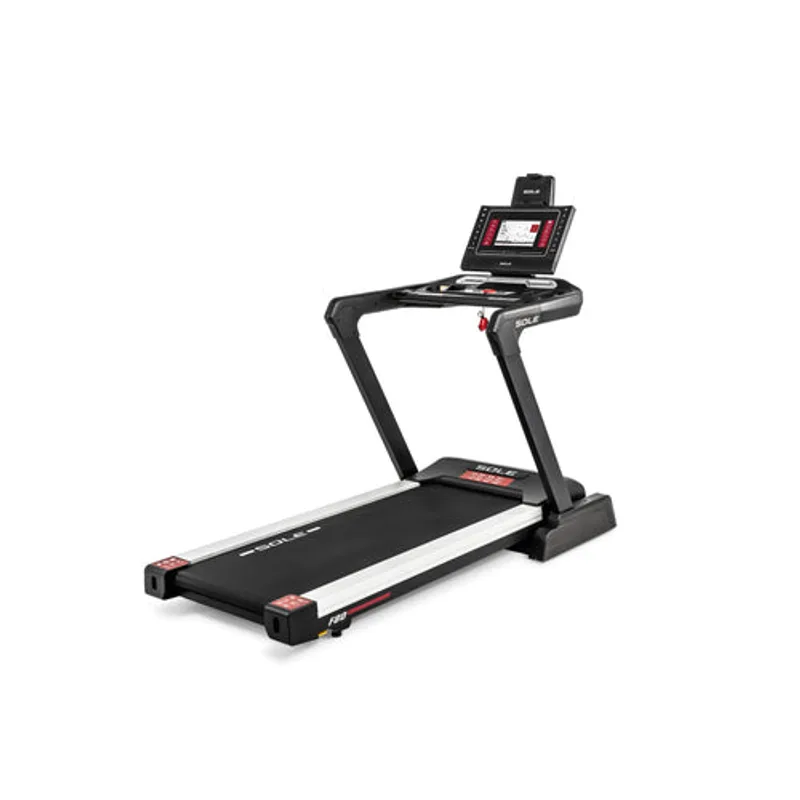
Sole F80
Pros
- No subscription required — every feature works from the console on day one
- New brushless 3.25 HP motor (April 2026) runs quieter and is rated for roughly 10x the lifespan of the prior brush motor
- Lifetime warranty on frame and motor — best coverage at this price point
- 15% incline outperforms most subscription-based treadmills in this price range
- CushionFlex 2.0 deck noticeably softens impact without feeling unstable at speed
- Screen mirroring lets you run Peloton, Zwift, or Apple Fitness+ from your own phone at no extra cost
Cons
- 20" deck width is narrower than the outgoing model's 22" — wider runners may notice at faster paces
- No decline function, unlike connected competitors such as the NordicTrack Commercial 1750
- 10.1" display is small next to the 16"+ screens on subscription-based machines
- 350 lb capacity is solid but not class-leading among premium folding treadmills
The F80 has been Sole’s flagship residential treadmill for over a decade, and the April 2026 refresh is the first significant hardware change to the motor and deck in that stretch. Everything else — the lifetime frame and motor warranty, the subscription-free approach, the 15% incline ceiling — carries over from the version that made the F80 a perennial recommendation.
What Changed in the 2026 Update
The new brushless 3.25 HP motor is a downgrade on paper from the outgoing 3.5 CHP unit, but brushless motors run more efficiently than brushed motors of similar or even slightly higher rated output — less friction, less heat, fewer moving parts to wear out. Sole’s claim of roughly 10x the motor lifespan lines up with how brushless motors generally perform against brushed equivalents in continuous-duty equipment. For a treadmill that’s going to log hundreds of miles a year, that durability upgrade matters more than the half-horsepower difference in the spec sheet.
The CushionFlex 2.0 deck is the other headline change. Sole narrowed the running surface from 22” to 20” while keeping the 60” length, and added the updated cushioning layer to reduce joint impact. Twenty inches is still comfortable for most runners — it’s the same width as the Sole F63 and most treadmills under $1,500 — but it does close the gap with premium 22” decks like the Horizon 7.4 AT’s. Taller or wider-stride runners who specifically want the extra two inches should weigh that before buying.
No Subscription, Full Functionality
Every feature on the F80 works without a subscription or account. The 10.1” touchscreen runs seven preset workout apps out of the box, and screen mirroring lets you cast Peloton, Zwift, or Apple Fitness+ from your own phone if you already pay for one of those separately. There’s no proprietary content library locked behind a paywall — what you see in the box is what you get, permanently.
Warranty and Long-Term Ownership
Sole backs the F80 with a lifetime warranty on the frame and motor, three years on the deck and parts, and one year on labor. That’s the strongest coverage available at this price point, and it hasn’t changed with the 2026 update. For buyers planning to keep a treadmill for a decade or more, that lifetime motor guarantee is worth more than a half-inch of screen size or a slightly higher CHP rating on a competing machine.
Where the F80 Falls Short
The F80 has no decline function — it’s incline-only, same as most machines at this price. Runners who specifically want eccentric downhill-simulation training need to look at a connected machine like the NordicTrack Commercial 1750, which offers -3% decline but requires an iFIT subscription to unlock its full feature set. The 10.1” display is also modest next to the 16”+ touchscreens on subscription-based competitors — functional, but not a centerpiece.
Horizon 7.4 AT
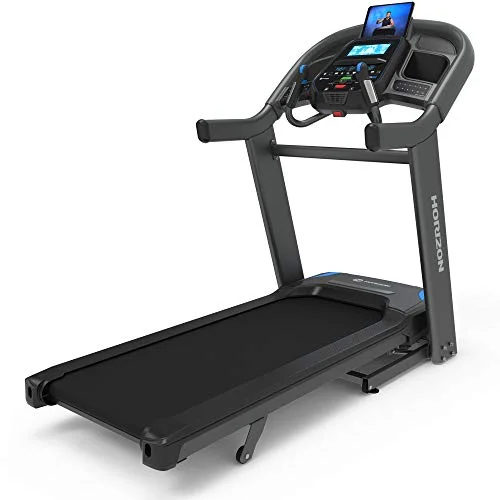
Horizon 7.4 AT
Pros
- No subscription required — open Bluetooth connects to Peloton app, Zwift, Apple Fitness+
- SPRINT8 HIIT protocol built directly into console — eight automated intervals with no app needed
- 22" deck is a full 2 inches wider than the updated Sole F80
- 3.5 CHP motor slightly outpaces the F80's new 3.25 HP unit on paper
- Lifetime motor and frame warranty matches Sole's coverage
Cons
- 325 lb weight capacity is lower than the Sole F80's 350 lbs
- No built-in touchscreen — needs a phone or tablet for video content
- No decline option
- Heavier console footprint makes it slightly harder to reposition solo
The Horizon 7.4 AT is the closest direct competitor to the F80’s non-connected pitch, and at $1,799.99 it currently lands close to the F80 in price. Where the F80 leans on brand history and warranty depth, the 7.4 AT counters with a wider 22” deck and a built-in SPRINT8 HIIT protocol that runs entirely from the console.
SPRINT8 vs. Screen Mirroring
SPRINT8 is Horizon’s built-in interval system — eight 30-second max-effort sprints separated by 90-second recovery periods, automated directly by the console with no app or subscription. It’s a fundamentally different approach from the F80’s screen-mirroring model: SPRINT8 gives you one structured, ready-to-go workout format baked into the hardware, while the F80 leaves workout selection entirely up to whatever app you mirror from your phone. Buyers who want a machine that tells them what to do without any setup lean toward the 7.4 AT. Buyers who already have a preferred training app or coach lean toward the F80’s more open approach.
Deck and Capacity Trade-offs
The 7.4 AT’s 22” deck is two inches wider than the updated F80’s 20” surface — a real advantage for wider-stride runners. But the F80’s 350 lb weight capacity beats the 7.4 AT’s 325 lbs, which matters more for heavier users than deck width does. Neither machine offers decline. Both carry a lifetime motor and frame warranty, so long-term coverage is a wash.
Buying Guide: What to Look for in a Non-Connected Treadmill
Motor type matters more than raw CHP. A brushless motor rated slightly lower on paper often outlasts a brushed motor rated slightly higher, because it generates less internal friction and heat over thousands of hours of use. Don’t rule out a machine solely because a competitor’s CHP number is bigger.
Deck width vs. deck length. Length (60” is the standard for serious runners) matters more than width for most buyers. Width becomes relevant specifically for runners with a wide, loping stride or larger frames — if that’s you, prioritize the 22” option.
Warranty coverage is the real differentiator once you strip out subscriptions. With no monthly content fee separating machines, the frame and motor warranty terms are what actually protect your investment over a 10-year ownership window. Lifetime coverage on both is the bar to clear.
Screen mirroring vs. built-in programming. Decide whether you want the treadmill to structure your workouts (like Horizon’s SPRINT8) or whether you’d rather bring your own app and let the machine just be a mirror and a motor. Neither approach is objectively better — it depends on whether you already have a training system you like.
Incline range covers most training needs without decline. Unless downhill-simulation training is a specific goal, 15% incline (available on both machines here) covers the vast majority of incline-walking and hill-training protocols people actually use.
FAQ
What changed with the Sole F80 in 2026? Sole swapped the motor for a brushless 3.25 HP unit rated for roughly 10x the lifespan of the previous brushed motor, and updated the deck to CushionFlex 2.0 cushioning. The running surface also narrowed from 22” to 20” wide while staying 60” long. Price, warranty terms, and the subscription-free approach are unchanged.
Is the Sole F80 still subscription-free? Yes. Every feature works out of the box with no account or ongoing payment required. Screen mirroring lets you cast third-party apps from your phone if you already subscribe to one, but nothing on the F80 itself requires a subscription to function.
Is the Sole F80 or Horizon 7.4 AT better? It depends on what you value. The F80 wins on weight capacity (350 vs 325 lbs) and warranty reputation. The 7.4 AT wins on deck width (22” vs 20”) and offers SPRINT8’s built-in interval programming, which the F80 doesn’t have an equivalent for. Both are non-connected and both carry lifetime motor and frame warranties.
Does the Sole F80 have decline? No. Like most treadmills at this price, the F80 is incline-only up to 15%. Decline capability is limited to pricier connected machines like the NordicTrack Commercial 1750.
How loud is the new brushless motor? Brushless motors are generally quieter than brushed motors of similar output because they have fewer moving parts generating friction. Sole markets the 2026 motor specifically on reduced noise, consistent with how brushless motors typically perform in continuous-duty equipment.
Verdict
The 2026 update doesn’t reinvent the Sole F80 — it reinforces what already made the machine a recommend: no subscription, a warranty that actually protects a decade of ownership, and specs that hold up against machines costing hundreds more. The switch to a brushless motor is a genuine durability upgrade even though the deck narrowed slightly in the process.
For most buyers who want a treadmill that works fully on day one and keeps working without a monthly bill, the Sole F80 remains the strongest non-connected option in its price range. The Horizon 7.4 AT is the right call specifically if a wider 22” deck or built-in SPRINT8 interval programming matters more to you than the F80’s higher weight capacity and brand warranty reputation.