Recovery has become the defining upgrade for home gym athletes in 2026. Dedicated mobility corners — a foam roller, a strap, resistance bands, and a lacrosse ball — have moved from afterthought to standard practice for serious home gym builders. The shift makes sense: spending 10 minutes on mobility work before and after training is one of the highest-return habits available, and the total cost of a complete mobility toolkit is less than a single plate pair.
This guide covers why mobility work matters, the four essential tools that cover every recovery need, and a practical routine structure you can use starting tonight.
Why Mobility Work Belongs in Your Home Gym Routine
Home gym athletes face a specific recovery challenge: there’s no warm-up area, no stretching room, and no one to remind you to cool down. You finish your last set and walk directly back into your house. That friction disappears the moment your mobility tools are within arm’s reach of your rack.
The practical case for mobility work is straightforward. Restricted hip flexors compromise squat depth and increase lower back involvement. Limited thoracic extension forces the lumbar spine to compensate during overhead pressing. Tight hamstrings alter your hinge pattern in ways that increase injury risk over months of training. None of these limitations show up immediately — they accumulate.
The benefits of a consistent mobility practice, as documented in physical therapy literature, include:
- Improved joint range of motion — enabling deeper squats, better overhead positioning, and safer hinge mechanics
- Reduced delayed onset muscle soreness (DOMS) — myofascial release after training reduces perceived soreness in subsequent sessions
- Injury prevention — addressing tissue restrictions before they become movement compensations
- Faster recovery between sessions — active recovery mobilization accelerates tissue repair
None of this requires 30-minute daily yoga sessions. A focused 8–12 minutes of mobility work, applied strategically before and after training, produces measurable improvements in range of motion over four to six weeks.
The Four Essential Mobility Tools
Four tools cover the full spectrum of home gym recovery needs:
| TriggerPoint GRID | OPTP Stretch Strap | TheraBand Bands | Kieba Lacrosse Balls | |
|---|---|---|---|---|
| Price | $34.99 | $17.99 | $14.99 | $11.99 |
| Primary Use | Myofascial release | Assisted stretching | Active mobility | Trigger points |
| Areas Covered | Large muscle groups | Full body | Joints + end range | Localized spots |
| Resistance | None (pressure) | None (leverage) | Light-medium | None (pressure) |
| Portability | Medium | High | High | High |
| Best For | Post-workout rolling | Flexibility sessions | Warm-up/cool-down | Pre-workout prep |
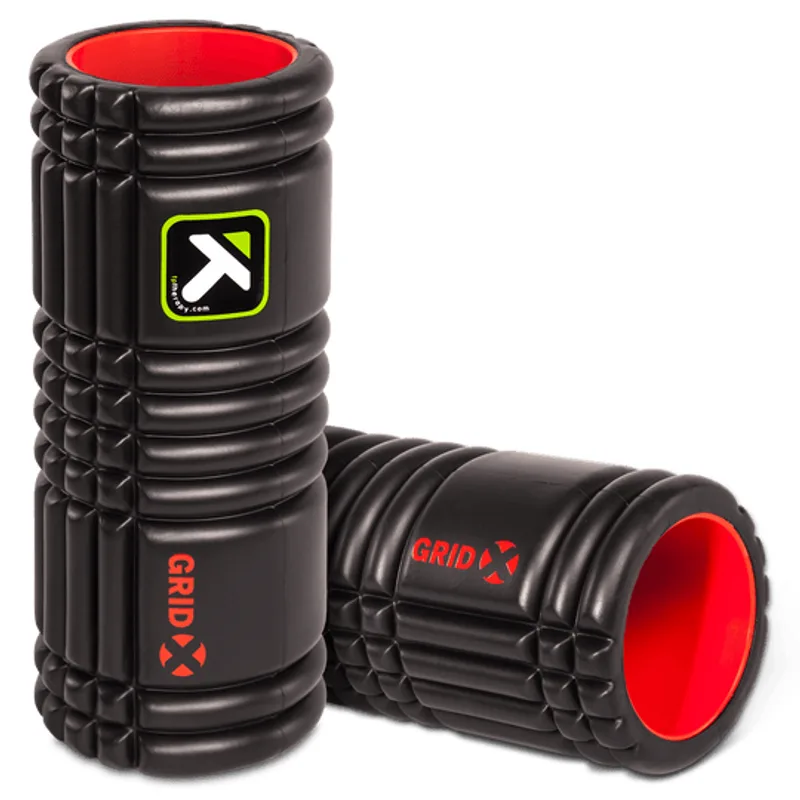
TriggerPoint GRID 1.0 Foam Roller (13-Inch)
Pros
- Three-zone multi-density surface provides flat, grid, and channel patterns for varied pressure
- Hollow rigid core holds shape under body weight — won't compress flat like cheap foam rollers
- 13-inch length targets IT bands, calves, upper back, and quads effectively
- Includes free access to an online instructional video library covering major muscle groups
- Trusted by physical therapists and used in clinical rehabilitation settings
Cons
- 13-inch length requires repositioning for full-length thoracic spine passes
- Firm rigid core feels aggressive for athletes new to foam rolling
- No softer density option — the surface is firmer than basic foam alternatives
The TriggerPoint GRID is the most versatile tool in any mobility kit. The three-zone surface — flat, grid, and channel — lets you vary pressure without switching tools. Flat sections for broad sweeps across the upper back, grid sections for the IT band and quads, channel sections for rolling directly along the spine without direct vertebral contact. Owner feedback consistently points to two qualities: it doesn’t compress flat like cheap foam rollers, and the instructional video access makes it actually usable for athletes who have never foam rolled before.
The 13-inch length is intentional. Shorter than most foam rollers, it forces you to position your body accurately rather than just flopping on a 36-inch cylinder. That constraint improves technique. Start with two minutes per muscle group post-workout — quads, IT band, upper back, calves — and build from there.
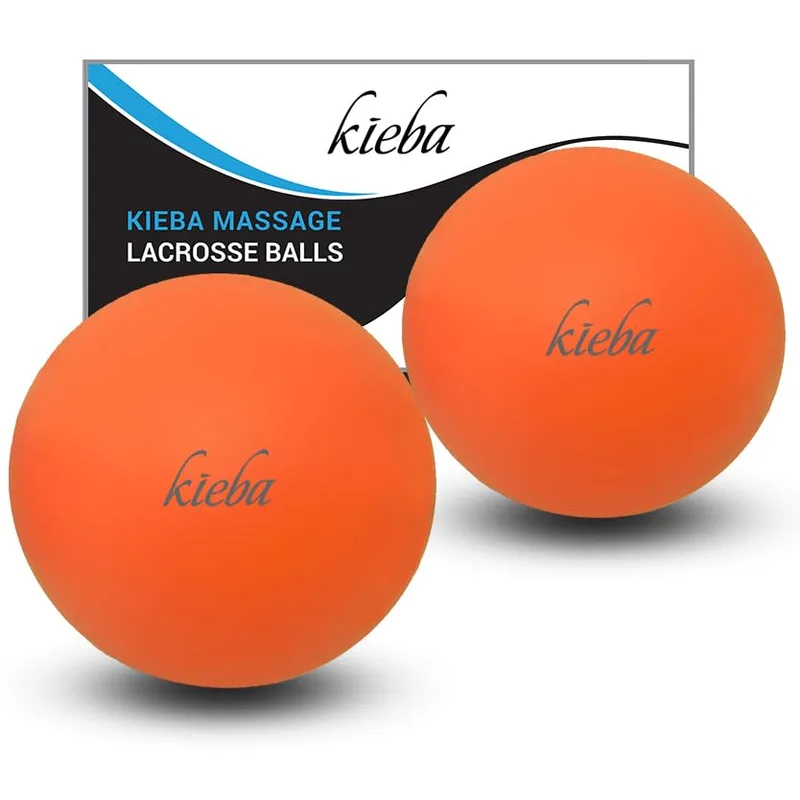
OPTP Stretch Out Strap with Exercise Book
Pros
- Woven nylon loops do not stretch or degrade, unlike elastic bands — holds position precisely
- Ten loops allow exact positioning for every stretch — hamstrings, hip flexors, calves, shoulders
- 6-foot length accommodates tall athletes without compromising range
- 40-page exercise booklet contains 30+ stretch protocols with coaching cues
- Made in the USA and used in physical therapy clinics and athletic training rooms
Cons
- No resistance properties — purely a positioning and leverage tool
- Bulkier than a simple loop band when packed for travel
- Optimal loop placement takes a few sessions to learn
The OPTP Stretch Out Strap solves a problem that most home gym athletes don’t know they have until they try to stretch properly: leverage. To stretch your hamstring effectively, you need to maintain a neutral spine while bringing your leg toward your chest. Doing this with your hands requires significant upper body strength and usually results in rounding the lower back. The strap provides the leverage your hands can’t.
The ten individual loops are the key feature. They’re not elastic — they hold exactly where you place them. Hamstring stretch: loop 3 or 4 around the ball of your foot, leg extended at 90 degrees, strap pulled toward you while keeping your lower back flat. Hip flexor: loop over the foot, leg extended behind you, gentle pull forward. The 40-page booklet maps out 30+ protocols with clear coaching cues. The design hasn’t changed meaningfully since 1993 because it doesn’t need to.
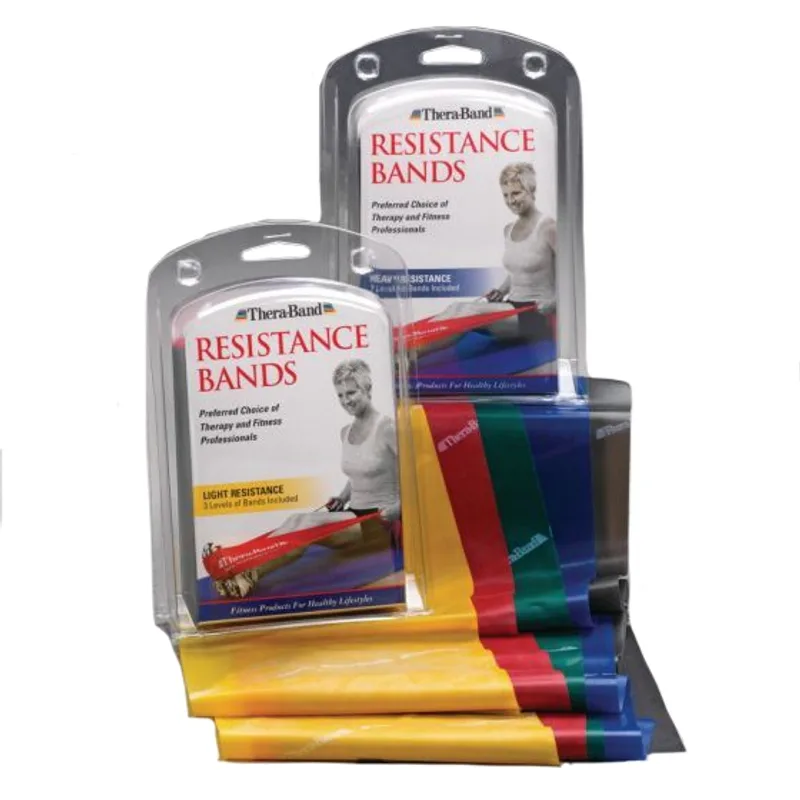
TheraBand Professional Non-Latex Resistance Bands Set (Beginner Kit)
Pros
- Non-latex construction safe for athletes with latex sensitivities
- Color-coded progression allows you to move from yellow to green as range of motion improves
- Active resistance engages muscles through the full stretch range, reinforcing end-range strength
- 5-foot length handles hip flexor, hamstring, shoulder, and ankle mobilization exercises
- Clinical-grade product used by physical therapists and occupational therapists
Cons
- Low resistance ceiling — not suitable for loaded strength work
- No handles or loops — requires manual grip or anchoring to a fixed point
- Flat band can roll or twist during overhead or rotational movements
Resistance bands serve a different function than foam rollers or stretching straps. Rather than passively releasing tight tissue, they provide active resistance at end ranges — which is where movement compensation typically begins. A hip flexor that can contract at full extension is more stable than one that can only be stretched passively. TheraBand’s non-latex construction and color-coded progression make these the clinical standard for a reason.
The beginner kit (yellow, red, green) covers the resistance range needed for mobility work. Use yellow for shoulder CARs (controlled articular rotations) and ankle mobilization. Use red for hip flexor and thoracic rotation work. Green for building end-range hamstring and hip strength. These are not strength training bands — the resistance is light. The point is muscle engagement through range of motion, not load.
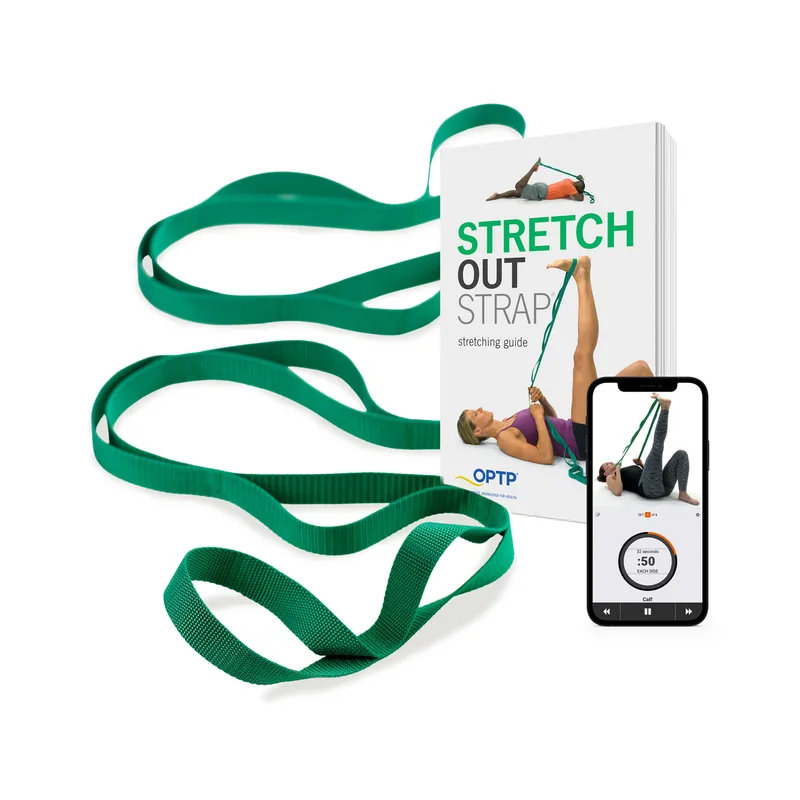
Kieba Massage Lacrosse Balls Set of 2
Pros
- Two balls allow peanut-style double placement for thoracic spine and paraspinal work
- Solid rubber construction delivers consistent, firm pressure without compressing under body weight
- Compact 2.5-inch size reaches the plantar fascia, shoulder rotators, glutes, and hip flexors
- No chemical odor and won't stain walls — safe for wall-assisted shoulder and upper back work
- At under $12 per pair, the lowest-cost entry into trigger point therapy
Cons
- Firm rubber surface has no give — may be too aggressive for inflamed or acutely sore tissue
- No texture variation for lighter or deeper pressure options
- Rolls freely on smooth floors — use on a yoga mat to keep in place
Lacrosse balls target what foam rollers can’t reach: the plantar fascia, individual hip rotators, the suboccipitals at the base of the skull, the rotator cuff. A foam roller applies pressure across a large surface area. A lacrosse ball concentrates that pressure into a point the size of your thumb. Owner reports identify foot rolling (plantar fasciitis management) and shoulder work (anterior capsule) as the highest-value applications.
The two-ball format in the Kieba set allows a peanut configuration — tape or hold two balls together — that lets you roll along either side of the spine simultaneously without putting direct pressure on the vertebrae. This is the most effective tool for thoracic extension and mid-back mobility that doesn’t require a chiropractor.
How to Build a Home Gym Mobility Routine
Three application windows cover every training scenario:
Pre-Workout: Dynamic Mobility (8–10 Minutes)
Before loading your joints, prepare them. Dynamic mobility work improves tissue temperature, activates the muscles you’re about to train, and identifies any range-of-motion restrictions before they become movement compensations under load.
Recommended sequence (adjust for your training day):
- Lacrosse ball: Foot rolling (60 sec each), glute work against a wall (60 sec each side)
- TheraBand: 10 reps hip flexor activation, 10 reps shoulder CARs each side
- Hip 90/90 transitions: 5 reps each direction (no tools needed)
- Thoracic rotation: 8 reps each side from a half-kneeling position
Total: 8 minutes. This sequence addresses the three areas most likely to create compensation patterns during a strength session — hips, thoracic spine, and shoulders.
Post-Workout: Foam Rolling + Static Stretching (10–15 Minutes)
After training, your tissue temperature is elevated and your muscles are pliable. This is the optimal window for foam rolling and static stretching.
Foam rolling sequence (45–60 sec per area):
- Quads — both sides
- IT band — both sides
- Upper back — 3–4 passes from mid-thoracic to traps
- Calves — both sides
Static stretching with OPTP strap (30–45 sec per stretch, 2 rounds):
- Supine hamstring stretch — both sides
- Figure-4 hip stretch (loop around the foot, knee driven across) — both sides
- Standing hip flexor stretch with strap assist — both sides
The 30–45 second hold duration is supported by flexibility research as the minimum for producing lasting tissue length changes. Shorter holds (10–15 seconds) improve range of motion acutely but don’t carry over to subsequent sessions.
Off-Day Active Recovery
On rest days, a 10-minute full-body mobility flow maintains and extends the gains made during training windows. This is where you address the areas that don’t get attention during workout-specific sessions: thoracic rotation, ankle mobility, shoulder internal/external rotation.
Use the OPTP strap for a full hamstring and hip flexor sequence. Work the TheraBand through shoulder and hip CARs. Spend two minutes with the lacrosse ball on any areas that feel dense or restricted. The goal is blood flow and range maintenance, not aggressive tissue work.
Mobility by Body Region
Hips
The most common limitation in home gym athletes, particularly those who sit during the day. Priority muscles: hip flexors (psoas/iliacus), glutes, hip external rotators (piriformis). Tools: lacrosse ball against a wall for piriformis, OPTP strap for supine hip flexor, TheraBand for active hip extension.
Thoracic Spine
Thoracic extension and rotation drive overhead pressing mechanics, front squat positioning, and deadlift posture. The peanut ball configuration (two lacrosse balls) is the most effective tool here. Spend 60–90 seconds at each spinal level from T4 to T10.
Hamstrings
Tight hamstrings are the most common complaint from home gym barbell athletes. Daily OPTP strap work (2 rounds, 45 seconds per side) produces measurable flexibility gains within 3–4 weeks. Combine with foam rolling the proximal hamstring (below the glute) with the GRID.
Shoulders
Shoulder mobility determines overhead pressing depth and safe back squat bar position. Lacrosse ball against a wall targeting the posterior capsule (reach across your body, ball behind shoulder, lean into wall) combined with TheraBand shoulder CARs covers both passive and active mobility needs.
FAQ
How often should I do mobility work? Daily mobility work produces faster improvements than 3x per week. Even 8–10 minutes before each training session and 10–15 minutes after covers most athletes’ needs. If daily is unrealistic, prioritize post-workout rolling and OPTP strap work — those two windows produce the most carry-over.
Is foam rolling actually effective, or is it just a warmup ritual? The research on foam rolling’s mechanisms is still being refined, but the practical outcomes are consistent: foam rolling reduces perceived muscle soreness, improves acute range of motion, and doesn’t negatively impact strength performance when done before training. Owner reports and physical therapy application support the TriggerPoint GRID specifically for myofascial release work. Use it as a tool with a specific protocol, not as something to roll on randomly for 30 seconds.
Do I need all four tools, or can I start with one? Start with the foam roller. The TriggerPoint GRID addresses the largest surface areas (quads, IT band, upper back, calves) and provides the biggest return for athletes new to recovery work. Add the lacrosse balls second for targeted trigger point access. The OPTP strap becomes essential once you commit to a structured flexibility protocol. TheraBand bands add the active mobility layer that passive tools miss.
How long before I see flexibility improvements? Consistent daily work produces measurable range-of-motion improvements in 3–4 weeks, based on owner feedback and physical therapy protocols. The OPTP strap and static stretching produce the fastest flexibility gains. Foam rolling contributes primarily to soreness reduction and acute range of motion, not lasting flexibility changes.
Can I use these tools if I have an existing injury? The lacrosse ball and foam roller should be used away from acutely inflamed tissue. Rolling directly on an inflamed area increases inflammation. Work around the area instead — releasing the surrounding tissue takes pressure off the injury site. The OPTP strap is safe for most injuries when used gently. Consult a physical therapist before applying any direct pressure to injured tissue.
Conclusion
The complete mobility toolkit — TriggerPoint GRID, OPTP Stretch Out Strap, TheraBand bands, and Kieba lacrosse balls — costs under $80 total. That’s less than a single pair of 45-lb bumper plates. The return on that investment is measured in fewer missed training days, better movement mechanics under load, and range-of-motion improvements that accumulate over years.
Top pick: TriggerPoint GRID 1.0 Foam Roller. Start here. Every other tool builds on a foundation of soft tissue quality. Once you’ve established a foam rolling routine, add the OPTP strap for flexibility work and the lacrosse balls for targeted trigger point access. The TheraBand set completes the kit with active mobility work that passive tools can’t replicate.
Build this routine into every session. The athletes who train injury-free for years aren’t genetically exceptional — they’re consistent.