Therabody made a notable move in early 2026 by expanding its lineup — the Theragun Prime 6th Gen launched as the most drop-resistant model in the range, and Therabody quietly repositioned the Pro Plus as the flagship experience for athletes who want recovery tech, not just a motor and a ball attachment. The Pro Plus hasn’t changed dramatically in spec, but at $549–$599, it’s now competing in a category where fewer brands can keep pace.
This review focuses on whether that price is justified — and whether the Hypervolt 2 Pro at roughly $300 closes the gap enough to make the Pro Plus hard to recommend.
Quick Comparison
| Spec | Theragun Pro Plus | Hypervolt 2 Pro |
|---|---|---|
| Rating | 9.0/10 | 8.3/10 |
| Price | $649.99as of Oct 18, 2026 | $349.00as of Oct 18, 2026 |
| Amplitude | 16mm | 14mm |
| Stall Force | 60 lbs | ~30-35 lbs (est.) |
| Speed Settings | 5 | 5 |
| Max PPM | 2,400 | 2,700 |
| Battery Life | ~150 minutes | ~180 minutes |
| Weight | 3.6 lbs (1.65 kg) | 2.6 lbs |
| Therapies | 6 (percussion, vibration, heat, LED, breathwork, cold) | — |
| Attachments | 5 included | 5 included |
| Bluetooth | Yes (Therabody app) | Yes (Hyperice app) |
| Warranty | 1 year | 1 year |
| Motor | — | 90W brushless |
| Check Price → | Check Price → |
Prices change daily — tap Check Price for the current Amazon price. Numbers shown were verified on the "as of" date.
Theragun Pro Plus
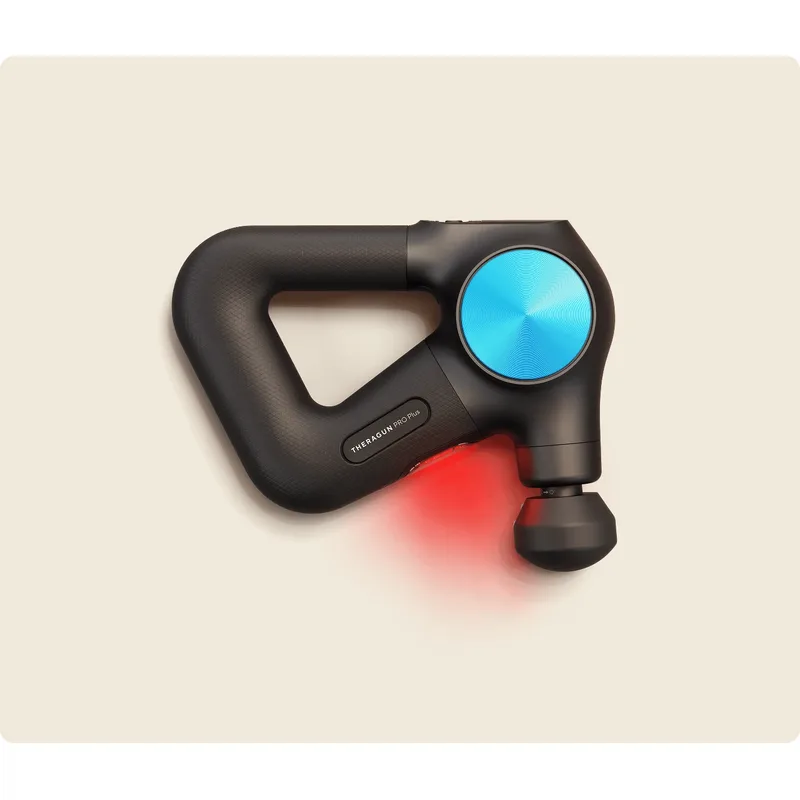
Theragun Pro Plus
Pros
- 16mm amplitude and 60 lbs stall force penetrate deeper than virtually any competing consumer massage gun
- Integrated heat attachment warms to 131°F in under 10 seconds — no warm-up time needed
- Near-infrared LED light improves surface circulation during use
- Built-in biometric heart rate reader enables guided breathwork recovery sessions
- QuietForce Technology keeps noise levels well under 65 dB even at full speed
- Therabody app delivers pre-built protocols for sleep, pre-workout, and injury-specific routines
Cons
- At $599–$649, this is the most expensive consumer massage gun available
- 3.6 lbs is noticeably heavy during extended overhead or hard-to-reach use
- Cold therapy cap sold separately — the "6-in-1" claim requires an additional purchase
- 150-minute battery is shorter than the Hypervolt 2 Pro's 180-minute runtime
The Theragun Pro Plus is not a massage gun in the traditional single-purpose sense. It’s a recovery device that combines percussive therapy with five additional modalities — vibration, heat, near-infrared LED light, biometric-guided breathwork, and cold therapy (with the separately sold cap). Whether you use all of those features determines a lot of whether the $599 price makes sense for you.
The core percussive specs are the best available in a consumer device: 16mm amplitude and 60 lbs of stall force. Amplitude is the distance the head travels with each strike. At 16mm, the Theragun Pro Plus reaches deeper into muscle tissue than most competitors, which typically land at 12–14mm. Stall force is the pressure required to stop the motor. At 60 lbs, the Pro Plus doesn’t bog down when you drive it into a tight quad or a stubborn trap — it maintains speed under real resistance.
QuietForce Technology keeps operational noise under 65 dB at full speed. That’s noticeably quieter than older Theragun generations, though the Pro Plus isn’t as hushed as the Hypervolt line. At maximum 2,400 PPM, the motor is audible — but it’s no longer the jackhammer sound profile associated with early percussion guns.
The heat attachment is a functional advantage for cold mornings or stiff joints. It reaches target temperature in under 10 seconds and operates at three settings: 113°F, 122°F, and 131°F. For pre-workout warm-up — particularly in unheated garages — applying 90 seconds of heat percussion to hip flexors or lats before lifting is meaningfully different from cold percussion alone.
The LED and biometric features are real additions, not marketing copy. The near-infrared LED increases local circulation during use. The built-in heart rate reader feeds into the Therabody app’s breathwork protocols, which guide recovery breathing after training sessions. Whether these features matter depends entirely on how you train and recover. For athletes who prioritize sleep quality and post-workout parasympathetic recovery, they’re useful. For lifters who just want to roll out their legs before a squat session, they’re background features that don’t justify the price alone.
The weight — 3.6 lbs — is the most consistent practical complaint. It’s manageable for lower-body self-massage — positioning is straightforward. For upper back, shoulder, or neck work, holding 3.6 lbs at arm’s length for two minutes is genuinely tiring. The ergonomic angled handle reduces some wrist strain, but the mass is what it is.
Battery life at 150 minutes is functional rather than generous. A full week of two-sessions-per-day use (10 minutes each) still exceeds the battery before requiring a charge. But compared to competitors offering 180-minute runtimes, the Pro Plus is shorter.
Hypervolt 2 Pro
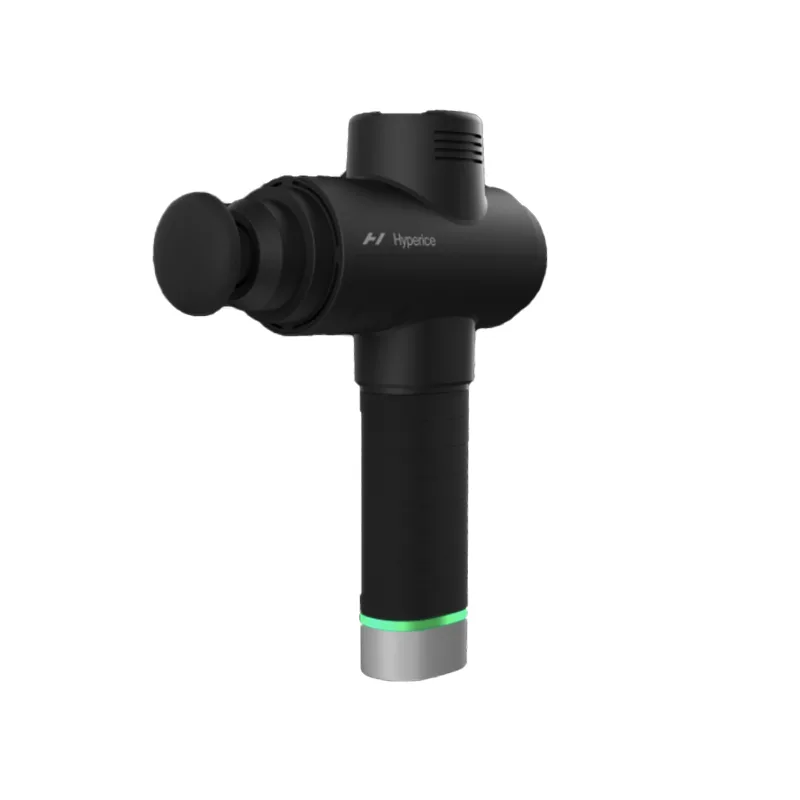
Hypervolt 2 Pro
Pros
- Quiet Glide Technology is genuinely quiet — noticeably more muffled than older Hypervolt models
- 2.6 lbs is lighter and more manageable for solo self-massage sessions
- 180-minute battery life outlasts most competitors including the Theragun Pro Plus
- Hyperice app includes guided routines and sport-specific recovery protocols
- $299–$349 price point makes this a serious premium option without the flagship price
Cons
- 14mm amplitude and estimated 30–35 lbs stall force can't match the Theragun Pro Plus for deep-tissue penetration
- No heat therapy, LED, or biometric features — strictly percussion and vibration
- Stall force data is estimated — Hyperice does not publish official stall force specs
- Some users report the default ball attachment wears faster than Therabody equivalents
The Hypervolt 2 Pro makes a strong case as the rational choice for the majority of home gym athletes. At $299–$349, it’s roughly $200 to $250 cheaper than the Theragun Pro Plus and covers the fundamentals well: 14mm amplitude, an estimated 30–35 lbs of stall force, 5 speeds up to 2,700 PPM, five attachment heads, and 180 minutes of battery life.
Quiet Glide Technology is Hyperice’s answer to Therabody’s QuietForce. The result is a noticeably muffled operation — some users describe it as the quieter of the two brands at comparable speeds, though both operate in a workable range for gym or apartment use.
The 2.6 lbs weight is a practical advantage for overhead and upper-body work. Self-massaging your own thoracic spine or posterior shoulder with a 2.6 lbs device is considerably less fatiguing than doing the same with a 3.6 lbs unit. For solo use without a partner, this difference compounds across a full session.
The limitation is raw power. The Hypervolt 2 Pro’s 14mm amplitude and estimated stall force of 30–35 lbs (Hyperice doesn’t publish official stall force data) are genuinely lower than the Theragun Pro Plus. For athletes with significant muscle mass, chronic tightness from heavy barbell work, or specific injury recovery needs, that gap is real. For general post-workout recovery and maintenance work, it’s less likely to matter.
No heat, no LED, no biometric features. The Hypervolt 2 Pro is a percussion and vibration device — a very good one — but it doesn’t cross into multi-modality recovery territory. The Hyperice app is solid with sport-specific protocols, but it doesn’t integrate breathwork or heart rate data.
Which One Should You Buy?
The decision comes down to how you train and how deeply you need to work.
Buy the Theragun Pro Plus if:
- You train heavy compound lifts (squatting, pulling, pressing) and have chronic muscle density in your hips, legs, or upper back
- You train in a cold environment and want heat therapy as part of your warm-up
- You’re investing in a complete recovery system and will actually use the app-guided breathwork protocols
- You want the deepest percussive penetration available from a consumer device
Buy the Hypervolt 2 Pro if:
- Your recovery needs are general post-workout muscle flushing rather than deep-tissue work
- Solo overhead/upper-body use is frequent and device weight matters
- You want a premium massage gun without the flagship price
- Battery runtime matters more than raw stall force
What to Look for in a Massage Gun
Amplitude is the most important spec for deep-tissue work. 12mm handles surface layers. 14mm reaches most muscle bellies. 16mm penetrates dense tissue in large muscle groups. If you’re primarily working quads, hamstrings, glutes, or a tight upper back, amplitude matters.
Stall force determines whether the motor maintains speed under pressure. A low stall-force gun bogs down when you lean into it — defeating the purpose for dense muscle tissue. Therabody publishes this figure (60 lbs). Hyperice doesn’t, which makes comparison harder and the Hypervolt’s performance harder to evaluate on paper.
Noise matters for shared living situations. Both the Theragun Pro Plus and Hypervolt 2 Pro are among the quietest guns in the premium tier. Budget devices are considerably louder.
Attachments change the application. Ball heads for general use, flat heads for dense muscle groups, fork heads for either side of the spine, bullet heads for trigger point work. Both guns ship with five heads covering all of these.
App integration is useful if you’ll use it. Pre-built protocols reduce guesswork. For athletes who don’t know where to start, an app that says “Here’s the exact routine for lower-body DOMS” is worth having.
FAQ
Is the Theragun Pro Plus worth $599? For athletes who will use the heat therapy, biometric breathwork, and LED features alongside the core percussive therapy, yes — the multi-modality recovery approach is genuinely differentiated. For athletes who just want a powerful percussion gun and won’t use the additional features, the Hypervolt 2 Pro at $299–$349 covers the fundamentals more economically.
What is QuietForce Technology? QuietForce is Therabody’s motor and housing design that reduces operational noise to under 65 dB even at maximum speed. It allows use in shared spaces without the aggressive noise profile of older percussion guns. The Hypervolt 2 Pro’s Quiet Glide Technology achieves a comparable result through different engineering.
How does amplitude affect performance? Amplitude is the stroke length — how far the head travels per percussion. Greater amplitude reaches deeper into muscle tissue. At 16mm, the Theragun Pro Plus can treat muscle tissue that 12mm or 14mm devices don’t fully reach. For large, dense muscle groups (quads, glutes, hamstrings), this is a meaningful difference.
Does the Theragun Pro Plus include cold therapy? No. Cold therapy requires the separately sold cold therapy cap. The device comes with heat and LED attachments, but the “6-in-1” designation requires the additional cold cap purchase to be fully realized.
How long do massage gun batteries last? The Theragun Pro Plus provides approximately 150 minutes per charge. The Hypervolt 2 Pro provides approximately 180 minutes. Both are competitive for regular daily use without needing mid-session charging.
Verdict
The Theragun Pro Plus is the best percussion massage gun available if you’ll use the full feature set. The 16mm amplitude and 60 lbs of stall force are class-leading. The heat therapy has real pre-workout utility. The biometric breathwork integration is a differentiator for athletes focused on complete recovery, not just muscle work.
If those advanced features don’t align with how you train, the Hypervolt 2 Pro delivers excellent percussion performance, quieter operation, lighter weight, and longer battery life at a significantly lower price.
For most home gym athletes running a balanced lifting program, the Hypervolt 2 Pro is the rational buy. For competitive athletes, powerlifters, or anyone investing in structured recovery protocols, the Theragun Pro Plus earns its price.