StairMaster spent early 2026 promoting its new 4G StepMill, built specifically to fit under standard 8-foot residential ceilings — a direct response to the biggest reason stair climbers rarely made it out of commercial gyms and into home setups. That single product decision says something about where home cardio is heading: stair climbing is no longer a niche add-on, it’s a legitimate competitor to the treadmill for anyone building a serious home cardio station.
Both machines torch calories and build cardiovascular fitness. Past that, they’re genuinely different tools. A treadmill is weight-bearing, space-hungry, and mechanically simple to understand — walk, jog, run. A stair climber is lower-impact, dramatically smaller, and trains the glutes and posterior chain harder than flat-ground work ever will. The right one for your gym depends on your joints, your square footage, and your budget more than any spec sheet comparison will tell you.
Here’s the full breakdown, with two picks for each machine type across different price points.
Quick Comparison
| Spec | Sole F80 Folding Treadmill | NordicTrack T 6.5 Si Treadmill | Sole CC81 Cardio Climber | Sunny Health & Fitness Foldable Vertical Step Climber |
|---|---|---|---|---|
| Rating | 9.1/10 | 8.4/10 | 8.7/10 | 8.3/10 |
| Price | $1783.95as of Oct 18, 2026 | Check price | $1699.99as of Oct 18, 2026 | $112.68-$149.99as of Oct 18, 2026 |
| Motor | 3.5 CHP continuous-duty | 2.6 CHP continuous-duty | — | — |
| Speed | 0.5-12 MPH | 0-10 MPH | — | — |
| Incline | 0-15% (rack-and-pinion) | 0-12% | — | — |
| Belt Size | 22" x 60" | 20" x 55" | — | — |
| Weight Capacity | 350 lbs | 300 lbs | 400 lbs | 330 lbs |
| Folded Dimensions | 45" x 38" x 71.5" | — | — | — |
| Machine Weight | 274 lbs | — | — | 29.3 lbs |
| Warranty | Lifetime frame/motor/deck, 5-yr electronics, 2-yr labor | 10-yr frame, 2-yr parts, 1-yr labor | — | — |
| Display | — | 10" Smart HD touchscreen | Bluetooth LCD console | — |
| iFIT | — | Compatible (30-day free trial) | — | — |
| Type | — | — | Vertical climber and stepper | Vertical stair stepper |
| Resistance Levels | — | — | 20 magnetic | — |
| Dimensions | — | — | 59" L x 31" W x 86" H | — |
| Step-Up Height | — | — | 10" | — |
| Power | — | — | Corded | — |
| Step Height Range | — | — | — | 21.5" extended climbing stride |
| Handlebar | — | — | — | Adjustable |
| App | — | — | — | SunnyFit (1,000+ guided workouts) |
| Foldable | — | — | — | Yes |
| Check Price → | Check Price → | Check Price → | Check Price → |
Prices change daily — tap Check Price for the current Amazon price. Numbers shown were verified on the "as of" date.
The Treadmill Picks
Sole F80 Folding Treadmill
Sole F80 Folding Treadmill
Pros
- 22" x 60" commercial-width belt gives noticeably more room than budget treadmills or any stair climber's stepping surface
- 3.5 CHP motor runs smooth and quiet at sustained running speeds — owner reports confirm low vibration
- 350 lb weight capacity is among the highest in the home folding treadmill category
- Cushion Flex Whisper Deck absorbs impact better than a flat deck, though still more joint stress than stepping
- Lifetime frame and motor warranty is exceptional coverage for the price tier
- Folds upright with an Easy Assist mechanism, dropping the footprint for shared-use rooms
Cons
- $1,799 is a serious investment compared to entry-level stair climbers under $200
- 274 lbs makes repositioning a two-person job
- Running mechanics still load the knees and ankles at 2-3x body weight per stride, regardless of deck cushioning
- No live connected fitness platform — third-party apps only via Bluetooth
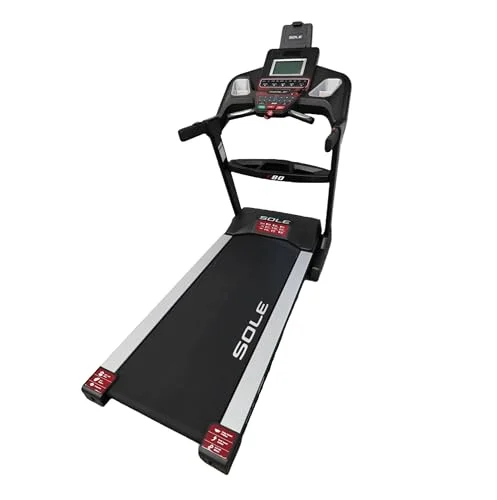
The Sole F80 is the treadmill to buy if you want commercial-adjacent build quality without a commercial price. The 22” x 60” belt matches the width used in mid-grade gym machines — noticeably larger than the 20” belts on most sub-$1,000 home treadmills, and a real advantage for taller runners or anyone with a long stride.
The 3.5 CHP motor handles sustained running without the stuttering that plagues budget machines at higher speeds. Owner reports consistently describe it as quiet under load, which matters if you’re training early morning or in a shared living space. The Cushion Flex Whisper Deck reduces impact along the belt, but running is still weight-bearing exercise — no amount of deck cushioning changes the fact that your joints absorb 2-3 times your body weight with every stride, something neither stair climber pick in this guide asks of you.
At $1,799, the F80 asks for a real budget commitment. It earns it through belt size, motor power, and a lifetime frame and motor warranty that beats most competitors at this tier. Buyers who mostly walk or jog lightly can get most of the value at $899 with the NordicTrack.
NordicTrack T 6.5 Si Treadmill
NordicTrack T 6.5 Si Treadmill
Pros
- 10" smart touchscreen with iFIT integration brings guided workouts at a lower price than the Sole F80
- EasyLift Assist folding makes storage effortless in shared living spaces
- 10-year frame warranty is excellent coverage at this price point
- Handles walking and light jogging without strain — good fit for households mixing fitness levels
- Compact enough for apartments without sacrificing a usable belt area
Cons
- 2.6 CHP motor can strain under sustained running past 6-7 MPH
- 20" x 55" belt is narrower than the Sole F80 — taller runners will notice the shorter deck
- iFIT subscription ($39/month) is required after the trial to keep using the connected features
- Still weight-bearing impact exercise, unlike either stair climber pick here
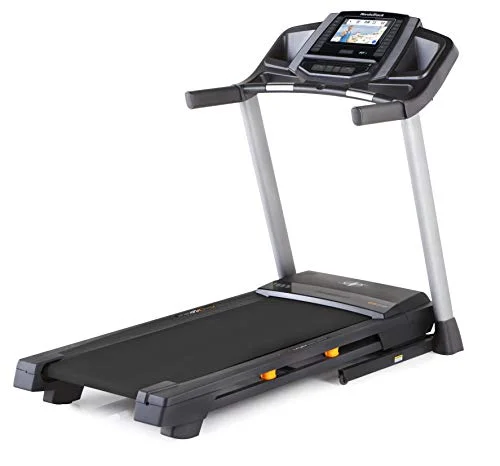
The T 6.5 Si is the value entry point for a smart, connected treadmill. The 10” iFIT-integrated touchscreen brings guided trainer workouts directly onto the console, auto-adjusting speed and incline to match the program — no manual fiddling required mid-session.
For walking and light jogging under 7 MPH, the 2.6 CHP motor is entirely adequate. The 20” x 55” belt is narrower than the F80’s, but most home users never push those edges during normal sessions. The EasyLift Assist folding mechanism is a genuine convenience — the deck locks up with minimal effort, freeing floor space that a stair climber would use far more efficiently in the first place.
The catch is the iFIT subscription: $39/month after the 30-day trial to keep using the features that justify buying this model over a basic treadmill. Over three years, that’s roughly $1,200 in subscription costs stacked on top of the hardware. Anyone who doesn’t want a recurring fitness bill should weigh that against a one-time-cost stair climber like the Sunny Health option below.
The Stair Climber Picks
Sole CC81 Cardio Climber
Sole CC81 Cardio Climber
Pros
- 20 magnetic resistance levels give real progression a simple incline-only stepper can't match
- 400 lb weight capacity is the highest of any machine in this guide, treadmills included
- Non-weight-bearing-on-impact stepping and climbing motion is dramatically easier on knees and ankles than running
- Adjustable handlebars with 1-15" of arm travel add an upper-body component to the workout
Cons
- Doesn't fold — the 59" x 31" footprint is permanent, unlike compact folding steppers
- At $1,699, it's priced closer to a premium treadmill than a budget cardio add-on
- Needs roughly 10" of ceiling clearance above the tallest user, since it doesn't collapse for storage
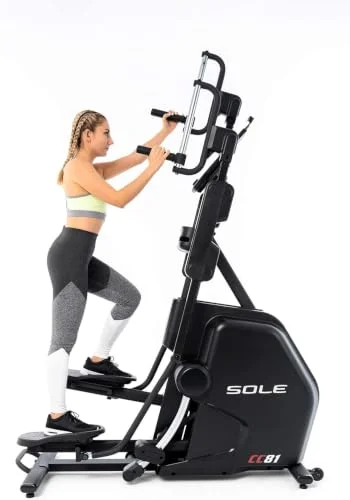
The Sole CC81 is the machine to buy if you want the deepest training progression of any stepping machine in this guide. Twenty magnetic resistance levels let you dial in intensity the way a spin bike does, something the incline-only budget steppers here can’t match, and the 400 lb weight capacity is the highest of any machine in this comparison, treadmills included.
Because stepping and climbing is a lower-impact motion than running, it puts far less stress on the knees and ankles — a genuine advantage for anyone managing joint pain who still wants a hard cardio session. Adjustable handlebars with 1-15” of arm travel add an upper-body pulling component that a simple stepper doesn’t offer.
The tradeoffs are real: unlike the compact steppers most buyers picture when they think “stair climber,” the CC81 doesn’t fold, and its 59” x 31” footprint with an 86” height needs a dedicated spot and real ceiling clearance. At $1,699, it’s priced as a premium machine — closer to the Sole F80 treadmill than to a budget cardio add-on — so it makes the most sense for buyers who want climbing as their primary cardio modality rather than a compact space-saving extra.
Sunny Health & Fitness Foldable Vertical Step Climber
Sunny Health & Fitness Foldable Vertical Step Climber
Pros
- $140 is a fraction of the cost of any treadmill in this comparison — the cheapest legitimate cardio machine here
- 330 lb weight capacity beats every other budget product in this guide, including both treadmills
- At 29.3 lbs, easy to fold and tuck away in a closet between sessions
- SunnyFit app unlocks 1,000+ guided step and cardio workouts at no extra hardware cost
- 21.5" extended climbing stride accommodates both light recovery sessions and full-extension climbing
Cons
- No electromagnetic resistance — difficulty comes from stride depth and pace, not a resistance dial
- Basic LCD display only, no touchscreen or streaming
- Triangular frame footprint is wider than either treadmill's folded footprint when in use
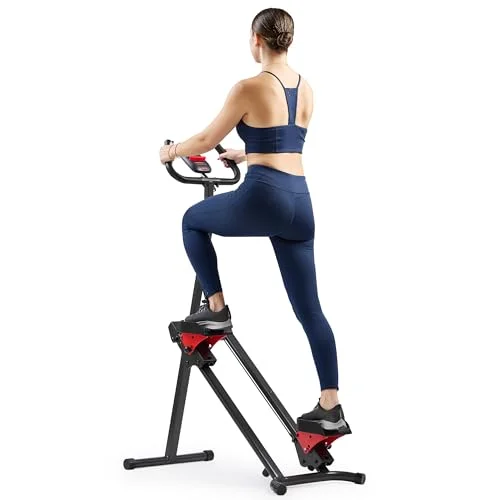
The Sunny stepper makes the strongest budget argument in this entire comparison. At $140, it costs less than one-tenth of the Sole F80 treadmill and delivers a legitimate stepping cardio workout with a 330 lb weight capacity — matching the highest capacity of any budget machine in this guide.
The 21.5” extended climbing stride covers both light recovery-pace sessions and full-extension climbing, and the adjustable handlebar accommodates a range of user heights. At 29.3 lbs, it folds and tucks into a closet in seconds, which no treadmill — and no longer the Sole CC81 — in this guide can claim. The SunnyFit app adds over 1,000 guided workouts at no extra hardware cost.
The limitations track directly with the price: there’s no resistance dial, so intensity is entirely a function of how fast and deep you step, and the LCD display shows only basic metrics. For anyone who wants the lowest-cost, lowest-impact, smallest-footprint entry into serious cardio training, this is the machine in this guide with the least financial risk.
Treadmill vs Stair Climber: Head-to-Head
Joint Impact
Stair climbers win decisively. Stepping keeps the movement compact and largely vertical, without the ground-reaction forces that running generates. Treadmill running produces impact forces roughly 2-3 times body weight per stride, which adds up fast over a 30-minute session.
For anyone managing knee pain, hip issues, or recovering from a lower-body injury, a stair climber is almost always the more comfortable choice. Healthy joints can tolerate treadmill impact fine, and the bone-density stimulus from weight-bearing exercise is a real benefit that stepping doesn’t provide to the same degree.
Calorie Burn
Treadmills generally edge out stair climbers for calories burned per minute at a hard, sustained effort — running engages more total muscle mass and requires supporting your full body weight through each stride. But stair climbing recruits the glutes, hamstrings, and calves harder than flat-ground running, and the perceived effort at a given heart rate tends to run higher on a stepper, which some owners find pushes them to a harder overall session.
For pure calories-per-minute, treadmill running at pace wins. For posterior-chain engagement per minute, the stair climber wins.
Space Requirements
This depends heavily on which stair climber you’re comparing. The budget Sunny stepper weighs 29.3 lbs and folds away entirely — a fraction of the floor space either treadmill needs, even folded. The premium Sole CC81, by contrast, doesn’t fold at all and needs a dedicated 59” x 31” footprint with 86” of clearance overhead, which is a bigger permanent commitment than either treadmill’s folded footprint of 45” x 38”.
For apartments, shared rooms, or anyone without a dedicated gym space, the budget stepper is the easier machine to live with day to day. Buyers considering the CC81 for its resistance range should treat it like a treadmill-sized purchase, not a space-saving one.
Noise
Stair climbers are quieter. There’s no belt-on-deck friction and no motor working to maintain speed under load — just the mechanical resistance of the stepping mechanism. Treadmills generate motor noise, belt noise, and foot-impact vibration that carries through floors in apartments and multi-story homes.
Price Range
Budget for budget, stair climbers are dramatically cheaper at the entry level. The Sunny stepper costs $140; a treadmill worth owning starts closer to $800-900. At the premium end the gap flips — a resistance-based climber like the Sole CC81 runs $1,699, more than the NordicTrack treadmill and within range of the Sole F80 — so for most home buyers, stepping is only the lower-cost path if you stick to the compact budget steppers rather than a full resistance-based climber.
Who Should Buy a Treadmill
- You’re training for running events (5K, 10K, half marathon) — there’s no substitute for running-specific training
- Your joints are healthy and you want the higher calorie burn and bone-density benefit of weight-bearing exercise
- You have a dedicated gym space where a 45”+ folded footprint isn’t a problem
- You want a single machine the whole household can use across a wide range of fitness levels, from walking to running
Who Should Buy a Stair Climber
- You have knee pain, hip issues, or any lower-body condition that makes running uncomfortable
- Space is tight — an apartment, a shared room, or anywhere floor space is limited
- You want to target glutes and posterior chain harder than flat-ground cardio delivers
- You’re working with a tight budget and want the lowest-cost entry into serious cardio equipment
- You want a machine that’s easy to fold away and store between sessions
Buying Guide: What to Look for
For treadmills, motor size matters most. For walking only, 2.0 CHP is enough. For jogging up to 6 MPH, look for 2.5-3.0 CHP. For sustained running at 7+ MPH, get 3.0 CHP or higher — the Sole F80’s 3.5 CHP handles heavy use without straining.
For stair climbers, decide between a stepper and a resistance-based climber. A vertical stepper like the Sunny pick uses independent pedals and is compact and affordable. A magnetic-resistance climber like the Sole CC81 doesn’t fold but offers real progression across 20 resistance levels — closer to a true cardio machine than a compact accessory.
Check weight capacity before buying either machine type. Budget treadmills often cap at 250-300 lbs, and budget steppers can cap even lower. The Sole CC81’s 400 lb capacity and the Sole F80’s 350 lb capacity are the highest in this guide.
Subscription costs are part of the real price. A $899 NordicTrack with a $39/month iFIT subscription costs roughly $2,300 over three years. Factor recurring app costs into your budget before comparing sticker prices across machine types.
If floor space is tight, the budget stepper is the safer pick. It folds away completely between sessions; the Sole CC81 and both treadmills need a dedicated, permanent footprint.
Frequently Asked Questions
Is a stair climber or treadmill better for weight loss? Both work if you use them consistently. Treadmill running burns somewhat more calories per minute at a hard pace, but stair climbing recruits more of the glutes and hamstrings and tends to feel harder at a matched heart rate. The machine that gets used five days a week beats the machine with a marginally higher calorie burn that collects dust.
Is a stair climber good for bad knees? Stepping is generally lower-impact than running because it avoids the repeated ground-reaction forces of a running stride. That said, deep, fast stepping still loads the knees under bodyweight, so anyone with an active knee injury should confirm with a doctor or physical therapist before starting.
Do stair climbers build leg muscle? Stair climbing builds real muscular endurance in the glutes, hamstrings, quads, and calves, and the posterior-chain emphasis is stronger than flat-ground treadmill work. For significant hypertrophy, resistance training with progressive overload — squats, leg press, lunges — is still more effective than any cardio machine.
How much floor space does a stair climber actually need? A compact stepper like the Sunny pick needs roughly 2 feet by 2 feet of floor space and folds away when not in use. A resistance-based climber like the Sole CC81 needs closer to 5 feet by 2.5 feet of permanent floor space plus real ceiling clearance since it doesn’t fold — check both before buying.
Can I get a serious cardio workout on a $140 stair stepper? Yes. The budget Sunny stepper has no resistance dial, so intensity depends entirely on your stride depth and pace, but a hard 20-30 minute session on it will raise your heart rate as effectively as a comparable treadmill session. The limitation is training variety, not effectiveness.
Conclusion
Treadmills and stair climbers both deliver real cardiovascular fitness — the right one depends on your joints and your floor plan more than anything else.
Get a treadmill if your joints tolerate running, you’re training for a running event, or you have the dedicated floor space for it. The Sole F80 ($1,799) is the best treadmill for regular serious use, with a 22” x 60” belt and a lifetime frame warranty. The NordicTrack T 6.5 Si ($899) is the smarter budget pick if you want iFIT-guided workouts without the premium price.
Get a stair climber if you’re managing joint pain, working with limited space, or want the lowest-cost path into serious cardio. The Sole CC81 Cardio Climber ($1,699) is the best all-around climber for real resistance progression, though it needs a dedicated, non-folding footprint. The Sunny Health & Fitness Foldable Vertical Step Climber ($140) is the highest-value cardio machine in this entire comparison — a 330 lb capacity that beats every treadmill here, at a fraction of the cost of the premium treadmill, and it folds away completely.
For more options in either category, see our full breakdowns of the best treadmills for home and the best stair climbers for home gym.