The CDC reports that only about 14% of adults 65 and older met federal physical activity guidelines as of recent data — and that gap is exactly what the 2026 home fitness market is now targeting directly. AI-guided machines, low-impact resistance systems, and accessible cardio equipment have made it easier than ever to build an effective home gym setup for seniors that doesn’t require a gym membership, complicated setup, or high-impact movement. The equipment covered here requires no jumping, no heavy loading, and no complex technique to start safely.
This roundup covers five categories of equipment that research and physical therapists consistently recommend for older adults: recumbent cardio, full-body rowing, resistance training, weight training, and balance work. Each product is evaluated for safety features, ease of use, weight capacity, and long-term value — the factors that matter most for a home gym built around longevity and independence.
Quick Picks
Schwinn 270 Recumbent Exercise Bike is the best overall at $549 — step-through mounting, 25 resistance levels, heart rate programs, and proven reliability make this the default recumbent bike choice for most seniors.
Concept2 RowErg is the best full-body cardio machine at $990 — zero joint impact throughout the entire stroke, 500 lb capacity, PM5 monitor with no subscription, and a separable design that stores against a wall when not in use.
TheraBand Resistance Bands Set, Beginner Kit is the best value at $15 — non-latex, clinically standardized resistance levels used in physical therapy, and usable while seated for seniors who cannot stand for extended training sessions.
CAP Barbell Neoprene Dumbbell Pair is the best starting weight at $25 — neoprene coating, hex ends that won’t roll, and available in 1–30 lb pairs so seniors can purchase exactly the weight that fits their current strength.
BOSU Pro Balance Trainer is the best balance trainer at $155 — two training surfaces in one platform, 350 lb capacity, and direct fall-prevention benefit through proprioceptive training that translates to daily movement stability.
Comparison
| Spec | Schwinn 270 Recumbent Exercise Bike | Concept2 RowErg Rowing Machine | TheraBand Resistance Bands Set, Beginner Kit | CAP Barbell Neoprene Coated Dumbbell Pair | BOSU Pro Balance Trainer |
|---|---|---|---|---|---|
| Rating | 9.0/10 | 9.1/10 | 8.5/10 | 8.0/10 | 8.3/10 |
| Price | Unavailable | $990 | $11.99as of Oct 18, 2026 | Check price | Unavailable |
| Resistance Levels | 25 magnetic levels | — | — | — | — |
| Programs | 29 preset workouts | — | — | — | — |
| Display | Dual LCD | — | — | — | — |
| Heart Rate Monitoring | Contact grips + telemetry ready | — | — | — | — |
| Bluetooth | Yes (Schwinn app compatible) | — | — | — | — |
| Weight Capacity | 300 lbs | 500 lbs | — | — | 350 lbs |
| Footprint | 64"L × 27.7"W × 49.9"H | — | — | — | — |
| Machine Weight | 106 lbs | 57 lbs (total) | — | — | — |
| Warranty | 10-yr frame / 2-yr mechanical / 1-yr electrical | 5-yr frame / 2-yr parts | — | — | — |
| Resistance Type | — | Air flywheel (damper 1–10) | — | — | — |
| Monitor | — | PM5 Performance Monitor | — | — | — |
| Machine Length | — | 96" (splits into two pieces) | — | — | — |
| Seat Height | — | 14" standard legs / 20" tall legs option | — | — | — |
| Assembly | — | Moderate | — | — | — |
| Band Count | — | — | 3 bands (Yellow / Red / Green) | — | — |
| Material | — | — | Non-latex | Neoprene over iron core | — |
| Resistance Range | — | — | Light (Yellow) through Medium (Green) | — | — |
| Length | — | — | 5 feet per band | — | — |
| Use Setting | — | — | Physical therapy, rehabilitation, home strength | — | — |
| Includes: | — | — | Resistance progression chart | — | Pump and instructional wall chart |
| Weight | — | — | — | 10 lbs per dumbbell (sold as pair) | — |
| Head Shape | — | — | — | Hex (non-rolling) | — |
| Available Range | — | — | — | 1–30 lb pairs | — |
| Handle | — | — | — | Textured contoured grip | — |
| Surface | — | — | — | Non-slip neoprene coating | — |
| Diameter | — | — | — | — | 65 cm |
| Training Surfaces | — | — | — | — | Dome side up or flat base up (two orientations) |
| Use Case | — | — | — | — | Balance, rehabilitation, low-impact strength |
| Inflation | — | — | — | — | Adjustable for firmness preference |
| Check Price → | Check Price at Concept2 → | Check Price → | Check Price → | Check Price → |
Prices change daily — tap Check Price for the current Amazon price. Numbers shown were verified on the "as of" date.
Detailed Reviews
Schwinn 270 Recumbent Exercise Bike — Editor Pick
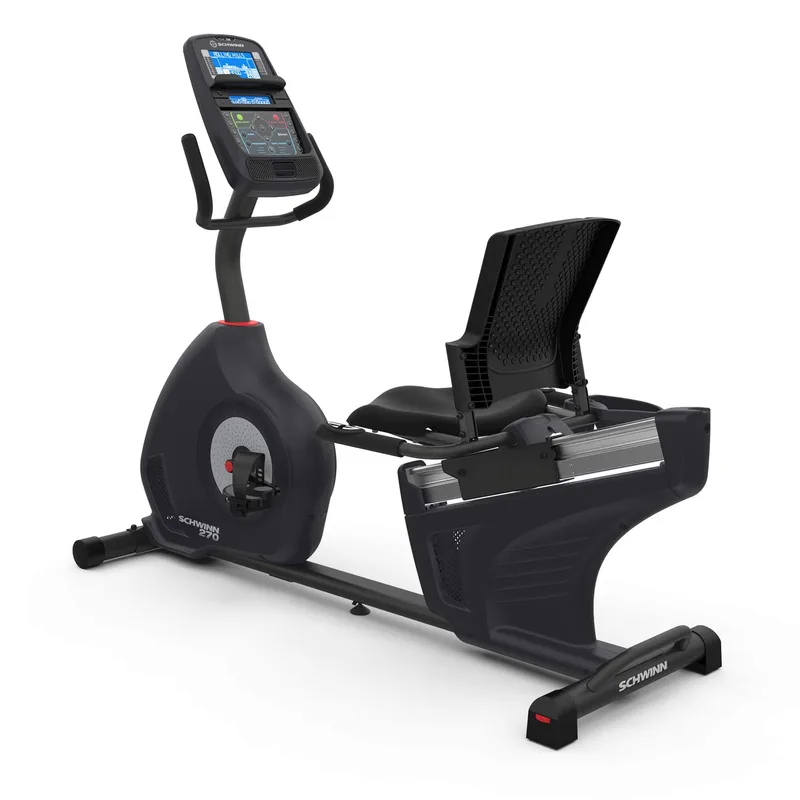
Schwinn 270 Recumbent Exercise Bike
Pros
- Step-through open frame lets seniors walk into the seat position without swinging a leg over — mounting and dismounting requires minimal balance or hip flexibility
- 25 magnetic resistance levels progress from a barely-there warm-up to genuine cardiovascular intensity with one dial — no stopping to adjust, no moving parts to jam mid-session
- 29 workout programs include heart rate target zones that keep training intensity within safe cardiovascular ranges without manual monitoring
- USB charging port and media shelf let users manage phones and tablets without leaving the seat during longer cardio sessions
- Dual LCD display shows pace, distance, calories, resistance level, and heart rate simultaneously — no toggling between screens during a workout
Cons
- 106 lb assembled weight means repositioning requires two people — choose the permanent location before completing assembly
- 29-program console can feel overwhelming initially for seniors unfamiliar with digital fitness equipment — expect a short learning curve navigating the menu system
- 300 lb weight capacity is adequate for most users but lower than some competitors at similar price points
The Schwinn 270 is the standard recumbent bike recommendation for seniors because it solves the two problems that make other cardio machines difficult for older adults: mounting difficulty and resistance that’s either too hard to adjust or too limited in range.
The step-through frame is the critical structural feature. Standard upright bikes and most recumbent bikes require the user to swing a leg over a seat or crossbar, which demands hip flexibility and balance that many seniors don’t have consistently. The 270’s open frame eliminates this entirely — the user walks into the seat position from the side and sits down. Dismounting is the same: stand up from the seat and step away. No balancing act, no leg swing, no risk of catching a foot on the frame.
The 25-level magnetic resistance system operates quietly and adjusts mid-pedal without interrupting the stroke. The jump from level 1 to level 25 covers a wide range — from a recovery-pace warm-up that barely loads the legs to a resistance level that produces genuine cardiorespiratory effort at moderate cadence. Most seniors will train between levels 5 and 15 for most sessions, which means substantial room to progress without hitting a resistance ceiling.
The 29 workout programs are more than most users will need, but the heart rate target programs are specifically useful for older adults. Setting a target heart rate zone — say, 60–75% of estimated max — and letting the bike adjust resistance to maintain that zone removes the cognitive load of monitoring intensity manually while providing a defined cardiovascular training stimulus.
USB charging and the media shelf address the practical reality of longer cardio sessions. A 30–45 minute recumbent ride is manageable when a user can manage a phone or tablet without leaving the seat. Without those features, users either ride without entertainment or interrupt the session repeatedly to manage a device on a separate surface.
Concept2 RowErg Rowing Machine — Best Full-Body Cardio
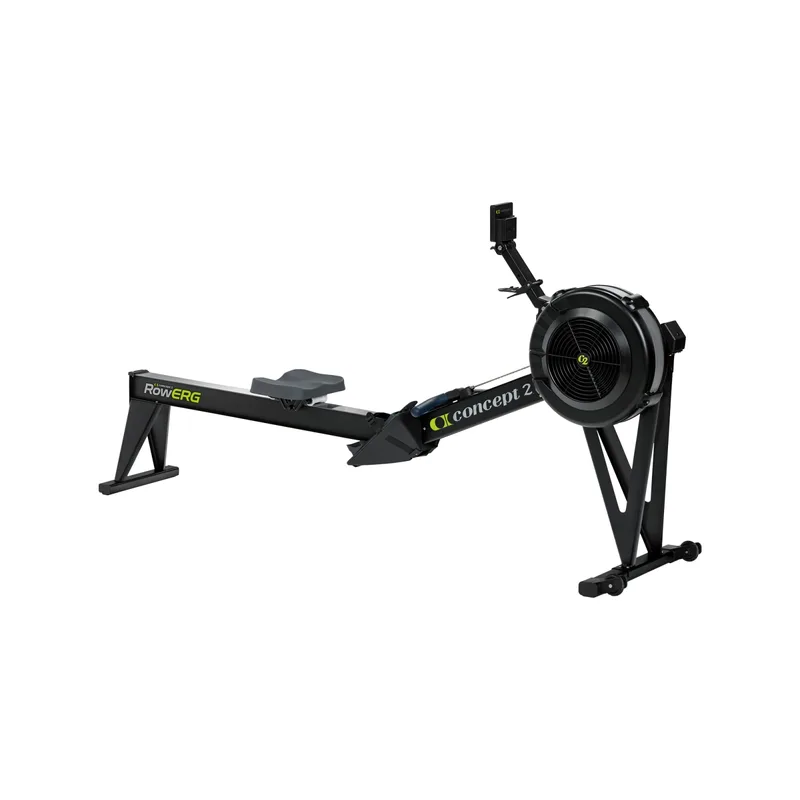
Concept2 RowErg Rowing Machine
Pros
- Fully seated stroke means zero weight-bearing on hips, knees, or ankles at any point — no impact load, no landing forces, no joint deceleration stress throughout the entire movement
- 500 lb weight capacity is the highest in this roundup and appropriate for a broad range of body types without capacity concerns
- Separates into two 28.5 lb halves for storage against a wall — manageable pieces for a single person to reposition
- PM5 monitor tracks stroke rate, pace, distance, and watts with no subscription required — complete training data without ongoing cost
- Tall legs option raises the seat to 20" from the floor, making mounting and dismounting significantly easier for seniors with limited hip flexion or knee pain
Cons
- Sold direct from Concept2 — no Amazon Prime delivery, shipping timelines vary by season and stock
- Correct rowing technique takes 2–3 sessions to establish — pulling early with the arms or rounding the lower back reduces effectiveness and can cause back strain
- Air flywheel creates audible mechanical noise — louder than magnetic resistance machines, which matters in shared living spaces or apartments
Rowing is the most genuinely low-impact full-body cardiovascular exercise available for home gym use. Every phase of the stroke is concentric — the body never decelerates against load or absorbs impact force. There is no landing, no catching body weight on a bent knee, no hip impact. For seniors who can no longer run, walk fast on an incline, or use a stair climber without joint discomfort, rowing eliminates those impact mechanisms entirely while still providing cardiovascular and muscular training across legs, back, core, and arms simultaneously.
The Concept2 RowErg is the benchmark against which all other rowing machines are measured, and the 500 lb rated weight capacity makes it structurally appropriate for a wide range of users. Most rowing machines in the $300–$600 range are rated 250–300 lb; the Concept2’s capacity doubles that at a price that reflects the structural engineering behind it.
The PM5 monitor tracks stroke rate, pace, split time, distance, watts, and calories without any subscription requirement. Every metric updates in real time, the interface is straightforward, and the data allows for session-to-session comparison that supports genuine progressive training. No app download required, no monthly cost, no connected platform to manage — just accurate data displayed on a screen.
The tall legs option is a specific feature worth flagging for seniors. The standard seat height is 14 inches from the floor — lower than most chairs, which makes mounting and dismounting more difficult. Ordering the machine with tall legs raises the seat to 20 inches, closer to a standard chair height, which substantially reduces the hip flexion and quad strength required to stand up from the seat after a session. If mounting and dismounting difficulty is a concern, specify tall legs at the time of order.
The machine splits into two halves for storage — total machine weight is 57 lbs, and each half weighs around 28 lbs. Two manageable pieces that can be stored vertically against a wall make the RowErg practical for a home gym where floor space is shared with other uses.
TheraBand Resistance Bands Set, Beginner Kit — Best Value
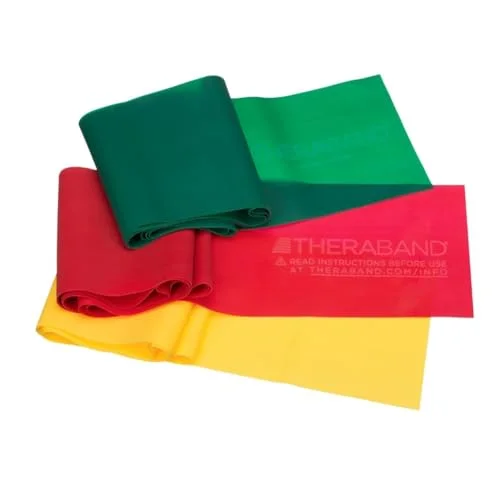
TheraBand Resistance Bands Set, Beginner Kit
Pros
- Non-latex construction eliminates contact allergy risk — an important safety specification for older adults who may have developed latex sensitivities over time
- Three progressive resistance levels allow seniors to start at the lightest band and advance without purchasing new equipment as strength improves
- No grip strength required to use — bands lay flat across the palm or can be looped around the forearm, making them accessible for adults with arthritis or reduced hand strength
- Used in hospital and outpatient physical therapy settings — TheraBand's resistance levels are clinically standardized, not arbitrary marketing gradations
- Compact enough to store in a drawer, use seated in a chair, or pack for travel — requires no dedicated equipment space
Cons
- Three bands will not provide adequate resistance range for seniors who are already physically active — intermediate athletes will need the intermediate or advanced kit
- Flat band requires learning anchor techniques (foot anchor, door anchor, loop grip) — initial setup takes practice before it feels natural
- No handles included — grip comfort depends on the user's hand tolerance during pulling exercises
TheraBand’s flat resistance bands are the equipment used in physical therapy clinics for a reason: they require no minimum strength to grip, they work from seated positions, they provide graduated resistance levels with clinical precision, and they are inherently safer than free weights for users whose balance, grip, or joint integrity limits what movements they can perform safely.
The beginner set includes yellow (light), red (light-medium), and green (medium) bands — the three resistance levels that cover most seniors’ initial 6–12 months of resistance training. The yellow band provides meaningful resistance for shoulder external rotation, hip abduction, and seated row movements without overwhelming the muscle groups that are typically weakest at the start of a training program. The green band is where most seniors who train consistently for 3–4 months land for upper body pulling and light lower body work.
Non-latex construction is a genuine safety specification, not marketing copy. Latex sensitivity can develop over time with repeated exposure, and for older adults who may have had multiple surgeries or medical procedures involving latex gloves, an allergy is a realistic risk. Non-latex bands eliminate that concern entirely.
Seated use is the specific application that makes resistance bands irreplaceable in a senior home gym. Every exercise with a resistance band can be performed from a chair: shoulder presses, lateral raises, seated rows, hip abduction, leg extensions, ankle dorsiflexion. For seniors who stand for cardio (rowing, biking) but need to do strength work from a seated position for stability or fatigue reasons, bands are the only equipment category that covers this fully.
The $15 price point means that adding a second set — the intermediate kit with green, blue, and black bands — represents a $15 investment as strength progresses. That progression path is a better financial fit for most seniors than purchasing adjustable dumbbells at $200–$350 upfront before knowing what resistance range they’ll need.
CAP Barbell Neoprene Coated Dumbbell Pair — Best for Getting Started
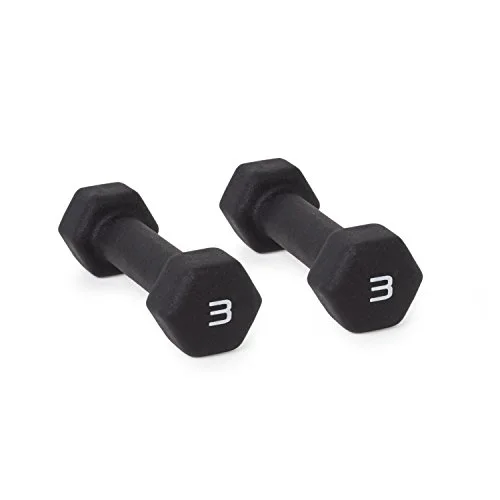
CAP Barbell Neoprene Coated Dumbbell Pair
Pros
- Neoprene surface is warm to the touch, grippy when hands are sweaty, and significantly reduces the injury risk of dropping a weight — the safe material choice for solo training without a spotter
- Hex-shaped ends prevent dumbbells from rolling off surfaces or across the floor — a meaningful safety detail that eliminates a tripping hazard in the workout area
- Available in 1–30 lb increments — seniors can purchase the appropriate starting weight and add a heavier pair when strength improves, rather than buying a full rack upfront
- Zero assembly — remove from packaging and use immediately, which eliminates a barrier for adults unfamiliar with fitness equipment hardware
- Two or three pairs stack in a compact floor space next to a chair or bench without a rack, keeping the workout area organized
Cons
- Fixed weight means a new pair is required for each weight increase — cost accumulates if buying multiple pairs across a progression
- Neoprene smell is noticeable when new — typically dissipates within a few weeks of regular use
- Not appropriate as a standalone strength training approach — most seniors will need multiple pairs within 3–6 months as baseline strength develops
Fixed-weight dumbbells have a specific advantage over adjustable options for seniors: simplicity. There is no dial mechanism to rotate, no pin to insert, no weight selector plate to position correctly. Pick up the dumbbell and use it. For older adults who are just starting resistance training or who have limited hand dexterity from arthritis, eliminating any mechanical interaction with the weight is a meaningful accessibility improvement.
Neoprene coating serves two functions beyond the obvious comfort advantage. First, the material provides grip that doesn’t depend entirely on hand strength — the coating creates friction between the dumbbell and the palm even when sweating, which reduces the grip demand during pulling and pressing movements. Second, neoprene dramatically reduces the injury severity if a dumbbell is dropped — a neoprene-coated 10 lb dumbbell hitting a foot causes significantly less damage than bare cast iron at the same weight.
The hex-shaped ends are a safety feature that the round-ended dumbbells sold by many budget brands lack. A round dumbbell set on a bench, on the floor, or on a chair armrest will roll. A hex dumbbell stays where placed. In a home gym where the workout happens in a living room or bedroom — not a purpose-built facility with rubber floors and proper storage — not having a dumbbell roll across the floor during a session is a meaningful risk reduction.
At $25 for a 10 lb pair, the entry cost is low enough that purchasing two or three pairs at different weights doesn’t represent a significant investment. Most seniors starting resistance training benefit from at least three weights — a light pair for shoulder and arm movements, a medium pair for larger muscle groups, and a heavier pair for lower body exercises. Three pairs across the 5, 10, and 15 lb range costs under $75 total, which is less than most adjustable dumbbell systems.
BOSU Pro Balance Trainer — Best Balance Trainer
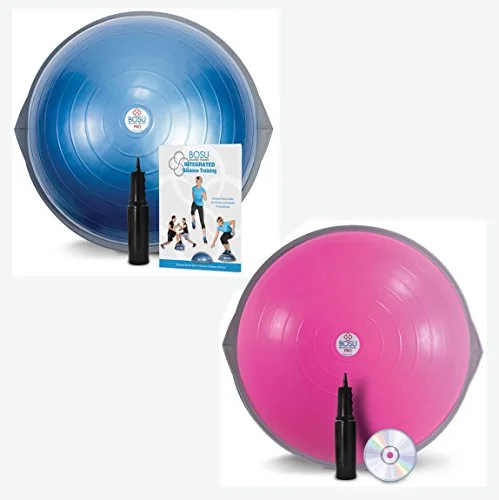
BOSU Pro Balance Trainer
Balance decline is one of the primary injury pathways for adults over 65. Falls are the leading cause of injury-related death in older adults according to the CDC, and the physical adaptation that reduces fall risk is proprioceptive training — exercises that challenge the ankle, knee, and hip stability systems under controlled conditions. The BOSU does exactly this: it creates a controlled unstable surface that requires the user’s stabilizing muscles to activate in response to small perturbations, building the reflex patterns that maintain balance during daily movement.
The BOSU Pro has two training orientations. Dome side up creates a rounded, unstable surface for standing exercises, balance holds, and seated core work. Flat side up (dome facing the floor) creates a different type of instability — the rigid platform is elevated on the inflated dome, creating a rocking motion that requires different stabilization responses from the ankles and hips. Two distinct surfaces mean two distinct training stimuli, which extends the exercise range and prevents accommodation to a single balance challenge.
For seniors new to balance training, the standard progression is to start with seated work on the dome, then progress to standing with one hand on a wall or chair for support, then standing unsupported. This staged approach makes the BOSU accessible even for seniors with significant balance deficits, because the initial training can happen from a position that is inherently stable.
The 350 lb weight capacity provides structural headroom for exercises that load the platform more dynamically — step-ups, standing presses, shallow squats on the dome. The machine is engineered to hold those loads without compromising the dome integrity, which matters for the machine’s longevity under regular training use.
Inflation is adjustable. A firmer dome creates a less forgiving surface that requires more active stabilization; a softer dome is more forgiving and appropriate for early-stage balance work. Seniors starting balance training benefit from a slightly softer setup that provides a challenge without destabilizing so aggressively that it creates a fall risk. The included pump allows this adjustment.
Buying Guide: Choosing Safe Equipment for a Senior Home Gym
Prioritize Low-Impact Movement Patterns
The core selection criterion for senior fitness equipment is impact. High-impact movements — running, jumping, rapid direction changes — place acute loading on hips, knees, and ankles that joints compromised by arthritis, prior surgery, or natural density reduction cannot always absorb safely. Every product in this roundup operates through concentric-dominant, low-impact movement patterns: pedaling, rowing, band pulling, dumbbell pressing, and balance holding.
When evaluating equipment not covered in this roundup, ask whether the movement pattern involves landing forces or rapid joint deceleration. If it does, assess the joint load against your specific situation. If it doesn’t — as with recumbent bikes, rowing machines, and resistance bands — the load is progressive and controllable from the first session.
Mounting and Dismounting Are Safety-Critical
Equipment that is difficult to get on or off creates an injury risk before the workout starts. The Schwinn 270’s step-through frame and the Concept2 RowErg’s tall legs option exist specifically to reduce this risk. When evaluating any cardio machine, physically simulate the mounting motion: which foot lifts first, where the hands go, whether the motion requires hip flexibility above 90 degrees or substantial balance.
Resistance equipment has the same consideration. Dumbbells picked up from the floor require hip hinging; dumbbells stored on a low rack or shelf require the same. Resistance bands require only lifting the band from a hook or drawer. Building a home gym that keeps all equipment at accessible heights — roughly counter height to mid-chest — minimizes the risk during the mundane parts of the workout.
Weight Capacity and Machine Stability
Choose equipment with a weight capacity at least 50 lbs above your body weight. The buffer provides structural margin for dynamic loading — a rowing stroke, a balance shift, a leaning movement — which always exceeds static body weight. The Concept2’s 500 lb capacity and the BOSU Pro’s 350 lb capacity both provide this margin across a wide range of users.
Machine stability on the floor is a separate consideration from weight capacity. A light machine with non-slip feet is more stable than a heavy machine with smooth rubber pads on a slick floor. Check the base design — wide footprints and rubberized contact points indicate machines designed to stay stationary during dynamic movement patterns.
Ease of Resistance Adjustment
For cardio equipment, the resistance adjustment mechanism matters more than the range. A dial or lever that adjusts while exercising — without stopping the movement — maintains training continuity and eliminates the instability that comes from reaching for a knob, shifting weight off a foot, or looking away from the front. The Schwinn 270’s in-session adjustment capability is a specifically senior-friendly design choice.
For resistance bands, the resistance change mechanism is simply switching bands. This is simpler than any dial or pin system and requires no fine motor interaction with the equipment beyond picking up a different band.
Consider Training Environment
The BOSU’s balance training should happen in a cleared area with a wall or sturdy chair within arm’s reach. Rowing and recumbent biking can happen in tighter spaces, but confirm the machine footprint fits the available room with clearance on all sides for safe entry and exit. The Concept2’s separable design allows storage in a hallway closet or against a wall when not in use — a practical advantage for seniors training in shared living spaces.
Frequently Asked Questions
What is the safest type of cardio equipment for seniors?
Recumbent bikes and rowing machines are consistently rated among the safest cardio options for older adults by physical therapists and sports medicine researchers. Both operate through fully seated or supported positions, eliminate impact loading entirely, provide active feedback through resistance control, and allow immediate stopping without balance risk. Treadmills and stair climbers introduce fall risk and impact loading; ellipticals are low-impact but require standing balance throughout. For seniors with specific joint concerns, consult a physician or physical therapist before starting any new cardio modality.
How many days per week should seniors exercise?
Current guidelines from the CDC and American College of Sports Medicine recommend that adults 65 and older aim for at least 150 minutes of moderate-intensity aerobic activity per week, along with muscle-strengthening activities on two or more days. This translates to roughly 30 minutes of cardio on 5 days per week, or 50 minutes on 3 days — both approaches meet the guideline. Balance training (such as BOSU work) is specifically recommended at least 3 days per week for fall prevention. Start below these targets if you’re new to exercise and progress gradually.
Should seniors use resistance bands or dumbbells?
Both serve different functions and work best in combination. Resistance bands allow training from seated positions, require minimal grip strength, and load through angles that dumbbells cannot replicate (lateral shoulder work, hip external rotation, ankle dorsiflexion). Dumbbells provide more stable, incremental loading for compound pressing and pulling movements. Seniors who are new to strength training typically benefit from starting with resistance bands for 4–8 weeks before adding dumbbells, as the band movements build joint stability and movement patterns that make dumbbell use safer.
Is a recumbent bike or rowing machine better for seniors?
These machines train different physical qualities and both belong in a well-rounded senior home gym. A recumbent bike provides lower-body cardiovascular training with very low skill requirement — anyone can get on and pedal. A rowing machine provides full-body cardio that includes back, core, and arm engagement, but requires learning a stroke pattern that takes a few sessions to develop. If only choosing one, a recumbent bike is the lower barrier starting point. Rowing becomes the higher-value addition for seniors who have established a cardio baseline and want to add upper body cardiovascular conditioning without impact.
At what age should someone stop using a home gym?
There’s no age at which exercise stops being beneficial. Research consistently shows that resistance training and cardiovascular exercise improve functional capacity, bone density, and fall resistance well into the 80s and 90s. The exercise type should shift as mobility and strength change — from higher-impact to lower-impact modalities, from heavier loads to lighter loads with higher repetitions — but stopping exercise is not the answer to age-related physical change. Any senior starting a new exercise program should get medical clearance first, particularly those managing chronic conditions.
Conclusion
For most seniors building a home gym in 2026, the priority order is: establish a cardio habit first with the Schwinn 270 Recumbent Bike, add full-body conditioning with the Concept2 RowErg when budget allows, build resistance training from the ground up with TheraBand bands, add CAP Barbell neoprene dumbbells as strength progresses, and incorporate BOSU balance training three times per week for fall prevention.
The equipment covered here doesn’t require a fitness background, significant floor space, or a steep learning curve. It does require consistency — 30 minutes of daily movement produces meaningful cardiovascular and muscular adaptation over 8–12 weeks regardless of starting fitness level. The goal for a senior home gym isn’t elite performance. It’s consistent movement, maintained independence, and the physical capacity to keep doing the activities that matter.