Most home gym buying guides rank equipment by price or looks. That’s the wrong axis once you’re squatting 400+, benching in triples with a wide grip, or just built bigger than the average buyer these products are designed for. The right axis is weight capacity — and the gap between consumer-grade and commercial-grade specs is bigger than most spec sheets make obvious. Industry data on this split is consistent: commercial equipment typically runs 11-gauge steel frames versus 14-gauge in consumer models, with capacities exceeding 1,000 lbs instead of topping out well below it. Manufacturers are also leaning into upgradeable capacity in 2026 — cable machine weight stacks that ship at a base spec and can be bumped up later are becoming more common, which tells you the industry knows buyers are training heavier than the average spec sheet assumes.
This guide covers six pieces of equipment picked specifically for lifters who need to buy once: two power racks at different price points, an Olympic barbell built to competition tensile spec, a bench rated for triple-digit rep-max bench sessions, calibrated steel plates that don’t lie about their weight, and flooring dense enough to survive a missed rep. Every spec below is what you should actually check before buying — not marketing copy.
Comparison
| Spec | Rogue RML-490 Power Rack 3.0 | Titan Fitness T-3 Series Power Rack (24" Depth) | Rogue Ohio Power Bar - Black Zinc | REP Fitness FB-5000 Competition Flat Bench | XMARK Calibrated Steel Powerlifting Plates | MSI Heavy-Duty Horse Stall Mat (3/4") |
|---|---|---|---|---|---|---|
| Rating | 9.3/10 | 8.6/10 | 9.4/10 | 9.0/10 | 8.5/10 | 8.3/10 |
| Price | $1,180 | Check price | $315 | $245 | Check price | $112.00as of Oct 11, 2026 |
| Steel | 3x3" 11-gauge | 11-gauge 2x3" | — | 3x3" 11-gauge | — | — |
| Weight Capacity | 1,000 lbs rackable (Monster Lite J-cup spec) | 1,100 lbs rackable / 4,400 lbs total rack rating | — | 1,000 lbs | — | — |
| Height | 80.375" or 90.375" | 82" | — | 16.9" (IPF competition spec) | — | — |
| Interior Depth | 43" | 24" | — | — | — | — |
| Footprint | 53"W × 53"D | — | — | 7.36 sq ft | — | — |
| Hole Spacing | 1" Westside (bench/pull zone), 2" elsewhere | Westside pattern | — | — | — | — |
| Frame Weight | 340 lbs | — | — | — | — | — |
| Origin | Made in USA | — | — | — | — | — |
| Pull-Up Bars | — | 1.25" standard and 2" fat grip, both included | — | — | — | — |
| Tensile Strength | — | — | 205,000 PSI | — | — | — |
| Shaft Diameter | — | — | 29mm | — | — | — |
| Bar Weight | — | — | 45 lb | — | — | — |
| Sleeve Rotation | — | — | Bronze bushings | — | — | — |
| Knurl | — | — | IPF powerlifting marks, center knurl | — | — | — |
| Finish | — | — | Black zinc shaft, bright zinc sleeves | — | — | — |
| Warranty | — | — | Lifetime against bending | — | — | — |
| Pad | — | — | — | 4" CleanGrip high-density foam | — | — |
| Bench Weight | — | — | — | 62 lbs | — | — |
| Base | — | — | — | Tripod foot design | — | — |
| Material | — | — | — | — | Machined steel | Solid rubber |
| Calibration Tolerance | — | — | — | — | ±10 grams | — |
| Center Hole | — | — | — | — | 50mm | — |
| Diameter Standard | — | — | — | — | Meets IPF competition diameter spec | — |
| Color Coding | — | — | — | — | 25kg red / 20kg blue / 15kg yellow / 10kg green | — |
| Sold As | — | — | — | — | Individual plates | — |
| Thickness | — | — | — | — | — | 3/4" (19mm) |
| Dimensions | — | — | — | — | — | 42" × 72" (3.5' × 6') |
| Surface | — | — | — | — | — | Non-slip textured |
| Color | — | — | — | — | — | Black |
| Recommended Use | — | — | — | — | — | Under racks, barbells, and heavy dumbbells |
| Check Price at Rogue → | Check Price → | Check Price at Rogue → | Check Price at REP → | Check Price → | Check Price → |
Prices change daily — tap Check Price for the current Amazon price. Numbers shown were verified on the "as of" date.
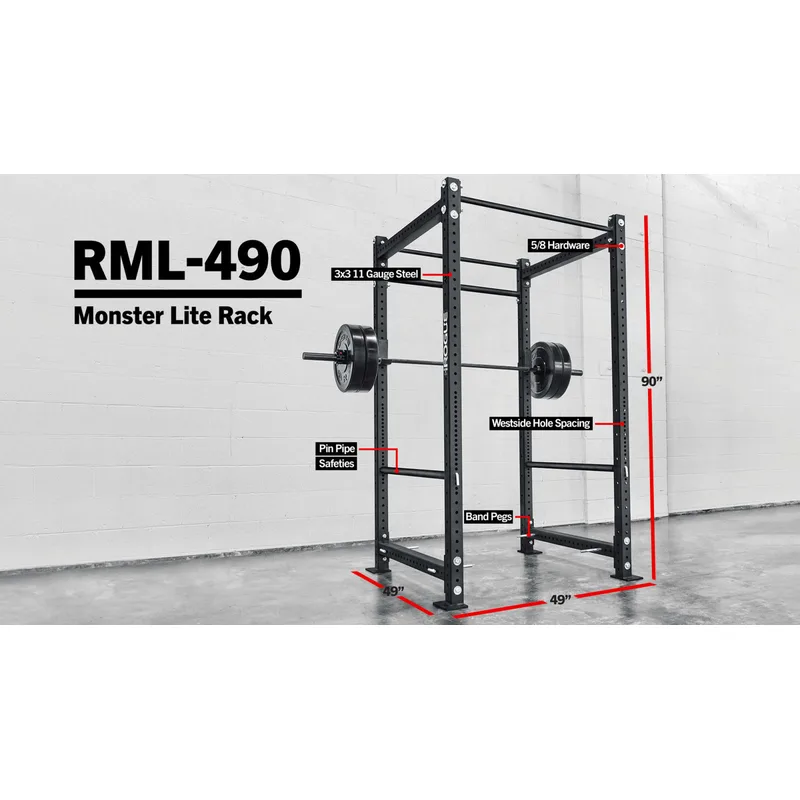
Rogue RML-490 Power Rack 3.0
Pros
- 3x3" 11-gauge steel matches the upright spec used in commercial facilities charging monthly membership fees
- 43" interior depth is the deepest in this roundup — real clearance for sumo stance and rear bar storage
- Lifetime warranty from a manufacturer with a two-decade structural track record
- Monster Lite attachment ecosystem lets the rack grow into a cable station, lat pulldown, or belt squat rig later
- Bolt pattern and hole spacing hold up under repeated max-effort loading without the wobble cheaper racks develop
Cons
- $1,180 base price before J-cups, safeties, or attachments that some competitors bundle in
- 340 lb frame plus a floor-anchor requirement makes this a permanent installation, not something you reposition often
- Direct-only from Rogue — no Amazon Prime shipping or one-click return
- Not the cheapest route into a heavy-rated rack if budget is the primary constraint
The RML-490 earns the top spot because nothing else here matches its combination of steel gauge, interior depth, and long-term attachment support. The 3x3” 11-gauge uprights are the same cross-section used in commercial racks — this isn’t a home gym compromise dressed up with marketing language, it’s the actual spec. The 43” interior depth matters more than most buyers realize until they’re mid-set: a shallow rack forces a compressed stance or a bar path that clips the uprights, and 43” gives real room for a sumo deadlift setup or storing loaded bars against the rear posts.
Westside hole spacing at 1” through the bench and pull zone means J-hooks and safety bars land exactly where you need them instead of the 2” jump that forces you to choose between “too high” and “too low.” Combined with the Monster Lite attachment ecosystem, this rack is a platform you build on rather than replace — add a lat pulldown, cable arms, or a belt squat attachment later without touching the core frame.
The tradeoff is cost and permanence. At $1,180 before safeties or attachments, plus a 340 lb frame that’s meant to be anchored in place, this is a rack for a dedicated training space, not a rack you move around a shared garage. If that’s not your situation, the Titan below is the more practical pick.
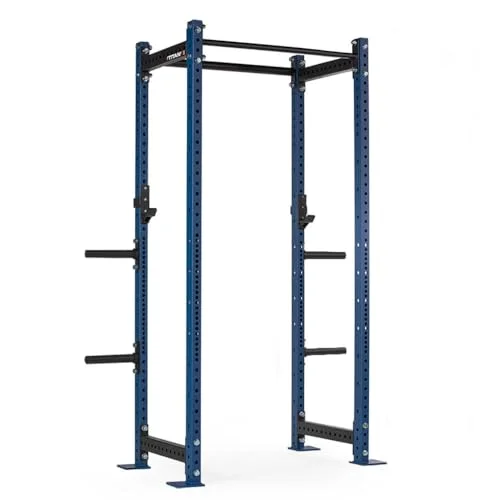
Titan Fitness T-3 Series Power Rack (24" Depth)
Pros
- 1,100 lb rackable rating tops the published J-cup spec on the pricier Rogue rack in this roundup
- Ships through Amazon with Prime delivery and Amazon's standard return window
- Dual pull-up bars (standard and fat grip) included at this price point
- 24" depth works in tighter garage footprints where a full commercial-depth cage won't fit
- 11-gauge steel is a genuine step up from the 14-gauge racks that dominate the sub-$500 category
Cons
- 2x3" uprights are a smaller cross-section than the 3x3" steel used on the Rogue and REP racks in this guide
- Safety arms and spotter pins are typically a separate line item — confirm what ships in the box before ordering
- 24" interior depth is shallow for taller lifters or a wide sumo pull stance
- Live Amazon pricing fluctuates — check the current listing rather than assuming a fixed number
The Titan T-3 exists for a specific buyer: someone who wants a genuinely heavy-rated rack without leaving Amazon or waiting on freight shipping. The published 1,100 lb rackable rating is higher on paper than the Rogue’s Monster Lite J-cup spec, and the 11-gauge steel is a real jump over the 14-gauge construction that dominates budget racks. Both pull-up bars — standard 1.25” and 2” fat grip — ship included, which some competitors charge extra for.
Where it gives ground back is cross-section. 2x3” uprights flex more under sustained heavy loading than the 3x3” steel on the Rogue and REP products in this roundup, and the 24” interior depth is tight if you’re tall or pull sumo with a wide stance. Safety arms are also commonly sold separately on Titan’s rack lineup — confirm exactly what’s bundled with this specific listing before you check out, since Amazon listings and configurations change.
For a first heavy-duty rack, or a second rack in a smaller space, the T-3 is the practical, Prime-shippable answer. For a forever rack in a dedicated space, the RML-490 above is the better long-term investment.
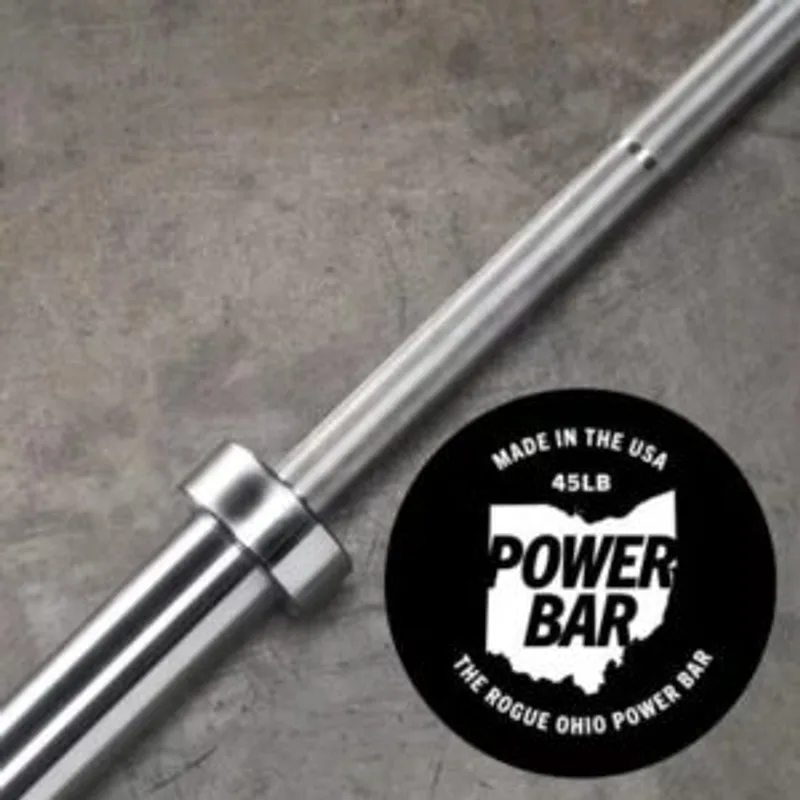
Rogue Ohio Power Bar - Black Zinc
Pros
- 205,000 PSI tensile steel resists permanent bend well past any load a human can rack on the sleeves
- Bronze bushings give the stiff, direct feel powerlifters want under max-effort squat and bench loads
- IPF-spec knurl marks and center knurl mirror competition bar dimensions, so training carries over to meet day
- Lifetime warranty against bending, backed by a bar that has been the default choice in thousands of home and commercial gyms
- 29mm shaft diameter is the powerlifting-federation standard, not a compromise diameter aimed at general fitness
Cons
- $315 is a real expense for one bar — general-purpose bars run less than half that
- Black zinc needs more upkeep in humid or unheated garages than a stainless finish
- Bushings, not bearings, so it isn't the first choice if Olympic pulls are a bigger priority than squat/bench/deadlift
- Direct-only from Rogue — no Amazon Prime option
A rack is only as good as the bar you put in it, and this is where a lot of home gym budgets go wrong — buyers spend heavily on the cage and then load it with a $120 bar that flexes and doesn’t recover its whip consistently. The Ohio Power Bar’s 205,000 PSI tensile steel is built specifically to resist that permanent bend under repeated max-effort loading. A 190,000 PSI bar starts to yield somewhere around 1,500–1,800 lbs of center-loaded force; at 205,000 PSI, this bar has more margin above anything a human is going to load onto it.
Bronze bushings, not bearings, are the deliberate choice here — bushings give a stiffer, more direct feel that powerlifters generally prefer for squat, bench, and deadlift over the faster spin bearings provide for Olympic pulls. The IPF-spec knurl marks and center knurl mean your grip width and bar feel in training match what you’ll find on a competition platform, which removes one variable on meet day.
At $315, this is the priciest single item in the roundup relative to its category, and the black zinc finish asks for more maintenance than stainless in a humid or unheated garage. If your training is Olympic-lift-heavy rather than powerlifting-heavy, a bearing bar is the better tool — this one is built for the squat rack, not the platform.
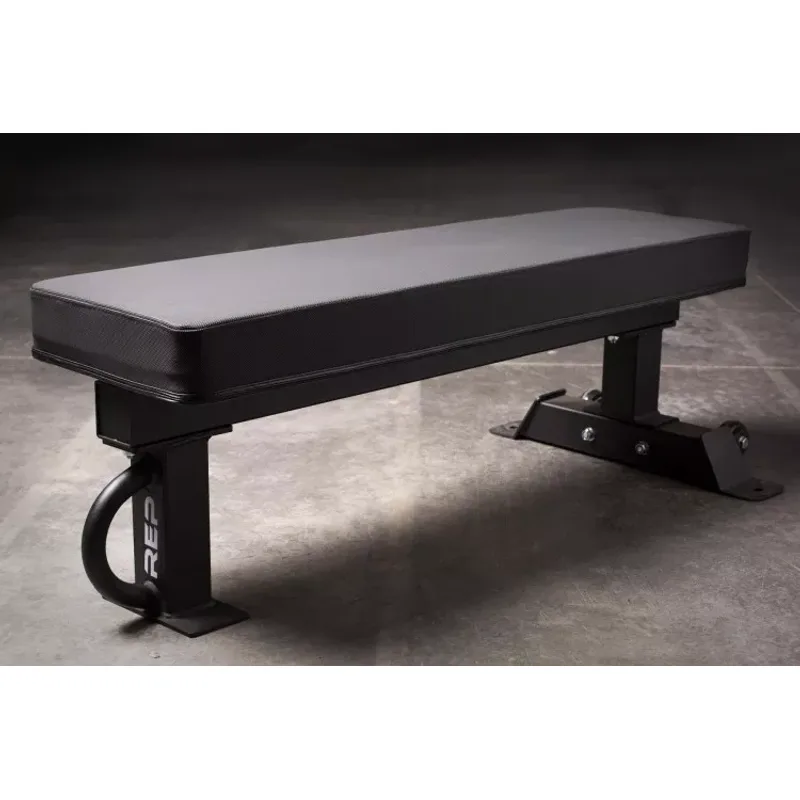
REP Fitness FB-5000 Competition Flat Bench
Pros
- 1,000 lb rated capacity from 3x3" 11-gauge steel handles max-effort bench work without frame flex
- 16.9" height matches IPF competition spec, so setup and leg drive carry over directly to meet day
- Tripod foot design keeps legs clear of foot placement for full leg drive on heavy sets
- 4" CleanGrip pad holds its shape under repeated heavy loading better than thinner vinyl pads
- Purpose-built as a flat competition bench rather than a compromise multi-angle design
Cons
- $245 base price, with some color finishes priced higher
- No incline or decline adjustment — this is a dedicated flat bench, not a multi-angle bench
- Direct-only from REP — no Amazon Prime shipping
- 62 lbs and a fixed frame make it less portable than lighter folding benches
Bench weight capacity gets overlooked constantly because a bench looks simple — four legs and a pad — but the frame underneath a heavy bench press session takes real lateral and vertical stress. The FB-5000’s 3x3” 11-gauge steel is rated to 1,000 lbs, and the tripod foot design specifically routes the legs out of the way of foot placement so leg drive isn’t compromised by tripping over a base rail mid-set.
The 16.9” bench height matches IPF competition spec, which matters more than it sounds like it should: bench height changes your leg angle, your arch, and your bar path off the chest. Training on a bench that doesn’t match competition height means re-learning your setup on meet day. The 4” CleanGrip pad is dense enough to hold its shape through months of heavy loading rather than compressing into a soft dip where your shoulders sit.
This is a dedicated flat bench with no incline or decline function, so it’s a second bench for most home gyms rather than the only bench — pair it with an adjustable bench for accessory work if you need incline pressing in your program.
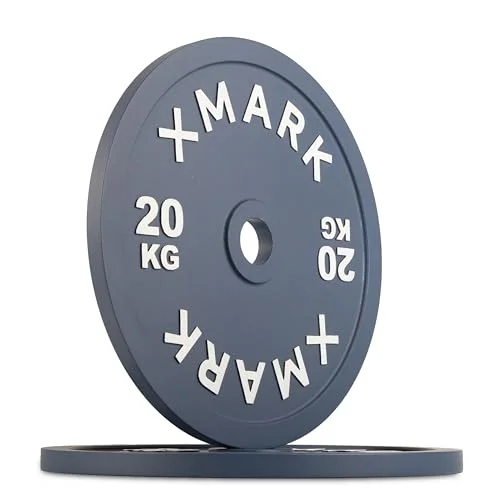
XMARK Calibrated Steel Powerlifting Plates
Pros
- ±10 gram calibration tolerance means the number stamped on the plate is the actual weight you're lifting
- 50mm bushings and IPF-spec diameters mean these load and spin the same as plates used in competition
- Thin steel profile lets you load more total weight onto a standard barbell sleeve than thick cast iron plates
- Color coding by kilogram value speeds up plate math when you're loading heavy and don't want to double-check
- Machined tolerances hold up over years of use, unlike cast plates that wear unevenly
Cons
- Sold individually, not in matched pairs — order carefully to get the quantity you actually need
- Steel-on-steel contact is louder on the rack and under the bar than bumper or urethane plates
- No rubber coating, so a dropped plate can chip garage flooring without a mat underneath
- Amazon pricing on this listing wasn't live-confirmed at publish — check the current listing before ordering
Weight capacity on a rack or bar is only half the equation — if your plates aren’t accurate, your training numbers aren’t real. XMARK’s calibrated plates hold a ±10 gram tolerance, which is the same standard competition federations use, versus cast iron plates that can be off by a pound or more per plate. Over a loaded bar with eight or ten plates on it, that inaccuracy compounds into meaningful error on your actual training max.
The 50mm center hole and IPF-spec diameter mean these load and spin the same way competition plates do, and the thin steel profile lets you fit more total weight onto a standard sleeve than you can with bulky cast iron — a real consideration once you’re loading past what a standard bar can physically hold in cast plates. Color coding by kilogram value speeds up the math when you’re loading heavy and don’t want to stop and recalculate.
These ship individually, not as matched pairs, so double-check the quantity in your cart before ordering — a common mistake is ordering what you think is a pair and receiving a single plate. They’re also louder than bumper plates and will chip unprotected flooring if dropped, which is exactly why flooring is the next category in this guide.
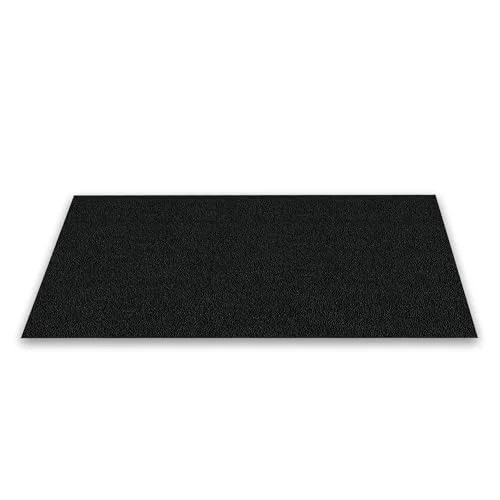
MSI Heavy-Duty Horse Stall Mat (3/4")
Pros
- 3/4" thickness is the same spec Rogue and REP Fitness recommend for platforms where loaded barbells get dropped
- Solid rubber slab absorbs impact noise from dropped plates far better than thin interlocking foam tiles
- Priced well below branded gym flooring rolls at equivalent thickness
- Dense rubber protects concrete from pitting or cracking under a loaded rack's feet
- Single solid mat means no seams shifting apart under a rack that gets bumped or dragged
Cons
- 42"×72" is smaller than a full 4'×6' stall mat — check your coverage math before ordering multiples
- Solid slabs are heavy and awkward for one person to carry and position alone
- New rubber carries a noticeable odor for the first one to two weeks
- No interlocking edges — mats can shift apart under heavy lateral movement unless bordered or taped
Flooring is the most commonly underspecced item in a heavy-lifting setup. Buyers get the rack, bar, and plates right, then put them on flooring that wasn’t built to take a dropped 405 lb bar. The 3/4” thickness on this stall mat is the specific spec Rogue and REP Fitness both recommend for platforms where loaded barbells get dropped from height — thinner mats absorb less impact and transmit more shock into the slab underneath.
Solid rubber construction means no interlocking seams to shift apart under a rack that gets bumped or dragged during a session, and the density noticeably cuts the noise and vibration of a dropped plate compared to foam tiles rated for cardio equipment, not barbell work. At $112 for a 3.5’×6’ mat, it’s priced well under branded flooring rolls at the same thickness.
The tradeoffs are practical rather than performance-related: these are heavy, awkward for one person to position alone, and carry a noticeable rubber odor for the first week or two. The 42”×72” size is also smaller than a standard 4’×6’ stall mat, so plan your total coverage area before ordering multiples for a full platform.
How to Evaluate Weight Capacity Before You Buy
Steel gauge matters more than the capacity number on the box. Gauge measures wall thickness — lower numbers mean thicker steel. 11-gauge is standard for equipment genuinely rated above 1,000 lbs; 14-gauge is common on budget gear and is adequate for most recreational lifters, but it flexes more under sustained heavy loading and fatigues faster over years of use.
Tube size compounds with gauge. A 3x3” upright at 11-gauge is meaningfully stiffer than a 2x3” upright at the same gauge, because cross-sectional area increases the resistance to bending under load. Two racks can both claim “11-gauge steel” and still perform differently based on tube dimensions.
Tensile strength (PSI) is the number that matters for bars, not “weight capacity.” Most Olympic barbells don’t publish a static weight rating because a bar’s failure mode isn’t a single number — it’s the PSI rating of the steel. A 190,000 PSI bar starts to permanently deform around 1,500–1,800 lbs of center-loaded force; look for bars rated at 190,000 PSI or higher if you’re training heavy compound lifts regularly.
Rackable capacity and total rack capacity are different numbers. Rackable capacity is what the J-cups and safety arms can hold during active use. Total rack capacity, sometimes listed much higher, often includes distributed static load across the whole frame and isn’t the number to use for planning your working sets.
Calibration tolerance matters as much as raw weight for plates. A ±10 gram tolerance on calibrated steel plates is a meaningfully different product from uncalibrated cast iron that can run a pound or more off per plate. If you’re tracking training maxes closely, the accuracy difference compounds across a loaded bar.
Flooring needs a thickness spec, not just a “heavy duty” label. 3/4” is the benchmark for platforms where loaded bars or heavy dumbbells get dropped. Anything thinner is fine for general training but under-built for that specific use case.
FAQ
What weight capacity should a power rack have for serious lifting?
Look for a rackable capacity of at least 1,000 lbs if you’re training compound lifts seriously, and prioritize 11-gauge steel at minimum 2x3” tube size — 3x3” if your budget allows. The published number matters less than the steel gauge and tube size behind it, since two racks with similar capacity claims can perform very differently under real loading.
Is a heavier-gauge barbell always better for heavy lifting?
Not exactly — gauge doesn’t apply to bars the same way it does to racks. What matters for a barbell is tensile strength (PSI). Look for at least 190,000 PSI for serious powerlifting-style training; anything below that is more likely to develop a permanent bend under repeated max-effort loading over years of use.
Do I need calibrated plates if I’m not competing?
Not strictly, but if you’re tracking a training max closely or following a percentage-based program, uncalibrated plates that run off by a pound or more per plate will throw off your actual loaded weight across a full bar. Calibrated plates remove that variable, which matters more the heavier you’re training.
How thick should home gym flooring be for heavy lifting?
3/4” is the benchmark most manufacturers recommend for platforms where loaded bars or heavy dumbbells get dropped from height. Thinner flooring works fine for general strength training without drops, but under-protects both your joints and your slab once you’re training near max effort.
Can I mix brands — for example, a Rogue rack with non-Rogue plates?
Yes. Rack, barbell, bench, plates, and flooring are independent purchase decisions with no cross-brand compatibility issues, unlike rack attachments, which are frequently brand-specific. The only place to check compatibility is barbell sleeve diameter against your plates’ center hole — standard Olympic sleeves and 50mm center holes are the near-universal spec, so this is rarely an issue in practice.
Conclusion
If budget allows a dedicated training space, the Rogue RML-490 Power Rack 3.0 is the buy-once pick — 3x3” 11-gauge steel, real interior depth, and an attachment ecosystem that keeps the rack relevant as your setup grows. If you need something heavy-rated without leaving Amazon, the Titan T-3 gets you a genuinely higher published rackable capacity for a fraction of the price, with the tradeoff of a smaller cross-section upright.
Whichever rack you choose, don’t undercut it with a budget bar, a light-duty bench, uncalibrated plates, or thin flooring. The Ohio Power Bar, REP FB-5000, XMARK calibrated plates, and a 3/4” stall mat round out a setup where every piece is actually rated for the loads you’re planning to put on it — not just the rack.