Recovery has moved to the center of the home gym conversation in 2026. Products like the Normatec 3 compression boots and Theragun Prime have become as recognizable to serious home gym athletes as barbells and power racks — and for good reason. The science on recovery has continued to build: adequate tissue work, compression, cold therapy, and electrical muscle stimulation are no longer optional extras. They determine how consistently you can train, how quickly you progress, and how long you stay healthy.
The challenge is that the recovery equipment category is crowded with products that range from genuinely effective to borderline useless. This guide covers six tools that belong in every serious home gym: one representative pick from each major recovery category, chosen based on owner feedback, verified availability, and the practical demands of athletes training at home.
If you want a deeper dive on any specific category, see our roundup of best massage guns for recovery and best foam rollers.
Quick Picks
Theragun Prime (5th Gen) at $199 is the best overall recovery tool: 16mm amplitude, QuietForce noise reduction, and Therabody app guidance make it the highest-value percussion massager for home gym athletes who want professional results without a professional price tag.
Normatec 3 Legs at $799 is the best compression system: seven-zone sequential compression, full wireless operation, and consistent owner reports of reduced next-day soreness justify the investment for athletes training lower body four or more times per week.
TriggerPoint GRID 2.0 at $60 is the best value: the 26-inch multi-density foam roller covers the full back, maintains its shape long-term, and delivers legitimate myofascial release at a price point that leaves budget for every other tool on this list.
Therabody PowerDot 2.0 Duo at $149 is the best EMS device: passive electrical muscle stimulation that works while you rest — no active effort required, Bluetooth-controlled, and useful for both pre-workout activation and post-workout recovery.
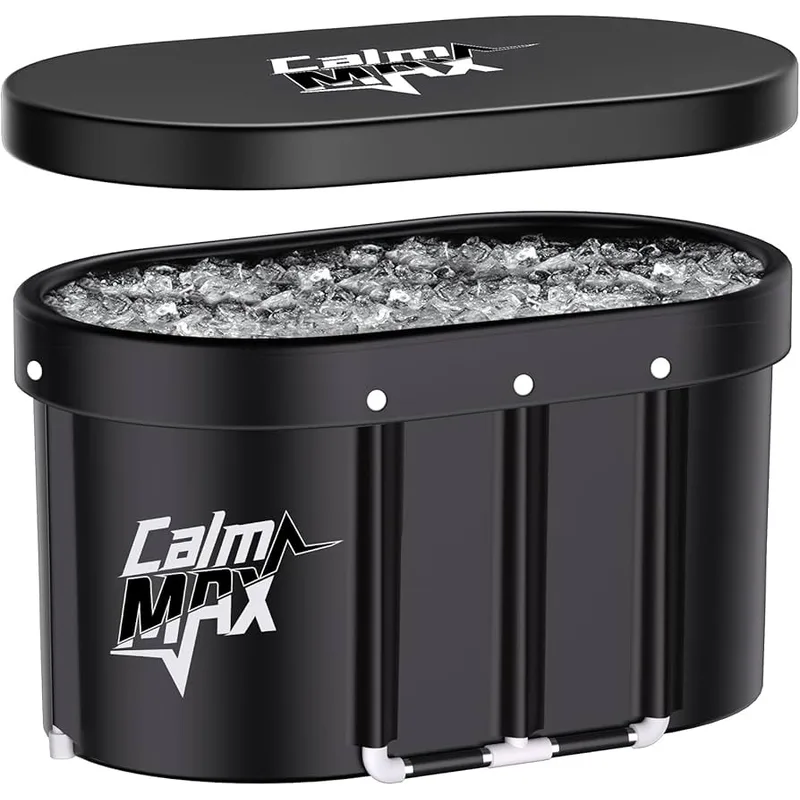
CalmMax Ice Bath Tub at $139 is the best cold therapy option: full-body cold water immersion for under $150, with 140-gallon capacity, 6-layer insulated walls, and an included cover to extend your ice supply between sessions.
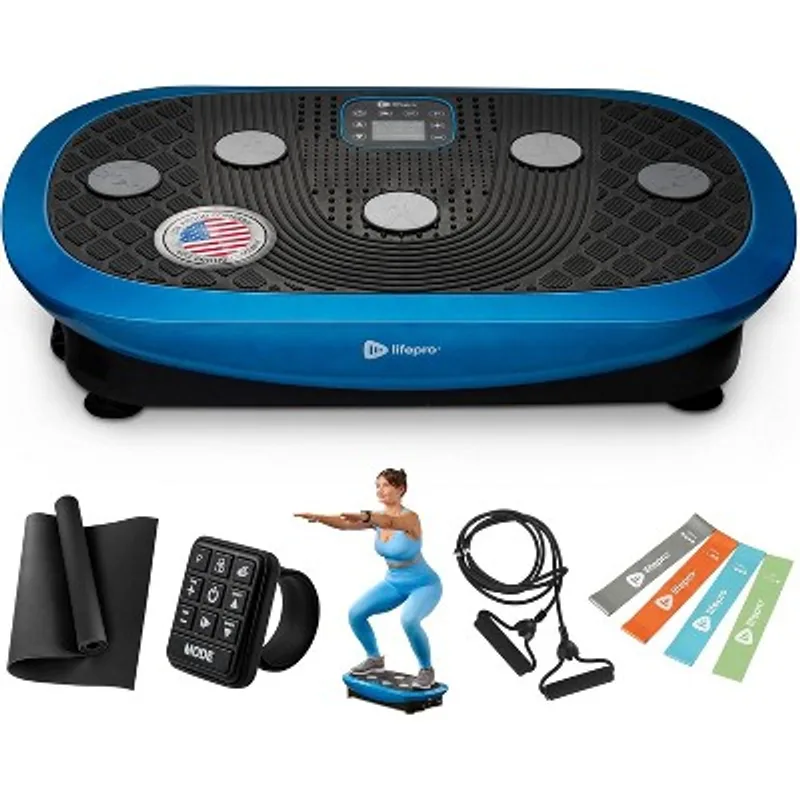
LifePro Rumblex Plus 4D at $199 is the best vibration plate: triple-motor 4D motion with 60 speed levels makes it the most versatile whole-body vibration tool for recovery and lymphatic drainage in the home gym category.
The 6 Recovery Tools Every Home Gym Athlete Needs
| Spec | Theragun Prime (5th Generation) | Hyperice Normatec 3 Legs | TriggerPoint GRID 2.0 Foam Roller (26-Inch) | Therabody PowerDot 2.0 Duo | CalmMax Oval Ice Bath Tub (XL) | LifePro Rumblex Plus 4D Vibration Plate |
|---|---|---|---|---|---|---|
| Rating | 9.0/10 | 9.2/10 | 8.5/10 | 8.3/10 | 8.0/10 | 8.2/10 |
| Price | Unavailable | $798.67-$899.00as of Oct 18, 2026 | Check price | Unavailable | Unavailable | $249.95-$399.99as of Oct 18, 2026 |
| Amplitude | 16mm | — | — | — | — | — |
| Speeds | 5 speed settings | — | — | — | — | — |
| Battery Life | 150 minutes | ~2–3 hours per charge | — | ~8 hours | — | — |
| Weight | 2.2 lbs | — | — | 1.5 oz per pod | — | — |
| Attachments | 4 included | — | — | — | — | — |
| Noise Level | QuietForce (~60–65 dB) | — | — | — | — | — |
| App | Therabody (Bluetooth) | — | — | PowerDot (Bluetooth) | — | — |
| Coverage | — | Full leg (foot to hip) | — | — | — | — |
| Compression Zones | — | 7 air chambers per leg | — | — | — | — |
| Pressure Levels | — | 3 intensity settings | — | — | — | — |
| Connection | — | Hyperice App (Bluetooth) | — | — | — | — |
| Design | — | Wireless, no external air pump | — | — | — | — |
| Length | — | — | 26 inches | — | — | — |
| Diameter | — | — | 5.5 inches | — | 41 inches | — |
| Core | — | — | Hollow EVA | — | — | — |
| Surface | — | — | Multi-density exterior (3 zones) | — | — | — |
| Weight Capacity | — | — | 500 lbs | — | — | — |
| Includes | — | — | Online video access | — | — | Resistance bands, remote, exercise mat |
| Technology | — | — | — | NMES + TENS (electrical muscle stimulation) | — | — |
| Pods | — | — | — | 2 wireless smart pods | — | — |
| Programs | — | — | — | Recovery, warm-up, endurance, strength | — | 3 auto + manual |
| Capacity | — | — | — | — | 140 gallons | — |
| Construction | — | — | — | — | 6-layer insulated walls | — |
| Shape | — | — | — | — | Oval | — |
| Cover | — | — | — | — | Included | — |
| Setup | — | — | — | — | Portable, no tools required | — |
| Motors | — | — | — | — | — | Triple motor (oscillation + lateral + pulsation) |
| Speed Levels | — | — | — | — | — | 60 levels |
| Frequency Range | — | — | — | — | — | 4–40 Hz |
| Max Load | — | — | — | — | — | 330 lbs |
| Check Price → | Check Price → | Check Price → | Check Price → | Check Price → | Check Price → |
Prices change daily — tap Check Price for the current Amazon price. Numbers shown were verified on the "as of" date.
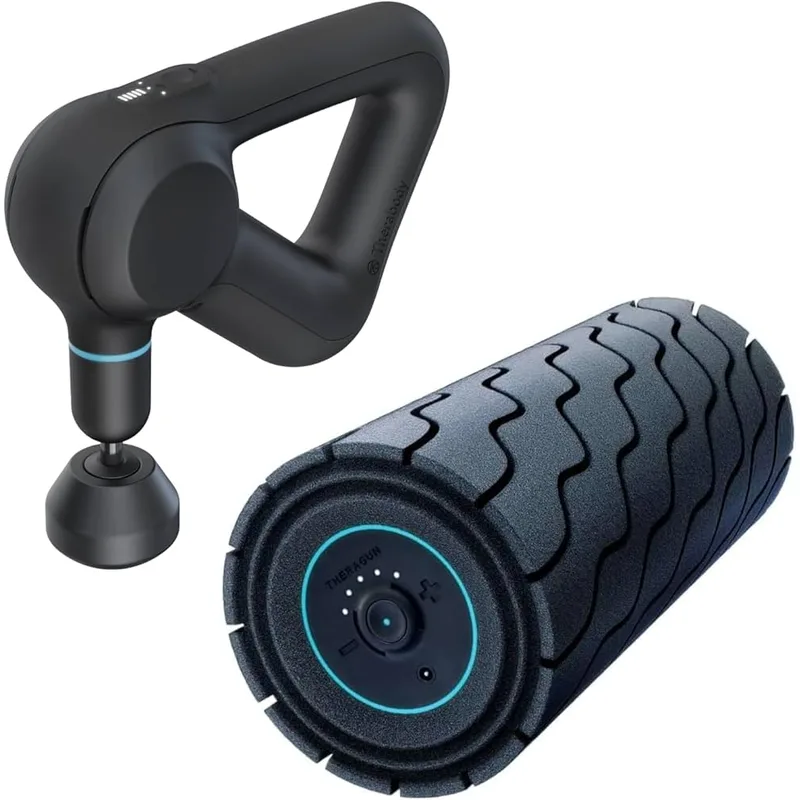
Theragun Prime (5th Generation)
Pros
- 16mm amplitude delivers deeper muscle penetration than most sub-$200 percussion devices — reaches tissue layers that vibration plates and basic massagers cannot
- QuietForce technology keeps operating noise at 60–65 dB, low enough to use during work calls or in shared spaces without disrupting others
- Therabody app includes guided recovery routines mapped to specific muscle groups and training types — not just raw percussion
- Five speed settings from 1,750 to 2,400 RPM cover the full range from lymphatic flushing at low speed to deep tissue work at high speed
Cons
- At 2.2 lbs, it is heavier than compact options like the Hypervolt Go 2 — reaching the upper back unassisted requires flexibility
- Four included attachments are adequate but not as comprehensive as the Pro Plus kit; the dampener attachment for bony areas is not included
- Bluetooth is required to unlock the full range of app-guided programs; offline use limits you to manual speed selection only
The Theragun Prime 5th Gen is the percussion massager to buy if you want exactly one recovery device that covers the most ground. At 16mm amplitude, it reaches deeper into muscle tissue than the 10–12mm amplitude of budget percussion guns — a difference you feel in quads, glutes, and lats after a hard session.
The QuietForce motor runs at 60–65 dB. For reference, that’s roughly the sound level of a normal conversation. You can use it in a shared apartment, during a TV show, or between calls without drawing attention. The Therabody app adds guided routines that map to specific muscle groups and training types — you don’t need to improvise a protocol every session.
The Prime sits between the entry-level Mini (shorter amplitude, no app) and the Pro Plus (reviewed separately), and it’s where most home gym athletes find the best combination of performance and price. The $199 street price puts it $100 below the Pro Plus while retaining the 16mm amplitude and QuietForce technology that matter most.
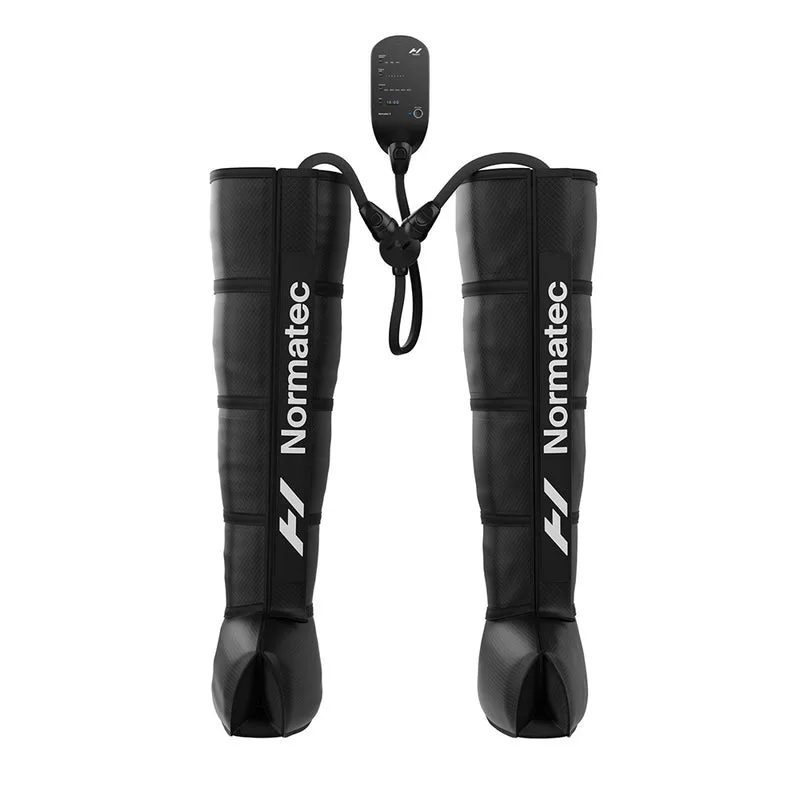
Hyperice Normatec 3 Legs
Pros
- Seven independent air compression zones per leg allow the device to sequence compression from the foot up through the hip — mimicking the lymphatic drainage pattern used in clinical recovery settings
- Wireless and fully portable — no compressor unit or tethering hose required, so you can use it on a couch, at a desk, or while traveling
- Hyperice app provides access to pre-built recovery programs for specific sports and training types, including strength training, cycling, and running
- Consistent owner reports describe meaningful reduction in next-day leg soreness and faster readiness to return to training after high-volume lower body sessions
Cons
- At $799, this is the highest price point on this list — it is a premium investment that makes most sense for athletes training legs four or more times per week
- The 3-zone intensity control (low/medium/high) does not allow per-zone customization — the Normatec Elite ($999+) unlocks zone-level pressure control
- Not useful for upper body recovery; Normatec arms and hip attachments are sold separately at additional cost
Normatec’s compression boot system has been used by professional sports teams for years. The consumer version — the Normatec 3 Legs — brings the same sequential air compression protocol to home athletes at a price that has dropped significantly since the product launched.
The system works by inflating seven independent zones per leg in a pulsing sequence that moves from the foot up through the thigh, mimicking the body’s natural lymphatic drainage direction. Owner reports consistently describe noticeably reduced next-day soreness after heavy leg sessions — squats, deadlifts, leg press, and long runs all benefit from 20–30 minutes in the boots.
The main honest drawback is price. At $799, this is a significant investment. If you’re training legs twice a week at moderate intensity, the TriggerPoint roller and foam rolling will serve most of your needs at a fraction of the cost. But if you’re running high-volume lower body programming or doing back-to-back competition prep cycles, the time-to-recovery advantage the Normatec delivers pays for itself faster than the price tag suggests.
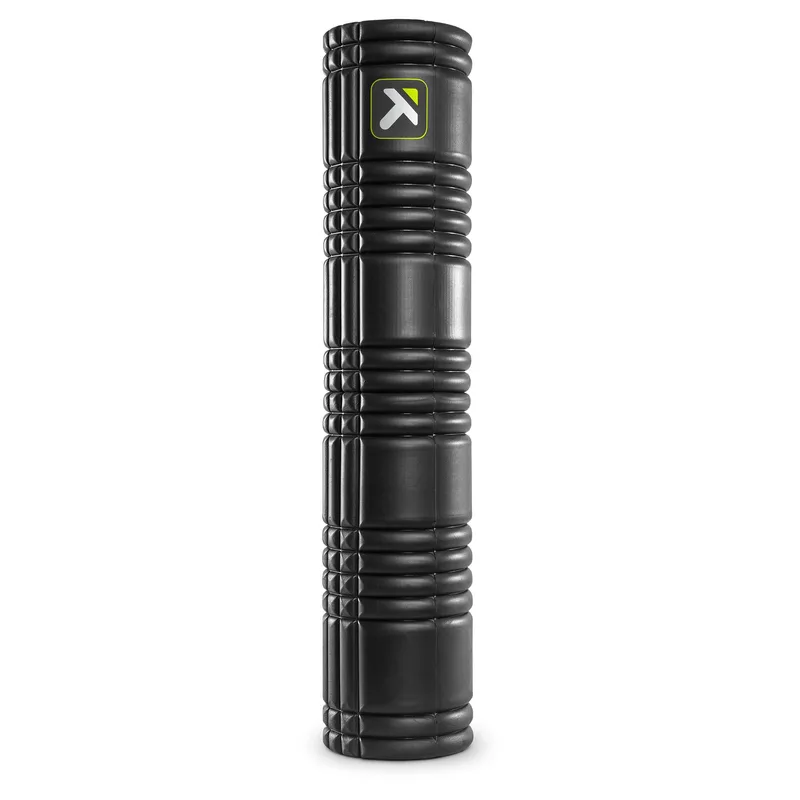
TriggerPoint GRID 2.0 Foam Roller (26-Inch)
Pros
- 26-inch length covers the full back in a single pass — no repositioning required between thoracic and lumbar segments the way a 13-inch roller demands
- Multi-density three-zone surface mimics a therapist's hands — flat sections for broad pressure, ridges for targeted myofascial release, and rounded edges for edge-work along muscle bellies
- Hollow EVA core maintains firmness and shape under repeated heavy use; does not compress or deform over time the way solid foam options do
- At $60, it delivers professional-quality rolling performance without the $80–120 price of vibrating foam roller alternatives that add little functional benefit for most users
Cons
- 26-inch length is not travel-friendly — if portability matters, the 13-inch GRID is the better choice, though back coverage is reduced
- Does not vibrate — athletes who specifically need the neurological inhibition response from vibration-assisted rolling should look at the Theragun Wave Roller instead
- No significant texture difference from the original GRID for most users; the upgrade over the previous version is primarily the longer length
The TriggerPoint GRID 2.0 is on this list for one reason: it does the job better than anything else at $60, and foam rolling belongs in every recovery routine regardless of what else you own.
The 26-inch version specifically matters for home gym athletes. The 13-inch original is fine for IT bands and calves but requires repositioning six or seven times to work through the full back. The 26-inch covers the entire posterior chain from thoracic spine to lower back in a single pass. It saves time and actually gets used consistently — which is the only metric that matters in recovery equipment.
The multi-density exterior — three distinct surface zones that vary in firmness and texture — produces a more effective myofascial release than single-density foam. It mimics finger pressure better than a smooth cylinder. At 500 lb capacity and hollow EVA construction, it will not compress or deform after a year of daily use, which cheaper foam rollers consistently do.
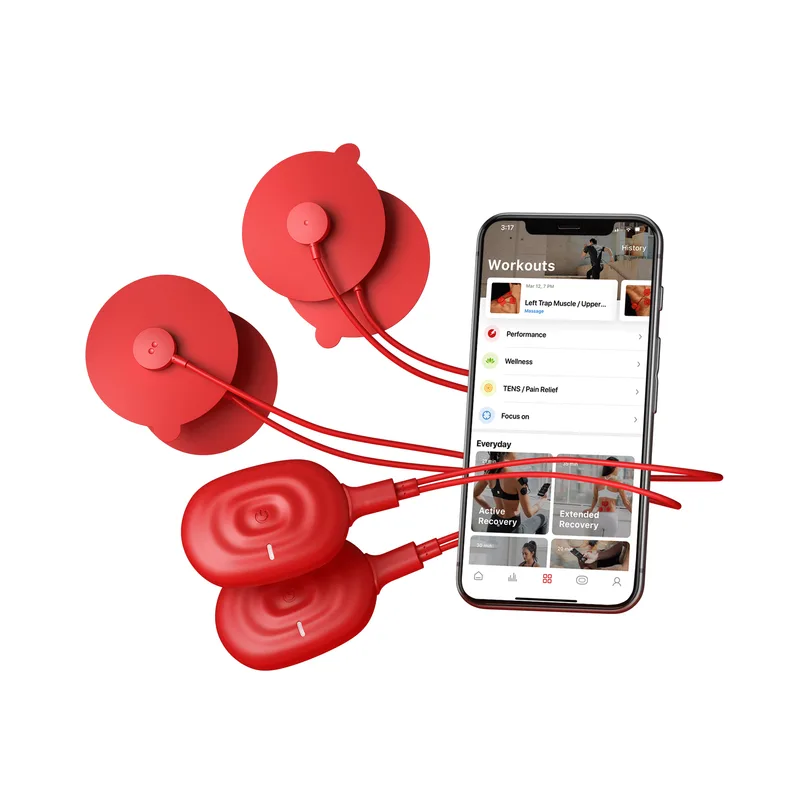
Therabody PowerDot 2.0 Duo
Pros
- Passive recovery — you apply the electrode pads and let electrical pulses flush lactate and increase circulation while you sit or lie down, with no active effort required
- NMES programs can be used both pre-workout (for warm-up activation) and post-workout (for active recovery and soreness reduction) — same device, two different use cases
- Wireless pod design eliminates the cord tangle of legacy TENS units; pods attach directly near the electrode placement site
- Therabody app provides pre-programmed protocols for specific muscle groups with automatic intensity progression built in
Cons
- Electrode pads are consumable — the included pads last approximately 20–30 uses before adhesion degrades and replacements must be purchased ($15–20 per pack)
- The learning curve for correct electrode pad placement is real; incorrect placement reduces effectiveness and the app guidance alone is not always sufficient for first-time EMS users
- Only two pods are included — covering bilateral muscle groups (both quads, both hamstrings) requires repositioning pads between sets
Electrical muscle stimulation sounds like a recovery gimmick until you understand the physiology. EMS and TENS devices deliver mild electrical impulses that cause muscle contractions and increase local blood flow — flushing metabolic waste products (including lactate) from muscle tissue without requiring physical effort from the athlete. You put on electrode pads, sit on the couch, and let the device do the work.
The PowerDot 2.0 Duo brings that protocol to home athletes in a Bluetooth-connected package. The app controls intensity progression across the session and provides guided programs for specific recovery needs — post-leg day is different from post-cardio, and the programs account for that. Two pods allow you to work two muscle groups simultaneously, covering bilateral quads or both sides of the lower back in a single session.
The electrode pad replacement cost is real — budget approximately $40–60 per year for consumables. That’s still cost-effective relative to regular sports massage appointments, which is the practical comparison for most home gym athletes.
CalmMax Oval Ice Bath Tub (XL)
Pros
- Full-body cold water immersion at under $150 — the most cost-effective way to access the cold therapy protocol used by professional athletes and S&C coaches
- 140-gallon capacity and 41-inch oval diameter accommodate athletes up to 6 feet 5 inches in a fully seated immersion position without knee compression
- Insulated 6-layer walls slow temperature rise after ice loading — maintains target cold range (50–59°F) significantly longer than single-layer inflatable alternatives
- Included cover locks in cold temperature between sessions and prevents debris, extending the useful time between full water changes
Cons
- Requires continuous ice supply — plan on 20–40 lbs of ice per session depending on initial water temperature and ambient heat, which adds ongoing cost
- Outdoor or large-space use only — water spillage and drainage logistics are not practical for most indoor settings
- No active cooling system; temperature control depends entirely on ice load and ambient conditions, not a powered chiller unit
Cold water immersion — at 50–59°F for 10–15 minutes post-training — remains one of the most researched recovery protocols available. The evidence supports reductions in perceived muscle soreness and faster return to baseline performance. The CalmMax tub makes that protocol accessible at home without building a permanent installation or spending $5,000 on a chilled plunge pool.
The 140-gallon oval design accommodates full-body seated immersion for athletes up to 6’5”. The 6-layer insulated walls slow temperature rise after ice loading, which matters practically — a single-layer inflatable tub loses its temperature window within 10–15 minutes on a warm day. The CalmMax’s insulation extends that window to 30–45 minutes, long enough for a complete protocol.
The main operational requirement is consistent ice. Plan on 20–40 lbs per session depending on initial water temperature. Most grocery stores sell 20 lb bags for $3–5 each. If ice logistics are a long-term concern, a dedicated ice maker attachment to the tub is available separately and reduces the operational cost significantly.
LifePro Rumblex Plus 4D Vibration Plate
Pros
- Triple-motor 4D motion combines oscillation, pulsation, and lateral movement simultaneously — producing more varied muscle activation for recovery and lymphatic circulation than single-motor plates
- 60 speed levels allow gradual intensity progression from gentle warm-up and lymphatic drainage protocols at low Hz to more aggressive vibration recovery at high Hz
- Low-impact standing use makes it accessible for athletes with joint issues or post-injury limitations who cannot tolerate conventional foam rolling or percussion therapy
- Includes resistance bands for light upper-body activation during vibration sessions — expands the tool beyond pure recovery into light mobility and warm-up work
Cons
- 330 lb weight capacity is the lowest on this list — significantly heavier athletes should verify the weight limit before purchasing
- The 4D motion at higher speeds can feel disorienting for first-time vibration plate users — start at level 1–5 and gradually build familiarity
- Footprint is relatively large (~29" x 18") for what is primarily a recovery accessory — storage between sessions requires dedicated floor space
Vibration plates occupy a different niche in the recovery toolkit than percussion or compression. Standing on a vibration platform at low frequency (4–8 Hz) produces reflexive muscle contractions that increase circulation and lymphatic flow without any metabolic cost. It’s useful for warmup activation before training, for active recovery on off days, and for athletes with joint pain that prevents conventional foam rolling or percussion work.
The LifePro Rumblex Plus 4D distinguishes itself from single-motor plates by combining three independent motors for oscillation, lateral movement, and pulsation simultaneously. The result — true 4D motion — is more stimulation per session than single-axis plates at the same price point. The 60-level speed range allows granular control from a light lymphatic session (level 3–5) to aggressive vibration recovery (level 25+).
At $199 with resistance bands, remote control, and an exercise mat included, it’s one of the few recovery tools on this list that crosses over into training utility as well, which extends its practical use beyond strict post-workout windows.
Buying Guide: How to Build a Recovery Stack
Start with tools you’ll actually use consistently
A $799 compression boot system used three times per week beats a $60 foam roller used once a month. Before spending on premium recovery equipment, be honest about your recovery habits. If you don’t currently have any consistent post-workout routine, start with the TriggerPoint GRID 2.0 and the PowerDot 2.0 and build from there. Both cost under $250 combined.
Match the tool to your training volume
Cold water immersion and compression boots show the most meaningful recovery benefit in athletes with high weekly training volume — five or more sessions per week, or significant lower body emphasis. Casual lifters at two or three sessions per week recover adequately with percussion and foam rolling alone.
Recovery tool priority order for a new home gym
- Foam roller — foundational, inexpensive, daily use. Buy it before anything else.
- Percussion massager — targeted, faster than foam rolling, works muscle groups the roller misses.
- EMS device — passive recovery that works while you rest. High return on time investment.
- Cold therapy — most impactful for high-volume athletes; requires ice logistics.
- Compression boots — premium investment justified by frequency and intensity of leg training.
- Vibration plate — useful for warm-up, active recovery days, and joint-sensitive athletes.
How long to use each tool
- Foam roller: 60–90 seconds per muscle group, daily or post-training
- Percussion massager: 2 minutes per muscle group, pre or post-training
- Compression boots: 20–30 minutes post-training or before bed
- EMS/TENS: 20–30 minutes per session, 2–4 times per week
- Cold plunge: 10–15 minutes at 50–59°F, within 2 hours post-training
- Vibration plate: 10–15 minutes at low intensity for recovery; 5 minutes for pre-workout activation
FAQ
Do I need all six of these tools to recover properly?
No. A foam roller and a percussion massager cover 80% of the recovery work most home gym athletes need. The EMS device, compression boots, cold therapy, and vibration plate add meaningful benefit at higher training volumes or for specific use cases — they’re not prerequisites for effective recovery at moderate training intensity.
Is cold water immersion safe?
Cold water immersion at 50–59°F is well-tolerated by healthy adults. Start with 2–3 minutes and build tolerance before attempting full 10–15 minute sessions. Avoid cold plunging if you have cardiovascular conditions or Raynaud’s disease without consulting a physician first. Exit the water immediately if you feel unusual chest tightness or extreme difficulty breathing.
When should I use EMS vs. a massage gun?
Use EMS (PowerDot) for passive recovery when you want to flush lactate without physical effort — while watching TV or doing desk work. Use the percussion massager when you need targeted, fast tissue work on specific muscle groups before or after training. The two tools are complementary, not interchangeable; active percussion and passive EMS serve different recovery mechanisms.
How often should I use a foam roller?
Daily use is beneficial. Rolling major muscle groups for 60–90 seconds each — focusing on quads, hamstrings, glutes, thoracic spine, and IT bands — takes 10–12 minutes total and delivers measurable improvements in tissue quality and range of motion over 4–6 weeks of consistent practice. More is not necessarily better; consistency matters more than session length.
Can compression boots replace foam rolling?
No. Compression boots improve circulation and reduce systemic soreness but do not address myofascial restriction, tissue adhesions, or mobility limitations the way foam rolling and percussion work can. Use compression boots to reduce soreness; use foam rolling and percussion to address movement quality. Both have a role in a complete recovery routine.
Conclusion
The Theragun Prime (5th Gen) is the top pick overall: it’s the single tool that delivers the most recovery benefit per dollar for athletes who are starting to build a recovery kit. If your budget allows one additional tool, pair it with the TriggerPoint GRID 2.0 and you’ll have a complete daily routine covered for under $260.
For higher training volume athletes with leg-dominant programming, adding the Normatec 3 compression boots is a legitimate investment — the recovery time compression provides is real and quantifiable in how often you can train legs at full intensity. The PowerDot 2.0 Duo slots in after that as passive recovery between sessions.
Cold therapy (CalmMax tub) and the vibration plate (LifePro Rumblex Plus 4D) are both useful additions once your foundational stack is built. They’re not prerequisites — but both add genuine value for athletes who train consistently and take recovery seriously.
Build the stack in order of impact, use every tool consistently, and your results will compound over time.