By mid-2026, home gym tracking has split into two clear camps: AI-powered apps that generate personalized workout plans and adjust weekly based on your logged performance, and a growing category of connected hardware — smart scales, chest-strap heart rate monitors, and GPS watches — that feed real data into those platforms. Boostcamp, which was named a top workout app in July 2026 for its trainer-designed program library, now sits alongside longtime favorites like Hevy and JEFIT in the free-to-use category. The tools to actually measure your body’s response to training have gotten cheaper and more accurate at the same time.
This guide covers both sides: the best free apps for logging sets and reps, and the hardware that makes that data meaningful — a budget smart scale, two chest-strap HR monitors at different price points, a premium scale with Wi-Fi sync, and a GPS watch that consolidates most tracking into one device.
| Spec | RENPHO Elis 1 Smart Scale | Wahoo TICKR Heart Rate Monitor | Polar H10 Heart Rate Monitor | Withings Body Smart Scale | Garmin Forerunner 265 |
|---|---|---|---|---|---|
| Rating | 8.5/10 | 8.8/10 | 9.3/10 | 9.0/10 | 9.2/10 |
| Price | $24.99as of Oct 18, 2026 | Check price | Check price | $129.95as of Oct 18, 2026 | Unavailable |
| Metrics Tracked | 13 body composition metrics | — | — | Weight, BMI, body fat, muscle mass, water percentage, bone mass | — |
| Connectivity | Bluetooth | Bluetooth + ANT+ | Bluetooth + ANT+ + 5kHz | Wi-Fi + Bluetooth | — |
| Max Capacity | 400 lbs | — | — | 396 lbs | — |
| Battery | USB rechargeable (3–4 months per charge) | — | — | 4 AA batteries (18+ months) | — |
| User Profiles | Up to 8 | — | — | — | — |
| App | RENPHO Health (free) | — | — | Withings Health Mate (free) | — |
| Simultaneous Connections | — | Up to 3 devices | 2 Bluetooth devices | — | — |
| Battery Life | — | 500+ hours (replaceable coin cell) | — | — | Up to 13 days (smartwatch), 20 hours (GPS mode) |
| Weight | — | 1.7 oz | — | — | — |
| Strap Material | — | Soft textile, machine washable | Soft textile | — | — |
| Water Resistance | — | IPX7 | IPX7 (swimmable) | — | — |
| Internal Memory | — | — | 1 training session stored offline | — | — |
| App Compatibility | — | — | Polar Flow, Garmin Connect, Strava, Wahoo, 50+ apps | — | — |
| Display | — | — | — | LCD with color indicators | 1.3" AMOLED (454x454) |
| GPS | — | — | — | — | Multi-band (better accuracy indoors and in urban areas) |
| Built-in HR Monitor | — | — | — | — | Optical (continuous) |
| Storage | — | — | — | — | 8 GB music + training plans |
| Water Rating | — | — | — | — | 5 ATM |
| Check Price → | Check Price → | Check Price → | Check Price → | Check Price → |
Prices change daily — tap Check Price for the current Amazon price. Numbers shown were verified on the "as of" date.
Why Tracking Matters in a Home Gym
Commercial gym members often have trainers, class instructors, or workout partners who provide external structure. Home gym athletes don’t. Without a log, it’s easy to feel like you’re working hard while stalling at the same weights for months.
Tracking solves three specific problems:
1. Progressive overload visibility — You can’t add weight systematically without knowing what you lifted last week. Even a simple spreadsheet beats memory.
2. Identifying what’s actually working — Most lifters cycle through programs without finishing them. A logged training history shows which movements produced measurable strength gains versus which felt hard but produced no measurable improvement.
3. Recovery feedback — Body weight trends, resting heart rate, and HRV (heart rate variability) data reveal recovery status between sessions. This matters more for home gym athletes who don’t have a coach watching their performance dip.
Best Free Workout Tracking Apps for Home Gyms
These apps are free (with optional paid tiers) and work well for home gym strength training. None require special hardware — a phone is enough.
Hevy
Hevy is the most popular standalone workout logger for home gym athletes in 2026. The core feature set — exercise log, set/rep/weight entry, PR tracking, and workout history — is free. The interface is clean and fast enough to use between sets without breaking flow. Hevy syncs across devices and shows clear progress graphs per exercise.
Best for: Lifters who want a clean, fast log without extra features.
Strong
Strong (iOS and Android) takes a similar approach to Hevy with a slightly different interface. The free tier covers unlimited workout logging. The paid tier adds workout templates, more detailed analytics, and Apple Watch integration. Plates calculator and rest timer are both built in.
Best for: Apple Watch users or lifters who want built-in plates math.
JEFIT
JEFIT offers a larger exercise database than either Hevy or Strong, plus community-created workout plans. The free tier has ads and limits some analytics. Worth considering if you want guided programs from the app itself rather than just logging custom workouts.
Best for: Lifters who want a built-in program library alongside the log.
Boostcamp
Added to the top of best workout app lists in July 2026, Boostcamp hosts fully designed programs from recognized coaches and athletes — including GZCLP, Bridge programs, and others. The programs auto-calculate weights based on your working max and progress automatically. Free with no subscription required for the core library.
Best for: Beginners or intermediate lifters who want coach-designed progression without paying for coaching.
TrainHeroic (Paid)
For athletes who follow remote coaches or want detailed volume/intensity analytics, TrainHeroic is the professional-grade option. It’s subscription-based ($12–20/month) and adds athlete-coach communication, detailed training load tracking, and team features. Overkill for casual home gym users but the right choice for competitive lifters.
Best for: Competitive athletes with remote coaches or powerlifting/CrossFit competition goals.
Best Hardware Tools for Home Gym Tracking
Apps log what you input manually. Hardware captures data your body actually produces — weight trends, heart rate during sets, recovery metrics. These five products cover the range from a $27 entry-level smart scale to a $350 GPS watch.
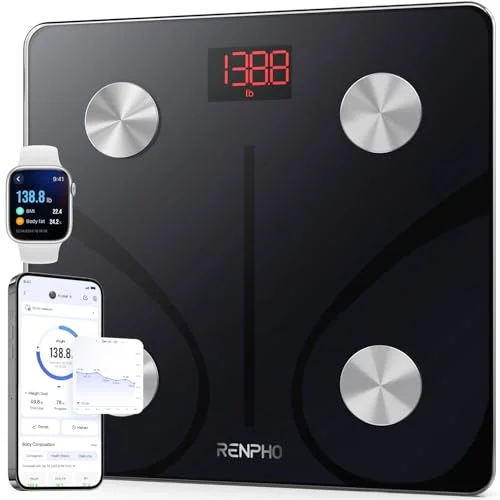
RENPHO Elis 1 Smart Scale
Pros
- Tracks 13 metrics including body fat, muscle mass, and visceral fat for under $30
- Free app with no subscription integrates with Apple Health, Google Fit, and Samsung Health
- USB rechargeable — no AA batteries to replace
- 8 user profiles make it useful for households with multiple lifters
- Over 30 million sold on Amazon; one of the best-supported budget scales available
Cons
- Wi-Fi sync not included — must have phone nearby during weigh-ins
- Bioimpedance accuracy is ±3–5% for body fat — consistent trends matter more than absolute numbers
- App can feel cluttered; the interface takes a few sessions to learn
The Renpho Elis 1 is the first tracking tool most home gym athletes should buy. At $27, it tracks 13 body composition metrics via bioimpedance analysis — stepping on the scale barefoot takes two seconds and the RENPHO Health app receives the reading automatically over Bluetooth.
The 13 metrics include body weight, BMI, body fat percentage, skeletal muscle mass, protein, water percentage, bone mass, and visceral fat level. Bioimpedance accuracy varies day-to-day based on hydration — weigh at the same time each morning, before eating or drinking, for consistent comparisons. The absolute body fat number matters less than the trend over four to eight weeks.
The free app integrates with Apple Health, Google Fit, and Samsung Health without setup friction. Eight user profiles can share one scale, which works well for households where multiple people are training. USB rechargeable charging lasts three to four months per charge — far better than disposable batteries.
Limitation worth noting: you need your phone nearby during weigh-ins since there’s no Wi-Fi sync. For most home gym athletes this isn’t an issue — your phone is within arm’s reach anyway.
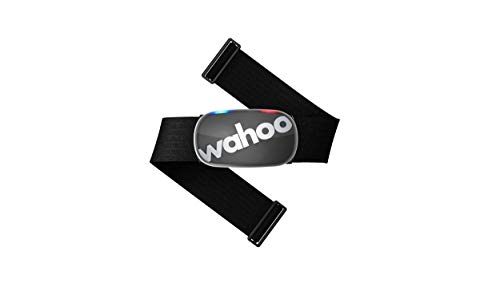
Wahoo TICKR Heart Rate Monitor
Pros
- Connects to three Bluetooth devices simultaneously — useful if you track on a phone, smartwatch, and tablet at once
- ANT+ connectivity pairs with Garmin, Wahoo Elemnt, and most gym equipment consoles
- 500+ hour battery life means charging is not a recurring concern
- Textile strap is comfortable for long sessions and machine washable
- $49 price point is the sweet spot between quality and cost
Cons
- Coin cell battery is replaceable but not rechargeable via USB — less convenient than newer rechargeable models
- No internal memory; requires a connected device to log workouts
- Chest strap placement can shift during dynamic movements like burpees or rowing
A smart scale tracks body composition passively. Heart rate during training is active data — it tells you how hard you’re actually working versus how hard you think you’re working. The Wahoo TICKR gives you that for $49.
Chest straps outperform optical wrist monitors during weightlifting. Optical sensors on watches struggle when wrist flexion (during cleans, curls, pull-ups) or heavy grip reduces blood flow at the sensor site. A chest strap reads ECG-equivalent electrical signals from the heart directly, which remains accurate regardless of limb position.
The Wahoo TICKR connects to up to three Bluetooth devices simultaneously and also transmits on ANT+. This means it pairs with your phone’s workout app, your Garmin watch, and a treadmill console at the same time. The 500-hour coin cell battery removes charging as a recurring concern. Textile strap goes in the washing machine — important for something that collects workout sweat.
For interval training, circuit work, or any cardio mixed into your gym sessions, the TICKR turns your workout app into a real-time intensity monitor rather than just a rep logger.
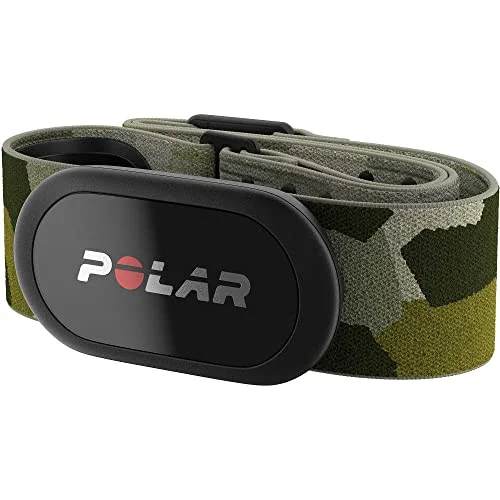
Polar H10 Heart Rate Monitor
Pros
- Recognized as the gold standard for chest-strap HR accuracy in sports science research
- Internal memory stores one session — useful for lifts away from your phone
- 5kHz analog transmission pairs with older cardio machine consoles at the gym or at home
- Compatible with 50+ apps and platforms including Polar Flow, Garmin Connect, and Strava
- IPX7 water resistance handles sweat-heavy sessions and pool swimming
Cons
- At $90, it costs nearly twice as much as the Wahoo TICKR for most of the same core function
- Two Bluetooth device limit versus three on the Wahoo TICKR
- No rechargeable battery — uses CR2025 coin cell (lasts roughly 400 hours of training)
The Polar H10 has been the reference standard for chest-strap heart rate accuracy in sports science research for years, and the 2026 version maintains that reputation. Owner reports and independent accuracy comparisons consistently rank it at the top of consumer-grade heart rate monitors.
The standout feature differentiating it from the Wahoo TICKR: internal memory for one training session and 5kHz analog transmission. Internal memory means you can leave your phone in the locker room (or the other room) and still capture a full training session for sync later. The 5kHz analog signal pairs with older cardio machine HR displays — a Concept2 rower, treadmill console, or older elliptical — without Bluetooth.
Compatible with Polar Flow, Garmin Connect, Wahoo, Strava, TrainingPeaks, and 50+ other platforms. If you track on multiple services or plan to change apps over time, the H10’s broad compatibility is a practical advantage.
At $90 — nearly double the Wahoo TICKR — the upgrade is worth it for athletes who care deeply about HR accuracy, want offline session recording, or use equipment with older 5kHz consoles. For general home gym training where a phone is always nearby, the TICKR covers most use cases at half the price.
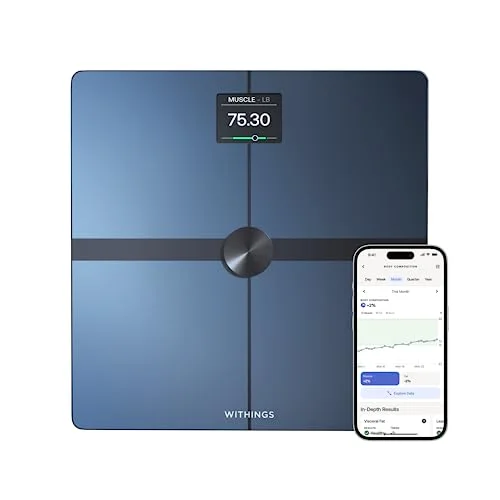
Withings Body Smart Scale
Pros
- Wi-Fi sync uploads readings automatically without opening the app — data just appears in your log
- Health Mate app is consistently rated as the best-designed scale app with clear trend graphs
- Syncs with Apple Health, Google Fit, MyFitnessPal, and Strava without additional setup
- Long battery life on standard AA batteries — no USB charging or cable management
- Recognizes up to 8 users automatically by weight range — no login required per user
Cons
- At $90, it costs three times the Renpho Elis 1 for similar body composition data
- Some users report body fat readings differ from DEXA scans by 4–7% — use trend data, not absolute numbers
- Requires Wi-Fi setup on first use; occasional sync drops reported on 5GHz networks
The Withings Body Smart Scale justifies its $90 price over the Renpho Elis 1 primarily through one feature: Wi-Fi sync. Instead of requiring a phone nearby during weigh-ins, the Body Smart uploads readings to the Withings Health Mate app automatically whenever it detects your home network. You step on, get your reading, and the data is in your log by the time you pick up your phone.
The Withings Health Mate app is consistently rated as the best-designed body composition app available. Trend lines, goal tracking, and body composition breakdowns are presented clearly. The app integrates natively with Apple Health, Google Fit, MyFitnessPal, and Strava — if you’re already tracking in those ecosystems, the Body Smart feeds data automatically without manual export.
Battery life on 4 AA cells runs 18+ months — no USB cables or recharging needed. Up to 8 users are recognized automatically by weight range, making household sharing frictionless.
The main reason to choose the Renpho over the Withings: price. If budget is the constraint, the Renpho tracks the same metrics and produces the same kind of trend data for $63 less. The Withings earns its premium through the app experience and Wi-Fi sync convenience, not fundamentally different accuracy.
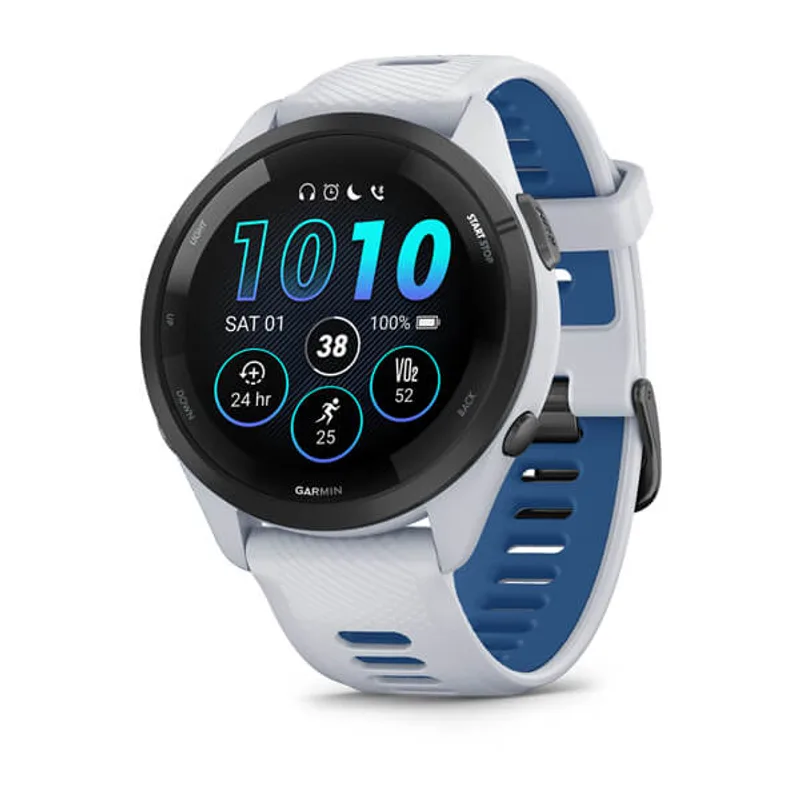
Garmin Forerunner 265
Pros
- AMOLED display is genuinely readable mid-set without squinting — a major upgrade over MIP displays
- Training Readiness and Recovery Time features help prevent overtraining in self-coached home gym setups
- Built-in optical HR + HRV Status tracking gives daily recovery insights without a separate chest strap
- Garmin Connect app provides detailed training load analysis, VO2 Max trends, and sleep tracking in one place
- 13-day battery life means weekly charging rather than daily
Cons
- At $350, it represents a significant investment for pure workout logging — apps like Hevy are free
- Optical HR is less accurate than chest straps during high-intensity lifting sets with wrist flexion
- Garmin Connect app has a learning curve; the full feature set takes several weeks to explore
The Garmin Forerunner 265 consolidates most tracking functions into one wrist-worn device: continuous optical heart rate, GPS workouts, HRV Status, Training Readiness scores, sleep tracking, and a full workout log via Garmin Connect. For home gym athletes who also run, cycle, or do outdoor training, it removes the need for multiple separate devices.
The 1.3” AMOLED display is a meaningful upgrade over older Garmin MIP screens — bright enough to read mid-workout without pressing a button, and detailed enough to display lap data or workout instructions clearly. Battery life extends to 13 days in smartwatch mode and 20 hours in GPS mode, so weekly charging covers most training schedules.
The Training Readiness and Body Battery features give daily guidance on how hard to push based on sleep quality, HRV, and training load from previous days. For self-coached home gym athletes without a training partner or coach, this kind of objective feedback helps prevent the common pattern of training equally hard every day until something breaks down.
The optical HR sensor is less accurate than the Polar H10 during heavy lifting sets — any optical wrist monitor has this limitation. For pure strength athletes who care about lifting-specific HR data, pairing the Forerunner 265 with a chest strap (like the Wahoo TICKR or Polar H10) gives the best of both worlds. For athletes whose training includes a significant cardio component, the Forerunner 265 alone covers most tracking needs adequately.
Buying Guide: Building Your Tracking Stack
Start Here (Budget: Under $30)
If you’ve never systematically tracked your home gym workouts, the Renpho Elis 1 scale and any free app (Hevy, Boostcamp, Strong) is the complete starting stack. You’ll have daily body composition trends, a full workout log with PR tracking, and a data foundation to reference for the next year of training. Total cost: $27.
Add Heart Rate Monitoring (Budget: $50–100)
Once you’re logging consistently, a chest strap reveals the difference between training hard and training smart. The Wahoo TICKR ($49) is the right choice for most home gym athletes — accurate, dual-protocol, and practically maintenance-free. Upgrade to the Polar H10 ($90) if you use equipment with older 5kHz consoles or want clinical-grade accuracy for interval training.
Upgrade the Scale (Budget: $90)
The Withings Body Smart’s Wi-Fi sync and app quality are genuinely better than the Renpho experience. Upgrade when you’re ready to invest in a cleaner long-term data setup — particularly if you’re already using Strava, Apple Health, or MyFitnessPal and want automatic syncing without friction.
All-In-One Watch (Budget: $350)
The Garmin Forerunner 265 makes sense when training includes significant time outside the home gym — running, cycling, outdoor rowing — or when you want coaching feedback (Training Readiness, Body Battery) built into your daily workflow. It replaces a standalone HR monitor for most purposes but doesn’t eliminate the value of a chest strap for precise lifting-specific HR data.
How to Use App and Hardware Data Together
Data without action is noise. Here’s a practical workflow for each level:
Beginner stack (app only):
- Log every set: exercise, weight, reps
- Review progress graphs monthly, not weekly — four weeks is the minimum meaningful window
- If a lift isn’t moving after six weeks, assess sleep, nutrition, and volume before adding more intensity
Intermediate stack (app + smart scale + HR monitor):
- Weigh daily, same time each morning; review seven-day rolling average (ignores daily fluctuations)
- Track average HR during work sets — if it’s climbing week-over-week at the same load, it may signal accumulated fatigue
- Compare body weight trend to strength trend: losing weight rapidly while strength stalls = too aggressive a deficit
Advanced stack (app + scale + HR monitor + GPS watch):
- Use Training Readiness or Body Battery scores to determine session intensity, not just how you feel when you walk in
- HRV trends over four weeks are a reliable early warning for overtraining — a sustained downward trend before objective performance drops
- Export combined data from Garmin Connect to Training Peaks or Whoop for deeper load analysis if competing
FAQ
Q: Do I need any hardware to track home gym workouts, or is an app enough?
An app alone is a solid starting point — Hevy, Strong, and Boostcamp are free and provide everything needed to log progressive overload and identify trends. Hardware becomes worth it when you want to track body composition changes (smart scale) or training intensity and recovery (heart rate monitor or GPS watch). Most home gym athletes benefit from adding a scale first, then a heart rate monitor once the training log habit is established.
Q: Are smart scale body fat readings accurate?
Consumer bioimpedance scales measure body fat with a margin of roughly ±3–5% compared to DEXA scan results. The absolute percentage is less important than consistency — weighing at the same time each morning before eating or drinking gives you a trend line that’s meaningful even if the exact numbers aren’t clinical. If you’re cutting or bulking, a four-to-eight-week trend in the right direction is actionable data regardless of the absolute starting number.
Q: What’s the difference between Bluetooth and ANT+ on a heart rate monitor?
Bluetooth connects to smartphones, tablets, and modern smartwatches. ANT+ connects to GPS devices (Garmin, Wahoo Elemnt) and older cardio machine consoles. Most home gym athletes only need Bluetooth. ANT+ becomes important if you also cycle outdoors with a Garmin bike computer, use a treadmill or elliptical with an older HR console, or train at a facility with ANT+-only equipment. The Wahoo TICKR and Polar H10 both support both protocols.
Q: How does the Garmin Forerunner 265 compare to a Fitbit for gym tracking?
Fitbits excel at passive step counting, sleep tracking, and general activity monitoring. The Forerunner 265 is built for sport-specific training load analysis — it tracks structured workouts, GPS routes, Training Readiness, and advanced metrics like lactate threshold and VO2 Max. For a home gym athlete who trains with intent, the Garmin provides meaningfully more useful feedback. A Fitbit at a similar price point serves a different, more casual tracking use case.
Q: Is it worth paying for a premium workout app like TrainHeroic or Dr. Muscle?
Paid apps make sense in two specific situations: when you’re following a coach remotely and need a shared platform, or when you want AI-adjusted programming that accounts for your performance week over week without manual updates. For self-programmed training, free apps like Hevy and Boostcamp cover 95% of what most home gym athletes need. Start free, pay for software only if a free tool is clearly limiting your progress.
Conclusion
The most effective tracking setup is the one you’ll use consistently. For most home gym athletes, that means starting with a free app (Hevy or Boostcamp are the strongest picks in 2026) and a Renpho Elis 1 scale — both are simple enough that they remove friction rather than add it.
Once the habit of logging is solid, the Wahoo TICKR at $49 is the most valuable next purchase: it turns every workout into a session with objective intensity data, not just a rep count. From there, the Polar H10 is the upgrade path for accuracy-focused lifters, the Withings Body Smart upgrades the scale experience for those who want clean Wi-Fi-synced data, and the Garmin Forerunner 265 is the right choice for athletes whose training extends beyond the home gym walls.
For more ways to build out your training space, see our complete home gym setup guide and our best home gym setup under $1,500 guide.