Belt squat machines have gone from specialty gym curiosities to one of the fastest-growing categories in home gym equipment, and 2026 is when the market started feeling it. Titan Fitness launched their SquatMax-MD collaboration with Brian Henesey — the inventor of the original SquatMax mechanism that’s been scientifically validated to replicate barbell squat muscle activation — and demand for dedicated belt squat hardware has expanded into the mid-budget home gym segment. For athletes who squat under a barbell every week, or who can’t, a belt squat machine solves a problem that no other piece of equipment addresses.
The mechanics matter here. A belt squat transfers load from the barbell (which sits on your traps and compresses the spine) to a hip belt that hangs weight below your center of gravity. Your legs do the same work. Your spine, shoulders, and upper body do nothing. This is not a workaround for people who don’t want to squat hard — it’s a training tool that lets you squat heavier, more frequently, and with less cumulative spinal stress than barbell-only programming allows. Athletes recovering from back injuries, powerlifters adding squat volume without frying the CNS, and home gym builders who want complete lower body training without a barbell all benefit from the same machine.
This roundup covers five options from $279 to $1,499: standalone lever machines, freestanding vertical units, and rack attachments. The Bells of Steel Belt Squat Machine 2.0 at $999 is the top pick for athletes who want a dedicated machine with quality construction and don’t need to spend $1,499 on the SquatMax-MD. The Titan Belt Squat Machine is now similarly priced at $999 on Amazon for athletes who prefer Prime fulfillment.
Quick Picks
Bells of Steel Belt Squat Machine 2.0 is the best overall at $999 — 11-gauge steel, 700 lb capacity, compact 51” × 40” footprint with vertical peg storage, belt and band pegs included.
Titan Fitness Belt Squat Machine is the best value at $999 on Amazon — 1,000 lb capacity, diamond-plate platform, Prime-eligible shipping, and enough machine weight to stay planted under heavy loading.
Titan Fitness SquatMax-MD is the most proven design at $1,499 — peer-reviewed research backs the SquatMax mechanism as the closest belt squat approximation to barbell back squat muscle activation, and the freestanding design with wheels stands alone without rack infrastructure.
Fringe Sport Mammoth is the best budget option at $299 — universal rack mount fits most power racks, adjustable lever length, hip belt included, on Amazon.
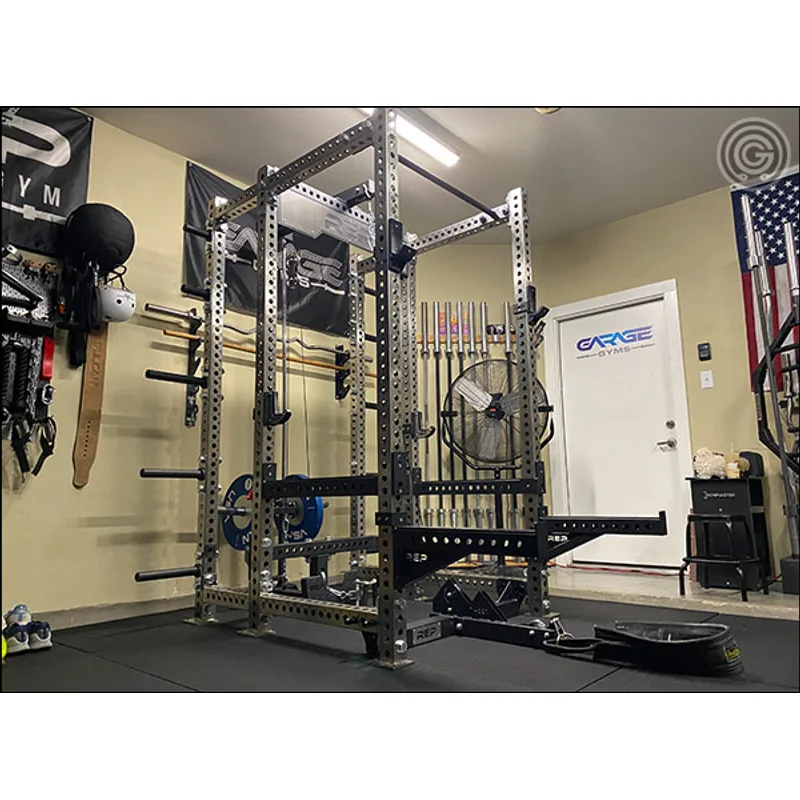
REP Fitness Belt Squat is the pick for REP rack owners at $279 — 1-to-1 cable ratio, 11-gauge hardware, zero additional floor footprint for athletes who own a PR-5000 or PR-4000 with the Lat Tower.
Comparison
| Spec | Bells of Steel Belt Squat Machine 2.0 | Titan Fitness Belt Squat Machine | Titan Fitness SquatMax-MD Freestanding | Fringe Sport Mammoth Belt Squat | REP Fitness Belt Squat |
|---|---|---|---|---|---|
| Rating | 9.2/10 | 8.6/10 | 8.9/10 | 8.0/10 | 7.8/10 |
| Price | $999 | $1149.99as of Oct 18, 2026 | Unavailable | $299.00as of Oct 18, 2026 | $279 |
| Frame | 11-gauge steel, black powder coat | Plate-loaded lever, diamond-plate steel platform | Freestanding plate-loaded vertical | — | 11-gauge steel |
| Footprint | 51" × 40" × 35.5" (vertical pegs 51" × 52.5") | 83" W × 54" D | 45" W × 41" D platform | — | — |
| Machine Weight | 264 lb | 232 lb | 200 lb | — | — |
| Weight Capacity | 700 lb | 1,000 lb | 1,000 lb | — | 600 lb |
| Loading | Top and side pegs included | Side plate pegs | — | — | — |
| Assembly | Moderate | Moderate | Moderate | Easy | Easy (if lat tower already installed) |
| Belt Adjustment | — | — | 7 positions with carabiner | — | — |
| Mount | — | — | — | Universal power rack upright (fits most 2"×2" and 3"×3" racks) | REP PR-5000 V2 or PR-4000 (requires Lat Tower Attachment) |
| Adjustable Length | — | — | — | 39" – 48.75" | — |
| Included | — | — | — | Hip belt | — |
| Use Case | — | — | — | Rack-mounted lever arm | — |
| Compatibility | — | — | — | Standard 1" or 1.25" upright holes | — |
| Weight | — | — | — | — | 41 lb |
| Cable Length | — | — | — | — | ~75" from top pulley |
| Check Price at Bells of Steel → | Check Price → | Check Price → | Check Price → | Check Price at REP → |
Prices change daily — tap Check Price for the current Amazon price. Numbers shown were verified on the "as of" date.
Detailed Reviews
Bells of Steel Belt Squat Machine 2.0 — Editor Pick
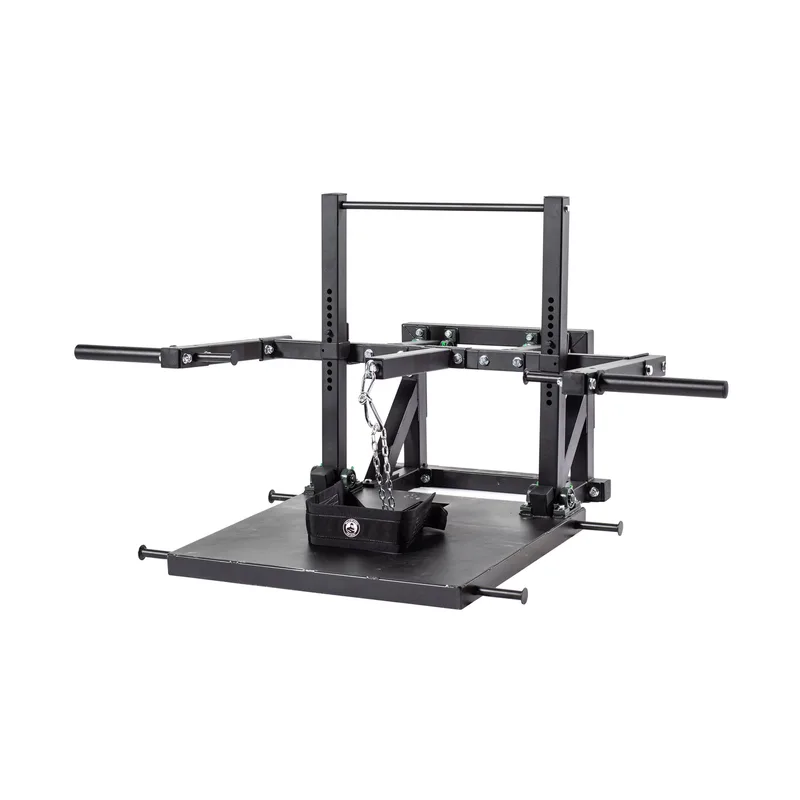
Bells of Steel Belt Squat Machine 2.0
Pros
- 11-gauge steel frame with zero flex under heavy loading — owner reports across multiple home gym forums describe no movement or wobble during sets up to 400+ lb
- Compact lever arm cuts into the frame center, keeping the machine footprint at 51" × 40" — smaller than most standalone belt squat designs without sacrificing weight capacity
- Includes top pegs, side pegs, and four band pegs as standard equipment — no additional hardware needed to run banded belt squats, good mornings, or Romanian deadlifts from the hip attachment
- 700 lb rated capacity exceeds realistic loading ranges for any home gym athlete — the machine will not be the limiting factor in your belt squat program
- Weightlifting belt included with purchase — padded and adjustable for different hip widths, this is not a thin nylon afterthought
- Vertical peg storage shrinks the active footprint to 51" × 52.5", allowing the machine to live in a dedicated zone without consuming the full 81" footprint during rest periods
Cons
- Direct-only from Bells of Steel — no Amazon Prime shipping, no retail pickup, lead times vary by stock status
- 264 lb assembled weight means initial placement is a two-person operation — decide the permanent floor zone before ordering
- Lever arm design produces a slight forward arc during the squat, which differs from vertical cable pull; most users adapt within a few sessions
The Bells of Steel Belt Squat Machine 2.0 earns the top spot in this roundup on build quality and value density. The 11-gauge steel frame — the same specification Bells of Steel uses across their power rack and barbell product line — is the standard for dedicated training equipment that’s expected to handle real loading over years of use. Owner accounts in home gym communities consistently describe zero frame flex during heavy loading, and the 264 lb machine weight creates the ground stability that prevents shifting during deep squats.
The footprint design is worth understanding before you buy. The primary footprint is 51” × 40” × 35.5” with the weight pegs oriented horizontally, but vertical peg storage brings the active footprint down to 51” × 52.5”. That’s a meaningful difference in a home gym where every square foot counts. The lever arm cuts into the center of the frame rather than extending from one end, which is the design choice that keeps the overall dimensions compact relative to machines with an equivalent weight capacity.
What comes with the machine matters at $999. The weightlifting belt is padded and adjustable — not the thin nylon strip that ships with budget machines and gets discarded after one session. The four band pegs expand the exercise library to include banded belt squats (increasing resistance at lockout), band-resisted Romanian deadlifts from the hip attachment, and good morning variations. Athletes who want to add accommodating resistance to their belt squat programming have everything they need without additional purchases.
The 700 lb rated capacity is honest. At 11-gauge, the machine is built to handle that load without structural concern. Most home gym athletes never exceed 300–400 lb in a belt squat, which means the machine operates well within its design range throughout its service life.
Direct-only ordering from Bells of Steel means no Amazon Prime. Shipping to the continental US typically runs 1–2 weeks. For a machine this size and weight (264 lb delivered), freight delivery is standard — plan for a scheduled delivery window.
Titan Fitness Belt Squat Machine — Best Value
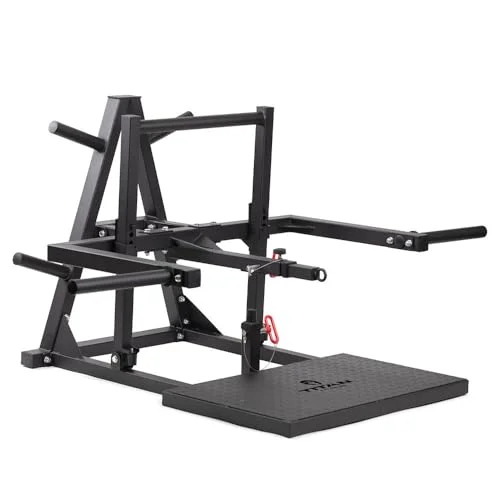
Titan Fitness Belt Squat Machine
Pros
- 1,000 lb rated capacity at this price point is exceptional — the Titan Belt Squat Machine delivers the structural headroom of commercial equipment without a commercial price tag
- Diamond-plate steel platform provides genuine grip texture without rubber mats — feet stay positioned under heavy loading during both descent and lockout
- On Amazon with standard fulfillment — no direct-only ordering, no extended lead times, eligible for Prime shipping
- 232 lb machine weight creates a stable base that does not shift during heavy belt squatting — the machine absorbs the loading force without floor anchoring
- Plate pegs load from the side, allowing easy access to add and remove plates without leaning across the machine
- Titan's customer support covers the US-focused warranty period with parts availability from a domestic inventory
Cons
- Lever arm mechanism creates a forward arc through the squat movement — not a vertical cable pull; athletes accustomed to cable-style belt squat machines will need to adjust their foot positioning
- 83" footprint in one dimension requires a dedicated floor zone — measure your available space before purchasing, as this is one of the larger footprints in this roundup
- Included belt is thin nylon — plan to purchase a padded hip belt separately if you train at higher loads for longer sessions
The Titan Fitness Belt Squat Machine makes a clear case for itself at $999 on Amazon: 1,000 lb capacity, a plate-loaded lever mechanism, and Prime-eligible shipping from a brand with a strong US customer service infrastructure. For athletes who want a standalone belt squat machine without spending $1,499, the Titan delivers the structural basics at a price that matches the Bells of Steel and undercuts the SquatMax-MD.
The diamond-plate steel platform is the standout detail. Knurled grip texture keeps feet positioned throughout the movement without rubber mats, adhesive tape, or other workarounds. During heavy loading where foot slip becomes a real concern, the platform holds. The 232 lb machine weight and stable base design keep the machine planted — lever belt squat machines generate lateral and downward force during the squat that lighter machines transfer to the floor as vibration or drift, and the Titan doesn’t.
The 83” footprint in one dimension is the main practical consideration. This machine requires a clearly defined floor zone in the gym layout — it’s not a machine that gets moved around. Measure the space before purchasing and establish the permanent location. Once set, the machine doesn’t need repositioning.
The lever mechanism works differently from a vertical cable pull. The resistance arc tilts slightly forward during the movement, which changes the feel compared to a barbell squat or cable belt squat. It’s not better or worse — it’s different. Athletes who’ve only done barbell squats adapt to the arc within a few sessions. The important thing is that the machine loads the quads, glutes, and hamstrings effectively under that arc, which it does.
The included belt is thin. Budget an additional $30–50 for a padded hip belt if you plan to use this machine for regular training rather than occasional use.
Titan Fitness SquatMax-MD Freestanding — Most Proven
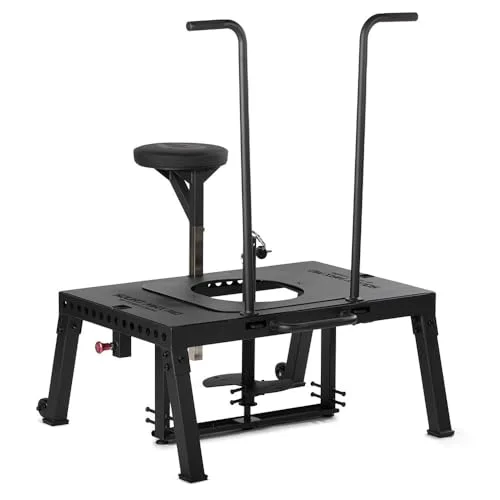
Titan Fitness SquatMax-MD Freestanding
Pros
- SquatMax-MD design was developed by Brian Henesey and validated in peer-reviewed research as the only belt squat machine demonstrated to closely replicate barbell back squat muscle activation across quads, hamstrings, and glutes
- Vertical loading pin mechanics produce a direct upward pull — true vertical resistance under the hips rather than the forward arc of lever arm designs, which is the closest mechanical approximation to a barbell squat
- Included nylon squat belt has 7 adjustment points and a carabiner — more adjustment range than most stock belts, covering a wider spread of hip widths and comfort preferences
- Band pegs built into the platform enable banded accommodation work — increasing resistance at lockout for powerlifting-specific belt squat programming
- 200 lb freestanding machine with built-in wheels allows repositioning without disassembly — the machine moves to a wall between sessions, freeing the working floor zone
- On Amazon with standard fulfillment — Prime-eligible without direct-only lead times
Cons
- $1,499 is the highest price in this roundup by a meaningful margin — the premium reflects the science-validated design and freestanding construction, but the Bells of Steel at $999 closes the gap in practical standalone performance for most home gym athletes
- Platform height of 20" can challenge ceiling clearance for tall athletes in basement gyms with standard 8-foot ceilings — measure standing-upright head clearance before ordering
- Top-loading pin requires clearing all plates before changing the loading stack — side-loading designs like the Titan Belt Squat Machine are faster to unload and reload between sets
The SquatMax-MD has a different origin story than most home gym equipment. Brian Henesey developed the SquatMax mechanism as a training tool that could replicate barbell squat mechanics without spinal loading — and the design was evaluated in peer-reviewed research that confirmed it achieves close muscle activation profiles to the barbell back squat across the quads, glutes, and hamstrings. The Titan Fitness Freestanding SquatMax-MD (released 2024–2025) brings that mechanism to a standalone machine on Amazon at $1,499.
The key design difference from lever machines is the loading direction. The SquatMax-MD loads from a vertical pin below the platform, which means the resistance pulls directly downward through the hip belt rather than at the forward angle that lever arms produce. This vertical pull is what most closely replicates the physics of a barbell squat — the weight wants to pull you down, not forward. For athletes who care about movement specificity, this matters.
The 7-position adjustable belt with carabiner is more functional than it sounds. Different loading positions change the effective hip distance from the attachment point, which adjusts the resistance curve through the movement. Athletes with wider or narrower hip structures use different positions to find the setup where the machine loads them correctly at the bottom of the squat.
The freestanding design with built-in wheels and 200 lb machine weight is practically useful. The machine rolls to a corner or wall between sessions without disassembly. The 45” × 41” active platform footprint is relatively contained for a freestanding machine, and it comes back to the working zone in under a minute.
At $1,499, the SquatMax-MD is for athletes who treat the belt squat as a primary training tool rather than a supplementary one. If you’re adding belt squats as a spinal decompression accessory two days per week, the Bells of Steel at $999 is the better value. If the belt squat is going to be the centerpiece of your leg training program and you want the machine that comes closest to replicating barbell squat mechanics, the SquatMax-MD justifies the premium.
Fringe Sport Mammoth Belt Squat — Best Budget
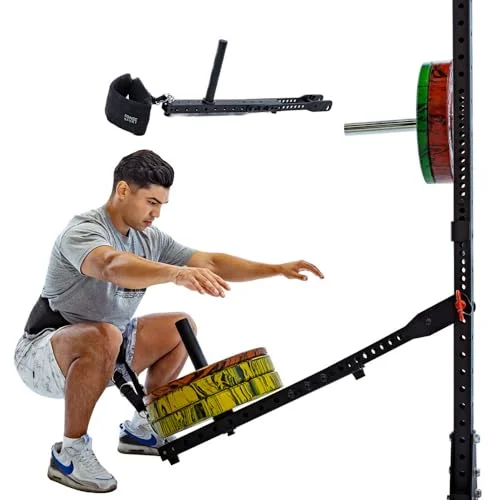
Fringe Sport Mammoth Belt Squat
Pros
- Universal upright mount fits most power racks on the market — not locked to a specific brand's ecosystem, making this the rack attachment choice for athletes who own non-REP racks
- $299 is the lowest price for a functional belt squat setup in this roundup — for athletes who already own a power rack, this converts existing equipment without a standalone machine footprint
- Adjustable lever length (39"–48.75") accommodates different user heights and squat depths without replacing the attachment
- Hip belt included at no additional cost — ready to use out of the box without extra accessory purchases
- On Amazon for Prime fulfillment — standard shipping timeline without specialty retailer processes
- Long lever arm design flattens the arc through the squat compared to shorter lever designs — the movement feels more like a squat than a lever press at the bottom position
Cons
- Requires an existing power rack to function — this is not a standalone machine, and athletes without a rack cannot use this product
- Lever arm still produces a forward arc during movement — the long lever reduces the arc relative to shorter designs but does not replicate the vertical pull of the SquatMax-MD
- Limited to belt squat exercises — no side pegs, no band attachment points, no versatility beyond the core belt squat movement
The Fringe Sport Mammoth Belt Squat Attachment solves a specific problem well: for athletes who own a power rack and want to add belt squatting without buying a standalone machine, the Mammoth provides the cheapest functional entry point in this roundup at $299 on Amazon.
The “universal” rack mount designation means something specific. The Mammoth fits most standard power racks with 2×2” or 3×3” uprights and standard hole diameters — not locked to a single brand’s ecosystem the way the REP attachment is. If you own a Titan T-2, a CAP cage, a Rogue Monster Lite, or most other standard racks, the Mammoth mounts and functions. This broad compatibility is what separates it from the REP option and makes it the relevant choice for home gym builders who aren’t in the REP ecosystem.
The lever length adjustment from 39” to 48.75” is the functional spec that matters most for height-specific setup. Taller athletes need more lever length to reach a comfortable squat depth without the machine running out of travel before parallel. At 48.75” maximum, the Mammoth covers the range for athletes up to approximately 6’3”–6’4” depending on limb proportions.
The included hip belt is functional. It’s not padded to the same standard as standalone machine belts, but it’s usable for moderate loading without replacement. At 300 lb or more, most athletes will want an upgraded padded belt.
The exercise range is squats only. No side pegs, no band attachment points, no versatility beyond the belt squat movement. For athletes who want to add Romanian deadlifts, good mornings, or banded work, the Bells of Steel at $999 covers all of that from the same machine. The Mammoth is a pure belt squat attachment at a budget price — straightforward and functional.
REP Fitness Belt Squat — Best for REP Rack Owners
REP Fitness Belt Squat
Pros
- $279 is the most affordable dedicated belt squat option in this roundup — for athletes who own a REP PR-5000 or PR-4000 with the Lat Tower installed, this converts existing rack infrastructure at the lowest cost
- Honest 1-to-1 cable ratio routes resistance directly from the floor-anchored loading pin through the lat tower pulley — the cable direction is closer to vertical than most lever arm attachments
- Adds zero floor footprint beyond the rack that's already there — the belt squat attachment removes from the rack between sessions, restoring the power rack's standard functionality
- 11-gauge steel cable routing hardware matches REP's rack construction standard — the attachment is not an aftermarket accessory but an engineered extension of the rack system
- 600 lb capacity covers the loading range of serious home gym belt squatting without building in unnecessary structural overhead
- REP Fitness's direct support covers the attachment through their equipment warranty program
Cons
- Requires a REP PR-5000 V2 or PR-4000 power rack AND the Lat Tower Attachment — athletes without both pieces of existing REP equipment cannot use this attachment, which makes it the most constrained option in this roundup
- Front leg of the rack lifts slightly during heavy loading, which reduces cable travel and can limit squat depth without standing on elevation plates or mats
- Belt not included — budget an additional $30–60 for a padded hip belt to use this attachment comfortably
The REP Fitness Belt Squat attachment at $279 is the most affordable dedicated belt squat setup in this roundup, but the eligibility constraint is real: it requires a REP PR-5000 V2 or PR-4000 power rack with the REP Lat Tower Attachment already installed. Athletes who own one of those racks with the lat tower get a functional 1-to-1 cable belt squat that adds zero floor footprint and comes off the rack completely between sessions.
The 1-to-1 cable ratio is what makes this attachment mechanically distinct from the rack attachment category in general. The cable routes from the loading pin on the floor, up through the lat tower pulley, and down to the hip belt — which means the resistance direction is closer to vertical than any lever arm produces. The physics more closely approximate the downward pull of a barbell squat than a lever machine at the same price. For a $279 attachment, that’s a meaningful advantage.
The 600 lb capacity covers the loading range of serious home gym belt squat training. The 11-gauge steel cable routing hardware is built to REP’s rack construction standard — this is an engineered extension of the rack system, not a consumer accessory bolted to the upright.
The documented limitation is the front leg lift. Under heavy loading, the front leg of the rack lifts slightly, which shortens the cable travel distance and can limit squat depth. The standard workaround is standing on a 25 lb bumper plate or a yoga block to restore the full range. Athletes who don’t own those elevation options will need to purchase them. Standing on a plate during belt squats is not unusual, but it’s a setup step the Mammoth doesn’t require.
The REP Belt Squat attachment is the right call for athletes already in the REP ecosystem who want to add belt squatting to their training. For everyone else, the Mammoth at $299 provides broader rack compatibility without the specific prerequisite.
Buying Guide: What to Look for in a Home Gym Belt Squat Machine
Standalone Machine vs. Rack Attachment
Standalone machines — the Bells of Steel, Titan Belt Squat Machine, and SquatMax-MD in this roundup — occupy their own floor zone permanently and don’t require an existing power rack. They’re heavier (200–264 lb), require a dedicated footprint, and cost more. The payoff is that they function independently and don’t compete with the rack for attachment real estate.
Rack attachments — the Fringe Sport Mammoth and REP Belt Squat — mount to a power rack you already own, occupy no additional floor space, and cost significantly less. The tradeoff is that they require an existing rack and, in REP’s case, a specific rack model with a specific secondary attachment.
If you already own a quality power rack with compatible uprights, a rack attachment is the value play. If you don’t have a rack or want belt squat capability independent of it, a standalone machine is the right direction.
Lever Arm vs. Vertical Cable vs. Vertical Pin
The resistance direction affects the feel of the movement significantly.
Lever arm (Bells of Steel, Titan Belt Squat Machine, Fringe Sport): The lever produces a forward arc through the squat. Athletes feel more quad drive at the bottom and slightly less hip-hinge emphasis than a barbell squat. Most athletes adapt within a few sessions. Lever machines are mechanically simpler, more durable, and generally less expensive than cable systems.
Vertical cable (REP Fitness, some Rogue machines not in this roundup): The cable routes through a pulley to produce a more vertical resistance direction. Closer to a barbell squat in the loading vector, with a smooth resistance curve.
Vertical pin (SquatMax-MD): A direct loading pin below the platform with no pulley — true vertical resistance under the hips. The research-validated mechanism for replicating barbell squat muscle activation most closely.
For most home gym athletes, the lever arm is fully functional and the most cost-effective path. For athletes optimizing movement specificity, the vertical pull options are worth the higher price.
Weight Capacity
Most home gym belt squat training occurs in the 150–400 lb range. A 700 lb rated machine (Bells of Steel) is structurally conservative for that loading level. A 1,000 lb rated machine (Titan, SquatMax-MD) is rated for competition-level loading.
Don’t undersize capacity — the structural integrity of the frame is partially a function of its capacity rating. A 300 lb rated machine running at 80% capacity degrades faster than a 700 lb machine running at 40% capacity.
Footprint and Space Planning
Belt squat machines require more floor space than most home gym athletes expect. A 51” × 40” machine (Bells of Steel with vertical pegs) requires a minimum 5” × 5” floor zone with access room. A machine with an 83” footprint in one dimension needs over 7 feet of clear floor just for the machine itself.
Measure your gym space with tape before purchasing. Mark the machine’s footprint on the floor and verify that training around it doesn’t compromise other equipment positioning. Belt squat training requires space to stand on the platform and load plates from the side — don’t plan a tight installation.
Assembly Difficulty
All five machines in this roundup are rated moderate or easy to assemble. The standalone machines (Bells of Steel, Titan, SquatMax-MD) weigh 200–264 lb and require two people for setup and for moving delivered freight into position. The rack attachments (Mammoth, REP) require one person and basic tools. Account for the assembly step when planning delivery logistics.
Frequently Asked Questions
What is the main benefit of a belt squat machine over a barbell squat?
The belt squat eliminates spinal loading. A barbell squat places compressive load on the spine through the weight resting on your traps and the resulting axial compression through the lumbar vertebrae. A belt squat attaches the resistance below your hips — the legs work equally hard but the spine, neck, and shoulders are not loaded at all. For athletes with back injuries, disc issues, or shoulder mobility limitations that prevent comfortable barbell positioning, the belt squat allows full-intensity lower body training that the barbell cannot.
How does a belt squat machine compare to a leg press?
A belt squat produces a free-standing loaded squat pattern — the athlete’s legs extend and flex against the belt resistance while standing upright, requiring balance, core bracing, and full lower body recruitment through the movement. A leg press uses a sled that dictates the movement path, reducing balance demand and allowing higher absolute loading with less technical requirement. The belt squat trains more closely to functional movement; the leg press allows more volume at higher absolute weight. Many athletes use both for different training purposes.
Do I need a power rack to use a belt squat machine?
Standalone machines (Bells of Steel, Titan Belt Squat Machine, SquatMax-MD) are fully freestanding and don’t require any existing rack. Rack attachments (Fringe Sport Mammoth, REP Fitness Belt Squat) mount to a power rack and require one to function. The Fringe Sport works with most standard racks; the REP attachment requires a REP PR-5000 V2 or PR-4000 with the Lat Tower Attachment installed.
Can beginners use a belt squat machine effectively?
Belt squat machines are well-suited for beginners because they remove the technical challenge of barbell positioning, bar path, and upper body stability that makes barbell squatting difficult to learn safely. The movement pattern (squat to depth against loaded resistance) is still a complex motor skill that requires deliberate practice, but the machine removes several simultaneous demands that barbell training stacks together. Beginners can focus on depth, knee tracking, and hip position without simultaneously managing a barbell on their back.
What is the difference between the SquatMax-MD and other belt squat machines?
The SquatMax-MD was designed by Brian Henesey specifically to replicate barbell squat mechanics through a vertical loading pin positioned below the platform. Research published in peer-reviewed journals evaluated EMG activation of the quads, hamstrings, and glutes during SquatMax-MD belt squats compared to barbell back squats and found similar muscle activation patterns. Lever arm machines produce a forward arc and a different loading vector; cable machines use a pulley for vertical direction; the SquatMax-MD uses a direct vertical pin with no intermediary mechanism. For athletes who want the belt squat’s spinal benefits without sacrificing movement specificity, the SquatMax-MD is the most validated design available.
Conclusion: Which Belt Squat Machine Should You Buy?
For most home gym athletes building a serious leg training program, the Bells of Steel Belt Squat Machine 2.0 at $999 is the right machine. The 11-gauge standalone construction, compact footprint with vertical peg storage, included belt and band pegs, and 700 lb capacity cover every practical training requirement without the $1,499 premium of the SquatMax-MD.
Athletes who want the most scientifically validated belt squat mechanism and train the belt squat as a primary movement should choose the Titan Fitness SquatMax-MD at $1,499 — the vertical pin design and peer-reviewed validation are worth the premium for serious users.
Athletes who want a standalone machine on Amazon without direct-only ordering should consider the Titan Fitness Belt Squat Machine at $999 — 1,000 lb capacity, on Prime, and a diamond-plate platform that holds under load.
Home gym athletes with existing power racks who want to add belt squatting at minimum cost should look at the Fringe Sport Mammoth at $299 for universal compatibility, or the REP Fitness Belt Squat at $279 if they own a REP PR-5000 or PR-4000 with the Lat Tower installed.
Pairs well with: a power rack if you’re choosing a rack attachment option, rubber gym flooring rated for plate drops and machine base loading, and leg extension machines to pair isolation work with the compound belt squat training.