Adjustable bench shopping at the premium tier comes down to two names, and in 2026 reviewers are still pointing buyers at the same pair: the Rogue Adjustable Bench 3.0 and REP Fitness’s AB-5200 2.0. Both are built from 11-gauge steel, both carry heavy-lifter capacity ratings, and both fold up onto a stand for storage. So the choice comes down to details: pad gap, seat angles, pad width, weight, and where the bench was made.
This comparison is based on manufacturer specs and published owner and reviewer feedback, not our own bench time. Short version: most lifters should buy the REP, and a specific kind of buyer should pay more for the Rogue.
| Spec | REP Fitness AB-5200 2.0 Adjustable Bench | Rogue Adjustable Bench 3.0 |
|---|---|---|
| Rating | 9.3/10 | 9.2/10 |
| Price | $549.99 | $595 |
| Back Positions | 10 (0-85 degrees) | 10 (0-85 degrees) |
| Seat Positions | 4 (0-30 degrees) | 3 (0, 15, 30 degrees) |
| Pad Gap | 1.4 inches | 1 inch |
| Weight Capacity | 1,000 lbs | — |
| Bench Weight | 115 lbs | 125 lbs |
| Frame | 11-gauge steel | 3x3" 11-gauge steel |
| Pad Width | 12" standard or 14" wide | 11" (foam) / 11.25" (vinyl) |
| Made In | — | USA |
| Check Price at REP → | Check Price at Rogue → |
Prices change daily — tap Check Price for the current Amazon price. Numbers shown were verified on the "as of" date.
Quick Verdict
REP AB-5200 2.0 wins for most home gyms. It offers more seat positions, an optional decline post, and a choice of 12” or 14” pad widths, and it is about 10 lbs lighter. It also costs less at list price before options.
Rogue Adjustable Bench 3.0 is the pick if USA manufacturing matters to you, or if you want the tightest pad gap. It is also the better fit if the rest of your gym is already Rogue.
Head-to-Head Breakdown
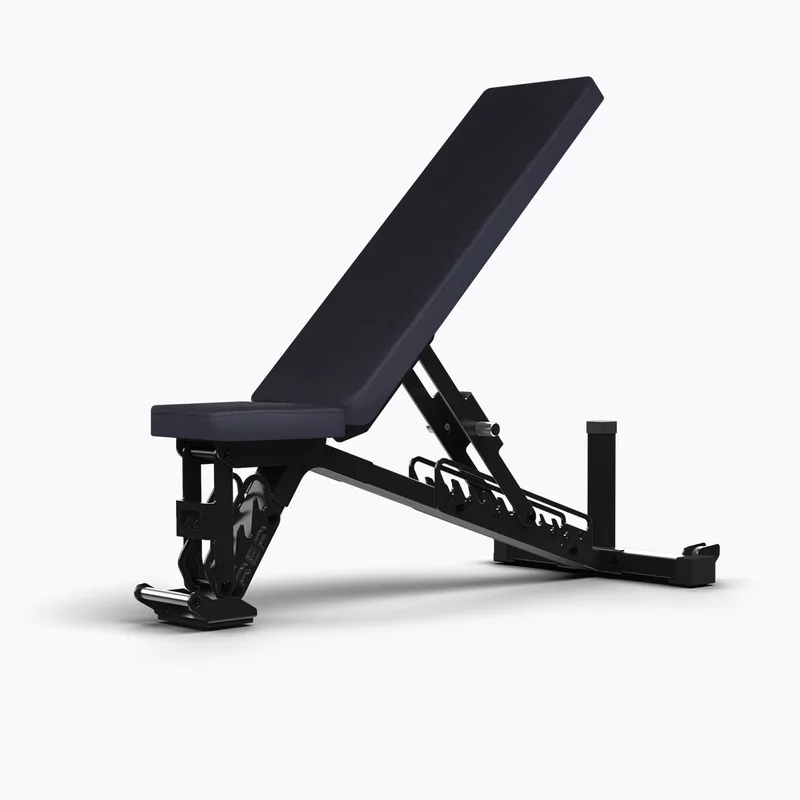
REP Fitness AB-5200 2.0 Adjustable Bench
Pros
- Optional decline post (-4, -6, -8 degrees) is something the Rogue does not offer
- 12" or 14" pad widths let you match shoulder breadth
- Ten back angles with a 52.5-67.5 degree range that suits most incline presses
- Lighter at 115 lbs, and stainless handles make it easier to move
- Frame and rail colors are customizable
Cons
- 1.4" pad gap is slightly larger than the Rogue's 1" gap
- Decline post and wide pad both add to the base price
- Sold direct from REP only
The AB-5200 2.0 is the more flexible bench. Back pad angles run 0, 20, 30, 37.5, 45, 52.5, 60, 67.5, 75, and 85 degrees. That spread includes the 30 and 45 degree angles many lifters use for incline pressing, plus the finer steps in between. The seat has four positions, one more than the Rogue, which helps lifters who want a more locked-in seat for heavy incline work.
The decline post is the feature the Rogue cannot match. Swap in the adjustable post and the bench goes to -4, -6, or -8 degrees. If you do not want a separate decline bench, this one add-on covers it. The options (wide pad, decline post, colors) raise the price above the base list, so price your exact configuration before comparing.
Physically, it measures roughly 57.6” long by 25.8” wide, stands 17.5” high including the pad, and weighs 115 lbs. The vertical storage stand takes up about 3.1 square feet. The 1.4” gap between back and seat pads is the one spec that trails the Rogue. If you want to see how else this bench stacks up, our best weight benches for the home gym roundup covers the wider field.

Rogue Adjustable Bench 3.0
Pros
- Made in the USA with a 3x3" 11-gauge steel frame
- Tighter 1" pad gap than the REP
- Built-in vertical storage stand with rubber padding
- Stainless steel version available for humid garages
- Textured foam pad grips well during heavy pressing
Cons
- Heaviest of the two at 125 lbs, and costs more at list price
- No decline option and a narrower pad than REP's wide setup
- Bolt-together assembly needs a wrench and hex key
- Sold direct from Rogue only
The Rogue Adjustable Bench 3.0 is the old-guard choice. It is made in the USA from 3x3” 11-gauge steel, with a bolt-together design and a built-in vertical storage stand with rubber padding. Back pad positions run across ten steps from 0 to 85 degrees, and the seat offers 0, 15, and 30 degrees, giving 30 possible configurations in total.
Its pad gap is 1”, tighter than the REP’s. That is a small but real difference: a smaller gap makes the seat-to-back transition less noticeable when you are seated for incline presses. Pads are 11” wide in textured foam or 11.25” in vinyl, so shoulder room is a little tighter than the REP’s standard 12” pad and a good deal tighter than its 14” wide option.
At 125 lbs it is heavier, which helps stability and hurts when you move it around the garage. Rogue also sells a stainless steel version for buyers worried about humidity or coastal air. Owner reports and reviewers commonly describe capacity as 1,000+ lbs, and Rogue’s page does not list a figure, so confirm with the brand before buying if you plan to press well past that.
Which Bench Wins?
Features
REP wins. The decline option, extra seat position, and choice of pad widths give it more ways to fit your body and training.
Pad Gap
Rogue wins. 1” versus 1.4” is a minor edge, but it is the one comfort spec where the numbers clearly favor Rogue.
Weight and Portability
REP wins. At 115 lbs with stainless handles, it is easier to shift for floor work or garage parking.
Build and Origin
Rogue wins for USA-made buyers, since it is the only option here. On steel gauge and capacity the two benches are comparable on paper.
Price
REP wins at the base list price. Add the wide pad and decline post, and the gap narrows, so compare equivalent configurations.
Buying Guide: What Matters in a Premium Bench
Pad gap. A smaller gap between seat and back pads feels better when you sit into an incline press. It matters most for lifters who bench heavy incline regularly.
Seat angles. Seat adjustability locks your hips in place. More positions give you more control, though three is enough for most people.
Pad width. Broader-shouldered lifters should look at a 14” option. A narrow pad can feel unstable under load.
Storage. Both benches store vertically. If your garage is tight, check the stand footprint before ordering.
Weight. Heavier benches are more stable but harder to move. If your bench travels between a platform and a rack, favor the lighter option.
Budget alternatives. If neither fits your budget, see our guide to adjustable benches under $300 or folding benches. For a full brand-level look, read Rogue vs REP Fitness. If decline work matters, see the best decline benches.
What the Spec Differences Mean in Practice
A 0.4” difference in pad gap sounds trivial on paper. In practice, the seat-to-back transition is where your lower back and glutes sit during an incline press, so lifters with a history of discomfort there tend to notice gap size first. The extra seat position on the REP matters for a different reason: seat angle controls how well you stay planted when the bar leaves the rack. Neither spec is a dealbreaker, and the right answer depends on how you press.
Pad width is the other practical variable. The Rogue’s 11” to 11.25” pad is narrower than the REP’s 12” standard and 14” wide options. If you have broad shoulders, or you often feel your shoulder blades slide off the pad edge on heavy sets, the REP’s wide pad is the more sensible choice. If you have a smaller frame or prefer a pad that stays out of the way of your elbows on dumbbell work, the narrower Rogue pad may suit you better.
Who Should Buy Which
Buy the REP if you train alone in a garage and want one bench to do everything. The optional decline post means you can skip a dedicated decline bench, which saves both money and floor space. The wide 14” pad is also worth a look if you are broad through the shoulders or carry more upper-body mass, because a wider platform gives your back more support under a heavy press. The lighter 115 lb frame is a plus if the bench shares floor space with a squat rack or a platform and has to be moved out of the way between sessions.
Buy the Rogue if you care where your equipment is made, you already own Rogue racks, or you simply prefer the tighter pad gap. The Rogue’s built-in vertical storage stand and 125 lb frame suit a permanent setup where the bench lives in one spot. The stainless option is relevant for unconditioned garages where surface rust is a recurring annoyance.
Setup and Space Notes
Both benches use a bolt-together design. Rogue lists a 3/4” wrench and 7/32” hex key for its build. Both fold onto a vertical stand for storage; REP lists a footprint of about 3.1 square feet in storage mode and roughly 10.3 square feet in use. Measure your rack’s interior and your bench’s length before you buy, since a 57.6” bench plus an overhead press clearance can crowd a short garage bay.
Neither bench is a budget purchase, and both brands sell direct, so factor in shipping time when comparing the final cost. If the list prices push past what you want to spend, the same buying logic applies at lower price points: prioritize steel gauge, pad gap, and a stable base over color options and add-ons.
FAQ
Is the REP AB-5200 2.0 better than the Rogue Adjustable Bench 3.0? For most buyers, yes. It has more seat positions, an optional decline post, and wider pad choices. The Rogue’s advantages are its 1” pad gap and USA manufacturing.
Does the Rogue bench have a decline position? No. Its back pad runs from 0 to 85 degrees. If you want decline, the REP’s optional adjustable post adds -4, -6, and -8 degree angles.
What weight capacity should I expect? REP rates the AB-5200 2.0 at 1,000 lbs. Rogue’s product page does not list a figure, though reviewers describe the bench as 1,000+ lbs.
Are these benches sold on Amazon? No. Both are sold direct from their brands, so use the buttons on the cards above to check current price and availability.
Do I need a bench this expensive? Not for most training. A solid mid-priced bench will serve casual lifters, but heavy pressers who want a tighter pad gap, high capacity, and long-term durability get real value from either of these.
Conclusion
The REP Fitness AB-5200 2.0 is the bench most home gym lifters should buy: more adjustability, optional decline, a wider pad choice, and a lower starting price.
The Rogue Adjustable Bench 3.0 earns its premium for buyers who want a USA-made frame, the tightest pad gap in this pair, and a bench that matches the rest of a Rogue gym.